
Skip to content
Dr. Romantic
A high-adrenaline surgical haven shrouded in rustic shadows, where gleaming scalpels cut through corporate greed to restore fragile souls, echoing like a heartbeat against the quiet storm of human suffering.
Dr. Romantic

Dr. Romantic

낭만닥터 김사부

"May values ​​not die and beauty not be shallow..."

07 November 2016 — 17 June 2023 South Korea 3 season 52 episode Ended 8.2 (127)

Cast: Han Suk-kyu, Lee Sung-kyoung, Ahn Hyo-seop, Jin Kyung, Im Won-hee

Drama True Medical Ethics vs. Corporate Greed Mentorship and Generational Legacy Redefining 'Romanticism' as Moral Courage Trauma, Healing, and Psychological Rebirth Systemic Reform vs. Individual Morality

Overview

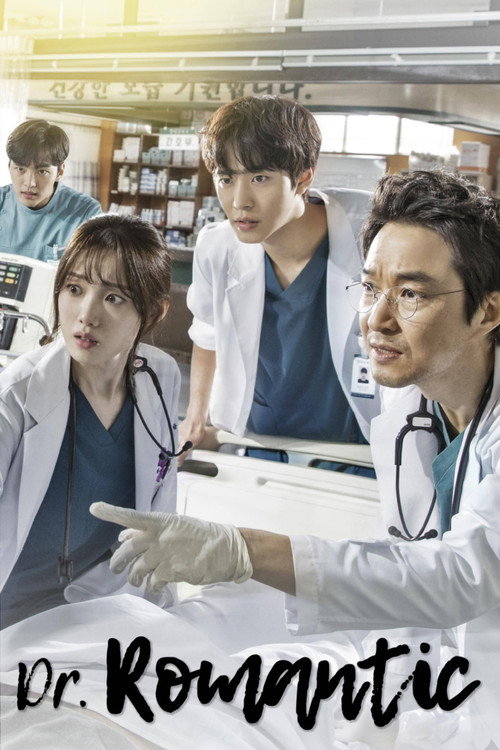
Dr. Romantic (낭만닥터 김사부) is an acclaimed South Korean medical drama franchise created by writer Kang Eun-kyung and director Yoo In-shik, spanning three seasons and 52 main episodes broadcast between 2016 and 2023. The narrative centers on Doldam Hospital, a rundown, underfunded provincial clinic situated near a dangerous highway junction in Gangwon Province. Behind its rustic exterior operates Master Kim (Boo Yong-joo), South Korea’s only triple-board-certified chief surgeon, who voluntarily abandoned the nation’s premier medical center following a tragic political conspiracy. From this humble refuge, Master Kim takes in bruised, disillusioned young doctors and transforms them into elite, ethical medical professionals.

Across its three-season run, the overarching story traces Doldam Hospital’s metamorphosis from an obscure rural emergency room into an autonomous, state-of-the-art Regional Trauma Center. Each season introduces a distinct generation of protege surgeons who arrive carrying severe personal trauma, professional shame, or cynical burnout. Under Master Kim's tough-love mentorship, these young doctors confront corrupt hospital executives, political agendas, and life-or-death medical crises, gradually discovering what it truly means to put patient dignity above personal ambition.

Rather than relying on formulaic episodic cases alone, the series builds an expansive universe exploring the tension between privatized corporate healthcare and humanitarian medicine. The macro-narrative charts the ideological war between Master Kim’s philosophy of uncompromising patient care and corporate conglomerates seeking to shut down or monetize Doldam. As the series progresses, former students return as leaders, forming an interconnected network of mentors and proteges dedicated to preserving human dignity in medicine.


Core Meaning

The primary message of Dr. Romantic is an uncompromising defense of human dignity, medical ethics, and moral idealism in an increasingly transactional world. Through the central character of Master Kim, the creators redefine the concept of 'romanticism' (낭만, Nangman). In the context of the series, being a 'romantic' does not mean indulging in sentimental love stories; rather, it represents a fiercely passionate, unyielding refusal to compromise one's principles, professional ethics, or compassion despite societal pressures, financial incentives, or systemic corruption.

The show argues that true mastery in any field—especially medicine—cannot exist without a moral compass. It critiques modern institutional structures that reduce human beings to billing numbers, metrics, or political leverage. Across all three seasons, the creators demonstrate that true revenge against an unfair system is not achieved through bitterness or political maneuvering, but through absolute excellence, integrity, and the cultivation of a new generation that holds firm to humanistic values.

Thematic DNA

True Medical Ethics vs. Corporate Greed 30%
Mentorship and Generational Legacy 25%
Redefining 'Romanticism' as Moral Courage 20%
Trauma, Healing, and Psychological Rebirth 15%
Systemic Reform vs. Individual Morality 10%

True Medical Ethics vs. Corporate Greed

This theme serves as the structural backbone of the entire series. Season 1 establishes the clash between Geosan University Hospital’s profit-driven corporate hierarchy and Doldam Hospital’s emergency-first doctrine. Season 2 deepens this conflict through corporate takeover attempts by aggressive administrators, while Season 3 examines how administrative bureaucracy and legal liabilities threaten specialized trauma centers. The show consistently posits that a doctor's sole loyalty must be to the patient lying on the operating table.

Mentorship and Generational Legacy

Master Kim’s role as a transformative mentor evolves across all 52 episodes. In Season 1, he breaks down the arrogant ego of Kang Dong-joo. In Season 2, he rescues Seo Woo-jin from financial ruin and despair. In Season 3, his former students become mentors themselves, passing on his operational philosophy to a third generation of residents. The series illustrates that true leadership does not create followers; it creates new leaders capable of carrying the torch.

Redefining 'Romanticism' as Moral Courage

The concept of Nangman (romanticism) undergoes systematic exploration. Initially viewed by young doctors as outdated, reckless, or foolish, Master Kim’s 'romanticism' is revealed to be the ultimate form of courage: believing in humanity, refusing to take easy shortcuts, and holding fast to purpose amidst a cynical society. By Season 3, this personal philosophy matures into a shared organizational culture among the entire Doldam staff.

Trauma, Healing, and Psychological Rebirth

Nearly every major character enters Doldam Hospital carrying severe psychological scars—ranging from PTSD, panic disorders, and childhood abuse to professional betrayals. The operating theater becomes a space not only for physical surgery but for internal psychological healing. The show demonstrates that doctors must heal their own wounds before they can effectively heal others.

Systemic Reform vs. Individual Morality

The series poses a persistent question: Can an ethical individual change a corrupt system, or must one build new institutions entirely? Through the gradual construction of the Doldam Trauma Center, the narrative transitions from individual acts of medical heroism toward establishing sustainable, institutionalized emergency care infrastructure.

Character Analysis

Master Kim / Dr. Boo Yong-joo

Han Suk-kyu

Archetype: The Wise Mentor / Unorthodox Sage Key Trait: Uncompromising Integrity

Motivation

To save lives indiscriminately and nurture genuine doctors who put human dignity above all else.

Character Arc

Begins Season 1 as a mysterious, brusque hermit surgeon carrying the trauma of lost proteges. Over three seasons, he transitions from an isolated miracle worker into an institutional patriarch who builds a sustainable system and steps back to let his trained proteges lead.

Dr. Seo Woo-jin

Ahn Hyo-seop

Archetype: The Cynical Antihero / Prodigy Key Trait: Fierce Surgical Precision

Motivation

Evolves from sheer financial survival to protecting Doldam Hospital and honoring Master Kim's philosophy.

Character Arc

Introduced in Season 2 as a loan-shark-oppressed, whistleblowing surgeon who views medicine strictly as a transactional paycheck. Through Master Kim’s guidance, he overcomes severe survival trauma, learns to trust colleagues, and evolves into Doldam's core general surgeon and a compassionate mentor in Season 3.

All 5 characters and cast

Symbols & Motifs

Doldam Hospital / The Rustic Wooden Signboard

Meaning:

Symbolizes sanctuary, authenticity, and resilience. Located far from the glittering skyscrapers of Seoul, the weathered building represents a space stripped of corporate vanity where medicine returns to its purest form.

Context:

Used as the primary backdrop for the series, situated in a rundown, underfunded provincial clinic near a dangerous highway junction in Gangwon Province.

The Old Cassette Player and Classic Rock Tapes

Meaning:

Symbolizes Master Kim’s unshakeable inner calm, nostalgic romanticism, and grounding principles.

Context:

Played by Master Kim in his office or before complex surgeries, highlighting his refusal to submit to the frantic chaos of modern materialism.

Surgeons' Hands / The Scalpel

Meaning:

Represents both the immense responsibility of life-saving power and human vulnerability.

Context:

Featured in recurring plotlines focusing on hand injuries across all three seasons, emphasizing the physical fragility of surgeons and the transfer of physical mastery from mentor to student.

The Doldam Regional Trauma Center Blueprint

Meaning:

Symbolizes the physical realization of Master Kim’s lifelong vision and the bridge between individual moral idealism and systemic institutional change.

Context:

Serves as the physical blueprint for transforming Doldam from an obscure rural ER into an autonomous state-of-the-art trauma facility across the seasons.

The 'Oddball Project' Binder

Meaning:

Symbolizes collective wisdom, research outside corporate constraints, and the living legacy handed down to future generations of doctors.

Context:

A thick archive compiled by Master Kim containing rare, complex, and unconventional medical cases solved at Doldam.

Memorable Quotes

분노로 복수하지 마라. 실력으로 복수해라. 네가 바뀌지 않으면 아무것도 바뀌지 않는다.
— Master Kim / Dr. Boo Yong-joo

Context

Season 1, Episode 14. Master Kim delivers this landmark advice to Kang Dong-joo when Dong-joo is consumed by fury against the corrupt executives who wronged his family.

Meaning

Encapsulates the show's core ethos: true triumph over systemic injustice is achieved through self-mastery and professional excellence, not destructive rage.

우리가 왜 사는지, 무엇 때문에 사는지에 대한 질문을 포기하지 마라. 그 질문을 포기하는 순간 우리의 낭만도 끝나는 거다.
— Master Kim / Dr. Boo Yong-joo

Context

Season 2, Episode 16 (Finale). Spoken during Master Kim’s closing reflection as Doldam wins its independence.

Meaning

Explicitly defines 'romanticism' as a continuous philosophical inquiry into human purpose and ethics.

All 5 quotes

Episode Highlights

How to Put an Elephant into a Fridge?

S1E1

Introduces the hyper-intense, chaotic environment of Doldam Hospital. It establishes Kang Dong-joo’s elite arrogance and his jarring initial encounter with Master Kim’s unorthodox, blindingly fast surgical techniques.

Significance:

Sets up the core dynamic of the franchise: an ambitious youth humbled and rebuilt by a legendary mentor.

If You Cannot Break It, Don't Be Weak

S1E14

Features a high-stress emergency room lockdown due to a suspected MERS (Middle East Respiratory Syndrome) outbreak. Dong-joo collapses from exhaustion while treating patients, and Master Kim delivers his iconic lesson on skill over anger.

Significance:

Serves as the turning point where Dong-joo fully sheds his ego and accepts Master Kim as his true teacher.

The Moment of Truth

S1E20

Master Kim and the Doldam team perform a high-risk artificial heart replacement surgery on Chairman Shin within an unprecedented timeframe, despite political sabotage from CEO Do Yoon-wan.

Significance:

Proves Doldam’s clinical superiority over Geosan Main Hospital, securing Chairman Shin’s backing and solidifying Doldam’s reputation.

Walk of Respect

S2E8

Focuses on a young female paramedic declared brain-dead, whose mother decides to donate her organs. Simultaneously, an incarcerated murderer requires an emergency organ transplant.

Significance:

Delivers a profound moral meditation on medical equality and patient dignity; the solemn honor walk down the hospital hallway for the donor paramedic remains one of the franchise's most tear-inducing sequences.

The Oddball Project

S2E16

Master Kim undergoes successful hand surgery for his carpal tunnel syndrome, reveals Chairman Shin’s secret final bequest creating an independent medical foundation for Doldam, and wins over rival Dr. Park Min-kook.

Significance:

Ends the corporate existential threat from Geosan Hospital and clears the legal path to build the Regional Trauma Center.

The Coast Guard Mission

S3E1

Begins with an unauthorized covert operation aboard a Coast Guard vessel to treat critically injured North Korean defectors before political deportation forces interfere.

Significance:

Demonstrates the elevated cinematic scale of Season 3 and reasserts Master Kim’s baseline rule: human lives precede geopolitics.

Forest Fire Crisis & The Master Plan

S3E15

A massive forest fire threatens to incinerate Doldam Hospital, forcing a complete, tense evacuation of staff and patients. Rain miraculously saves the building, while returned prodigal son Kang Dong-joo secures trauma center government certification.

Significance:

Closes the trilogy by demonstrating that Doldam is no longer just dependent on Master Kim’s individual hands, but is now a fully realized, multi-generational institution.

Philosophical Questions

What is the true monetary value of a human life in privatized healthcare?

The series repeatedly forces administrators and doctors to choose between financial viability and emergency care for indigent patients.

Does institutional protocol supersede immediate moral duty?

Through scenes where surgeons violate bureaucratic hospital rules to perform life-saving emergency procedures, the show questions whether law without compassion is true justice.

Can true mastery exist without moral integrity?

By contrasting technically skilled yet morally hollow corporate surgeons with Doldam’s dedicated team, the show argues that technical skill divorced from ethics leads to professional decay.

How can an individual maintain moral idealism in a cynical society?

Master Kim’s daily life provides an ongoing answer: through continuous self-reflection, discipline, and refusal to surrender one's personal values.

Alternative Interpretations

The Socio-Political Allegory: Under this reading, Doldam Hospital represents an anti-capitalist sanctuary resisting the commodification of basic human rights. Master Kim’s battle against Geosan Foundation mirrors the struggle of public welfare against corporate privatization.The Psychological Healing Container: This perspective interprets Doldam not merely as a medical clinic, but as an allegorica...

Full ending explanation

Cultural Impact

Dr. Romantic emerged during a period of widespread public discussion regarding South Korea’s medical infrastructure. The country faced severe shortages of regional emergency trauma centers, low reimbursement rates for essential medicine, and an over-concentration of specialized doctors in lucrative cosmetic fields in Seoul. Doldam Hospital’s battle to build a state-funded regional trauma center mirrored real-life efforts by pioneer Korean trauma surgeons (such as Dr. Lee Kook-jong) to establish emergency infrastructure.

The franchise set the modern gold standard for Korean medical dramas and proved that Korean television could sustain an ongoing multi-season franchise with high quality, creating a blueprint for ensemble workplace dramas.

Audience Reception

Audience reviews across platforms (IMDb, MyDramaList, Reddit) consistently rank Dr. Romantic as one of the greatest Korean dramas ever produced, holding an overall consensus rating of 9.2/10. Viewers praise Han Suk-kyu's iconic, career-defining performance, the exhilarating emergency room pacing, authentic surgical realism, deeply moving patient-centered subplots, and organic character growth across multi-season arcs.

However, some criticisms and controversies were noted: long-time fans observed that Season 3 allocated an increased focus on romantic subplots compared to Season 1's tighter focus on surgical ethics. Additionally, critics pointed out that hospital board villains across all three seasons occasionally relied on formulaic corporate-sabotage tropes and extreme medical improbability for dramatic effect.

Interesting Facts

  • The production employed a standing team of six to seven practicing medical consultants and professional surgeons who spent hundreds of hours on set to audit scripts, train actors in suturing techniques, and ensure surgical instrument accuracy.
  • The iconic exterior of Doldam Hospital was filmed at the former Sanjeong Lake Family Hotel in Pocheon, Gyeonggi Province, while interior ER and operating rooms were custom-built studio sets designed to mirror vintage 1980s medical architecture.
  • Veteran actor Han Suk-kyu researched rural physicians to create Master Kim's distinct warm voice, characteristic chuckle, and relaxed physical posture, often ad-libbing comforting remarks to junior doctors.
  • Prior to filming Season 2 and 3, Ahn Hyo-seop and Lee Sung-kyung underwent rigorous medical boot camp training, practicing organ tying, vessel clamping, and fast suturing on pig skin and synthetic models.
  • The franchise set historical rating records for Korean terrestrial television, with Season 1 reaching a peak national rating of 27.6%, Season 2 achieving 27.1%, and Season 3 dominating its weekend timeslot.
  • Supporting cast members including Jin Kyung, Im Won-hee, Kim Min-jae, and Yoon Na-moo returned for all three seasons over a seven-year span (2016–2023) due to personal loyalty to director Yoo In-shik and actor Han Suk-kyu.

Easter Eggs

Kim Hye-soo's Cameo (Season 1 Prequel, Ep 21)

Screen legend Kim Hye-soo made a special appearance as Dr. Lee Young-jo, Master Kim’s ex-lover and first love from his university days. Her appearance provided crucial backstory regarding Master Kim's early idealism and introduced HIV-treatment ethics into the series.

Yang Se-jong’s Return (Season 2, Ep 14–15)

Yang Se-jong reprised his Season 1 role as Dr. Do In-beom for a multi-episode cameo in Season 2. His return created an engaging dynamic with Ahn Hyo-seop’s character (Seo Woo-jin), highlighting how much In-beom had matured since leaving Doldam.

Yoo Yeon-seok’s Major Season 3 Return

Yoo Yeon-seok returned as Dr. Kang Dong-joo in Season 3, Episode 12, taking over as interim director of the Regional Trauma Center. His return brought his Season 1 character arc full circle as he implemented tough systemic changes.

The Final Frame Silhouette of Yoon Seo-jung (Season 3, Ep 16)

In the final moments of the Season 3 finale, a woman holding a suitcase walks toward Doldam Hospital from a taxi, revealed on her luggage tag to be Dr. Yoon Seo-jung (Seo Hyun-jin's Season 1 character), signaling her return from America.

Meta-References in Shin I-rang Law Office

In the 2026 SBS drama Shin I-rang Law Office (featuring Yoo Yeon-seok), characters explicitly make meta-jokes asking if his character 'graduated from medical school' and calling him 'romantic,' directly referencing his iconic legacy in Dr. Romantic.

Frequently Asked Questions

Explore More About This Movie

Dive deeper into specific aspects of the movie with our detailed analysis pages

Comments (0)

Leave a comment

No comments yet. Be the first to share your thoughts!

Similar Movies