Skip to content
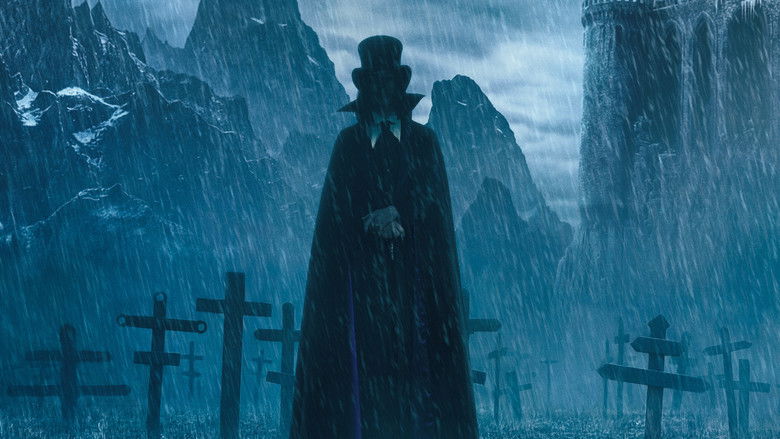
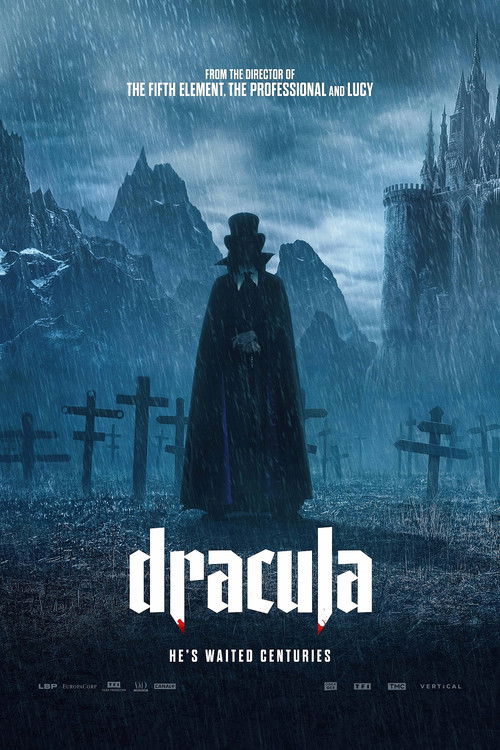
Dracula
A candlelit Gothic dark fantasy dripping with tragic longing, where centuries of blood-soaked devotion dissolve into a swirling phantom waltz through time and shadow.
Dracula

Dracula

"He renounced his faith to become immortal. Passion, anger, vengeance, and hatred will be unleashed into the modern world."

30 July 2025 France 130 min 7.2 (1,387)

Director: Luc Besson

Cast: Caleb Landry Jones, Zoë Bleu Sidel, Christoph Waltz, Matilda De Angelis, Ewens Abid

Fantasy Romance Horror Immortal Love and Reincarnation Blasphemy and Divine Defiance Obsession vs. Selfless Sacrifice Humanity Within Monstrosity
Budget: $52,000,000
Box Office: $42,404,858

Overview

Set between 15th-century Transylvania and late 19th-century Paris, Dracula (also promoted as Dracula: A Love Tale) reinterprets Bram Stoker’s classic lore through a deeply romantic and tragic lens. The narrative begins in 1480 Wallachia, where Prince Vladislav (Vlad the Impaler) achieves victory against Ottoman forces but loses his adored wife, Elisabeta. Consumed by grief and rage, Vlad denounces God and slays a high-ranking church official, incurring an unholy curse that turns him into an immortal vampire—Count Dracula.

Over the next four centuries, Dracula wanders Europe, utilizing vampiric agents and an intoxicating spellbinding perfume in a relentless quest to find his wife's reincarnated soul. In 1889, during the centenary of the French Revolution in Paris, young solicitor Jonathan Harker travels to Transylvania for a real estate transaction, carrying a photo of his fiancée, Mina Murray. Recognizing Mina as the exact image of Elisabeta, Dracula confines Harker and embarks on a journey to Paris to claim his lost love.

As Dracula weaves his hypnotic spell across the grand ballrooms of Paris, a careworn, unnamed priest specializing in dark entities partners with local physicians and Harker to track down the vampire before Mina's soul is irrevocably lost to the shadows.
Core Meaning

Director Luc Besson reframes Dracula not as a purely evil monster, but as a tragic antihero driven by overwhelming grief and defiant romantic passion. The film explores love as both a force of salvation and an unbearable curse.

Besson highlights how unchecked grief can warp pure devotion into possessive obsession. Ultimately, the film asserts that true love requires selfless sacrifice—letting go of the beloved's soul to protect them, rather than trapping them in an eternal darkness born of one's own refusal to accept loss.

Thematic DNA

Immortal Love and Reincarnation 35%
Blasphemy and Divine Defiance 25%
Obsession vs. Selfless Sacrifice 20%
Humanity Within Monstrosity 20%

Immortal Love and Reincarnation

Love transcends physical death and four hundred years of time, driving Dracula's entire existence across centuries.

Blasphemy and Divine Defiance

Vlad’s refusal to accept divine decree after his wife's death leads him to renounce heaven, slay a cardinal, and choose eternal damnation over submission.

Obsession vs. Selfless Sacrifice

The tension between Dracula’s desperate urge to possess Mina eternally and the final realization that true love means forfeiting his own existence for her salvation.

Humanity Within Monstrosity

The duality between Dracula’s grotesque vampiric instincts and his deeply human desire for beauty, art, and emotional connection.

Character Analysis

Prince Vlad / Count Dracula

Caleb Landry Jones

Archetype: Tragic Antihero / Obsessive Romantic Monster Key Trait: Unyielding romantic intensity and theatrical eccentricity

Motivation

Reuniting with his lost wife across centuries.

Character Arc

Evolves from a devoted 15th-century warrior into a bitter, theatrical bloodsucker, and finally into a soul who chooses self-sacrifice.

Elisabeta / Mina Murray

Zoë Bleu Sidel

Archetype: The Reincarnated Soul / The Innocent Heroine Key Trait: Ethereal presence and deep emotional vulnerability

Motivation

Uncovering the truth behind her visions and protecting her sanity and soul.

Character Arc

Begins as Vlad’s 15th-century wife whose death causes the curse, reincarnating as 1889 Parisian Mina who must navigate haunting visions of her former life.

All 5 characters and cast

Symbols & Motifs

Elisabeta's Music Box

Meaning:

Plays a shared melody from Wallachia, triggering Mina’s genuine ancestral memories and bypassing hypnotism.

Context:

Dracula activates it in Paris to bypass hypnotism and trigger Mina's genuine ancestral memories.

The Enchanted Perfume

Meaning:

Symbolizes artificial obsession and control in contrast to true soul recognition.

Context:

Crafted by Dracula over centuries to lure and hypnotize women across European courts.

Living Stone Gargoyles

Meaning:

Symbolize trapped, deformed souls eternally bound to his dark realm.

Context:

Animated stone creatures in Dracula's castle that act as his loyal, grotesque henchmen.

Blood / Hemoglobin

Meaning:

Acts as a profane sacrament replacing Holy Communion.

Context:

Dracula uses it to sustain his youth (such as drinking the blood of corrupt nuns) and share his curse.

Absence of Mirror Reflection

Meaning:

Represents Dracula's loss of his soul and human identity after his 1480 blasphemy, isolating him behind an eternal illusion.

Context:

Used to reflect Dracula's lost soul and missing human identity following his blasphemy.

Memorable Quotes

Do you think God will forgive us for loving each other so much?
— Prince Vlad

Context

Spoken to Elisabeta in 1480 Wallachia.

Meaning

Establishes the core romantic and theological tension that drives the plot.

God is love. He understands. And if he doesn't—he can go to hell.
— Elisabeta / Mina

Context

Spoken by Elisabeta / Mina expressing supreme devotion.

Meaning

The central thematic quote of the film, expressing absolute romantic devotion over religious dogma.

All 5 quotes

Philosophical Questions

Is immortality without love a gift or a curse?

Explored through Dracula’s 400 years of agonizing loneliness across centuries.

Does absolute love justify defying moral and divine laws?

Explored in Vlad’s renunciation of God and murder of the cardinal following his wife's death.

Where is the boundary between romantic devotion and toxic obsession?

Explored in Dracula’s use of hypnotic perfumes and forced turning versus his final act of self-sacrifice.

Alternative Interpretations

The Romantic Redemption Interpretation: Dracula's decision to allow himself to be staked while holding Mina is his ultimate act of love. By dying, he frees her soul from eternal damnation, redeeming his 400 years of selfish bloodlust.

Full ending explanation

Cultural Impact

Released in France in July 2025 and North America in February 2026, Dracula arrived alongside a broader 2024–2026 Gothic horror renaissance (such as Robert Eggers' Nosferatu and Guillermo del Toro's Frankenstein).

Critical reception was polarized: mainstream critics noted tonal clashes between campy humor (the gargoyle minions and perfume dance sequences) and serious romance. However, audience reception was notably positive (grossing over $42 million worldwide and holding an 81% audience score on Rotten Tomatoes), praising its visual style, romantic sincerity, and Caleb Landry Jones' magnetic performance.

Audience Reception

Praised: Caleb Landry Jones' committed performance; Christoph Waltz's witty priest; Danny Elfman’s score; rich cinematography and grand period design.

Criticized: Tonal inconsistencies (swinging from tragic romance to slapstick gargoyle comedy), rushed pacing in the romantic development, and CGI elements.

Overall Verdict: A campy, stylish, and passionately melodramatic gothic fairytale that prioritizes romantic grandeur over traditional horror dread.

Interesting Facts

  • Director Luc Besson cast Caleb Landry Jones as Dracula immediately after their collaboration on the Venice Film Festival contender Dogman (2023).
  • Produced with a €45 million ($52 million) budget by EuropaCorp and TF1 Films, with official support from France's CNC.
  • Legendary composer Danny Elfman created an original score blending dark orchestral melodrama and haunting waltzes.
  • Zoë Bleu Sidel, who portrays Elisabeta/Mina, is the daughter of actress Rosanna Arquette.
  • Christoph Waltz accepted the role of the unnamed vampire-hunting priest shortly after filming Guillermo del Toro's Frankenstein, where he played Victor Frankenstein’s mentor.
  • Luc Besson moved the 19th-century portion of Bram Stoker's story from London to Paris in 1889 during the World's Fair / Centenary celebrations.

Easter Eggs

Francis Ford Coppola’s 1992 Dracula

The reincarnation plot arc, naming the past wife Elisabeta, and old Dracula’s vocal tone in Transylvania pay homage to Coppola’s 1992 film.

Family Cameo

Luc Besson’s daughter, Thalia Besson, makes a cameo appearance during the Parisian sequence.

Living Stone Minions

The interactive stone gargoyle creatures in Dracula's castle serve as a visual homage to medieval cathedral architecture and classic gothic fairytales.

Wojciech Kilar Musical Homage

Danny Elfman's soundtrack features subtle melodic cues referencing Wojciech Kilar's iconic 1992 score.

Frequently Asked Questions

Explore More About This Movie

Dive deeper into specific aspects of the movie with our detailed analysis pages

Comments (0)

Leave a comment

No comments yet. Be the first to share your thoughts!

Similar Movies