Skip to content
Wicked: For Good
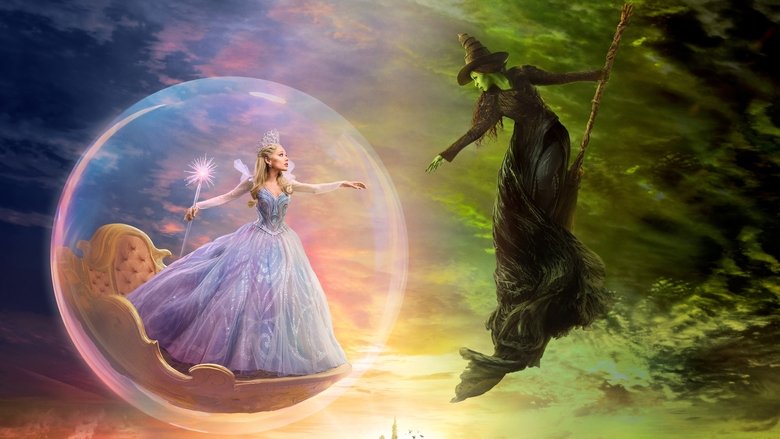
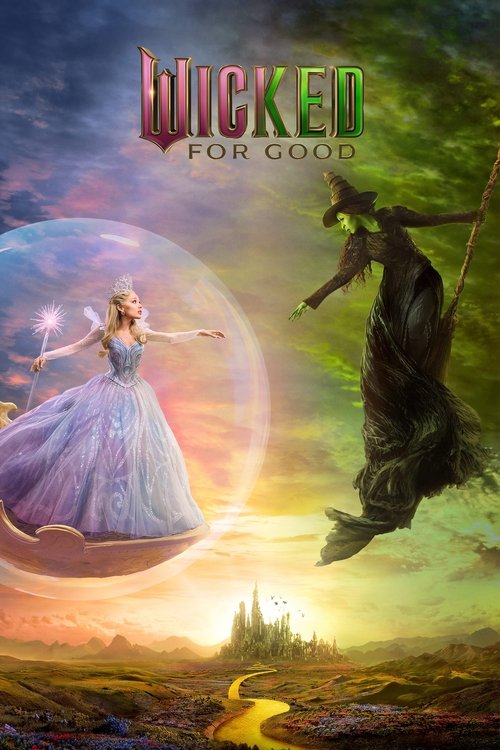
A bittersweet musical fantasy brimming with tragic longing and quiet defiance, where twin shadows of emerald and pink dance across a fracturing yellow brick road into the heart of sacrifice.
Wicked: For Good

Wicked: For Good

"You will be changed."

19 November 2025 United States of America 137 min 6.6 (1,087)

Director: Jon M. Chu

Cast: Cynthia Erivo, Ariana Grande, Jeff Goldblum, Michelle Yeoh, Jonathan Bailey

Fantasy Romance Adventure Friendship, Empathy, and Mutual Transformation ("For Good") Propaganda, Truth, and State-Sanctioned Villainy Oppression, Marginalization, and Animal Rights The Cost of Conformity vs. Radical Defiance Re-framing Mythology and Perspective
Budget: $150,000,000
Box Office: $539,042,601

Overview

Wicked: For Good serves as the dramatic conclusion to Jon M. Chu’s two-part cinematic adaptation of the generation-defining Broadway musical. Picking up years after the events of Wicked (2024), the film explores a deeply divided Land of Oz. Elphaba Thropp lives in exile within the dark Ozian forests, demonized by state propaganda as "The Wicked Witch of the West" while clandestinely continuing her desperate crusade to restore freedom to Oz’s silenced and oppressed Animals.

Meanwhile, in the glowing capital of Emerald City, Glinda has been crowned "Glinda the Good," serving as the effervescent, glamorous public figurehead for the regime led by the manipulative Wizard and Madame Morrible. Tasked with reassuring a frightened populace that all is well, Glinda revels in fame while preparing for a grand state wedding to Prince Fiyero. Yet behind her polished smile, Glinda remains haunted by her separation from Elphaba and the uncomfortable political realities of her position.

When Glinda attempts to broker a peace between Elphaba and the Wizard, her efforts trigger a disastrous chain reaction. As an angry mob rises against the "Wicked Witch" and a mysterious cyclone brings a young girl from Kansas crashing into Munchkinland, Elphaba and Glinda are forced to confront the systemic corruption of Oz and the true cost of their singular friendship.
Core Meaning

Director Jon M. Chu utilizes Wicked: For Good to examine how political systems construct narratives of virtue and villainy. The core message explores the tension between performative public morality and genuine private virtue. The film demonstrates that true transformation and "goodness" rarely stem from popular acclaim or state-sanctioned titles; rather, they arise through empathy, moral courage, and the profound impact two individuals can have on each other’s lives when they dare to see the truth.

Thematic DNA

Friendship, Empathy, and Mutual Transformation ("For Good") 30%
Propaganda, Truth, and State-Sanctioned Villainy 25%
Oppression, Marginalization, and Animal Rights 20%
The Cost of Conformity vs. Radical Defiance 15%
Re-framing Mythology and Perspective 10%

Friendship, Empathy, and Mutual Transformation ("For Good")

The bond between Elphaba and Glinda forms the emotional backbone of the narrative. Despite political polarization, physical estrangement, and conflicting loyalties, their shared history fundamentally rewrites their identities, allowing them to forgive one another and leave a permanent mark on Oz.

Propaganda, Truth, and State-Sanctioned Villainy

The Wizard and Madame Morrible maintain totalitarian power by creating a scapegoat. Elphaba’s genuine attempt to protect animal rights is weaponized into fearmongering propaganda, showing how easily public perception can be manipulated through media spin and curated symbols.

Oppression, Marginalization, and Animal Rights

The subjugation of Oz’s sentient Animals mirrors historical and contemporary civil rights struggles. Elphaba’s refusal to remain silent forces her out of polite society into outlaw status, illustrating the personal sacrifices required to resist systemic injustice.

The Cost of Conformity vs. Radical Defiance

Glinda initially chooses comfortable compliance within a corrupt hierarchy, whereas Elphaba chooses uncompromising exile. The film illustrates how both choices carry heavy burdens—Glinda must live with moral compromise, while Elphaba loses her freedom and reputation.

Re-framing Mythology and Perspective

By revisiting the familiar events of The Wizard of Oz through Elphaba’s eyes, the film challenges audiences to question accepted historical narratives and consider the untold human stories behind legendary "monsters".

Character Analysis

Elphaba Thropp

Cynthia Erivo

Archetype: Tragic Hero / Outcast Freedom Fighter Key Trait: Unyielding moral integrity and intense empathy.

Motivation

To free Oz’s silenced Animals and protect those she loves.

Character Arc

Transitions from an isolated, angry fugitive fighting an uphill battle to accepting her villainized status so she can protect Glinda and escape the system entirely.

Glinda Upland

Ariana Grande

Archetype: Reluctant Figurehead / Reformer Key Trait: Effervescent charisma masking growing moral sophistication.

Motivation

To maintain social stability while secretly trying to protect Elphaba.

Character Arc

Moves from a vapid, state-controlled media puppet reveling in vanity to a courageous leader willing to dismantle corruption from within.

All 5 characters and cast

Symbols & Motifs

The Grimmerie (Ancient Spellbook)

Meaning:

Symbolizes ancient, unadulterated power and the dangerous nature of raw truth.

Context:

It can only be read by those with genuine magic (Elphaba), highlighting the contrast between real talent and the Wizard's fake stage illusions.

Glinda’s Bubble & Pink Aesthetic

Meaning:

Represents curated superficiality, state propaganda, and insulation from harsh reality.

Context:

As Glinda grows morally, her bubble transforms from a symbol of vanity into a vessel of public responsibility.

The Silver / Ruby Slippers

Meaning:

Symbolize agency, tragic inheritance, and burden.

Context:

Transformed by Elphaba to allow her mobility-impaired sister Nessarose to walk, they become a tragic catalyst for Nessarose's downfall and Dorothy's arrival.

The Yellow Brick Road (Under Construction)

Meaning:

Symbolizes the artificial, state-mandated narrative constructed by the Wizard's regime.

Context:

A motif showing the road being built through forced animal labor and state coercion.

The Scarecrow, Tin Man, and Cowardly Lion

Meaning:

Physical manifestations of the casualties of tyranny and sacrifice.

Context:

Each represents a loved one transformed or harmed by the fallout of Elphaba’s fight against the Wizard.

Memorable Quotes

Because I knew you, I have been changed for good.
— Glinda and Elphaba

Context

Sung during their emotional final duet ("For Good") in the ruined castle before Elphaba’s staged departure.

Meaning

Forms the emotional core of the film, acknowledging that their friendship redefined their lives forever.

I'm limited. Just look at me, I'm limited. And just look at you, you can do anything.
— Glinda

Context

Spoken when Glinda tries to read the Grimmerie and fails.

Meaning

Openly acknowledging Elphaba's rare innate magic and accepting her own human limitations with humility.

All 4 quotes

Philosophical Questions

How is "Goodness" defined when morality is weaponized by the state?

Explored through Glinda’s struggle as the face of an oppressive regime versus Elphaba’s illegal yet ethically pure actions.

Can good intentions exist without triggering unintended tragic consequences?

Revealed through "No Good Deed"—Elphaba’s attempts to help her sister and Fiyero directly result in their tragic transformations into the Wicked Witch of the East, the Tin Man, and the Scarecrow.

Is living a comfortable lie preferable to enduring painful exile for the truth?

Highlighted by Elphaba’s ultimate choice to allow Oz to believe she is dead while she lives in secret freedom, leaving Glinda to carry the burden of reform.

Alternative Interpretations

Totalitarian Allegory: Glinda represents performative, state-sanctioned compliance that preserves comfort, while Elphaba represents the demonized whistleblower forced into revolutionary exile.Queer & Outsider Reading: The deep connection between Elphaba and Glinda is frequently analyzed as a story of non-conforming love and soulmates whose genuine bond cannot exist within the rigid confines of Ozi...

Full ending explanation

Cultural Impact

Adaptation Heritage: Adapts Act II of Stephen Schwartz and Winnie Holzman’s 2003 Broadway musical, which was derived from Gregory Maguire’s 1995 revisionist novel Wicked: The Life and Times of the Wicked Witch of the West.

Political Allegory: Resonates strongly with modern discussions regarding state media, political disinformation, civil liberties, and the social construction of "out-groups".

Critical & Box Office Impact: Garnered a massive global box office opening, continuing the commercial success of Part 1. While audience scores reached an astounding 96%+, critical reception was slightly more moderate (70–71% Rotten Tomatoes, 60–62 Metacritic) due to the darker, more episodic structure inherent to Act 2.

Audience Reception

Praised Aspects: Exceptional vocal performances and chemistry between Cynthia Erivo and Ariana Grande; emotional resonance of the finale duet "For Good"; high production value and costume detail; darker, more mature narrative tone.

Main Points of Criticism: Pacing challenges caused by adapting Act 2’s rapid plot points; episodic inclusion of Dorothy's story; comparison to Part 1's universally acclaimed "Defying Gravity" climax.

Overall Verdict: A deeply emotional, visually stunning conclusion that successfully delivers character payoff and thematic depth, even if its narrative structure is darker and more complex than its predecessor.

Interesting Facts

  • Wicked: For Good was filmed simultaneously with Wicked (Part 1) in the United Kingdom under director Jon M. Chu and cinematographer Alice Brooks.
  • Cynthia Erivo and Ariana Grande performed all their musical numbers with live vocal recording on set rather than relying on lip-syncing to studio tracks.
  • Composer Stephen Schwartz wrote two brand-new original songs specifically created to expand the narrative of Act 2 for the film version ("No Place Like Home" and "The Girl in the Bubble").
  • Rather than relying entirely on CGI, production constructed full physical environments for Munchkinland, Emerald City, and the Ozian dark forest at Sky Studios Elstree.
  • Costume designer Paul Tazewell integrated distressed remnants of Fiyero's original prince attire and Boq's Munchkin suit into their transformed Scarecrow and Tin Man character designs.

Easter Eggs

Original Broadway Cast Cameos

Idina Menzel (original Broadway Elphaba) and Kristin Chenoweth (original Broadway Glinda) make special cameo appearances during expanded Wiz-o-mania flashback sequences.

Creator Cameos

Book writer Winnie Holzman and composer/lyricist Stephen Schwartz appear as Emerald City citizens and guards during key sequences.

Musical Homages in Score

Score composer John Powell and Stephen Schwartz subtly embedded musical leitmotifs of "Somewhere Over the Rainbow" and Miss Gulch’s bicycle theme when Elphaba interacts with animals or rides across Oz.

Yellow Brick Road Forced Labor

The opening sequence depicts Munchkins and enslaved Animals laying down individual yellow bricks, adding dark political context to the iconic road from the 1939 film.

Dorothy's Gingham Silhouette

Dorothy Gale appears primarily in distant framing and silhouettes, dressed in her signature gingham dress, keeping the narrative perspective anchored strictly on Elphaba and Glinda.

Frequently Asked Questions

Explore More About This Movie

Dive deeper into specific aspects of the movie with our detailed analysis pages

Comments (0)

Leave a comment

No comments yet. Be the first to share your thoughts!

Similar Movies