Skip to content
Dragon Ball DAIMA
A sunlit-and-shadowed fairy-tale adventure that shrinks legends into children and sends them through a bizarre demon world, trading cosmic doom for wonder, laughter and one last warm farewell, like a lantern carried through a storybook night.
Dragon Ball DAIMA

Dragon Ball DAIMA

ドラゴンボールDAIMA

"Welcome to the great adventure!"

11 October 2024 — 28 February 2025 Japan 1 season 20 episode Ended 8.2 (644)

Cast: Masako Nozawa, Koki Uchiyama, Yumiko Kobayashi, Fairouz Ai, Showtaro Morikubo

Animation Sci-Fi & Fantasy Action & Adventure Comedy Nostalgia and farewell Childlike wonder and adventure Unity across divides Power versus cleverness and luck Origins and hidden history

Overview

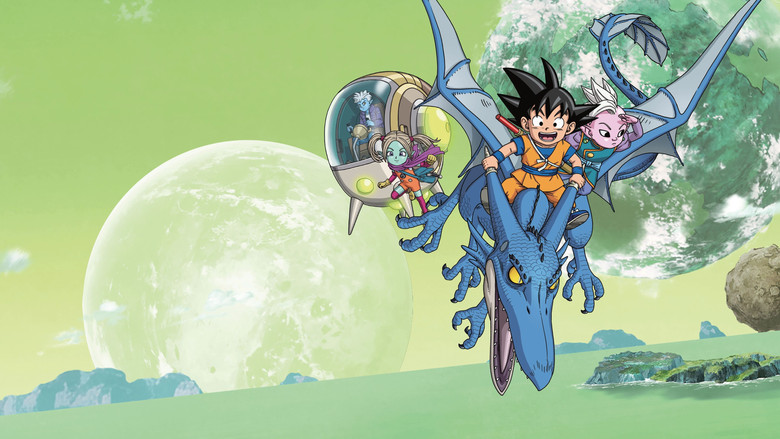
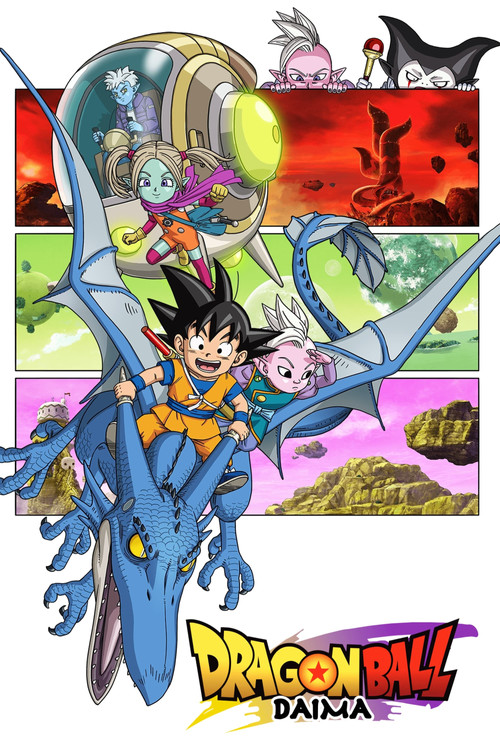
Dragon Ball DAIMA (2024–2025) is a 20-episode original anime. Akira Toriyama's story and designs shaped it, and it is the last Dragon Ball anime he worked on. It follows the Majin Buu Saga in continuity. A plot by a Demon Realm schemer leaves Goku and his friends transformed into children, and they travel to the Demon Realm to put things right.

The Demon Realm is a new corner of the world, with its own Dragon Balls and its own eccentric inhabitants. Goku and his allies, including Glorio, Panzy and the returning Supreme Kai, must clear obstacles and gather the Balls to recover their bodies. The tone is closer to early Dragon Ball and Dragon Ball GT than to the escalating universe-level fights of the later franchise. It values exploration, humor and fairy-tale invention alongside the action.

The series also deepens existing lore, including the origins of the Majin and of the Supreme Kai's people. It builds toward a confrontation with the Demon Realm's ruler and his Evil Third Eye. Reviewers described its plot as light even by Dragon Ball standards. They also saw it as a heartfelt, nostalgic homage.
Core Meaning

DAIMA is about the joy of adventure and the enduring spirit of Goku. Shrinking the heroes strips away the usual escalation of power levels and returns the franchise to its original idea of a curious child travelling a strange world with friends. Producer Akio Iyoku said the series was made in the "same spirit" as GT, aimed at adults who grew up with Dragon Ball and at their children.

It is also a farewell to Toriyama. His whimsy runs through it: a hero is saved by a comic accident, and a mocked outsider becomes a ruler. Its message is that bonds across divided peoples, humor and heart matter more than raw strength.

Thematic DNA

Nostalgia and farewell 30%
Childlike wonder and adventure 25%
Unity across divides 20%
Power versus cleverness and luck 15%
Origins and hidden history 10%

Nostalgia and farewell

The series revisits the franchise's adventure roots and echoes GT in its structure and theme song. It builds to a final episode that critics read as a tribute to Toriyama and to Goku's four-decade legacy.

Childlike wonder and adventure

With the cast de-aged, the story prizes exploration, travel and discovery over power escalation. The Demon Realm works as a playground of strange places and characters.

Unity across divides

Demon Realm societies are separated by social barriers. Outcasts and allies from different worlds are slowly drawn together, and the finale rewards this with a surprising change of leadership.

Power versus cleverness and luck

Even Super Saiyan 4 Goku cannot finish the villain's power alone. Victory comes through a comic accident, in keeping with Toriyama's humor.

Origins and hidden history

The story reframes the Majin and Supreme Kai lore, suggesting familiar elements of the world have deeper roots in the Demon Realm.

Character Analysis

Son Goku

Masako Nozawa

Archetype: Hero Key Trait: Relentless, joyful curiosity

Motivation

He wants to help his friends and rescue Dende. Along the way the wish to restore everyone's bodies and the thrill of a new adventure merge.

Character Arc

Goku begins as a child-sized fighter pulled into a rescue mission and finishes as the heroic anchor of the whole story. The finale is framed as a celebration of what he has represented for four decades.

Supreme Kai

Not confirmed in the searches

Archetype: Reluctant ally Key Trait: Cautious, dignified

Motivation

He wants his body back and he wants to understand his people's origins.

Character Arc

He serves as a conduit to the history of his own people and of Majin Buu. He is drawn into the deeper lore of the Demon Realm.

All 4 characters and cast

Symbols & Motifs

Child-sized bodies

Meaning: Lost power, vulnerability and a return to innocence.
Context: Goku, Vegeta, Piccolo and the others are de-aged. The Demon Realm Dragon Balls offer a way back, and the heroes only return to adulthood late in the story.

The Demon Realm Dragon Balls

Meaning: Hope and the price of restoration, a mirror of Earth's Dragon Balls.
Context: They are the quest object that drives the journey across the Demon Realm.

The Evil Third Eye

Meaning: Borrowed, corrupting power.
Context: Gomah wears it to unlock his Super Giant form, which makes him seem unbeatable until its weak point is exploited.

Super Saiyan 4

Meaning: A nostalgic link to GT and the heart of the homage.
Context: It appears in the climax, and some fans found it poorly explained and a deus ex machina.

The Book of Magic Items

Meaning: Knowledge and mundane objects as instruments of fate.
Context: In the finale it ends up as the improbable weapon that wins the day.

Memorable Quotes

Now to go even further beyond!
— Goku

Context

Episode 19, "Betrayal", when adult Goku shows off Super Saiyan 3.

Meaning

A deliberate echo of a famous Dragon Ball Z line. It is a dub addition: the original Japanese reportedly has Goku say, "Here's a bonus."

Episode Highlights

Betrayal

S1E19
Goku, back in his adult body, uses Super Saiyan 3 in a nostalgic fight scene.
Significance: It leads directly into the final battle against Gomah.

Maximum

S1E20
The finale. Super Saiyan 4 Goku fights Gomah in a spectacular battle. Majin Kuu then ends it with a comic accident, striking the Evil Third Eye three times with the Book of Magic Items. Kuu names himself Supreme Demon King, with Arinsu as Vice.
Significance: It closes the series on a Toriyama-style gag, a tribute to Goku, and a hint at a possible sequel.

Philosophical Questions

Is strength what defines a hero, or is it spirit?

The heroes are made small and weakened, and even the strongest Goku cannot solve the final problem by force alone. The finale hands victory to chance and an underdog.

Who deserves to lead a divided people?

The unlikely elevation of Majin Kuu, the one who unites disparate characters in the Demon Realm, as Supreme Demon King plays with the idea that rule belongs to the unifier rather than the strongest.

How It Ends

Alternative Interpretations

Some read the series as a love letter to GT and to the franchise's early adventure style. Others see it as a farewell to Toriyama, with Majin Kuu's rise as the final gag. The ending also invites debate over whether Super Saiyan 4 was earned or a deus ex machina, and whether the open ending promises a sequel.

Full ending explanation

Cultural Impact

DAIMA arrived in 2024 as the first new Dragon Ball TV anime after Super. It was a nostalgic project deliberately rehabilitating the spirit of the often-criticized GT. Toriyama's death during production gave it extra emotional weight as a final farewell. It played in a limited US theatrical event and was intended for a worldwide audience. The series is mostly remembered as a loving, lighthearted tribute to its creator.

Audience Reception

Reviewers praised the nostalgic charm, the new setting and the heartfelt farewell tone. One review called the story minimal even by Dragon Ball standards. Others called the finale predictable but a soothing celebration of Goku and a fitting farewell to Toriyama's world. Fan criticism focused on the villains being less threatening than earlier ones such as Towa, and on Super Saiyan 4 being poorly explained. Overall it is regarded as a warm, if safe, send-off.

Interesting Facts

  • Akira Toriyama was originally meant to give only advice, but he became so involved that he ended up shaping most of the story and art direction.
  • Toriyama died on March 1, 2024, during production, which makes DAIMA the last Dragon Ball anime he worked on.
  • The series leaked online before its announcement under the working title Dragon Ball Magic.
  • Executive producer Akio Iyoku said Dragon Ball GT was the biggest inspiration, with a target audience of viewers in their early 30s who grew up with GT and their children.
  • The idea of shrinking not just Goku but the entire cast came from Toriyama.
  • Iyoku said development took about six years, beginning in parallel with work on Dragon Ball Super: Super Hero.
  • 'Daima' is a made-up term. The kanji 大魔 mean 'great' and 'demon/magic'.
  • A limited US theatrical event on the weekend of November 8, 2024 showed the first three episodes in English dub and grossed $661,204.
  • The final episode aired in Japan exactly one year after Toriyama's death.

Easter Eggs

Goku's dub line 'Now to go even further beyond!' in episode 19

It deliberately echoes Goku's iconic Dragon Ball Z line before Super Saiyan 3, even though the original Japanese line differs.

The theme song and structure as homage to GT

A reviewer saw the theme as an homage to GT's closing song, which fits the producers' stated intention to follow GT's spirit.

Evil Third Eye merchandise at the end

Goku finds Evil Third Eye editions for sale, a gag that also hints at a possible sequel.

Frequently Asked Questions

Explore More About This Movie

Dive deeper into specific aspects of the movie with our detailed analysis pages

Comments (0)

Leave a comment

No comments yet. Be the first to share your thoughts!

Similar Movies