Skip to content
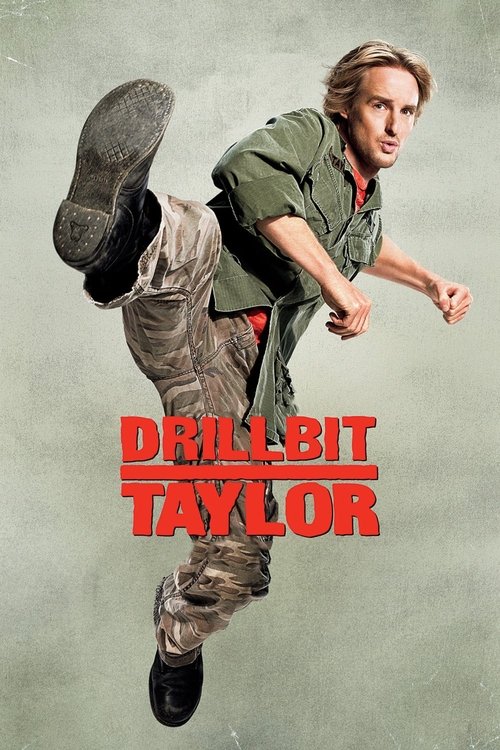
Drillbit Taylor
A sun-bleached suburban comedy where three doomed freshmen buy protection from a drifter in cargo shorts, and the cheapest bodyguard money can rent turns out to be the only adult who shows up.
Drillbit Taylor

Drillbit Taylor

"You get what you pay for."

04 February 2008 United States of America 110 min 5.8 (1,132)

Director: Steven Brill

Cast: Owen Wilson, Leslie Mann, Nate Hartley, Troy Gentile, David Dorfman

Comedy Bullying and the failure of adult authority The con man and the accidental father Masculinity, toughness and learning to fight Friendship among outcasts Class, invisibility and the disposable adult
Budget: $40,000,000
Box Office: $32,900,000

Overview

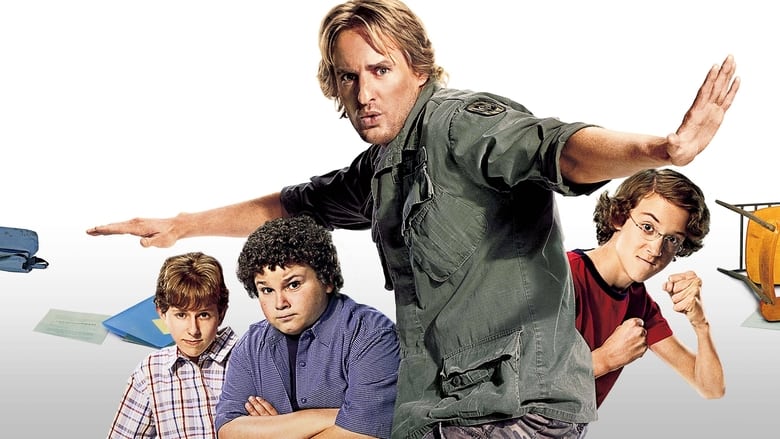
Three freshmen arrive at high school with nothing in common except a target painted on their backs: chubby, motor-mouthed Ryan, skinny and anxious Wade, and tiny, oblivious Emmit. Within a day they have attracted the undivided attention of Filkins, a bully whose menace runs well past the usual locker-shoving, and his sidekick Ronnie. With no teacher, parent or administrator willing to intervene, the boys do the only thing that makes sense to fourteen-year-olds with pooled allowance money: they place a classified ad for a bodyguard.

The man who answers is Drillbit Taylor, who introduces himself as a decorated ex-Army Ranger and is in fact a homeless drifter working a con. He sizes the boys up as marks, takes the job for the cash and whatever else he can carry out of their houses, and begins delivering self-defense wisdom of extremely questionable provenance. To keep an eye on his clients he talks his way onto campus as a substitute teacher, where he catches the attention of a colleague, Lisa, and finds himself maintaining a second fiction on top of the first.

What starts as a grift settles into something stickier. The boys begin to trust their fraudulent protector, Drillbit starts behaving like a man with responsibilities, and the escalating war with Filkins moves toward a confrontation that neither a con nor a classified ad can talk its way out of. Directed by Steven Brill, produced by Judd Apatow and built from an unfinished story by John Hughes, the film is a bullied-kid comedy about what happens when the person who finally protects you has nothing to protect himself with.
Core Meaning

At its center, Drillbit Taylor argues that protection is a relationship, not a service. The boys try to solve an emotional problem — being unsafe, unseen and unrepresented — with a transaction, and the transaction fails in every way except the one that matters: it puts a grown man in the room who eventually decides to stay.

The film's second, quieter claim is that the institutions that are supposed to protect children have quietly abdicated. Parents are distracted, teachers are outmaneuvered, and the school's response to organized cruelty is essentially nothing. Into that vacuum steps the least qualified adult in the county, and he is still an improvement.

Finally, the movie is about fraud as a two-way street. Drillbit invents a heroic version of himself to exploit three kids; the kids, in believing it, force him to keep performing it until the performance calcifies into character. The message is sentimental but not cynical: you can lie your way into decency if enough people need you to be the person you claimed to be.

Thematic DNA

Bullying and the failure of adult authority 30%
The con man and the accidental father 25%
Masculinity, toughness and learning to fight 20%
Friendship among outcasts 15%
Class, invisibility and the disposable adult 10%

Bullying and the failure of adult authority

The film's engine is Filkins's campaign against Ryan, Wade and Emmit, and crucially, the total absence of any functioning adult response. Teachers do not see it, administrators do not act, and parents are background noise. The boys' decision to hire protection is a damning verdict on the system: they have concluded, correctly, that nobody is coming. Critics noted the film works the same high-school template as John Hughes's era — a world neatly split between the cruel and the fair game — and the movie inherits both the clarity and the schematism of that split.

The con man and the accidental father

Drillbit presents as an ex-Army Ranger; he is a homeless thief casing three easy marks. His arc is the slow, unglamorous conversion of a grift into a guardianship. Every skill that made him a good con — reading people, improvising authority, performing confidence — turns out to be transferable to parenting. The film keeps its sentiment honest by never letting him become genuinely competent: he is a bad bodyguard who becomes an adequate adult.

Masculinity, toughness and learning to fight

The boys want to be taught how to fight; Drillbit mostly teaches them how to avoid fighting, badly. The film interrogates the pretense of manhood on both sides of the age gap — three kids performing toughness they do not have, and a man performing a military past he never had. That the resolution ultimately arrives through physical confrontation is the film's most contested move: several reviewers argued the ending endorses the very violent solution the middle of the movie mocks.

Friendship among outcasts

Ryan, Wade and Emmit have nothing in common but exclusion, and the film treats that as sufficient. Their loyalty is tested when bullying tempts each of them toward separate escape routes — social climbing, romance, self-preservation — and the strongest emotional current in the film is not Drillbit's redemption but the three boys refusing to let each other be picked off individually.

Class, invisibility and the disposable adult

Drillbit lives outdoors, in a community of unhoused men who move through the same suburb as the high school without being registered by it. The film quietly rhymes his invisibility with the boys': both are people the neighborhood has decided not to look at. It is the movie's most underexploited idea, but it gives the comedy its faint melancholy — the hero has no house to be safe in either.

Character Analysis

Drillbit Taylor

Owen Wilson

Archetype: Trickster / reluctant mentor (the con man turned guardian) Key Trait: Disarming, low-effort charm that works equally well as a con and as comfort

Motivation

Initially cash and easy theft; increasingly the unfamiliar experience of being needed, and the chance to become the man he only invented.

Character Arc

Begins as a homeless drifter running a fraud — posing as an ex-Army Ranger to take three boys' money and case their homes. Proximity does what conscience could not: he begins training them, defending them, and finally choosing them over the payoff. His arc is from predator to protector, completed only when the lie collapses and he returns anyway.

Wade

Nate Hartley

Archetype: Reluctant hero / audience surrogate Key Trait: Decency that arrives before nerve does

Motivation

To get through high school unharmed — and, once that fails, to protect his friends without becoming what he is fighting.

Character Arc

The skinny, anxious one who wanted only to survive freshman year unnoticed. Provoked into standing up for someone else on day one, he spends the film learning that the choice he made accidentally was the right one, and eventually stops outsourcing his courage to a hired man.

All 5 characters and cast

Symbols & Motifs

The classified ad

Meaning:

Childhood's attempt to purchase what should be freely given. It symbolizes the commodification of care in a world where safety has become a service the boys must shop for.

Context:

Placed by the boys in a newspaper after their first catastrophic day, it triggers the bodyguard auditions — a parade of applicants that culminates in Drillbit's arrival and functions as the film's inciting device.

The fake military résumé

Meaning:

Borrowed authority. The Army Ranger story is a costume of legitimacy that lets a man with no standing command respect from children who cannot check his credentials.

Context:

Drillbit introduces himself with this pedigree, and the film keeps returning to it as his lie is stretched into a substitute-teacher identity and eventually into a romance built on the same fiction.

The substitute teacher disguise

Meaning:

The counterfeit adult inside the institution. A man with no qualifications walks into a school and is accepted without scrutiny — a sly image of how little the system actually inspects the people it entrusts with children.

Context:

Drillbit infiltrates the campus to shadow his clients, and the ease of it becomes both a running joke and the film's sharpest incidental satire.

The homeless encampment

Meaning:

The parallel outcast society. It is the adult version of the school's bottom rung, showing what happens to people who never found anyone to protect them.

Context:

Drillbit's real living situation, glimpsed away from the suburban and school settings, is the film's counterweight to its brighter comedy.

The school hallway

Meaning:

A miniature social battlefield with fixed hierarchies and no neutral ground; passage through it is the boys' daily gauntlet.

Context:

Recurring staging space for the harassment sequences, where geography itself — lockers, doorways, the run between classes — becomes strategy.

Philosophical Questions

Can a person become good by pretending to be good long enough?

Drillbit's entire moral development is downstream of a lie. He never chooses virtue in the abstract; he is trapped inside a flattering performance by children who believe it, and the performance eventually binds him. The film suggests, without quite arguing it, that character may be less an inner property than a habit imposed from outside by other people's expectations.

Who is obliged to protect a child when the institutions decline to?

The boys' recourse to a classified ad is played for laughs but poses the question seriously. Schools, teachers and parents are shown as absent or ineffectual, and the film's answer — a stranger with no credentials and no stake — is deliberately unsatisfying. It leaves open whether the protection of the vulnerable is a civic duty, a professional one, or simply whatever an individual happens to volunteer.

Is meeting violence with violence a solution or a transfer of the problem?

The film wants to have this both ways. Its comedy repeatedly punctures the fantasy of fighting back, yet its climax delivers the beating the audience has been waiting for. Critics read this tension as a failure of nerve; it can equally be read as the honest depiction of a culture that preaches de-escalation and applauds retaliation.

What is the difference between being invisible and being worthless?

Drillbit lives outside the sightline of the suburb he moves through; the boys occupy the equivalent position inside their school. The film quietly proposes that social invisibility is not a judgment about worth but about attention — and that being seen by even one person is enough to reverse it.

Alternative Interpretations

The sentimental reading. Taken at face value, the film is a redemption story: a man with no home, no prospects and no honesty is offered a role he does not deserve, and grows into it. The boys do not get the bodyguard they paid for; they get something better and cheaper — an adult who cares. Under this reading, the fraud is the point, because it is the only mechanism by which a discarded man and three discarded kids could ever have been introduced.

Full ending explanation

Cultural Impact

Historical context. Drillbit Taylor arrived in March 2008 at the crest of the Judd Apatow production wave that had produced The 40-Year-Old Virgin, Knocked Up and Superbad. Its screenplay by Seth Rogen and Kristofor Brown was written directly in that idiom, but grafted onto an unfinished John Hughes story the studio had been sitting on for years. The result is a genuine artifact of a transitional moment in American comedy: the 1980s teen film handed across a generation to the improv-driven crew that had just replaced it.

Lineage and reference. The film is openly in conversation with My Bodyguard (1980) — a debt it pays off by casting that film's Adam Baldwin in a cameo — and with the Hughes high-school canon, whose neat division of the student body into the popular-and-cruel and the awkward-and-hunted it reproduces almost unchanged. Critics repeatedly identified this as the movie's central problem: it recycles a formula rather than updating it for a post-Columbine, pre-social-media understanding of bullying.

Reception. It was poorly reviewed, holding a 26% critics' score on Rotten Tomatoes from 145 reviews, with the consensus that "Owen Wilson's charms can't save Drillbit Taylor, an unfunny, overly familiar bullied-teen comedy." Audience response was warmer but still tepid — a 44% audience score from over 50,000 ratings and an IMDb average around 5.7. Commercially it was a rare stumble for the Apatow shingle, grossing about $49.7 million against a $40 million budget.

Afterlife. Its lasting significance is largely archival: it is the last screenwriting credit of John Hughes, an early lead role for Nate Hartley and Troy Gentile, and a case study in how a beloved producer's brand does not automatically transfer to material written for another era. It has since acquired a mild nostalgic following among viewers who were the characters' age in 2008, and it is regularly revisited in retrospectives of both Hughes's career and Apatow's misfires.

Audience Reception

Overall verdict. Audiences were more forgiving than critics but not by much: a 44% Popcornmeter score on Rotten Tomatoes from over 50,000 ratings and an IMDb average of roughly 5.7 place it firmly in the "watchable disappointment" band. Against the 26% critics' score, the gap suggests a film that plays better as low-stakes cable viewing than as a theatrical event.

What was praised. Owen Wilson's easy, shambling charm is nearly universally cited as the best thing in the picture — even hostile reviews conceded it, with the official critics' consensus itself framing the film as something Wilson's charms couldn't save. Viewers also responded to the three young leads, particularly the unforced chemistry among Nate Hartley, Troy Gentile and David Dorfman, and to Leslie Mann's warmth in an underwritten role. Nostalgic rewatchers frequently single out the bodyguard audition sequence and the film's genial, unhurried first act.

What was criticized. The dominant complaint is familiarity: the film runs the high-school comedy formula essentially unchanged since John Hughes's heyday, sorting its cast into the popular-and-cruel and the awkward-and-hunted with no new insight. Critics and audiences alike found it overlong and predictably resolved, and many noted a tonal souring — the constant fighting and punching gets nastier and less funny as it accumulates. The PG-13 rating drew fire from both directions: too tame for the Apatow crowd that arrived expecting Superbad, too rough in its violence for a family audience.

Controversial points. The ending is the flashpoint. By resolving the bullying plot through a physical beatdown, the film was accused of endorsing precisely the violent solution its comedy had been undercutting. A second recurring debate concerns the treatment of Drillbit's homelessness as a punchline rather than a condition. A third is authorship: knowing that John Hughes removed his name has colored later reappraisals, with some viewers reading the film as a botched inheritance and others defending it as a decent, modest comedy held to an unfair standard.

Interesting Facts

  • The story originated with John Hughes, who had sold the idea to Paramount years earlier but was never able to finish the treatment. After Judd Apatow's success with The 40-Year-Old Virgin, the studio hired him to develop the abandoned project.
  • It was John Hughes's final film as a writer before his death in 2009.
  • As he had done on Beethoven (1992) and Maid in Manhattan (2002), Hughes asked for his real name to be removed because so much had changed between script and screen. He is credited as 'Edmond Dantes' — the title character of Alexandre Dumas's The Count of Monte Cristo.
  • The screenplay was written by Seth Rogen and Kristofor Brown. It marked the first time Rogen collaborated on a screenplay with someone other than his regular writing partner Evan Goldberg.
  • Adam Baldwin appears in a cameo as a disgruntled bodyguard, essentially reprising his role from the 1980 bullying drama My Bodyguard.
  • The bodyguard interrogation scene — where the boys audition applicants and finally meet Drillbit — was the very first scene shot in the entire production.
  • During the car chase sequence, Alex Frost (Filkins) and Josh Peck (Ronnie) actually crashed the car while filming with Nate Hartley, Troy Gentile and David Dorfman.
  • The film was directed by Steven Brill and produced by Judd Apatow; it is one of the few Apatow-produced comedies of the period to be considered a commercial and critical disappointment.
  • Made on a reported $40 million budget, it grossed roughly $49.7 million worldwide — a thin result by the standards of Apatow's other productions of the era.

Easter Eggs

Adam Baldwin's cameo as a disgruntled bodyguard

A direct nod to My Bodyguard (1980), the bullying drama in which Baldwin played the hulking protector hired by a smaller boy. Casting him among the failed applicants is the film openly acknowledging its own template — and joking that the genuine article is too expensive for these kids.

John Hughes credited as 'Edmond Dantes'

The pseudonym is the hero of Dumas's The Count of Monte Cristo — a man who survives by assuming a fabricated, grander identity. It is an unintentionally perfect signature for a film about a nobody who poses as a decorated soldier, and it is Hughes's quiet way of disowning a script that had drifted from his draft.

The bodyguard audition parade

A montage of applicants that plays as a compressed genre survey, running through action-movie archetypes of the protector before landing on the most unqualified candidate available — the film's thesis delivered as a gag.

Frequently Asked Questions

Explore More About This Movie

Dive deeper into specific aspects of the movie with our detailed analysis pages

Comments (0)

Leave a comment

No comments yet. Be the first to share your thoughts!

Similar Movies