Skip to content
To Love Ru
A neon-soaked sci-fi harem comedy radiating earnest, kinetic warmth, where alien technological chaos collides with teenage bashfulness like cosmic fireworks exploding inside a sunlit high school classroom.
To Love Ru

To Love Ru

To LOVEる -とらぶる-

04 April 2008 — 29 October 2015 Japan 4 season 64 episode Ended 8.2 (412)

Cast: Akeno Watanabe, Haruka Tomatsu, Misato Fukuen, Sayuri Yahagi, Kanae Itou

Animation Sci-Fi & Fantasy Comedy Empathy and Redemption over Destructive Programming Polygamous Equilibrium vs. Traditional Monogamy Technological Chaos and Forced Proximity Autonomy and Freedom from Predestined Roles Adolescent Libido and Moral Restraint

Overview

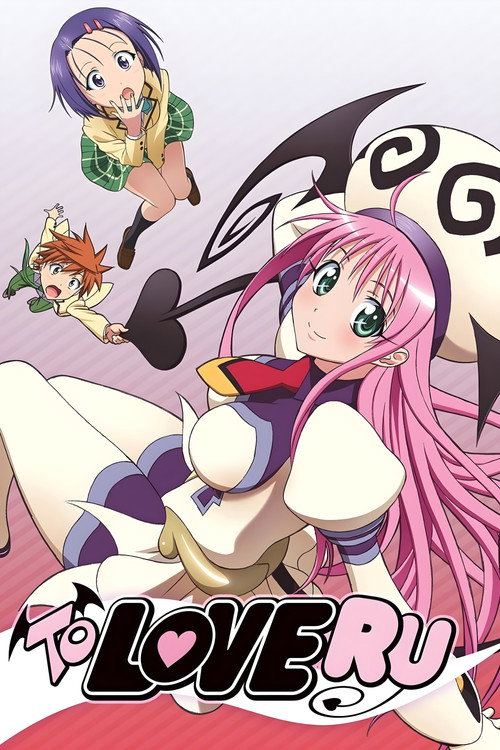
To Love Ru follows Yuuki Rito, an extraordinarily shy high school student unable to confess his feelings to his long-time crush, Sairenji Haruna. His quiet life is violently upended when Lala Satalin Deviluke, the crown princess of the supreme galactic empire, crash-lands stark naked into his bathtub while fleeing an unwanted political marriage. Due to a series of comedic extraterrestrial misunderstandings, Rito accidentally proposes to Lala under Devilukean custom, thrusting an ordinary Earth teenager into the center of intergalactic politics, lethal alien suitors, and chaotic alien inventions.

As the series progresses through Motto To Love Ru, To Love Ru Darkness, and To Love Ru Darkness 2nd, the story expands far beyond a simple love triangle. Lala’s younger twin sisters, Momo and Nana, move into the Yuuki household, and Momo initiates a calculated mastermind plot known as "Operation Harem" to allow Rito to marry all the women who love him. Concurrently, cold bioweapon assassins like Golden Darkness (Yami) and Mea Kurosaki seek sanctuary on Earth, shifting the focus from purely episodic slapstick toward serialized sci-fi action and deep emotional bonds. Across four seasons, the franchise evolves into a sprawling tale of an ever-expanding household where cosmic chaos and genuine affection gradually forge an unconventional family.
Core Meaning

Through its grand spectacle of alien tech and romantic misunderstandings, To Love Ru conveys that unconditional empathy, moral integrity, and patient kindness possess the power to neutralize destruction and bridge vast divides. Rito Yuuki lacks cosmic powers or martial prowess, yet his unwavering consideration for others transforms deadly bio-engineered weapons into compassionate humanized individuals and softens autocratic galactic royalty. The creators illustrate that love and emotional warmth are not rigid, zero-sum competitions, but expanding spaces capable of providing belonging to anyone seeking refuge from trauma or oppressive expectations.

Thematic DNA

Empathy and Redemption over Destructive Programming 30%
Polygamous Equilibrium vs. Traditional Monogamy 25%
Technological Chaos and Forced Proximity 20%
Autonomy and Freedom from Predestined Roles 15%
Adolescent Libido and Moral Restraint 10%

Empathy and Redemption over Destructive Programming

The narrative continually explores how genuine warmth dismantles violent intent. Bioweapons engineered solely for assassination—such as Golden Darkness (Yami), Mea Kurosaki, and Nemesis—arrive with cold, destructive directives. Through exposure to Earth’s peaceful culture and Rito's self-sacrificing protection, each weapon slowly abandons her lethal directive in favor of quiet domesticity and personal freedom.

Polygamous Equilibrium vs. Traditional Monogamy

Starting in Motto and dominating Darkness, the show moves away from standard romantic selection toward Momo’s "Harem Plan". The series questions traditional romantic tropes by examining whether an earnest, non-jealous equilibrium can exist where no girl's feelings are rejected or invalidated.

Technological Chaos and Forced Proximity

Lala’s alien gadgets act as physical manifestations of unpredictable fate. Inventions like teleportation devices, gender-bending rays, and sticky glues constantly breach personal boundaries, forcing characters out of their social shells and triggering honest emotional responses beneath comedic embarrassment.

Autonomy and Freedom from Predestined Roles

Nearly every major alien character flees a rigid, pre-determined existence. Lala runs away from political arranged marriage; Yami flees her life as an assassin-for-hire; Momo and Nana escape galactic court expectations. Earth serves as a sanctuary where individuals redefine their identity on their own terms.

Adolescent Libido and Moral Restraint

Rito’s constant "Lucky SuKebe" accidents subject him to overwhelming physical temptation. His struggles highlight the tension between raw adolescent desire and moral respect for women, emphasizing that true maturity lies in maintaining honor and self-control even under absurdly provoking circumstances.

Character Analysis

Rito Yuuki

Akeno Watanabe

Archetype: Reluctant Hero / Accidental Harem Lead Key Trait: Extreme moral integrity paired with uncanny "Lucky SuKebe" clumsiness.

Motivation

To live a peaceful human life, confess honestly to Haruna, and ensure everyone around him stays safe and happy.

Character Arc

Begins as a timid, panic-prone high school boy unable to talk to his crush. Over four seasons, he evolves into a courageous emotional core who willingly places his life on the line to shield galactic princesses and assassins alike from harm.

Lala Satalin Deviluke

Haruka Tomatsu

Archetype: Energetic Alien Princess / Genki Girl Key Trait: Unbounded cheerful optimism and genius technological intuition.

Motivation

To create wild inventions, escape imperial control, and give unconditional love to Rito.

Character Arc

Starts as a chaotic fugitive who claims Rito as her fiancé on a whim to avoid arranged marriage. Her impulsive fondness transforms into selfless, deep romantic devotion; she learns to understand Rito’s human feelings and willingly supports Momo’s vision so Rito can be happy without hurting anyone.

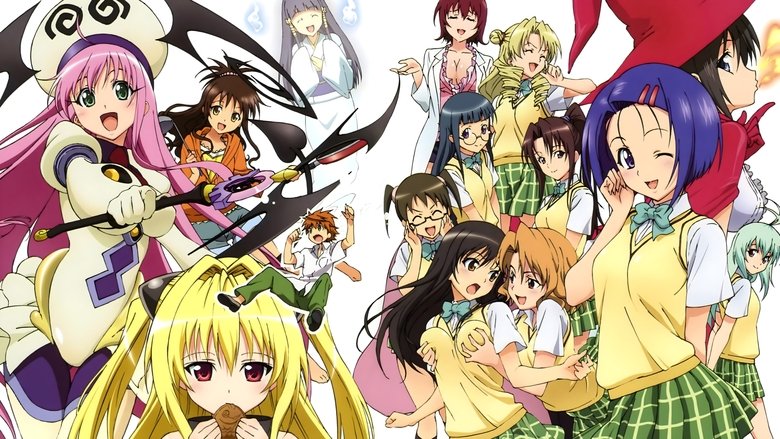
All 5 characters and cast

Symbols & Motifs

Peke (The Costume Robot)

Meaning:

Symbolizes Lala’s otherworldly flexibility and her outer social identity; when Peke runs out of energy, Lala’s regal alien barrier vanishes, leaving her completely exposed.

Context:

Lala’s sentient dress-making robot normally sits on her hair as a ribbon.

Taiyaki (Fish-Shaped Cake)

Meaning:

Symbolizes her humanization. Accepting taiyaki from Rito marks her transition from a cold, hired killer into a peaceful member of the community who finds joy in mundane pleasures.

Context:

Yami’s favorite Earth snack.

The Devilukean Tail

Meaning:

Symbolizes high galactic status and absolute physiological vulnerability; touching the tail induces intense, uncontrollable sensation, serving as a motif for ultimate intimacy and loss of emotional defense.

Context:

A physical trait shared by alien royalty.

Golden Hair / Transformable Blades

Meaning:

Symbolizes her traumatic history as a biological weapon. As she settles on Earth, her hair shifts from forming lethal blades to performing everyday tasks like holding books or drinking tea, reflecting her emotional reclamation.

Context:

Yami’s nanotech weapons.

The School Rooftop

Meaning:

Symbolizes equal footing, peace, and the warmth of ordinary Earth high school life away from space battles and royal duties.

Context:

A visual sanctuary where human teenagers and alien refugees gather.

Memorable Quotes

「ハレンチなっ!」
— Yui Kotegawa

Context

Spoken repeatedly across all seasons whenever lewd accidents occur (e.g., To Love Ru Season 1 Episode 7; Motto Episode 1).

Meaning

Yui’s signature catchphrase whenever Rito stumbles into accidental lewd situations. It symbolizes strict human moral rules pushing back against alien chaos, evolving into an affectionate running gag as Yui herself falls for Rito.

「えっちなのは嫌いです」
— Golden Darkness / Yami

Context

Spoken throughout the show whenever Rito accidentally lands on her (e.g., To Love Ru Season 1 Episode 6; Darkness Episode 1).

Meaning

Yami’s defense mechanism against physical intimacy and emotional vulnerability. It highlights her struggle to reconcile her cold weapon past with embarrassing Earth situations.

All 5 quotes

Episode Highlights

The Girl Who Fell From The Sky

S1E1

Premiere episode. Lala crashes into Rito's bathtub, causing an accidental proposal due to alien customs.

Significance:

Establishes the core sci-fi/harem premise, character dynamics, and slapstick tone.

The Alien Assassin

S1E6

Introduces Golden Darkness (Yami) as a hired killer targeting Rito. Rito responds with kindness and taiyaki rather than violence.

Significance:

Yami breaks her contract and settles on Earth, laying the foundation for her redemption arc and the Darkness sub-series.

Once Again from Here / Bathroom War / Tick Tock Tick Tock, the Sound of Love♡

S2E1

Soft reboot of the anime adaptation style, dropping Season 1 filler to strictly follow manga chapters. Introduces Momo and Nana moving into Rito's house.

Significance:

Upgrades visual pacing and sets up Momo as a central driving force.

Prologue ~Commence Project~

S3E1

Season 3 premiere. Momo formally initiates "Operation Harem," while bio-weapon assassin Mea Kurosaki appears to pull Yami back into their dark past.

Significance:

Shifts the series toward darker sci-fi lore and strategic harem planning.

A Room ~True Feelings~

S3E12

Season 3 Finale. Mastermind Nemesis reveals herself, seeking to unlock Yami's dormant "Darkness" form. Rito steps up to protect both Yami and Mea.

Significance:

Strengthens the bonds among Rito, Yami, and Mea, forcing Nemesis into temporary coexistence with them.

True Transformed ~Darkness Unleashed~

S4E12

Yami’s internal programming is forced into "Darkness Mode"—an unstoppable weapon state that threatens her friends.

Significance:

Reaches the dramatic peak where harem comedy and high-stakes action collide.

Bright Future ~Thank You~

S4E14

TV Anime Finale. Rito risks himself to overload Yami's emotionless state with intense bashfulness, snapping her back to her normal self.

Significance:

Concludes the overarching anime narrative, resolving Yami’s bioweapon trauma and bringing the core cast together.

Philosophical Questions

Can an entity engineered solely for destruction rewrite its own purpose?

Explored through Yami, Mea, and Nemesis, who challenge their bio-engineered programming to choose peace over destruction.

Is romantic love strictly a zero-sum game, or can affection expand harmoniously?

Explored via the conflict between Momo’s Harem Plan and Haruna’s traditional monogamous view of love.

How does galactic power reconcile with human morality?

Explored as the almighty Devilukean Royal Family willingly defers to Rito’s humble human values and sense of responsibility.

Alternative Interpretations

Satire of Harem Indecision: Momo’s "Harem Plan" can be read as a meta-critique of standard harem anime where the protagonist avoids making a choice. Rather than dragging out romantic frustration, the series presents a structured, alien solution—polygamy—challenging conventional monogamous tropes.

Full ending explanation

Cultural Impact

Debuting in 2008, To Love Ru arrived during the height of late-2000s harem anime. It inherited the alien-fiancée trope established by Rumiko Takahashi’s Urusei Yatsura, but pushed physical comedy and ecchi fanservice further than previous mainstream Shonen Jump adaptations.

The franchise proved that ecchi harem series could successfully transition from basic slapstick into serialized sci-fi action with high visual fidelity. Its production approach influenced later series like High School DxD and Trinity Seven.

Season 1 received mixed reactions due to heavy filler content. Motto received praise for sticking faithfully to the source manga. Darkness and Darkness 2nd were widely praised by fans of the genre for their visual art, darker sci-fi lore, and character arcs for Yami and Momo.

Audience Reception

Evolution of Opinion: Viewers initially dismissed Season 1 due to heavy anime-original filler. However, sentiment shifted positively with Motto’s faithful manga adaptations. By Darkness and Darkness 2nd, audience praise peaked, celebrating the studio's visual design, action choreography, and emotional payoff in Yami's story arc.

Praised Aspects: Distinctive character designs, top-tier voice acting, strong visual direction in Darkness, and genuine character development for Yami and Momo.

Main Points of Criticism: Early season filler, Rito's extreme bashfulness in early episodes, heavy TV broadcast censorship, and over-reliance on accidental physical mishaps.

Overall Verdict: Widely regarded as a landmark franchise in the harem/ecchi genre that successfully expanded beyond simple comedy to deliver a compelling narrative.

Interesting Facts

  • Production Evolution at Studio Xebec: Season 1 relied on heavy broadcast censorship (light rays, steam) and over 50% anime-original filler. By Motto and Darkness, Xebec overhauled its production line, utilizing uncensored AT-X broadcasts and home video releases to set new standards for high-budget ecchi animation.
  • Dual-Role Voice Performance: Voice actress Akeno Watanabe voiced both male protagonist Rito Yuuki and his female gender-bent persona, Riko Yuuki.
  • Manga Author's Personal Circumstances: Illustrator Kentaro Yabuki went through a public divorce and custody battle during the original manga's run in Weekly Shōnen Jump, contributing to the abrupt conclusion of the original series before it rebooted as To Love Ru Darkness in Jump Square.
  • Reused Designs from Black Cat: Creators Saki Hasemi and Kentaro Yabuki directly reused character concepts from Yabuki's earlier manga Black Cat. Yami is an expy of Eve, Tearju Lunatique shares her design and name with Black Cat's Tearju, and secondary characters like Kyouko Kirisaki and Kuro are direct references.
  • Directorial Shift Under Atsushi Otsuki: Director Takao Kato focused Season 1 on light, episodic comedy. When Atsushi Otsuki took over starting with Motto, he introduced cinematic camera framing, shadow work, and focused narrative arcs.

Easter Eggs

Black Cat Weaponry & Clothing

The handgun "Black Hades" wielded by assassin Kuro is a direct homage to Train Heartnet’s revolver "Hades" in Black Cat. Additionally, background art shows Lala playing an arcade game dressed as Train Heartnet.

The Principal's Pop-Culture Cameos

Sainan High's unnamed perverted principal frequently dresses up in disguises referencing stealth action video games (like Metal Gear) and ninja media to creep up on students.

Magical Kyoko (Mahou Shoujo Kyoko)

Kyouko Kirisaki plays an in-universe TV magical girl heroine. Characters regularly watch her show on TV, buy her merch, or attend her live stage shows, blurring real-life magical girl tropes with in-universe pop culture.

Demonological Naming Schemes

Planet names and royal families draw directly from demonology (Deviluke from Devil/Lucifer, Memory from Mephisto), combined with classic 1980s space-opera sci-fi tropes.

Frequently Asked Questions

Explore More About This Movie

Dive deeper into specific aspects of the movie with our detailed analysis pages

Comments (0)

Leave a comment

No comments yet. Be the first to share your thoughts!

Similar Movies