Skip to content
Soul Eater
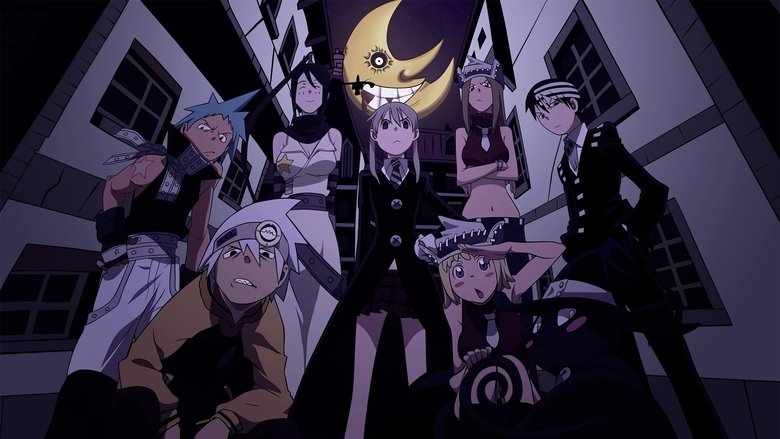
A gothic carnival of scythes and grinning moons, where teenage meisters and their living weapons dance on the edge of madness, their souls resonating like jazz under a sky that bleeds.
Soul Eater

Soul Eater

ソウルイーター

"A sound soul dwells within a sound mind and a sound body."

07 April 2008 — 30 March 2009 Japan 1 season 51 episode Ended 7.8 (372)

Cast: Chiaki Omigawa, Koki Uchiyama, Yumiko Kobayashi, Kaori Nazuka, Mamoru Miyano

Animation Sci-Fi & Fantasy Action & Adventure Comedy Fear, Madness and Courage Partnership and Soul Resonance Order vs. Chaos (Symmetry and Imperfection) Coming of Age Death as Guardian, Not Destroyer

Overview

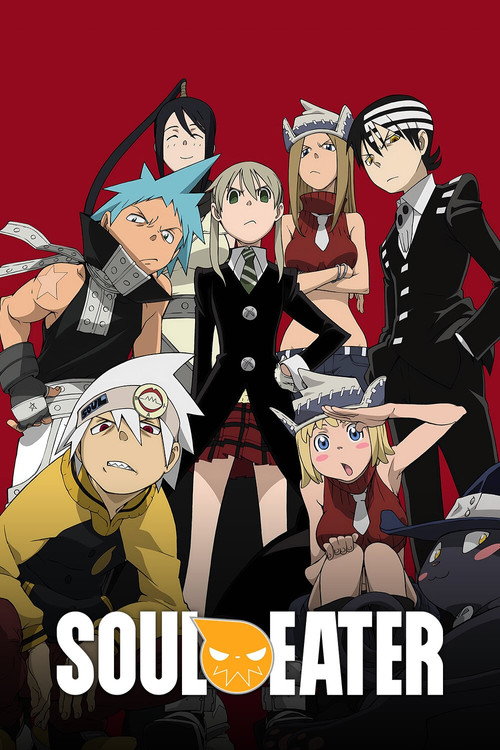
Soul Eater is set in Death City, home of the Death Weapon Meister Academy (DWMA). The school is run by the Grim Reaper himself, Lord Death, and it trains students to protect the peace of the world. The students are paired up: a meister works with a weapon, a partner who can turn into a scythe, a blade or a pair of pistols. Their job is to hunt down corrupted human souls before those souls grow into a Kishin, a god of madness.

The story follows three teams. Maka Albarn fights with her scythe partner Soul Evans. The loud, self-proclaimed "big star" Black☆Star fights with the calm Tsubaki. Death the Kid, Lord Death's son and a young man obsessed with symmetry, fights with his pistol partners. The early episodes play as episodic monster hunts full of slapstick. The plot then widens into a conflict with witches and a conspiracy that threatens to release an ancient terror sealed beneath the academy.

The anime was produced by Bones for the studio's 10th anniversary. It ran for 51 episodes from April 2008 to March 2009, while Atsushi Ohkubo's manga was still being serialized. As a result the series eventually leaves the source material and tells its own version of the fight between courage and madness.
Core Meaning

At its core, Soul Eater is about how fear and courage relate to each other. Its villain stands for madness born of fear: a paranoid wish to shut out the unknown and every possible future pain. Its heroes answer that fear with bravery, not with power. The series argues that fear is a normal part of being human and cannot be avoided. The answer is not to get rid of fear but to act in spite of it.

The show also suggests that a soul becomes strong through resonance with other people: trust between partners, friendship, and accepting another person's flaws. Maka and Soul's partnership, Kid's struggle with imperfection, and Black☆Star's need to grow up all make the same point. A human soul is at its strongest when it is connected to others, not when it tries to be complete on its own.

Thematic DNA

Fear, Madness and Courage 30%
Partnership and Soul Resonance 25%
Order vs. Chaos (Symmetry and Imperfection) 20%
Coming of Age 15%
Death as Guardian, Not Destroyer 10%

Fear, Madness and Courage

Madness in the series comes from fear, and it spreads like a contagion from the Kishin. Early episodes treat it as a monster to hunt. Over time it becomes something personal that seeps into the heroes, such as Soul's black blood. The series ends by naming bravery as the one real answer to it.

Partnership and Soul Resonance

Meisters and weapons can only fight at full strength when their souls resonate. The partnerships start out full of bickering. They grow into real trust, and the growth is shown through stronger and stronger combined attacks. Critics noted, however, that the anime's ending moves away from the team and toward a few individuals.

Order vs. Chaos (Symmetry and Imperfection)

Kid's obsession with symmetry and Lord Death's rule over the world are the order side of the story. Witches and madness are the chaos side. Kid's comic breakdowns about asymmetry work as a small-scale version of the larger question: can a perfectly balanced world exist, and should it?

Coming of Age

These are teenagers at school. They learn humility, as Black☆Star has to, they deal with their parents' mistakes, as Maka does with her father, and they figure out who they are when they are not in a school uniform or a combat role.

Death as Guardian, Not Destroyer

The Grim Reaper is written as a goofy, cheerful headmaster who protects the world. This flips the usual image of death. In this world, the death of souls that have gone bad is what keeps the living safe.

Character Analysis

Maka Albarn

Chiaki Omigawa

Archetype: Hero Key Trait: Bravery

Motivation

At first, to live up to her mother's legacy and prove herself. Later, to protect her friends and stand against madness.

Character Arc

She begins as a strict top student who is determined to turn Soul into a Death Scythe, partly to outdo her womanizing father. Over the series she learns to trust her partner and her own soul-perception. In the anime's ending she faces the Kishin with nothing but raw courage. The series frames this as her defining quality.

Soul Evans

Koki Uchiyama

Archetype: Loyal partner / cool rebel Key Trait: Effortless cool masking loyalty

Motivation

To become a Death Scythe for Maka, and later to protect her even at personal cost.

Character Arc

A laid-back scythe who is obsessed with being "cool." He hides an inner struggle with the black blood and the madness it invites. His arc is about resisting that temptation and becoming a partner Maka can rely on completely.

All 5 characters and cast

Symbols & Motifs

The grinning Sun and blood-dripping Moon

Meaning:

The world itself is shown as a manic, half-mad place, with madness built into the sky over Death City.

Context:

Death City has a giant laughing sun during the day. At night its sky has a moon with a devilish, blood-dripping grin. This is one of the series' best-known visual signatures.

Kishin eggs and souls

Meaning:

The corruption of humanity is made visible. Each soul collected is both a moral judgment and a step toward growing up.

Context:

A weapon becomes a Death Scythe by eating 99 Kishin-egg souls and one witch's soul. The first target shown is Jack the Ripper.

Symmetry

Meaning:

Perfect order, and the neurotic impossibility of achieving it.

Context:

Death the Kid's compulsion, played as a running gag. It also points to his role as Lord Death's heir and the one meant to keep the world balanced.

Black Blood and the Red Room

Meaning:

Madness inside oneself, the temptation of power at the cost of sanity.

Context:

Soul's inner world, shaped by the black blood, is a jazz-soaked room that references the Red Room from Twin Peaks.

The Scythe

Meaning:

The tool of Death, reframed as a partner and friend instead of an instrument of killing.

Context:

Soul's weapon form. Maka's goal is to turn him into a Death Scythe for Lord Death, following in her mother's footsteps.

Memorable Quotes

All those things..... WHO GIVES A DAMN?!?!
— Maka Albarn

Context

The final battle with Asura, after he claims madness will always be born again for all kinds of reasons (anime finale).

Meaning

This is the thesis of the anime's ending: courage means refusing to let madness's reasoning rule you.

Pain in the present can be dealt with. It's imagining future pain that hurts us the most. It terrifies us.
— Asura

Context

Asura's reflection on fear during his confrontation with the heroes.

Meaning

This sums up the villain's philosophy: madness grows out of anticipated fear.

All 6 quotes

Episode Highlights

Episode 1 (series premiere)

S1E1

Introduces the Death Weapon Meister Academy, the meister and weapon system, and the main characters.

Significance:

Sets up the world's rules and the gothic-comedy tone the rest of the series builds on.

Episode 38 (point of divergence)

S1E38

After this episode the anime leaves the manga and continues with an original storyline.

Significance:

This is where the anime-original conclusion begins, and it is the root of most criticism about the ending.

Episode 51 (series finale)

S1E51

Maka confronts Asura. She rejects his arguments for madness, and her friends name her defining quality: bravery.

Significance:

An ending unique to the anime, praised for its message and criticized for favoring a single character over the team.

Philosophical Questions

Is fear the root of all madness?

Asura argues that imagined future pain terrifies people more than present pain. The series presents madness as fear taken to its extreme and asks whether courage is the only real answer.

Can perfect order exist, or is imperfection necessary?

Kid's comic obsession with symmetry mirrors the larger conflict between Lord Death's order and the chaos of witches and madness.

Is it right to consume evil souls to become stronger?

The DWMA's whole system depends on harvesting corrupted souls. That raises questions about the ethics of power, even when it is used to protect people.

How It Ends

Alternative Interpretations

Ending as a thematic triumph: Some viewers see Maka's victory through pure bravery as the natural end point of the show's fear-versus-courage theme. Asura is defeated by the exact quality he lacks.

Full ending explanation

Cultural Impact

Bones made Soul Eater for its 10th anniversary, at a time when the studio was widely seen as at its peak. The series became known for a distinctive gothic look that is often compared to Tim Burton, mixing Halloween imagery with shōnen action and slapstick comedy.

Like Bones' first Fullmetal Alchemist anime, it ran into the problem of an unfinished manga and had to write its own ending. This makes it a common example in discussions of anime-original endings. The show did well in the West, especially through its airing on Cartoon Network, and it became a gateway series for many fans. Its world later expanded with the spin-off Soul Eater Not!. Ohkubo's signature character features, such as jagged teeth, carried over into his later series Fire Force, which has its own connections to Soul Eater.

Audience Reception

Audiences received the series warmly, especially in the West through Cartoon Network. Viewers praised its stylish gothic art, strong production values, energetic action and heart, and many remember it as a uniquely exciting action show from Bones' peak era.

The main criticism is the anime-original ending, which starts after episode 38. Many viewers felt it undercut the teamwork themes by focusing on a few characters, and some fans point to the manga as the more complete version of the story. The overall verdict is a well-loved, highly rewatchable action series with a divisive ending.

Interesting Facts

  • The anime was made as Studio Bones' 10th anniversary commemorative project.
  • It was directed by Takuya Igarashi and co-produced by Bones, Aniplex, Dentsu, Media Factory and TV Tokyo.
  • The 51 episodes aired on TV Tokyo from April 7, 2008 to March 30, 2009.
  • The anime follows the manga until about episode 38 and then switches to an original storyline, because Atsushi Ohkubo's manga was still being serialized.
  • Character design was led by Yoshiyuki Ito and art direction by Norifumi Nakamura.
  • Conceptual designs came from Shinji Aramaki, who worked on 1980s classics such as Bubblegum Crisis and Megazone 23.
  • The opening theme for the first 30 episodes is "Resonance" by T.M.Revolution.
  • Funimation licensed the series for North America, and it later became popular on Cartoon Network.

Easter Eggs

Sid Barrett is named after Syd Barrett

A reference to Pink Floyd's former frontman. It is one of several music references in the character names.

Kim Diehl is named after Kim Deal

A nod to the Pixies' bassist.

Soul's mindscape resembles the Red Room

The jazz-filled room created by the black blood references the Red Room from David Lynch's Twin Peaks.

Jack the Ripper and Al Capone as Kishin eggs

Real historical criminals appear as corrupted souls. Jack the Ripper is the first Kishin egg shown, and Black☆Star and Tsubaki hunt Al Capone.

Death the Kid and Billy the Kid

Kid's name and his gunslinger fighting style are probably a nod to the Old West outlaw.

The Enigma of Amigara Fault

The series references Junji Ito's well-known horror short story.

Frequently Asked Questions

Explore More About This Movie

Dive deeper into specific aspects of the movie with our detailed analysis pages

Comments (0)

Leave a comment

No comments yet. Be the first to share your thoughts!

Similar Movies