Skip to content
Edge of Tomorrow
A mud-and-steel science-fiction war film that turns death into a rehearsal. One cowardly man keeps waking into the same doomed morning until fear wears into grit and hopelessness into a stubborn, rueful hope.
Edge of Tomorrow

Edge of Tomorrow

"Live. Die. Repeat."

27 May 2014 United States of America 114 min 7.6 (14,810)

Director: Doug Liman

Cast: Tom Cruise, Emily Blunt, Brendan Gleeson, Bill Paxton, Jonas Armstrong

Action Science Fiction Growth through failure Fate versus choice Cowardice, courage and the making of a soldier Isolation and unshared memory War as a machine
Budget: $178,000,000
Box Office: $370,541,256

Overview

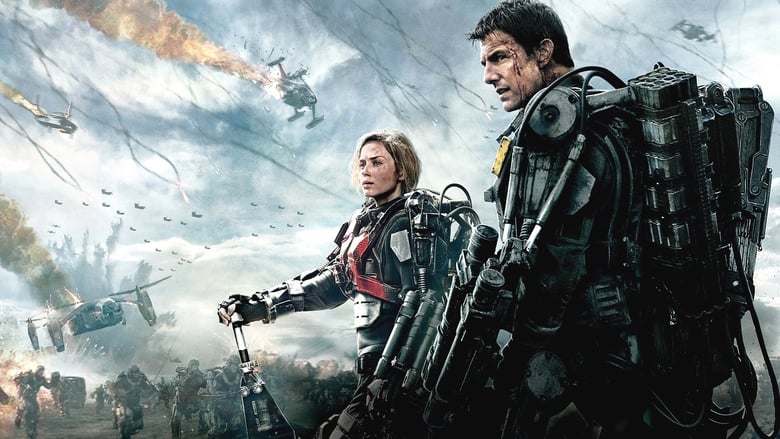
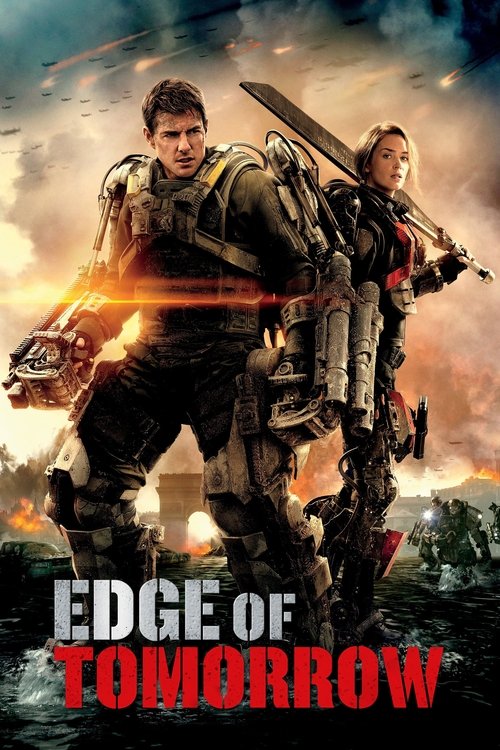
In the near future, Earth is under attack by a fierce alien race called the Mimics. Bill Cage (Tom Cruise) is a smooth-talking officer who has never seen combat. He is thrown onto the front line and sent onto a beach in France as part of a huge counteroffensive, with almost no training and no idea how to use his armored exosuit.

Cage dies within minutes. Then he wakes up on the morning before the battle, and it happens again, and again. Caught in a time loop, he finds an ally in Rita Vrataski (Emily Blunt), a legendary soldier who seems to understand what is happening to him. Together they use each repeated day to train, experiment and search for a way to defeat the enemy.

Doug Liman directed the film, adapting Hiroshi Sakurazaka's Japanese novel All You Need Is Kill. It mixes large-scale war spectacle with the dark comedy of a man who has to die hundreds of times to become the soldier he never wanted to be.
Core Meaning

The film treats growth as repetition. The heroism it shows is built one painful failure at a time, not something a person is born with. The loop takes away Cage's fear and ignorance and slowly forges a hardened warrior out of a coward. The story asks what we could become if we were forced to learn from every mistake, and what that knowledge costs.

The loop is also a place of loneliness. Cage grows closer and closer to Rita, but she forgets every day they share. The ending has what critics call a cosmic irony: Cage is finally free, but the relationship they built across hundreds of unseen timelines exists only in his memory. The film's point is that sacrifice and persistence matter even when nobody else knows about them.

Thematic DNA

Growth through failure 30%
Fate versus choice 20%
Cowardice, courage and the making of a soldier 20%
Isolation and unshared memory 15%
War as a machine 15%

Growth through failure

Every death teaches Cage something: a step to dodge, a soldier to save, a route to take. The live, die, repeat structure turns a coward into an expert. The film shows this through repetition and montage rather than one big moment of change.

Fate versus choice

The loop makes the same day look fixed, but Cage finds that small choices change the outcome. The characters have to face their past actions and decide how to shape a future that seems already decided.

Cowardice, courage and the making of a soldier

At first Cage is a PR man who tries to talk his way out of combat. Farell's speech about battle as the Great Redeemer is played with irony, but the film does let Cage earn a real, hard-won courage.

Isolation and unshared memory

Only Cage remembers each loop. Every morning Rita meets him as a stranger, so the connection between them is lopsided and fragile. This gives the romance a melancholy undertone.

War as a machine

Faceless alien swarms, mass beach landings and heavy exosuits show modern war as an industrial grinder that uses up soldiers. The staging deliberately recalls the Normandy landings.

Character Analysis

Bill Cage

Tom Cruise

Archetype: Reluctant hero / coward turned warrior Key Trait: Adaptability learned through endless repetition

Motivation

At first he wants to survive and escape. Later he wants to win the war and protect Rita.

Character Arc

He starts arrogant and clueless, a media officer who tries to avoid combat. Each reset strips away his fear and ignorance until he becomes a hardened warrior who is willing to sacrifice himself.

Rita Vrataski

Emily Blunt

Archetype: Warrior mentor Key Trait: Ruthless, pragmatic resolve

Motivation

To end the war by using the loop the way she once did.

Character Arc

She is a legendary war hero who has lived through a time loop herself. She trains Cage without mercy, and over the loops she moves from treating him as a tool toward a guarded closeness she never remembers.

All 3 characters and cast

Symbols & Motifs

The reset (waking up)

Meaning:

A second chance, and also a punishment. It stands for learning, trauma and the grind of self-improvement.

Context:

Each time Cage dies he wakes on the morning before the battle. The film makes the waking scene familiar, then funny, then painful.

The exosuit

Meaning:

The human body turned into a weapon. It fits Rita's line that Cage is not a soldier but a weapon.

Context:

Cage can't even turn off the safety at first. By the end he wears the suit like a second skin.

The beach in France

Meaning:

An echo of D-Day. It stands for collective sacrifice and the historical memory of war.

Context:

The central battle is fought again and again on the same shoreline. The loop turns the beach into a stage Cage learns by heart.

The Omega

Meaning:

The hive mind that controls time. It stands for an enemy that cannot be beaten by force alone, only by knowledge and sacrifice.

Context:

Destroying it is the heroes' final goal. At the climax its power to reset the day is turned back on itself.

Rita's nickname, "Full Metal Bitch"

Meaning:

The legend soldiers build around a hero. It hides a person carrying a secret burden.

Context:

The title comes directly from Rita Vrataski's character in the source novel.

Memorable Quotes

Come find me when you wake up!
— Rita Vrataski

Context

She says it on the battlefield just before she is killed, as if she knows something Cage doesn't.

Meaning

This line starts the partnership and hints that Rita knows the secret of the loop. It turns Cage's curse into a mission.

Battle is the Great Redeemer. It is the fiery crucible in which true heroes are forged. The one place where all men truly share the same rank, regardless of what kind of parasitic scum they were going in.
— Master Sergeant Farell

Context

Farell gives the speech to his squad. Because of the loop, Cage hears it over and over.

Meaning

The speech is played ironically, but it states the film's arc: Cage really is forged in battle, just through hundreds of deaths.

All 3 quotes

Philosophical Questions

Is a person defined by their memories or their actions?

Cage becomes a new man through experiences no one else remembers. The film asks whether growth only one person witnessed still counts as real.

Can we escape fate?

The same day repeats, but small choices change the outcome. The film suggests fate can be bent through knowledge and persistence.

What does repeated death do to a person?

Cage becomes numb to dying, and sometimes accepts losing Rita to move the plan forward. The film shows how cold calculation can grow out of limitless second chances.

Is courage learned or innate?

Cage's heroism is built step by step through repetition. That challenges the romantic idea of the born hero that Farell preaches.

How It Ends

Alternative Interpretations

The video-game reading: The loop works like save points and respawns. Cage \"learns the level\" through trial and error, which some read as a comment on how games teach mastery.A bittersweet ending: Some viewers see the final reset as a pure triumph. Others focus on the cosmic irony: Cage keeps every memory of his bond with Rita, and she has none.A mechanics debate: The Omega sends its own death 2...

Full ending explanation

Cultural Impact

The film came out in 2014, when Hollywood was relying more and more on existing properties. It adapted a Japanese light novel and brought the time-loop premise, best known from Groundhog Day, into a big-budget war film. It is often held up as one of the best uses of the structure, which critics have compared to video-game logic: die, respawn, try again.

Critics praised it heavily; Rotten Tomatoes' consensus called it \"gripping, well-acted, funny, and clever\" and proof that Tom Cruise could still carry a blockbuster. Its US box office was disappointing, but it earned about $381 million worldwide. Its reputation grew on home video, helped by renaming it after the tagline Live Die Repeat. Many now call it an underrated 21st-century science-fiction film, and continued talk of a sequel reflects that lasting interest.

Audience Reception

Critics and audiences both responded very well: Rotten Tomatoes lists 91% from critics and 90% from audiences. Viewers praised the clever, funny editing of the repeated deaths, the chemistry between Cruise and Blunt, Blunt's tough Rita, and Cruise playing against his usual image as a coward at first.

The most common criticism is the ending, which many find too neat and hard to square with the loop's rules. Some also say the Mimics and the final act in Paris are more generic than the inventive middle. The confusing marketing and title change are often blamed for its weak US opening. Overall, it is widely seen as one of the best original-feeling blockbusters of its decade and a cult favorite.

Interesting Facts

  • The film adapts the Japanese novel All You Need Is Kill by Hiroshi Sakurazaka.
  • Filming began in late 2012 at Warner Bros. Studios Leavesden outside London, with location work in Trafalgar Square and at Saunton Sands.
  • It was the first production at Leavesden after Warner Bros. finished a major refurbishment of the studio.
  • Hiroshi Sakurazaka visited the set and tried on one of the 35 kg exosuits.
  • The 'Normandy' beach scenes were mostly shot on the Leavesden backlot. Over four months, 1,300 tons of sand were shipped in, surrounded by an 1,800-foot green screen for CGI extensions.
  • Emily Blunt said the crew nicknamed the beach set 'the bitch' by the end of their seven weeks there.
  • Doug Liman wanted to call the film 'Live Die Repeat'. The studio released it as 'Edge of Tomorrow' and used his title as the tagline, which later became the name on home releases.
  • Nine companies worked on the visual effects.
  • Warner Bros. reportedly spent more than $100 million advertising the film.
  • The film grossed about $381 million worldwide on a budget of about $178 million. It was soft in the US but succeeded globally.

Easter Eggs

Rita's nickname 'Full Metal Bitch'

It is taken directly from Rita Vrataski's character in Sakurazaka's novel All You Need Is Kill, a nod to readers of the source material.

The beach assault on the coast of France

The landing on a French shoreline deliberately recalls the D-Day Normandy landings. The film calls it the Normandy beach, and it frames the alien war in the imagery of World War II.

Frequently Asked Questions

Explore More About This Movie

Dive deeper into specific aspects of the movie with our detailed analysis pages

Comments (0)

Leave a comment

No comments yet. Be the first to share your thoughts!

Similar Movies