Guardians of the Galaxy
A vibrant, irreverent space opera where cosmic outcasts find their rhythm, painting a kaleidoscopic vision of found family against a backdrop of galactic chaos.
Guardians of the Galaxy

Guardians of the Galaxy

"When things get bad, they'll do their worst."

30 July 2014 United States of America 121 min ⭐ 7.9 (28,968)
Director: James Gunn
Cast: Chris Pratt, Zoe Saldaña, Dave Bautista, Vin Diesel, Bradley Cooper
Action Adventure Science Fiction
Found Family Dealing with Loss and Trauma Redemption and Second Chances Rebellion Against Authority
Budget: $170,000,000
Box Office: $772,776,600

Overview

"Guardians of the Galaxy" introduces Peter Quill, also known as Star-Lord, an interstellar adventurer who was abducted from Earth as a child in 1988. In the far reaches of space, Quill steals a mysterious and powerful orb, making him the target of a galaxy-wide manhunt led by the formidable villain, Ronan the Accuser.

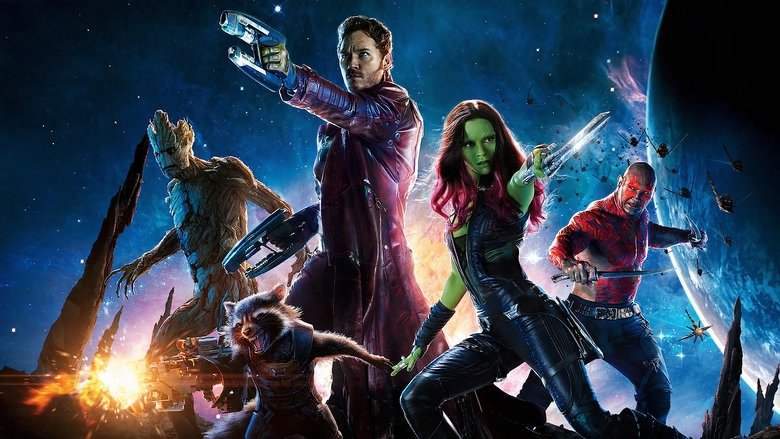
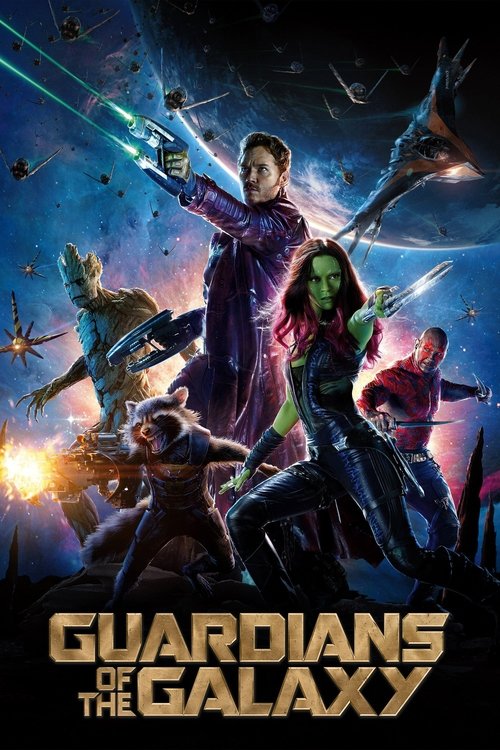
To evade Ronan, Quill is forced into an uneasy alliance with a quartet of eccentric misfits: Gamora, a deadly assassin with a troubled past; Drax the Destroyer, a vengeful warrior; Rocket, a genetically engineered, gun-toting raccoon; and Groot, a sentient, tree-like humanoid. Initially driven by selfish motives, this unlikely group must learn to trust each other to protect the orb, which they discover contains an Infinity Stone capable of immense destruction.

Their journey takes them from the pristine capital of the Nova Empire, Xandar, to the lawless mining outpost of Knowhere. The group, branding themselves the "Guardians of the Galaxy," must put aside their differences to stop Ronan from using the stone's power to annihilate an entire planet and threaten the universe, all while grooving to a nostalgic 1970s and '80s soundtrack from Quill's cherished mixtape.

Core Meaning

At its heart, "Guardians of the Galaxy" is a story about the formation of a non-traditional family among a group of broken individuals. Each character is a "loser," defined by a profound sense of loss: Peter Quill lost his mother, Gamora her family, Drax his wife and daughter, and Rocket his sense of identity. The film posits that people who have experienced deep loss can find solace and strength in one another, creating new, powerful bonds. It champions the idea that heroism isn't about perfection but about flawed individuals choosing to stand together for something greater than themselves. Director James Gunn framed the trilogy as being about the mother, the father, and the self, with this first installment focusing on the impact of Quill's mother and the creation of a new family unit. Ultimately, the film's core message is that connection, friendship, and shared purpose can heal deep wounds and empower outcasts to become saviors.

Thematic DNA

Found Family 40%
Dealing with Loss and Trauma 30%
Redemption and Second Chances 20%
Rebellion Against Authority 10%

Found Family

The central theme is the creation of a chosen family among outcasts. The five main characters are all deeply scarred by past trauma and loss, leaving them isolated. Quill is an orphan, Gamora an abused adopted daughter, Drax a widower, and Rocket a lonely genetic experiment. Through their shared adventure, they bicker and betray each other but ultimately form a powerful bond. Gamora's line, "I have lived most of my life surrounded by my enemies. I will be grateful to die among my friends," encapsulates this transformation. The film culminates in the ultimate expression of this theme when they physically join hands to share the immense power of the Infinity Stone, an act that would have destroyed any one of them alone.

Dealing with Loss and Trauma

Every member of the Guardians is defined by what they have lost. The film opens with the traumatic death of Peter's mother, a loss so profound he couldn't even take her hand. This event shapes his entire character, leaving him emotionally stunted and clinging to his mother's memory through her mixtape. Drax is driven solely by the murder of his family by Ronan. Rocket's cynical and abrasive personality stems from the trauma of being experimented on. The group explicitly bonds over this shared experience, with Quill stating, "I look around at us, you know what I see? Losers. I mean, like, folks who have lost stuff." Their journey to save the galaxy is also a journey of confronting and beginning to heal from their individual and collective grief.

Redemption and Second Chances

The film follows a group of criminals—a thief, two assassins, and a pair of bounty hunters—who become heroes. Each character is given a chance to move beyond their past. Gamora betrays her adoptive father, Thanos, and Ronan to do the right thing. Quill evolves from a self-serving rogue to a leader willing to sacrifice himself for others. The Nova Corps acknowledges their heroic turn by expunging their extensive criminal records, officially giving them a clean slate. The narrative argues that one's past actions do not have to define their future and that anyone is capable of redemption if they choose to fight for a cause greater than themselves.

Rebellion Against Authority

The film celebrates an anti-authoritarian spirit. The protagonists are all outlaws who exist on the fringes of society and operate outside the law. They are repeatedly imprisoned by or in conflict with established authorities like the Nova Corps. Their heroism is independent and self-motivated, contrasting with the more structured heroism of teams like the Avengers. The villain, Ronan, is also a rebel, a Kree fanatic who rejects a peace treaty made by his government. The film finds value in the chaotic, individualistic spirit of its heroes, suggesting that true morality comes from personal conviction rather than adherence to systemic rules.

Character Analysis

Peter Quill / Star-Lord

Chris Pratt

Archetype: Anti-Hero / The Rogue
Key Trait: Witty Irreverence

Motivation

Initially, his motivation is personal gain and survival. He lives by a loose code as a Ravager. This evolves into a desire to protect his new friends and, eventually, a sense of responsibility to prevent galactic catastrophe. His deeper, unconscious motivation is to find a place to belong and a family to replace the one he lost.

Character Arc

Peter Quill begins as a charming but emotionally stunted thief, using humor and bravado to mask the childhood trauma of his mother's death. His arc is about learning to move beyond his selfish instincts and embrace responsibility and connection. Initially motivated by profit, he learns to care for his new friends, risking his life to save Gamora and ultimately rallying the team to save Xandar. By finally taking Gamora's hand to wield the Infinity Stone, he completes a journey that began when he was unable to take his dying mother's hand, showing he has finally learned to face loss and forge new bonds.

Gamora

Zoe Saldaña

Archetype: The Reformed Killer
Key Trait: Deadly and Principled

Motivation

Her primary motivation is to atone for her past deeds and stop Ronan and Thanos from destroying more lives. She seeks freedom from her abusive father and a chance to define her own identity outside of his shadow. She is driven by a hidden moral compass that compels her to do the right thing, despite her upbringing.

Character Arc

Gamora starts as a feared assassin, the adopted daughter of the tyrant Thanos, seeking to escape her dark past. Her journey is one of redemption. She betrays Ronan and Thanos to prevent the Power Stone from falling into their hands. Over the course of the film, she learns to trust others, moving from a lone operative to a loyal member of a team. She sheds her reputation as a ruthless killer to become a hero, finding in the Guardians the family she never had and a cause worth dying for.

Drax the Destroyer

Dave Bautista

Archetype: The Avenger
Key Trait: Literal-Minded

Motivation

His sole motivation at the start is to kill Ronan the Accuser. This singular focus makes him unable to see the bigger picture. After Ronan's defeat, his motivation shifts to protecting his new family, though his quest for vengeance against Thanos remains.

Character Arc

Drax is introduced as a single-minded being consumed by grief and a literal-minded thirst for revenge against Ronan, who killed his family. His arc is about finding a new purpose beyond vengeance. While his initial attempts at revenge are reckless and endanger the group, he slowly learns the value of teamwork and friendship. He discovers a new family in the Guardians, and by the end, his desire for revenge is tempered by his loyalty to his friends. His declaration that the Guardians are his friends shows his evolution from an isolated avenger to a connected protector.

Rocket Raccoon

Bradley Cooper (voice)

Archetype: The Cynical Genius
Key Trait: Volatile and Tactical

Motivation

Rocket is motivated by a desire for money and a fierce, protective loyalty to Groot. Underneath his cynical exterior, he craves acceptance and a sense of belonging, which he has never had. He is also driven by a deep-seated insecurity about his origins, which fuels his defensive and aggressive behavior.

Character Arc

Rocket is a sarcastic, angry, and deeply wounded creature who pushes everyone away due to the trauma of being a lab experiment. His arc involves letting down his emotional walls and accepting that he is worthy of friendship. He cares deeply for Groot but is initially hostile to everyone else. Through the shared struggle, he learns to care for the other "losers" on the team. His tearful reaction to Groot's sacrifice reveals the depth of his capacity for love and connection, and his decision to stand with the team against Ronan marks his transformation from a selfish bounty hunter to a true Guardian.

Groot

Vin Diesel (voice)

Archetype: The Gentle Giant
Key Trait: Benevolent

Motivation

Groot's motivation is simple and pure: to protect his friends, especially Rocket. He acts as the moral and emotional anchor of the group, driven by an innate sense of kindness and loyalty that contrasts sharply with the cynicism of his companions.

Character Arc

Despite his limited vocabulary ("I am Groot"), Groot displays a clear and profound character arc. He begins as Rocket's loyal companion and muscle. Throughout the film, he demonstrates surprising gentleness and compassion, such as when he gives a flower to a small child. His arc culminates in the ultimate act of self-sacrifice, where he redefines his identity to include the entire team by saying "We are Groot." This act solidifies the group's bond and cements his role as the heart of the team. His rebirth as a sapling signifies renewal and the enduring spirit of their new family.

Symbols & Motifs

Peter Quill's Walkman and 'Awesome Mix Vol. 1'

Meaning:

The Walkman and the mixtape are Peter's last tangible connection to his mother, his childhood, and his home planet, Earth. The music itself symbolizes the emotional heart of the film, providing a nostalgic and ironic counterpoint to the cosmic action. It represents the love and humanity that Peter tries to protect and hide beneath his roguish exterior. By the end of the film, he finally opens his mother's last gift, "Awesome Mix Vol. 2," symbolizing his readiness to move forward from his grief while still holding onto his past.

Context:

Peter is introduced listening to the Walkman on Morag. He risks his life to retrieve it in the Kyln prison. The music is diegetic, playing a key role in many scenes, most notably the final confrontation where Peter distracts Ronan by singing and dancing to "O-o-h Child," weaponizing his mother's music to save the galaxy.

The Orb / Power Stone

Meaning:

The Orb is the film's MacGuffin, but as the container for the Power Stone, it symbolizes immense, destructive power and the corrupting influence of that power. Ronan seeks it for vengeance and genocide, while Thanos desires it for ultimate control. For the Guardians, it represents a responsibility they are initially unwilling to accept. Their ability to collectively withstand its energy symbolizes the strength they find in their unity and friendship, turning a weapon of destruction into a tool of salvation.

Context:

The entire plot is driven by the theft and pursuit of the Orb. Its power is demonstrated by the Collector, who explains the origin of the Infinity Stones. The climax revolves around the Guardians wresting control of the Stone from Ronan and containing its power by joining hands.

Groot's Sacrifice and Rebirth

Meaning:

Groot's transformation from a full-grown being to a sapling symbolizes sacrifice, hope, and the cyclical nature of life. His selfless act of creating a protective cocoon around his friends, declaring "We are Groot," signifies the team's final unification into a single entity—a family. His rebirth as a dancing sapling represents new beginnings and the enduring spirit of the Guardians. It ensures that even in the face of death and destruction, life and joy can find a way to grow again.

Context:

During the crash of Ronan's ship, the Dark Aster, Groot extends his limbs to form a protective sphere around the team, sacrificing himself in the process. Later, Rocket pots a single surviving twig, which begins to grow into a new Groot, seen dancing in a pot during the film's closing scenes.

Memorable Quotes

We are Groot.

— Groot

Context:

As Ronan's ship, the Dark Aster, is crashing, Groot forms a protective cocoon of his branches around the team to shield them from the impact. As Rocket tearfully asks him why he's sacrificing himself, Groot delivers this powerful line before impact.

Meaning:

This is the moment the five individuals truly become a team and a family. Groot alters his signature phrase, "I am Groot," to include everyone, signifying that their identities are now intertwined. It's a statement of ultimate sacrifice and love, encapsulating the film's central theme of found family.

Nothing goes over my head. My reflexes are too fast, I would catch it.

— Drax the Destroyer

Context:

After Rocket calls Peter's plan "12% of a plan," he explains to the group that metaphors will go over Drax's head because his species is completely literal. Drax, overhearing this, takes offense and delivers this line with complete sincerity.

Meaning:

This quote perfectly and hilariously illustrates Drax's key character trait: his absolute literal-mindedness. His inability to understand metaphors provides a constant source of humor and highlights the cultural and psychological differences between the members of the team, forcing them to learn how to communicate in new ways.

You said it yourself, bitch. We're the Guardians of the Galaxy.

— Peter Quill

Context:

As Peter and the other Guardians join hands to contain the power of the Infinity Stone, a shocked Ronan screams, "You're mortal! How?" Peter replies with this line just before they unleash the stone's power and destroy Ronan.

Meaning:

This is the triumphant moment Peter Quill fully embraces his new identity and the identity of his team. He throws Ronan's earlier mocking words back at him, claiming the title not as an insult but as a badge of honor. It signifies the completion of their journey from a "bunch of jackasses standing in a circle" to a legendary hero team.

I have lived most of my life surrounded by my enemies. I will be grateful to die among my friends.

— Gamora

Context:

When Peter presents his dangerous, near-suicidal plan to stop Ronan, Rocket protests that he's asking them to die. Gamora responds with this line, affirming her loyalty to the group and her willingness to fight alongside them, no matter the cost.

Meaning:

This quote marks a pivotal turning point for Gamora, who has spent her life as a tool for the galaxy's most evil beings. It's the first time she acknowledges having friends and a sense of belonging. The line powerfully expresses the theme of found family, highlighting how much this newfound connection means to someone who has only known betrayal and isolation.

What should we do next? Something good, something bad? A bit of both?

— Peter Quill

Context:

In the final scene aboard the Milano, after having their records expunged, Peter asks the team this question. Gamora smiles and tells him they'll follow his lead, to which he replies, "A bit of both," cementing their new dynamic as they fly off into space.

Meaning:

This final line encapsulates the group's identity as roguish anti-heroes. They have saved the galaxy, but they are not traditional, squeaky-clean heroes. They retain their edge and penchant for mischief. It promises future adventures that will walk the line between noble heroism and their outlaw roots, perfectly setting the tone for their future as a team.

Philosophical Questions

Can a new family be forged from shared trauma and loss?

The film deeply explores this question by assembling a team of individuals who are all, as Peter Quill says, "losers" who have "lost stuff." Each character is fundamentally broken by their past: Quill by the loss of his mother, Drax by the murder of his family, Gamora by her abusive upbringing, and Rocket by the torturous experiments that created him. The film argues that this shared experience of loss, rather than being a permanent weakness, can become the foundation for a profound and powerful bond. Their healing process begins not in isolation but when they start to rely on and care for one another. Their ability to form a family is not in spite of their trauma but because of it, as it gives them a unique empathy for each other's pain. The moment they join hands to share the power of the Infinity Stone is the physical manifestation of this idea: their collective pain and shared connection allows them to withstand a force that would destroy them individually.

What is the nature of good and evil, and can one escape a 'bad' past?

"Guardians of the Galaxy" presents a morally ambiguous universe where its heroes are thieves, assassins, and bounty hunters. The film challenges simplistic notions of good and evil by demonstrating that heroic actions can come from flawed individuals. Gamora, raised by Thanos to be a living weapon, chooses to betray her dark past to save countless lives. Peter Quill, a self-proclaimed outlaw, chooses self-sacrifice over personal gain. The film suggests that morality is not a fixed state but a series of choices. It rejects the idea that a person is defined forever by their past crimes, instead championing the possibility of redemption. The final scene, where Peter suggests they do "something good, something bad, a bit of both," reinforces this theme, portraying them as complex beings who have chosen the side of good but haven't lost their roguish nature.

Does identity come from nature (lineage) or nurture (experience)?

The film explores this through Peter Quill. For most of the story, he is defined by his experiences: abducted from Earth, raised by Ravagers, and shaped by his mother's memory and music. His identity is that of a roguish but charming human surviving in a hostile galaxy. However, the ending reveals a crucial part of his nature: he is only half-human, the son of an ancient, powerful celestial being. This explains his ability to hold the Infinity Stone without immediately disintegrating. The film doesn't choose one side over the other. His innate power (nature) allowed him to survive the climax, but it was his experiences and the family he nurtured (nurture) that put him in the position to save the galaxy in the first place. His heroism is a product of both his unique heritage and the relationships he forged.

Alternative Interpretations

While largely straightforward, some interpretations of "Guardians of the Galaxy" delve deeper into its allegorical meanings. One perspective views the film as a metaphor for overcoming the fear of emotional connection in the face of past trauma. Peter's inability to take his mother's hand at the beginning is a core wound; his journey is not just about saving the galaxy but about finding the courage to take Gamora's hand in the climax, literally and figuratively accepting a new connection despite the risk of loss.

Another reading focuses on the film as a critique of traditional masculinity and heroism. The team is led by Peter Quill, who subverts the stoic hero archetype with his reliance on humor, pop culture references, and a "dance-off" to save the universe. Drax, the hyper-masculine warrior, is often the butt of the joke due to his literalism, suggesting that brute force without emotional intelligence is incomplete. The film champions a more emotionally vulnerable and collaborative form of heroism, where strength is found in unity and friendship rather than individual power.

Finally, some analyses interpret the film through a philosophical lens, contrasting Aristotelian concepts of friendship with Nietzsche's Übermensch. Unlike typical superhero narratives that focus on a singular, powerful figure, the Guardians succeed not through individual might but by moving from a "friendship of utility" (using each other to escape prison or get money) to a true friendship where they are willing to sacrifice for one another, embodying the idea that collective action and mutual care are more powerful than any one hero.

Cultural Impact

"Guardians of the Galaxy" was a cultural phenomenon that significantly altered the trajectory of the Marvel Cinematic Universe and the superhero genre. Released in 2014, it was considered a huge gamble by Marvel Studios, taking a C-list team of obscure cosmic characters and turning them into household names. Its success demonstrated that audiences were receptive to more humor, weirdness, and unconventional tones in their comic book films, moving beyond the more grounded style of earlier MCU entries.

The film's most significant cultural contribution was its soundtrack. The "Awesome Mix Vol. 1," a collection of 70s and 80s pop and rock hits, became a multi-platinum-selling album and revitalized interest in many of the featured songs. This integration of a curated, nostalgic soundtrack became a defining feature of the series and influenced numerous other films and trailers to use similar musical techniques. The film's irreverent, self-aware humor, heavily influenced by director James Gunn's distinctive style, proved immensely popular and pushed the entire MCU in a more comedic direction, as seen in subsequent films like 'Thor: Ragnarok'.

Critically, the film was lauded for its heart, wit, and stunning visuals, proving that a space opera could be both emotionally resonant and hilariously funny. It received two Academy Award nominations for Best Visual Effects and Best Makeup and Hairstyling. For audiences, it was a breath of fresh air, attracting a broad demographic, including a notably large female audience (44% on its opening weekend), partly credited to its focus on ensemble chemistry over a single male lead and its co-writer, Nicole Perlman, the first woman credited on a Marvel Studios film. Characters like Rocket and Groot became instant pop culture icons, proving that unconventional, fully CGI characters could be compelling protagonists. Ultimately, "Guardians of the Galaxy" expanded the scope of the MCU into the cosmic realm, infused it with a new comedic sensibility, and proved that with the right execution, even the strangest ideas could become massive, beloved hits.

Audience Reception

Audience reception for "Guardians of the Galaxy" was overwhelmingly positive, with many viewers considering it a surprisingly fun and refreshing entry in the MCU. Viewers widely praised the film's humor, finding its witty, self-aware, and often irreverent tone to be a major highlight. The chemistry of the ensemble cast was frequently cited as the film's greatest strength; audiences fell in love with the dysfunctional dynamic of the core group, with the characters of Rocket Raccoon and Groot becoming instant fan favorites. The nostalgic 70s/80s soundtrack was another huge point of praise, with many viewers finding it perfectly complemented the film's fun-loving, adventurous spirit.

Criticism from audiences was minor but occasionally pointed to a formulaic plot, noting that the "unlikely heroes must save the world" trope was familiar, even with the film's unique execution. The main villain, Ronan the Accuser, was also a common point of criticism, with many viewers finding him to be an underdeveloped and generic antagonist compared to the vibrant and complex heroes. Despite these critiques, the overall verdict from audiences was that the film was a heartfelt, hilarious, and visually spectacular space adventure that successfully introduced a weird and wonderful new corner of the Marvel universe.

Interesting Facts

  • Chris Pratt reportedly stole his Star-Lord costume from the set, with the intention of wearing it to visit sick children in hospitals.
  • Vin Diesel recorded his line "I am Groot" over 1,000 times. He also recorded it in multiple languages, including Russian, Mandarin, Spanish, and French, so that his actual voice could be used in international versions of the film.
  • Director James Gunn's brother, Sean Gunn, performed the on-set motion capture for Rocket Raccoon. He also played the role of Kraglin, Yondu's first mate.
  • The name of Peter Quill's ship, the Milano, is a reference to his childhood crush, actress Alyssa Milano from the 1980s sitcom 'Who's the Boss?'.
  • Dave Bautista's Drax makeup took about three hours to apply each day. To remove it, he had to sit in a sauna to sweat it off.
  • Before Chris Pratt was cast, actors like Glenn Howerton from 'It's Always Sunny in Philadelphia' were considered for the role of Star-Lord.
  • The 'dancing baby Groot' scene at the end was animated based on director James Gunn's own dance moves, which he performed for the animators.
  • The film was considered a major risk for Marvel Studios, as it was based on one of their lesser-known comic book properties. Its massive critical and commercial success was a surprise to many.
  • Actress Laura Haddock, who plays Peter's mother Meredith Quill, also had a small role as an autograph seeker in 'Captain America: The First Avenger'.

Easter Eggs

Howard the Duck Cameo

In the post-credits scene, after the Collector's museum is destroyed, Howard the Duck is seen sipping a drink and making a sarcastic comment. Voiced by Seth Green, this was the character's first appearance in a Marvel film since his infamous 1986 movie, reintroducing him into the Marvel Cinematic Universe.

The Collector's Museum

Taneleer Tivan's collection is filled with references to the wider Marvel universe. Visible specimens include a Dark Elf from 'Thor: The Dark World', a Chitauri soldier from 'The Avengers', Cosmo the Spacedog (a telepathic Soviet dog and a member of the Guardians in the comics), and what appears to be Adam Warlock's cocoon.

Nathan Fillion's Cameo

Actor Nathan Fillion, a frequent collaborator with director James Gunn, provides the voice for the large blue alien inmate in the Kyln prison who threatens Peter Quill upon his arrival. It's a fun, hidden role for the cult-favorite actor.

The Celestials

The mining colony 'Knowhere' is revealed to be the severed head of a giant, ancient celestial being. Additionally, when the Collector is explaining the history of the Infinity Stones, a flashback shows a massive Celestial, Eson the Searcher, using the Power Stone to destroy a planet. This was the first significant depiction of the powerful space gods in the MCU.

Yondu's Comic Book Origins

In the film, Yondu is a space pirate, but in the original Marvel comics, he was a founding member of the Guardians of the Galaxy. The film re-imagines his character significantly but keeps his blue skin and incorporates his signature fin and arrow (re-imagined as a telekinetically controlled weapon).

⚠️ Spoiler Analysis

Click to reveal detailed analysis with spoilers

Frequently Asked Questions

Explore More About This Movie

Dive deeper into specific aspects of the movie with our detailed analysis pages

Comments (0)

Leave a comment

No comments yet. Be the first to share your thoughts!