Skip to content
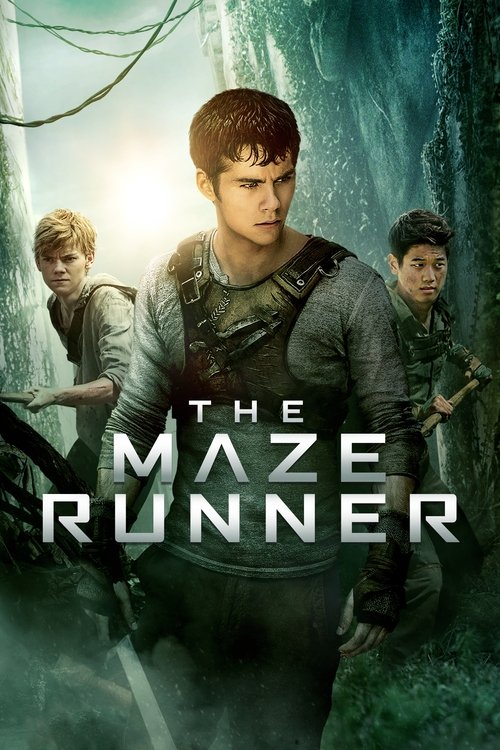
The Maze Runner
A visceral dystopian pulse-pounder cloaked in primal dread and relentless adrenaline, where youth is an expendable lab rat racing through towering monolithic jaws of concrete and mechanical terror.
The Maze Runner

The Maze Runner

"Get ready to run."

10 September 2014 United States of America 113 min 7.2 (18,420)

Director: Wes Ball

Cast: Dylan O'Brien, Kaya Scodelario, Thomas Brodie-Sangster, Ki Hong Lee, Will Poulter

Action Thriller Mystery Science Fiction Curiosity vs. Complacent Conformity Institutional Exploitation and Utilitarian Ethics Tribalism and Social Order Memory, Identity, and Reinvention
Budget: $34,000,000
Box Office: $348,319,861

Overview

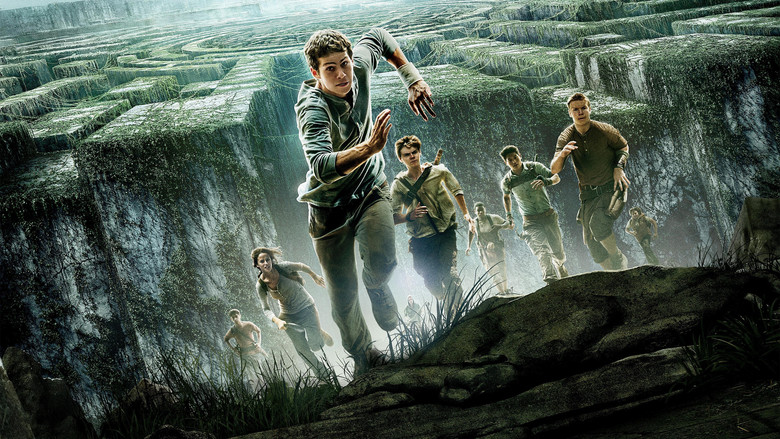
The Maze Runner opens with a teenage boy waking inside an ascending industrial elevator cage, devoid of all memories save for his name: Thomas. When the doors grind open, he is thrust into the Glade, an open, self-sustaining green expanse ringed by towering, cyclopean concrete walls. For three years, a community of boys has carved out an agrarian micro-society based on strict division of labor and inviolable rules, bound together by the hope of escape and the dread of what lies beyond.

Every morning, massive vertical doors slide open into a colossal, shifting labyrinth; every dusk, they slam shut to lock out the Grievers—lethal, bio-mechanical monstrosities prowling the dark corridors. Only an elite sub-group called "Runners" is permitted to map the labyrinth before the gates seal. However, Thomas refuses to conform to the Gladers' hard-learned complacency; driven by instinctual curiosity and fragmented visions of a mysterious entity called "W.C.K.D.," he questions the foundation of their survival.

The Glade’s fragile equilibrium ruptures completely when a comatose girl named Teresa arrives in the lift—carrying a cryptic warning that she is "the last one ever"—and clutching Thomas's name. When Thomas breaks the cardinal rule by stepping into the maze at dusk to save fallen comrades, he triggers a chain of unprecedented discoveries and internal schisms, forcing the trapped youths to choose between illusory sanctuary and a lethal bid for truth.

Core Meaning

At its core, director Wes Ball uses The Maze Runner to critique institutional conditioning and the seductive trap of complacent survival. Ball posits that safety bought with confinement and willful ignorance is merely a gilded cage. The Gladers have structured an orderly, ritualized civilization, yet it functions solely within parameters established by unseen architects. Thomas embodies the disruptive, defiant power of human curiosity: the understanding that life without autonomy and truth is not truly living. The film delivers a timely cautionary tale about how crises lead powerful authoritarian institutions (personified by WCKD) to treat the younger generation not as people, but as harvestable resources and experimental subjects for utilitarian social engineering.

Thematic DNA

Curiosity vs. Complacent Conformity 30%
Institutional Exploitation and Utilitarian Ethics 25%
Tribalism and Social Order 25%
Memory, Identity, and Reinvention 20%

Curiosity vs. Complacent Conformity

The Gladers have survived three years by establishing dogmatic laws and accepting their boundaries. Thomas acts as a catalyst; his refusal to obey artificial limits demonstrates that progress and liberation require confronting the terrifying unknown rather than settling into comfortable subjugation.

Institutional Exploitation and Utilitarian Ethics

The overarching shadow of W.C.K.D. explores how cold technocratic regimes justify cruelty and trauma under the banner of "the greater good". The Gladers' suffering is deliberately calculated, raising the question of whether saving humanity is worth destroying humanity’s core morality.

Tribalism and Social Order

Mirroring classic allegories like Lord of the Flies, the boys construct functional roles (Builders, Med-jacks, Runners) to stave off despair. When external pressures intensify, their society polarizes into those who seek freedom through danger (Thomas, Newt, Minho) and those whose existential terror manifests as dogmatic, violent orthodoxy (Gally).

Memory, Identity, and Reinvention

Stripped of past identities, childhood memories, and social background, the Gladers are forced to define themselves purely through their choices, actions, and loyalty in the present.

Character Analysis

Thomas

Dylan O'Brien

Archetype: The Inquisitive Hero / Disruptor Key Trait: Relentless curiosity and instinctive courage

Motivation

Uncovering his identity and breaking through artificial boundaries to liberate his peers.

Character Arc

Begins as a terrified, amnesiac newcomer; driven by instinctual rebellion, he survives a night in the maze, kills a Griever, discovers the escape code, and leads the Gladers into the real world, accepting his own complicated culpability.

Gally

Will Poulter

Archetype: The Dogmatic Enforcer / Antagonist Key Trait: Rigid traditionalism fueled by fear of the unknown

Motivation

Preserving social order and self-preservation inside the known world of the Glade.

Character Arc

Initially a gruff construction leader who prizes stability, Gally devolves into violent paranoia as the status quo crumbles; stung by a Griever, he seeks to sacrifice Thomas before being consumed by mad desperation.

All 5 characters and cast

Symbols & Motifs

The Maze

Meaning:

Symbolizes systemic oppression, existential confusion, and the manufactured trial of adolescence. Its constantly shifting walls reflect the moving goalposts erected by authoritarian systems to keep subjects disoriented and subservient.

Context:

Encloses the Glade and shifts configuration each night, guarded by the deadly Grievers.

The Glade Wall Carvings

Meaning:

The stone slab where Gladers scratch their names represents personal identity and remembrance. Crossing out names when boys die highlights their precarious mortality and the collective effort to ensure no fallen comrade is erased.

Context:

Located on the stone wall of the Glade where every Glader carves their name upon arrival.

Chuck’s Wooden Figurine

Meaning:

Represents innocence, unconditional hope, and the human need for genuine connection outside survival instincts.

Context:

A small carved totem Chuck made for parents he cannot remember, later entrusted to Thomas.

The Grievers

Meaning:

Biomechanical amalgamations of organic slime and hydraulic steel needle-legs representing the dehumanizing terror of technological control—cold, engineered nightmares weaponized by adult overseers to control rebellious youth.

Context:

Prowl the corridors of the labyrinth at night and attack any Glader caught outside the Glade doors.

The "W.C.K.D. is Good" Video Feed

Meaning:

A recurring motif symbolizing propaganda and doublespeak, highlighting how oppressive systems reframe clinical exploitation as benevolence.

Context:

Appears in Chancellor Ava Paige's broadcast and Thomas's fragmented memory sequences.

Memorable Quotes

Wicked is good.
— Chancellor Ava Paige / Teresa

Context

Spoken during Ava Paige's final video transmission before her staged suicide, and echoing through Thomas’s recurring memory fragments.

Meaning

The thematic thesis of the antagonists—a chilling utilitarian declaration asserting that any atrocity is defensible if it preserves the collective species.

Great, we're all bloody inspired.
— Newt

Context

Delivered dryly in response to a tense standoff and impassioned speech regarding whether to enter the maze.

Meaning

Highlights Newt’s dry, British, grounding humor, defusing tense moments of dramatic posturing and humanizing the boys' camaraderie.

All 4 quotes

Philosophical Questions

Does the survival of the human species justify the ritual torture and exploitation of innocent lives?

Explored through WCKD's horrific trials versus individual Glader humanity.

Is blissful, orderly ignorance preferable to dangerous, uncertain freedom?

Reflected in the ideological schism between Gally’s desire to remain in the Glade and Thomas’s drive to escape.

What defines human nature when memory and history are erased?

Examined through the boys establishing an egalitarian, functional community from absolute scratch.

Alternative Interpretations

The Utilitarian Machiavellian Reading: The film can be viewed as an inquiry into clinical utilitarian ethics. Ava Paige's WCKD is not evil in the traditional comic-book sense; Earth has been ravaged by solar flares and a brain-eating pathogen (The Flare). Sacrificing a few dozen immune teenagers in extreme, fear-inducing environments is calculated to harvest biological enzymes capable of saving billions.

Full ending explanation

Cultural Impact

Released in September 2014, The Maze Runner arrived during the zenith of the post-apocalyptic Young Adult boom ignited by The Hunger Games and Divergent. While many concurrent YA adaptations faltered due to overstuffed world-building and formulaic romantic triangles, The Maze Runner stood out by leaning heavily into male-centric survival horror, claustrophobia, and kinetic creature thrills.

Financially, its massive box office success ($348M) established Wes Ball as a master of high-production-value visual effects on disciplined budgets—a trajectory that later secured him tentpole franchise reins, including Kingdom of the Planet of the Apes. The film also launched Dylan O’Brien, Will Poulter, and Thomas Brodie-Sangster into mainstream franchise ubiquity.

Audience Reception

The Maze Runner holds a 65% critical rating and an 80% audience score on Rotten Tomatoes, alongside an 'A-' CinemaScore.

Praised:

  • Relentless Pacing & Tension: Critics and viewers universally lauded the film’s breathless tempo and genuine survival-thriller atmosphere.
  • Visual Effects Economy: Wes Ball’s direction delivered scale and creature effects rivaling $150M studio productions.
  • Strong Young Ensemble: The performances of O’Brien, Poulter, and Brodie-Sangster anchored the story with grounded emotional stakes.

Criticisms:

  • Third-Act Exposition Dump: Many critics argued that the transition from a tight survival mystery to convoluted sci-fi franchise world-building felt jarring and rushed.
  • Underwritten Female Lead: Teresa's late introduction leaves her character with limited agency compared to her Glade peers.

Controversial Elements: The abrupt cliffhanger ending, revealing that the Gladers' hard-fought escape was merely part of a larger staged test.

Interesting Facts

  • The film was produced on an extraordinarily modest budget of $34 million—a fraction of comparable YA blockbusters like The Hunger Games or Divergent—yet grossed $348 million worldwide, yielding an astronomical return.
  • Wes Ball had never directed a feature film before. He was originally meeting 20th Century Fox to develop a feature version of his computer-animated short Ruin; executives were so impressed by his visual efficiency that they handed him The Maze Runner.
  • Wes Ball initially passed on Dylan O’Brien’s audition tape because his gelled hair looked 'too MTV / Teen Wolf'. Ball only reconsidered after seeing a photograph of O’Brien with a buzz cut and realizing his rugged cinematic potential.
  • Blake Cooper was cast as Chuck after launching a persistent Twitter campaign directed at Wes Ball, begging for an audition; Ball eventually told him to send a tape to the casting director, who cast him immediately.
  • Filmed in the humid, remote swamps of Jackson and St. Francisville, Louisiana, the production hired venomous snake wranglers who caught up to 14 snakes per day (including copperheads and rattlesnakes) around the Glade clearing.
  • To build authentic ensemble camaraderie and survival instincts, Ball had the principal cast camp out overnight together in the Glade set before shooting began.
  • To maintain Newt’s subtle, character-defining limp consistently across multiple takes, Thomas Brodie-Sangster placed a small pebble inside his shoe.

Easter Eggs

Lord of the Flies Homage

The Glade’s social taxonomy, the tribal fire-gathering scenes, and Gally’s descent into mob violence directly mirror William Golding’s Lord of the Flies, down to Chuck embodying the innocent, doomed Piggy figure.

Names of Famous Historical Thinkers

The original novel’s naming convention carries into the film: Thomas is named after Thomas Edison, Newt after Sir Isaac Newton, and Alby after Albert Einstein.

Telepathic Cuts

In the novel, Thomas and Teresa communicate telepathically; Wes Ball deliberately dropped this sci-fi trope to maintain gritty cinematic realism, leaving only brief, fragmented auditory flashbacks to hint at their past shared connection.

The 'Key' Cylinder Serial Numbers

The electronic core ripped out of the killed Griever is marked with a digital read-out displaying 'Section 7' and 'W.C.K.D.,' hinting directly at the algorithmic sequence of the maze quadrants.

Frequently Asked Questions

Explore More About This Movie

Dive deeper into specific aspects of the movie with our detailed analysis pages

Comments (0)

Leave a comment

No comments yet. Be the first to share your thoughts!

Similar Movies