Skip to content
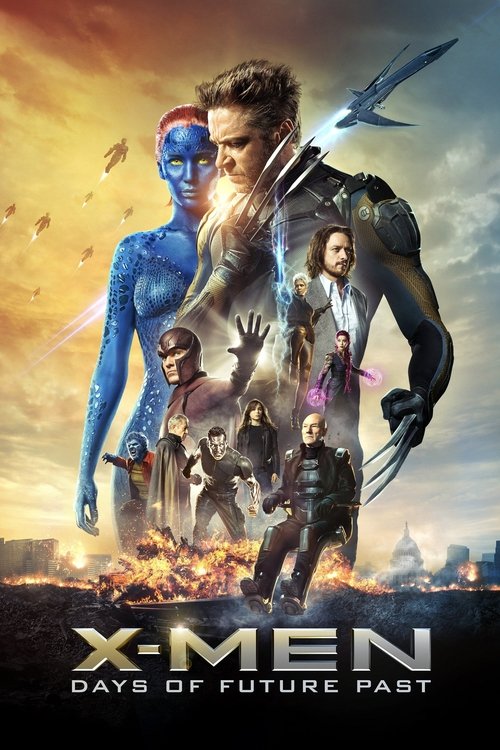
X-Men: Days of Future Past
A melancholic, time-fracturing sci-fi epic steeped in existential grief and stubborn hope, where dying embers of the future clash against the amber hues of the past to unbend the tragic arc of destiny.
X-Men: Days of Future Past

X-Men: Days of Future Past

"To save the future, they must alter the past."

15 May 2014 United States of America 132 min 7.5 (16,567)

Director: Bryan Singer

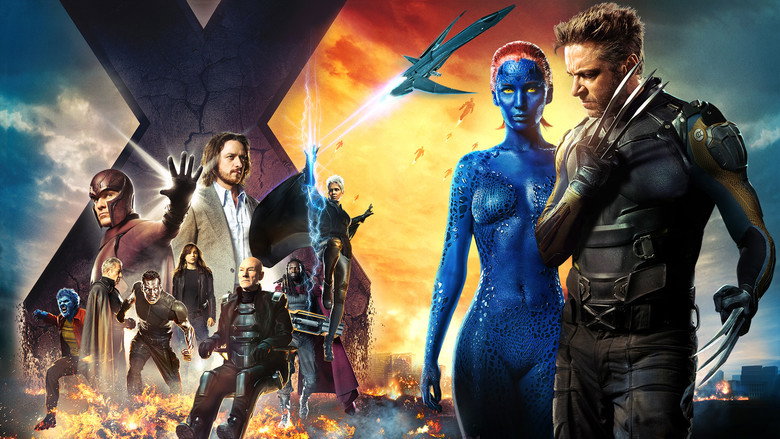
Cast: Hugh Jackman, James McAvoy, Michael Fassbender, Patrick Stewart, Ian McKellen

Action Adventure Science Fiction Hope, Forgiveness, and Redemption Determinism vs. Free Will Fear of the Other and Escalation of Violence The Cost of Escapism vs. Embracing Pain
Budget: $250,000,000
Box Office: $748,045,700

Overview

In a post-apocalyptic future set in 2023, mutantkind and human sympathizers are hunted to near-extinction by the Sentinels—unstoppable, adaptive robotic exterminators engineered to neutralize mutant biology. Pushed into their final stand at a remote temple, the surviving mutants, led by aged frenemies Charles Xavier and Erik Lehnsherr / Magneto, execute a desperate gambit: using Kitty Pryde’s phasing and consciousness-projection abilities, they send Wolverine’s indestructible mind fifty years back into his 1973 body.

His mission is to prevent the pivotal catalyst that sealed their fate: the assassination of anti-mutant industrialist Bolivar Trask by Raven Darkholme / Mystique. In the original history, Trask’s assassination convinced world powers to mass-produce the Sentinels, while Mystique’s capture allowed scientists to harvest her metamorphic DNA, rendering future iterations of the robots invincibly adaptive.

Upon arriving in 1973 against the backdrop of the Vietnam War and the Paris Peace Accords, Logan discovers that the greatest hurdle is not Trask, but a broken, disillusioned young Charles Xavier, who has abandoned his school and uses a power-suppressing serum to walk. Logan must act as mentor and diplomat, reuniting Charles with Hank McCoy / Beast and breaking Magneto out of the Pentagon to convince Raven that violence will only forge her own species' chains.
Core Meaning

Director Bryan Singer and screenwriter Simon Kinberg frame Days of Future Past around the transformative power of empathy over ideological extremism. The central message argues that our future is not written in stone, nor can peace be engineered through pre-emptive retribution or technological dominance. Rather, redemption requires confronting internal pain, accepting vulnerability, and granting individuals the agency to make moral choices. By rejecting the cycle of revenge, human beings and mutants alike can reshape what appears to be an inevitable apocalypse into a future rooted in co-existence.

Thematic DNA

Hope, Forgiveness, and Redemption 30%
Determinism vs. Free Will 25%
Fear of the Other and Escalation of Violence 25%
The Cost of Escapism vs. Embracing Pain 20%

Hope, Forgiveness, and Redemption

The emotional spine of the film rests on Xavier overcoming self-pity and grief to believe in humanity and mutantkind again. Rather than forcing Mystique’s compliance through mind control, Xavier’s ultimate triumph is appealing to her conscience, proving that anyone who stumbles can reclaim their path.

Determinism vs. Free Will

The narrative debates whether history is like a river—correcting itself despite ripples—or whether a single individual’s conscious moral decision can alter the entire continuum.

Fear of the Other and Escalation of Violence

Trask’s military-industrial paranoia and Magneto’s radical mutant supremacy represent two sides of the same coin: pre-emptive violence designed to destroy the Other before being destroyed. The film demonstrates how weapons conceived out of fear inevitably devour their creators.

The Cost of Escapism vs. Embracing Pain

Young Charles uses Hank's serum to suppress his telepathy and walk, preferring physical comfort to the agonizing psychic noise of the world’s suffering. He can only reclaim his purpose when he embraces the pain of others as empathy.

Character Analysis

Logan / Wolverine

Hugh Jackman

Archetype: The Reluctant Herald / Mentor Key Trait: Indomitable will and temporal endurance

Motivation

To prevent the slaughter of everyone he loves in the future.

Character Arc

Typically the berserker weapon, Logan in 1973 is forced into the role of patient peacemaker and moral anchor for a fractured Xavier.

Young Charles Xavier

James McAvoy

Archetype: The Fallen Mentor / Reluctant Hero Key Trait: Boundless empathy once his emotional walls are breached

Motivation

Initially self-preservation and silence; later, saving Raven and redeeming his life’s purpose.

Character Arc

Shifts from a reclusive, drug-dependent misanthrope who has lost faith into the compassionate visionary capable of leading mutantkind.

All 4 characters and cast

Symbols & Motifs

The Wheelchair vs. The Walking Serum

Meaning:

Symbolizes Xavier’s vulnerability and acceptance of duty. Walking represents selfish escapism and emotional numbness, while returning to the wheelchair marks his acceptance of psychic empathy and leadership.

Context:

Used throughout the 1973 timeline as young Charles chooses to give up physical mobility in order to restore his telepathic abilities and operate Cerebro.

The Sentinels (1973 mechanical models vs. 2023 adaptive biomechs)

Meaning:

Symbolize the relentless march of industrialized dehumanization and genocide.

Context:

Appears in both time periods, showing the progression from crude mechanical weapons to invincible, shape-shifting killing machines derived from mutant genetics.

The Chessboard / Pentagon Imprisonment

Meaning:

Reflects the strategic, ideological clash between Charles and Erik, who view lives as collateral moves in an existential game.

Context:

Emphasized during Magneto's high-security concrete confinement beneath the Pentagon and during ideological arguments between the two leaders.

The Gun Held by Mystique

Meaning:

Represents the fulcrum of human history—a mechanical instrument whose firing or lowering dictates the survival of entire races.

Context:

Featured during the critical moments in Paris and at the White House where Raven decides whether or not to assassinate Bolivar Trask.

The River / Water Imagery

Meaning:

Represents the temporal flow and the struggle against predestined fate.

Context:

Logan repeatedly associates temporal changes with a flowing river that resists redirection, culminating in his drowning in the Potomac by Magneto.

Memorable Quotes

Just because someone stumbles and loses their path, doesn't mean they are lost forever.
— Charles Xavier (Patrick Stewart / James McAvoy)

Context

Spoken across time during the psychic bridge between the two Charles Xaviers.

Meaning

Encapsulates the central thematic thesis of forgiveness and personal redemption.

You built these weapons to destroy us. Why? Because you are afraid of what we can do. You are afraid of being outlived.
— Erik Lehnsherr / Magneto (Michael Fassbender)

Context

Magneto's televised broadcast to humanity after commandeering the Sentinels and surrounding the White House.

Meaning

Articulates the core conflict of existential fear and the inevitable escalation between humans and mutants.

All 3 quotes

Philosophical Questions

Does the past dictate our choices, or do individual moral choices redefine history?

Explored through the tension between predestined timelines and Mystique's crucial decision at the White House.

Can a pre-emptive strike ever be morally justified in the name of security?

Examined through Bolivar Trask’s Sentinel project and young Magneto's desire to murder Trask and destroy world leaders to prevent mutant subjugation.

Is human suffering necessary for true empathy?

Addressed when older Charles tells younger Charles that his power comes from accepting and embracing pain rather than running from it.

Alternative Interpretations

The film can be analyzed through several distinct thematic frameworks:

Full ending explanation

Cultural Impact

Released in 2014, Days of Future Past pulled off an unprecedented structural feat in superhero cinema: creating a shared-continuity multiversal crossover that simultaneously honored the 2000s original cast and the 1960s/70s prequel cast.

Setting the past in 1973 allowed the film to tap into post-Vietnam disillusionment, the Paris Peace Accords, and the Watergate era, reimagining historical events (such as the JFK assassination) through a mutant lens. Garnering a 90%+ Rotten Tomatoes approval rating and $746 million at the box office, it revitalized the Fox Marvel franchise and became widely hailed as one of the finest entries in superhero film history.

Audience Reception

The film was universally lauded for its pacing, Peter Dinklage's nuanced performance as Bolivar Trask, James McAvoy and Michael Fassbender's dramatic gravitas, the emotional weight of Stewart and McKellen’s farewell, and the show-stopping Quicksilver kitchen sequence.

Some purists criticized the deviations from the comic book (specifically swapping Kitty Pryde for Wolverine as the time traveler) and minor plot holes regarding how mutant powers interacted with temporal physics. Overall, it is widely considered a high-water mark of the 20th Century Fox superhero universe, successfully delivering blockbuster spectacles anchored by mature character drama.

Interesting Facts

  • Patrick Stewart and Ian McKellen were co-starring in a stage production of Waiting for Godot when Bryan Singer approached them, leaving both stunned that they would return alongside McAvoy and Fassbender.
  • Matthew Vaughn, who directed X-Men: First Class, was originally attached to direct Days of Future Past but departed to make Kingsman: The Secret Service, allowing Bryan Singer to step in.
  • Quicksilver’s (Evan Peters) iconic kitchen rescue was shot at 3,200 frames per second using high-speed Phantom digital cameras with intensely bright lights, requiring Peters to wear sunglasses between takes.
  • An extended cut released on home video restores an entire subplot where Magneto and Iceman rescue Rogue (Anna Paquin) from Cerebro at the mansion in the dystopian future to take over Kitty’s fading powers.
  • With a production budget of roughly $205 million, the movie grossed approximately $746–$748 million worldwide, making it the highest-grossing mainline X-Men film.

Easter Eggs

Comic Creators Cameo

Legendary comic writer Chris Claremont (who penned the original 1981 Days of Future Past story arc) and writer/artist Len Wein (co-creator of Wolverine, Storm, and Colossus) appear as U.S. Congressmen during Trask’s hearing.

Bryan Singer Cameo

Director Bryan Singer makes a brief cameo as a photojournalist taking pictures during the Paris summit altercation.

The Fox Fanfare 'X'

The 20th Century Fox logo fanfare retains the letter X lingering on the screen as the rest of the text fades out, paying homage to the original film franchise signature.

The Year 2013/2023 Inversion

In the original comic arc, the dystopian Sentinel future is set in 2013; coincidentally, 2013 was the exact year filming commenced for the movie, with the on-screen dystopian future pushed forward to 2023.

Post-Credits Scene (En Sabah Nur)

A cloaked, grey-skinned mutant builds pyramids with telekinesis while four horsemen look on, teasing the villain Apocalypse for the sequel X-Men: Apocalypse.

Frequently Asked Questions

Explore More About This Movie

Dive deeper into specific aspects of the movie with our detailed analysis pages

Comments (0)

Leave a comment

No comments yet. Be the first to share your thoughts!

Similar Movies