Skip to content
Elyas
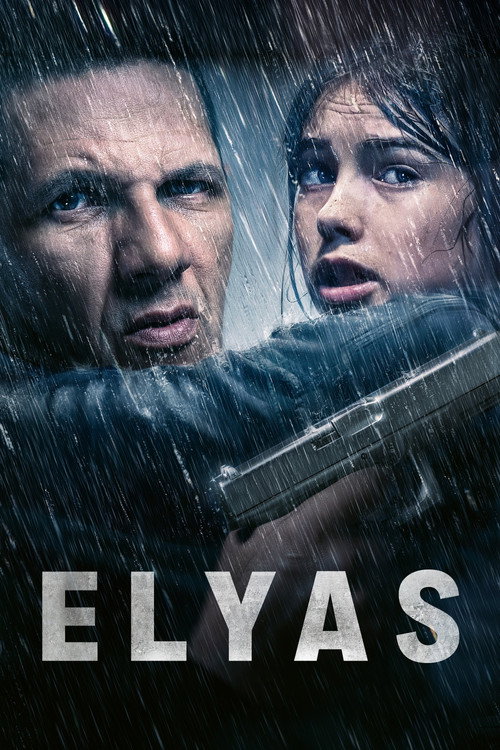
A scorched French action thriller where a hollowed-out soldier becomes a wall of flesh around a thirteen-year-old girl — tenderness sharpened into a weapon, blooming in the crosshairs.
Elyas

Elyas

03 July 2024 France 99 min 6.2 (165)

Director: Florent-Emilio Siri

Cast: Roschdy Zem, Laëtitia Eïdo, Nabil Elouahabi, Sherwan Haji, Dimitri Storoge

Action Thriller Trauma and the soldier who cannot come home Improvised fatherhood and the bond with the protected Women's freedom, forced marriage and the reach of family power Violence as language and as inheritance Exile, displacement and belonging
Budget: $12,460,000
Box Office: $1,359,330

Overview

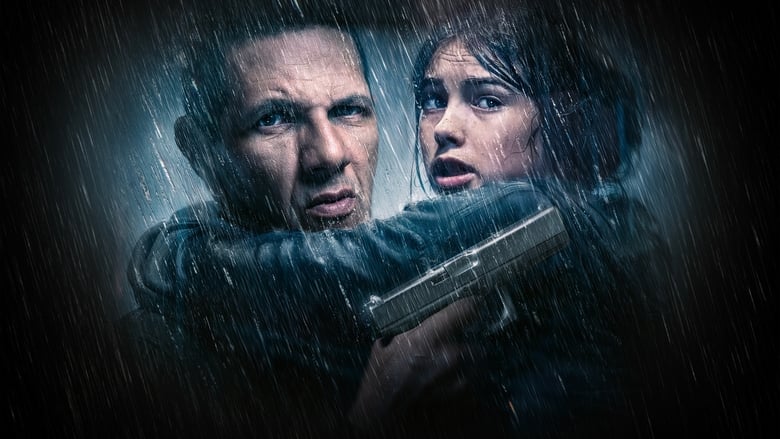
Elyas (2024), directed by Florent-Emilio Siri, follows a former soldier of the French Special Forces — solitary, paranoid, and visibly damaged by what he has seen — who takes a job far below the scale of the wars he once fought: close protection for two civilians. His charges are Amina, a woman arriving from the United Arab Emirates, and her thirteen-year-old daughter Nour.

What begins as a contract slowly becomes something closer to kinship. The ex-warrior and the teenager circle each other warily, and the film spends its first movement on that domestication: a man who trusts nothing learning to stand still long enough to be trusted. Then a mysterious commando unit locks onto the pair, and the job stops being a job. Elyas will do anything to keep the girl alive.

Running 99 minutes and released in French cinemas on 3 July 2024, the film is built on the classic bodyguard-thriller chassis — the wounded protector, the child who reawakens him, the professional pursuers who never explain themselves — and hands it to Roschdy Zem, whose gravity and stillness give the genre exercise its emotional weight. Siri has said the story grew out of real cases of young women from the Middle East abducted after fleeing forced marriages.

Core Meaning

At its centre, Elyas argues that a man ruined by state-sanctioned violence can only be repaired by choosing, for once, whom that violence serves. Elyas has spent a career being pointed at targets by institutions; the film's moral turn is that he finally aims himself — at the protection of one specific child, for no reason but that she matters to him.

Siri also uses the machinery of the action thriller to carry a subject that rarely gets an action-movie budget: the real danger faced by girls and women who run from forced marriage and from families with the money and reach to hunt them. The commando is not a fantasy villain but the enforcement arm of an idea about who owns a daughter's life. Freedom, in this film, is not declared — it has to be physically defended, body against body.

The message underneath the gunfire is quietly humane: fatherhood is a function, not a bloodline. A stranger who stands between a child and the world is, functionally, a parent — and being needed that way is the only therapy the film offers its broken soldier.

Thematic DNA

Trauma and the soldier who cannot come home 30%
Improvised fatherhood and the bond with the protected 25%
Women's freedom, forced marriage and the reach of family power 20%
Violence as language and as inheritance 15%
Exile, displacement and belonging 10%

Trauma and the soldier who cannot come home

Elyas is introduced as solitary and paranoid — a man whose combat training has curdled into permanent threat assessment. The film treats hypervigilance not as a superpower but as a wound: he scans rooms, distrusts contact, and lives at a remove from ordinary life. His skill set is inseparable from his damage, and the plot repeatedly asks whether a man built for war can be safely placed among civilians.

Improvised fatherhood and the bond with the protected

The heart of the film is the slow taming between the ex-warrior and thirteen-year-old Nour — two people learning each other's language. The girl's curiosity punctures his defensive shell; his competence gives her a floor to stand on. By the time the commando strikes, the professional contract has been replaced by something that behaves exactly like paternal love, which is what raises the stakes from duty to desperation.

Women's freedom, forced marriage and the reach of family power

Siri drew on real cases of young women from the Middle East pursued after escaping forced marriages. Amina and Nour's flight from the Emirates to France frames the film's threat as patriarchal rather than merely criminal: the hunters are the extension of a family's claim over a daughter's body and future. Geography offers no sanctuary — the film insists that borders do not protect the fleeing when the pursuers are wealthy enough.

Violence as language and as inheritance

Elyas can only express care through the one grammar he has mastered: force. Every act of tenderness in the film eventually converts into an act of destruction, and the film sits uneasily with that exchange rate. The commando mirrors him — same training, same discipline, opposite employer — suggesting that professional violence is morally neutral until someone chooses the target.

Exile, displacement and belonging

Everyone in the film is out of place: a soldier exiled from the army that made him, a mother and daughter exiled from their country, a commando operating outside any flag. The French landscapes become a neutral, indifferent territory where displaced people collide. Belonging is finally not a nation or a family name but the small circle of people you will stand in front of.

Character Analysis

Elyas

Roschdy Zem

Archetype: The wounded protector / antihero-guardian Key Trait: Hypervigilant stillness — a man who is calmest at the exact moment everyone else should be afraid

Motivation

Initially a paycheck and the structure that a mission provides a man who cannot function without one; ultimately the survival of a specific child, which becomes the first thing he has chosen for himself since leaving the army.

Character Arc

Begins as a shut-down former Special Forces operator whose paranoia has cost him any ordinary life, accepting close-protection work as a downgrade he can tolerate. Contact with Nour reopens a capacity for attachment he had deliberately amputated. When the commando attacks, the job's collapse strips away the last professional excuse and forces him to act as a father rather than an employee — and the violence that follows is both his relapse and his redemption.

Nour

Jeanne Michel

Archetype: The catalyst child / innocent who humanises the killer Key Trait: Disarming directness that cuts through Elyas's defensive armour

Motivation

To have a life that belongs to her — freedom from the fate arranged for her, and, more immediately, someone who will actually stay.

Character Arc

A thirteen-year-old uprooted from the Emirates and placed under armed guard, she starts out resentful of the silent stranger shadowing her life. Curiosity turns into testing, testing into trust, and trust into a real bond. The assault forces her to grow up at speed, moving from protected object to active participant in her own survival.

All 3 characters and cast

Symbols & Motifs

The bodyguard's body

Meaning:

The literalisation of love as shielding. Elyas's flesh is the last barrier between an idea and a child, which makes his scars a résumé and his survival a form of promise-keeping.

Context:

Running through the film's protection sequences, where the framing repeatedly puts Elyas between the camera's threat vector and Nour — he is staged as architecture before he is staged as a character.

The parachute and free fall

Meaning:

Controlled surrender: the only situation in which a hypervigilant man consents to falling. It figures the film's central question of whether trust can be trained the way a jump is trained.

Context:

The production mounted extensive skydiving work at Pujaut, with roughly twenty preparatory jumps and around thirty more shot for the film, making aerial descent one of the movie's signature physical images.

The unnamed commando

Meaning:

Faceless, uniform, motive-less on the surface — they embody a system rather than a villain. Their anonymity suggests that what pursues Nour is not one man's grudge but an institution of ownership.

Context:

Established from the moment the mysterious unit takes mother and daughter as targets, and sustained by the film's refusal to give the operators individual psychology.

The thirteen-year-old girl

Meaning:

The threshold age — no longer a child, not yet permitted to be an adult. Nour is precisely old enough to understand what is being decided about her life and precisely young enough to have no legal say in it.

Context:

Her age is foregrounded in the premise itself, and the film keeps her within a narrow band between dependence and agency as she and Elyas negotiate their bond.

The contract

Meaning:

Money as the film's opening moral frame and its first casualty. Protection begins as a transaction and must be transubstantiated into something unpaid before Elyas can be redeemed.

Context:

Present in the setup — a hired bodyguard, a client family — and quietly abandoned once the shooting starts and no employer remains to invoice.

Philosophical Questions

Can a person trained for violence ever return to ordinary life?

Elyas's paranoia is not a quirk but a functioning combat instrument running in a civilian environment. The film stages the mismatch constantly — a man calibrated for ambush living among people who fear nothing — and then, cruelly, vindicates him by making the ambush real. It leaves open whether his reintegration is possible or whether he is simply between deployments.

What makes someone a parent?

Nour has a mother who loves her and a family whose claim over her is precisely the threat. Into that gap steps a paid stranger who has no biological or legal standing and who nonetheless does the one thing a parent is supposed to do: stand in front of the danger. The film quietly proposes that parenthood is defined by the willingness to be destroyed on someone's behalf.

Whose life belongs to whom?

Rooted in the real cases of forced marriage that inspired the script, the film treats a thirteen-year-old's future as literally contested property — pursued by armed men across borders. It asks whether autonomy is an inherent right or a privilege that only exists where someone is strong enough to enforce it.

Is protective violence morally different from any other kind?

Elyas and the commando share training, discipline and methods; only the employer differs. By making the pursuers professionals rather than monsters, the film denies itself the comfort of a clear moral gap and forces the question onto intention alone — is the man defending the child good, or merely better aimed?

Alternative Interpretations

The redemption reading. The most straightforward interpretation treats the film as a salvation story: a soldier destroyed by professional violence is restored by using it, once, for someone he loves. Under this reading the bond with Nour is the cure and the finale is earned catharsis.

Full ending explanation

Cultural Impact

Context. Florent-Emilio Siri is one of the few French directors with a genuine action pedigree on both sides of the Atlantic, and Elyas arrived as part of a broader French attempt to make homegrown, star-driven action thrillers that can compete with American and streaming-era product. Casting Roschdy Zem — an actor associated with dramatic and auteur work — as a physical action lead was the film's central gambit.

Genre lineage. Critics almost unanimously placed the film in the shadow of Tony Scott's Man on Fire, with several arguing that the resemblance is so close that Elyas never earns an identity of its own. Zem's paranoid, monosyllabic professional was also compared to the Jason Statham school of taciturn protector.

Reception and afterlife. The critical response was mixed, and commercially the film underperformed badly, finishing with 179,758 admissions in France before moving to home video later in 2024, where it found a second, more forgiving audience. Its most durable cultural contribution may be thematic rather than formal: by grounding a summer action movie in the real phenomenon of girls hunted after fleeing forced marriage, it pushed a subject usually confined to social-realist drama into the vocabulary of popular genre cinema.

Audience Reception

Praised. The near-universal point of agreement is Roschdy Zem, repeatedly singled out for a powerful, nuanced performance that gives the paranoid loner real interiority — several reviewers described him as the film's master asset, holding together material that would otherwise be routine. The action sequences, particularly the aerial and parachuting work, and the relationship between Zem and newcomer Jeanne Michel were also cited as strengths.

Criticised. The dominant complaint is a lack of originality: reviewers described a film that mimics Man on Fire so closely that it never establishes its own identity, essentially a competent but generic bodyguard thriller. Words like lambda — average, off-the-shelf — recurred in French coverage, and some found the script's mechanics predictable well before the finale.

Verdict. An IMDb user score around 6.1 captures the consensus fairly: a solid, well-made genre piece elevated by its lead and let down by its familiarity. Its commercial failure in France — 179,758 admissions — was disproportionate to its actual quality, and it played better on home video, where expectations were calibrated to a straightforward action thriller rather than an event film.

Interesting Facts

  • Director Florent-Emilio Siri had wanted to work with Roschdy Zem for roughly two decades but had never found the right project until Elyas.
  • Siri drew on real cases — kidnappings of young women from the Middle East who had fled forced marriages — as the seed of the screenplay.
  • The film was shot in part at Pujaut during the summer of 2023, with the Skydive Pujaut team collaborating closely on the aerial material.
  • For the parachuting sequences the production carried out about twenty training and preparation jumps, plus roughly thirty more jumps to capture the scenes used in the film.
  • The score is credited to Jean-Pascal Beintus and Alexandre Desplat, an unusually prestigious pairing for a mid-budget French action thriller.
  • Cinematography is by Giovanni Fiore Coltellacci.
  • The film was produced with France 2 Cinéma, Orange Studio and Récifilms.
  • Jeanne Michel, who plays the thirteen-year-old Nour opposite Zem, was making her screen debut.
  • Released in French cinemas on 3 July 2024, the film runs 99 minutes.
  • Elyas was a commercial disappointment in France, drawing 179,758 admissions.

Frequently Asked Questions

Explore More About This Movie

Dive deeper into specific aspects of the movie with our detailed analysis pages

Comments (0)

Leave a comment

No comments yet. Be the first to share your thoughts!

Similar Movies