Skip to content
Eungyo
A melancholic, sunlit psychological drama drenched in longing and bitter grief, where the fragile warmth of youth illuminates an aging soul like a fleeting beam of light cutting through autumn fog before vanishing forever.
Eungyo

Eungyo

은교

"Desire Never Gets Old."

25 April 2012 South Korea 129 min 6.7 (103)

Director: Jung Ji-woo

Cast: Park Hae-il, Kim Moo-yul, Kim Go-eun, Jeong Man-sik, Park Chul-hyeon

Drama Romance Aging, Decay, and the Yearning for Youth Poetic Genius vs. Intellectual Mediocrity The Nature of the Muse and Objectification Loneliness, Neglect, and the Hunger for Regard
Box Office: $9,048,531

Overview

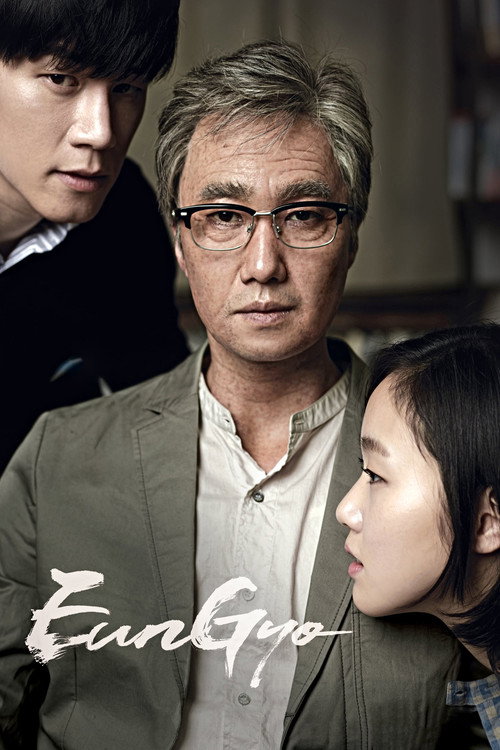
Directed by Jung Ji-woo and based on the controversial 2010 bestselling novel by Park Bum-shin, Eungyo (internationally released as A Muse) is a provocative, lyrical examination of youth, mortality, art, and desire. The narrative centers on Lee Jeok-yo, a revered 70-year-old national poet living a quiet, isolated life in his forested country home outside Seoul. Despite his towering cultural stature, Jeok-yo feels spiritually and physically decayed, reduced to a living monument awaiting a commemorative museum, with his daily affairs managed by his devoted protégé, Seo Ji-woo, an engineer-turned-author who has recently skyrocketed to commercial fame.

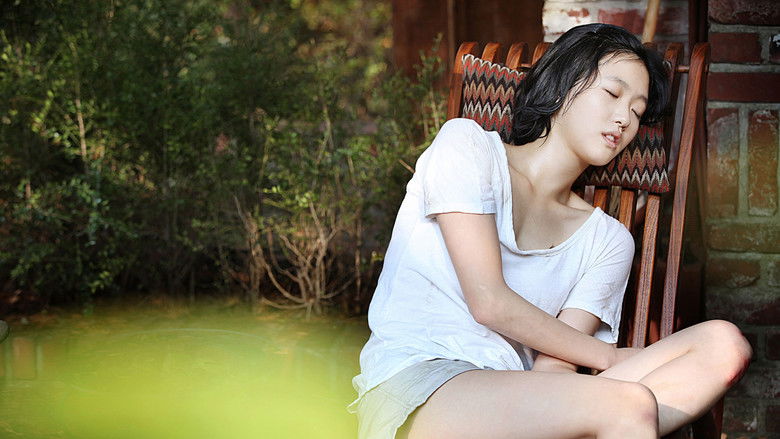
The sterile dynamic between mentor and apprentice is upended when Han Eun-gyo, a vibrant 17-year-old high school student, wanders onto Jeok-yo’s porch and falls asleep on an outdoor armchair. Captivated by her effortless vitality and innocence, Jeok-yo hires her as a part-time housekeeper. As Eun-gyo weaves herself into the rhythms of the household, her presence revitalizes Jeok-yo’s dormant creative spirit, prompting him to confront the agonizing reality of his aging body and igniting a private literary renaissance.

Ji-woo watches this blossoming bond with mounting anxiety, seeing the girl not only as an inappropriate distraction for his venerated mentor, but also as a rival for Jeok-yo's affection and artistic validation. What begins as an unconventional aesthetic communion between an elderly poet and a young girl soon spirals into an emotionally fraught power struggle, wherein jealousy, artistic inadequacy, and unspoken longing collide.
Core Meaning

At its core, Eungyo is not a voyeuristic tale of predation, but a meditation on the cruelty of time, the tragedy of unearned gifts, and the distinction between genuine artistic sensitivity and hollow technical ambition. Director Jung Ji-woo uses the central triangle to argue that youth and poetic genius are transient blessings endowed by nature rather than moral virtues or earned prizes.

Jeok-yo’s tragedy lies in the asymmetry between his ageless mind—which perceives and feels beauty with luminous intensity—and his deteriorating physical form, which renders active participation in that beauty socially and physically impossible. Conversely, Ji-woo possesses physical youth and virility but lacks the innate artistic soul required to truly comprehend or honor it. Through Eun-gyo, the film delivers a compassionate message about human vulnerability: every soul longs to be deeply perceived, valued, and loved for who they are rather than used as an instrument for another's ego.

Thematic DNA

Aging, Decay, and the Yearning for Youth 30%
Poetic Genius vs. Intellectual Mediocrity 25%
The Nature of the Muse and Objectification 25%
Loneliness, Neglect, and the Hunger for Regard 20%

Aging, Decay, and the Yearning for Youth

The film contrasts the blooming vitality of youth with the indignity of physical aging. Jeok-yo does not merely lust after Eun-gyo; he mourns his former self, projecting his younger reflection into fantasies where he interacts with her as an equal. The pain is existential: time robs humanity of physical agency while leaving emotional and aesthetic appetite intact.

Poetic Genius vs. Intellectual Mediocrity

The film explores the tension between Ji-woo's commercially driven writing and Jeok-yo's innate, sublime literary instinct. Ji-woo can manufacture popular plots through engineering discipline, but he cannot breathe genuine soul into words. His theft of Jeok-yo's manuscript reveals the torment of the mediocre artist who craves aesthetic brilliance he can never naturally produce.

The Nature of the Muse and Objectification

Eun-gyo functions as an artistic catalyst, but the film deconstructs how men project their ideals upon women. Jeok-yo elevates her into an ethereal aesthetic vision of purity and light, while Ji-woo perceives her as a conquest and a status symbol. The tension lies in Eun-gyo’s struggle to assert her real humanity against the poetic and physical projections forced upon her.

Loneliness, Neglect, and the Hunger for Regard

Beneath the intergenerational conflict is a shared core of emotional abandonment. Eun-gyo suffers domestic neglect and physical abuse at home; Jeok-yo is trapped in the cold isolation of academic veneration; Ji-woo is suffocated by his desperate need for his mentor’s praise. All three characters gravitate toward one another in an attempt to alleviate profound isolation.

Character Analysis

Lee Jeok-yo

Park Hae-il

Archetype: The Aging Mentor / Tragic Poet Key Trait: Lyrical genius burdened by physical decay.

Motivation

To recapture the creative spark, aesthetic passion, and emotional vitality of youth.

Character Arc

Transitions from a resigned, calcified literary monument into a man violently awakened by longing, leading to jealousy, betrayal, and melancholic acceptance of his mortality.

Han Eun-gyo

Kim Go-eun

Archetype: The Muse / The Vulnerable Innocent Key Trait: Unfiltered, radiant spontaneity.

Motivation

To find emotional validation, tenderness, and a refuge from domestic neglect.

Character Arc

Evolves from an uninhibited, neglected teenager seeking warmth into a self-aware young woman confronting the truth of how others view and commodify her.

All 3 characters and cast

Symbols & Motifs

The Broken and Sharpened Pencil

Meaning:

Represents true poetic perception, artistic discipline, and delicate craft, distinguishing genuine artistic soul from mechanical output.

Context:

Jeok-yo sharpens his pencils with a knife into precise, delicate tips, while Ji-woo uses mechanical sharpeners and blunt utensils. Eun-gyo is taught this careful craft by Jeok-yo, making the pencil tip the ultimate clue through which Eun-gyo later deciphers who truly authored the story of her life.

The Henna Bird Tattoo

Meaning:

Symbolizes fleeting freedom, transient vitality, and the gentle touch of youth resting briefly upon a dying canvas.

Context:

Eun-gyo draws a temporary bird tattoo with henna onto Jeok-yo’s chest while he lies on her lap. Because henna naturally fades over time, it underscores the ephemeral nature of their connection.

The Outdoor Armchair / Rocking Chair

Meaning:

Acts as a threshold motif representing the boundary where uninvited youth intrudes upon solemn, stagnant old age.

Context:

Situated on the sunlit veranda between the domestic sanctuary of the house and the untamed forest, this chair is where Eun-gyo first appears asleep to Jeok-yo.

The Red Sports Car

Meaning:

Symbolizes modern ambition, velocity, arrogance, and the superficial trappings of commercial success.

Context:

Purchased by Ji-woo following his literary and financial triumph, its sleek and loud presence stands in stark contrast to Jeok-yo’s timeless, wooden countryside sanctuary.

The Misty Mirror and Naked Flesh

Meaning:

Emphasizes the physical prison and deterioration of old age compared to the glowing beauty of youth.

Context:

Early in the film, Jeok-yo examines his aged, sagged body in front of a mirror after a bath under harsh, unforgiving light, which is later juxtaposed with the soft, glowing cinematography illuminating Eun-gyo’s skin.

Memorable Quotes

너희의 젊음이 너희의 노력에 의해서 얻은 상이 아니듯이, 내 늙음도 내 잘못으로 받은 벌이 아니다.
— Lee Jeok-yo

Context

Delivered by Jeok-yo during a public celebration honoring his literary career.

Meaning

Serves as the philosophical thesis statement of the entire film, encapsulating the unfairness, biological inevitability, and existential reality of the human lifecycle.

칠십 먹은 노인이 열일곱 살짜리 여고생을 마음에 품는 건 사랑이 아니에요. 추문이에요! 더러운 추문!
— Seo Ji-woo

Context

Shouted by Ji-woo during a heated, bitter confrontation with Jeok-yo.

Meaning

Demonstrates Ji-woo attempting to weaponize societal morality and conventions to mask his own base jealousy, inadequacy, and fear of exclusion.

All 5 quotes

Philosophical Questions

Is youth a moral achievement or mere biological happenstance?

The film challenges the arrogance of youth and societal reverence for physical vitality by portraying youth as an unearned gift of nature and aging as an unchosen biological reality rather than a moral failing.

Can desire be separated from physical possessiveness?

Jeok-yo sublimates his eros entirely into literature and aesthetic contemplation, raising the question of whether veneration without physical enactment can exist as a purer, transcendent form of love.

Does technical skill hold value without authentic soul?

Through Ji-woo’s hollow commercial success and desperate theft, the film asks whether art can be engineered solely through discipline and technique, or if it fundamentally requires an innate, untrainable sensitivity.

Alternative Interpretations

The film invites several nuanced readings:

Full ending explanation

Cultural Impact

Released in South Korea in April 2012, Eungyo arrived during an era when Korean cinema was intensely dissecting taboo social boundaries and generational divides. The original novel by Park Bum-shin had already ignited public debate during its online serialization concerning age-gap morality and the romanticization of minors.

Upon its theatrical release, media coverage initially focused heavily on graphic sexual sequences, marketing the film as an erotic drama. However, critical discourse soon pivoted toward praising its delicate, sensitive aesthetic treatment of mortality, loneliness, and artistic desire. The film launched Kim Go-eun into a premier leading actress in South Korea, and Jeok-yo's monologue regarding youth and old age became widely quoted in literary and pop-cultural discussions.

Audience Reception

Critical consensus praised Eungyo as a visually lush, sensitive, and emotionally resonant drama that was frequently mischaracterized by its erotic premise.

Key Praises:

  • Kim Go-eun’s debut received near-unanimous acclaim for balancing natural innocence with magnetic allure, earning her major domestic newcomer awards.
  • Kim Tae-kyung’s warm, sun-drenched cinematography and Yeon Ri-mok’s delicate musical score were widely lauded.
  • Jung Ji-woo was commended for handling a potentially lurid premise with emotional restraint.

Criticisms and Controversy:

  • Some critics noted that Park Hae-il’s prosthetic makeup occasionally felt artificial on close inspection.
  • The third-act escalation into thriller and sabotage territory was criticized by some as overly melodramatic compared to the meditative pacing of the first two acts.
  • The graphic intimacy involving a high school senior generated controversy, though commentators emphasized that the film focused on psychological devastation rather than exploitation.

Interesting Facts

  • Kim Go-eun had no prior professional screen-acting experience and was a student at Korea National University of Arts when she was cast after auditioning among roughly 300 candidates.
  • Park Hae-il was only 35–36 years old during filming and underwent 8 hours of complex silicone application and prosthetic makeup daily to play the 70-year-old poet.
  • Director Jung Ji-woo intentionally cast a younger actor in heavy makeup rather than an actual 70-year-old actor so the character could embody the vivid psychological projection of youth during fantasy sequences.
  • A body double was utilized for the full-body unclad mirror shots to authentically convey the anatomical muscle atrophy and skin texture of a septuagenarian.
  • Actor Song Chang-eui was originally slated to play Seo Ji-woo but had to drop out due to scheduling conflicts, leading to Kim Mu-yeol's casting.

Easter Eggs

Theodore Roethke’s Poetic Philosophy

Jeok-yo explicitly cites American poet Theodore Roethke in the film regarding the emotional weight of aging and the leaden burden of what was left undone in life.

Vladimir Nabokov’s Lolita Inversion

While drawing natural cultural parallels to Lolita, the narrative consciously subverts Nabokov’s dynamic. Rather than consummating an exploitative affair, Jeok-yo channels his forbidden passion into literature without physical contact in reality, whereas the younger protégé Ji-woo initiates the sexual liaison.

Korean High School Subculture

Eun-gyo altering her school uniform skirt at an alterations shop at the start of the film reflects a ubiquitous South Korean youth trend of customizing rigid institutional dress to assert individuality and budding femininity.

Frequently Asked Questions

Explore More About This Movie

Dive deeper into specific aspects of the movie with our detailed analysis pages

Comments (0)

Leave a comment

No comments yet. Be the first to share your thoughts!

Similar Movies