Skip to content
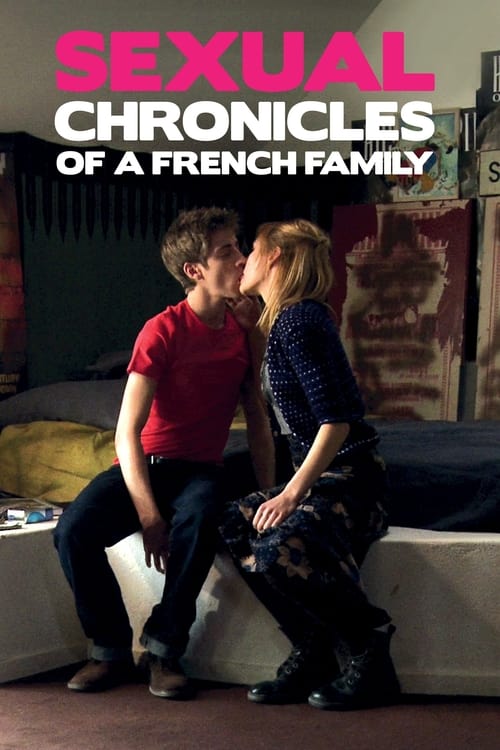
Sexual Chronicles of a French Family
A provocative Gallic dramedy brimming with awkward, tender longing, where raw, intimate bodies mirror an unveiled lens, reflecting three generations stripped of societal taboos.
Sexual Chronicles of a French Family

Sexual Chronicles of a French Family

Chroniques sexuelles d'une famille d'aujourd'hui

09 May 2012 France 85 min 5.4 (408)

Director: Jean-Marc Barr, Pascal Arnold

Cast: Mathias Melloul, Valérie Maës, Stephan Hersoen, Pierre Perrier, Yan Brian

Drama Comedy Romance Demystification of Sexuality and Taboos Intergenerational Views on Intimacy Adolescent Sexual Identity and Virginity Pressure Communication vs. Domestic Secrecy Digital Media and Modern Voyeurism

Overview

Sexual Chronicles of a French Family (Chroniques sexuelles d'une famille d'aujourd'hui) is a 2012 French comedy-drama co-directed by Jean-Marc Barr and Pascal Arnold. Set in contemporary France, the narrative centers on a seemingly ordinary middle-class household spanning three generations: grandfather Michel, parents Claire and Hervé, adult children Pierre and adopted daughter Marie, and 18-year-old high school student Romain.

The inciting incident occurs when Romain is caught masturbating and recording himself on his phone during a biology class as part of a dare among high school classmates. Suspended from school, Romain expects severe punishment. Instead, his empathetic mother, Claire, refuses to shame him. Recognizing how suppressed conversations around desire have become within their home, she uses the incident to open a transparent, non-judgmental dialogue about sex across the entire family.

The narrative follows Romain's anxious quest to lose his virginity alongside the private intimate lives of his family members. As Claire engages each relative—from her widowed father-in-law to her older children—the film presents a candid look at how different generations navigate intimacy, bodily pleasure, and self-acceptance.
Core Meaning

Co-directors Jean-Marc Barr and Pascal Arnold sought to demystify human sexuality in mainstream cinema, taking it back from pornographic tropes and moralistic shame. The film's central message is that sexual desire is a natural, fundamental aspect of human connection that exists across all stages of life—from adolescent curiosity to elderly romance. By replacing secrecy with candid communication, the directors argue that families can dismantle toxic taboos and build deeper emotional trust.

Thematic DNA

Demystification of Sexuality and Taboos 30%
Intergenerational Views on Intimacy 25%
Adolescent Sexual Identity and Virginity Pressure 20%
Communication vs. Domestic Secrecy 15%
Digital Media and Modern Voyeurism 10%

Demystification of Sexuality and Taboos

The film normalizes conversations around physical desire, stripping away guilt and showing sex as a healthy element of everyday life across generations.

Intergenerational Views on Intimacy

Compares how different age groups—the elderly grandfather, middle-aged parents, and young adult children—experience and communicate their sexual needs.

Adolescent Sexual Identity and Virginity Pressure

Explored through Romain, highlighting the social anxiety, self-doubt, and perceived pressure young adults feel when attempting to navigate their first intimate experiences.

Communication vs. Domestic Secrecy

Demonstrates how unexpressed desires create distance between family members, while open dialogue fosters empathy and mutual respect.

Digital Media and Modern Voyeurism

Framed by the opening classroom recording, exploring how smartphones, online videos, and digital culture influence modern youth's perception of intimacy.

Character Analysis

Romain

Mathias Melloul

Archetype: The Reluctant Coming-of-Age Hero / Insecure Virgin Key Trait: Vulnerable and introspective

Motivation

To lose his virginity and fit in with his peers.

Character Arc

Starts as an anxious, self-conscious 18-year-old paralyzed by his virginity, evolving into a more self-assured young man through open family support and honest romance.

Claire

Valérie Maës

Archetype: The Progressive Mentor / Matriarch Key Trait: Empathetic and open-minded

Motivation

To understand and support her children without judgment while revitalizing her own marriage.

Character Arc

Transitions from a routine-bound mother to an active catalyst for sexual transparency and emotional closeness in her home.

All 5 characters and cast

Symbols & Motifs

The Smartphone Video

Meaning:

Symbolizes the intersection of adolescent performance, digital voyeurism, and the shift toward public exposure of intimate acts.

Context:

Introduced in the opening scene where Romain records himself in biology class as part of a dare.

The Biology Classroom

Meaning:

Represents traditional, clinical education on human bodies, contrasting sharply with real-world emotional and physical sexual experiences.

Context:

Serves as the initial setting where the disruptive act of personal intimacy occurs.

The Family Dining Table

Meaning:

Serves as a motif for domestic routine; silent or tense breakfasts transition into open, frank discussions about personal desires.

Context:

Appears repeatedly throughout the film as the setting for domestic interaction and emerging communication.

Condoms / Contraceptives

Meaning:

A recurring physical motif signifying parental care, responsibility, and the pragmatic acceptance of active sex lives within the household.

Context:

Used in interactions between parents and children regarding safe sex practices.

Mirrors and Lenses

Meaning:

Visual symbols reflecting self-observation, body image insecurities, and the characters' search for self-acceptance.

Context:

Featured in private scenes depicting characters inspecting themselves and exploring bodily awareness.

Memorable Quotes

C'est pas la fin du monde.
— Romain

Context

Said to his mother after being caught in the classroom dare.

Meaning

Highlights adolescent deflections while setting the tone for his mother's non-punitive, calm response.

Gay, straight, bi... tu es sexuel. C'est tout. Si tu aimes la vie, tu aimes le sexe.
— Claire

Context

Spoken during a family discussion about orientation and desire.

Meaning

Encapsulates the film's core philosophical stance: sexuality is an innate extension of being alive.

All 3 quotes

Philosophical Questions

Does speaking openly about physical desire diminish its romantic mystery, or does it liberate individuals from neurosis?

Explored through Claire's initiative to discuss sexual desires openly within the family, contrasting domestic awkwardness with emotional liberation.

Should sexual fulfillment be viewed as an essential component of well-being across all ages, including late adulthood?

Explored through the storyline of grandfather Michel, who maintains physical intimacy in his later years without judgment.

How does ubiquitous digital recording alter adolescent self-worth and genuine intimate connections?

Explored through Romain's initial classroom dare recording and his subsequent struggle to establish authentic intimacy with Coralie.

Alternative Interpretations

Progressive Utopian Reading: The film can be viewed as an idealistic manifesto advocating for sex-positive parenting, showing how removing shame leads to emotional health.

Full ending explanation

Cultural Impact

Released in France in 2012, the film reflects French cultural attitudes that view sexuality with philosophical openness rather than puritanical sensationalism.

However, its reception was sharply divided: in France, it was treated as a modest art-house exploration of modern domestic life, whereas in North America, the censored IFC cut pleased neither art-house critics nor adult film audiences, leading to a 0% rating on Rotten Tomatoes.

The contrast between the French uncut release and the sanitized US version became a case study among film critics regarding censorship and international distribution standards.

Audience Reception

Praised: Viewers praised the non-judgmental stance on aging, naturalistic performances, fearlessness of the cast, and warm family chemistry.

Criticized: Critics cited a thin narrative plot, over-reliance on explicit encounters at the expense of deeper character development, and repetitive pacing.

Controversial Aspect: The inclusion of explicit intimate content within a family drama framework proved polarizing, particularly in foreign markets.

Verdict: A well-intentioned, unconventional French art-house experiment that succeeds as a sex-positive character portrait, though narrative depth is sacrificed for explicit candor.

Interesting Facts

  • Two Cuts Released: The original French release (85 minutes) contained graphic, unsimulated intimate scenes and full nudity, whereas North American distributor IFC Midnight released a heavily re-edited, cut, and blurred version (79 minutes).
  • Director Duo: Marks the fifth feature film collaboration between actor Jean-Marc Barr (The Big Blue) and writer-director Pascal Arnold.
  • Casting Approach: The production cast adult performers (e.g., Leïla Denio) alongside mainstream actors to ensure comfort and realism during uninhibited scenes.
  • Cinematography Technique: Jean-Marc Barr served as his own cinematographer, using lightweight handheld digital cameras to create an intimate, documentary-style atmosphere.
  • Reclaiming Eroticism: Directors stated in interviews that they wanted to depict authentic human intimacy to counter the artificiality of commercial pornography.

Easter Eggs

Philippe Duquesne Cameo

Well-known French comedic actor Philippe Duquesne makes a special appearance as the flustered school director.

French New Wave Homage

The loose, episodic structure and candid dialogue pay tribute to Nouvelle Vague filmmakers like Éric Rohmer and Jean Eustache, who explored youth, love, and philosophy.

Viral Internet Dares

The opening premise mirrors early-2010s smartphone video culture and adolescent social media dares.

Frequently Asked Questions

Explore More About This Movie

Dive deeper into specific aspects of the movie with our detailed analysis pages

Comments (0)

Leave a comment

No comments yet. Be the first to share your thoughts!

Similar Movies