Skip to content
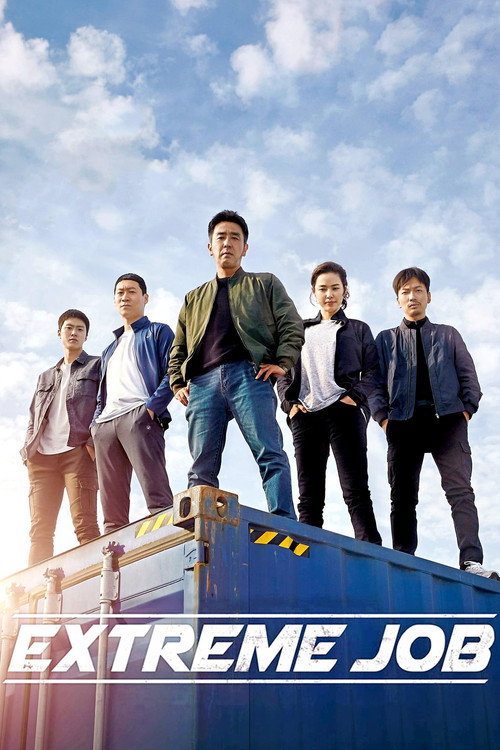
Extreme Job
A kinetic, grease-sizzling caper comedy where desperate working-class desperation meets deadpan absurdity, mirroring life as a smoking fryer basket where bruised misfits transform daily burnout into an accidental masterpiece of survival.
Extreme Job

Extreme Job

극한직업

"Part-time frying chicken, full-time undercover."

23 January 2019 South Korea 111 min 7.2 (363)

Director: Lee Byeong-heon

Cast: Ryu Seung-ryong, Lee Hanee, Jin Sun-kyu, Lee Dong-hwi, Gong Myoung

Crime Action Comedy Underdog Solidarity and Collective Camaraderie The Absurdity of Modern Capitalism and Small Business Identity Crisis: Duty vs. Economic Prosperity Competence Disguised as Incompetence Institutional Bureaucracy and Domestic Sacrifices
Budget: $8,120,000
Box Office: $124,652,206

Overview

Extreme Job follows a five-member narcotics detective squad on the verge of total departmental disgrace and disbandment. Led by the perpetually passed-over Captain Go, the team is notorious for botching operations, causing disproportionate property damage, and trailing behind rival precincts in promotions. Desperate to salvage their careers, the squad seizes one final lifeline: taking down a powerful transnational drug ring headed by the elusive baron Lee Moo-bae.

To conduct round-the-clock surveillance on the cartel’s safehouse, the detectives stake out a dilapidated, failing fried chicken joint directly across the street. When the restaurant's owner decides to close up shop, Captain Go stakes his own retirement savings to buy out the lease and keep their cover intact. However, to avoid suspicion from curious neighbors and criminals alike, they are forced to actually prepare and serve food.

The operation spirals into chaotic absurdity when Detective Ma improvises a sauce using his family's Suwon marinated rib (galbi) recipe. The culinary hybrid, dubbed "Suwon Wanggalbi Fried Chicken," becomes an overnight viral sensation. Trapped between unending lines of foodie customers, influencer hype, and their duty as police officers, the squad struggles to remember whether they are undercover cops running a chicken joint or full-time restaurateurs attempting to catch criminals.
Core Meaning

At its core, director Lee Byeong-heon uses the buddy-cop comedy format to construct a sharp, affectionate satire of the contemporary South Korean working class, the gig economy, and the relentless grind of everyday survival. The central thematic irony—that underappreciated civil servants achieve unprecedented financial success in the fiercely competitive restaurant market while completely failing at their primary profession—satirizes economic anxieties, workplace disillusionment, and self-employment struggles in modern Korea. The film ultimately celebrates collective solidarity, resilience, and the quiet dignity of ordinary strivers who refuse to be discarded by systemic neglect.

Thematic DNA

Underdog Solidarity and Collective Camaraderie 30%
The Absurdity of Modern Capitalism and Small Business 25%
Identity Crisis: Duty vs. Economic Prosperity 20%
Competence Disguised as Incompetence 15%
Institutional Bureaucracy and Domestic Sacrifices 10%

Underdog Solidarity and Collective Camaraderie

The five detectives represent societal castaways and workplace misfits. Their strength is not individual genius, but an unyielding, organic team chemistry forged in shared misery and shared triumphs.

The Absurdity of Modern Capitalism and Small Business

South Korea has one of the highest densities of fried chicken restaurants per capita, often started by retirees risking their severance packages. The film highlights the madness of viral social media marketing, supply-chain logistics, and predatory franchise schemes.

Identity Crisis: Duty vs. Economic Prosperity

As the restaurant rakes in cash, the characters genuinely struggle with whether to return to dangerous, low-paying police work or embrace their lucrative new culinary calling.

Competence Disguised as Incompetence

While the team appears bumbling and clumsy during procedural bureaucracy, each member possesses elite martial arts skills that only emerge when push comes to shove.

Institutional Bureaucracy and Domestic Sacrifices

The narrative highlights the painful friction between domestic obligations (mortgages, school fees, spousal respect) and thankless, hazardous civil service.

Character Analysis

Captain Go (Squad Chief Go)

Ryu Seung-ryong

Archetype: Bruised Mentor / Reluctant Leader Key Trait: "Zombie" resilience; survived 12 separate stab wounds in the line of duty.

Motivation

Securing promotion and financial stability for his family without losing his moral compass.

Character Arc

Evolves from a weary, demoralized supervisor into a fierce protector of both his squad and his dignity.

Detective Jang (Jang Yeon-soo)

Lee Hanee (Honey Lee)

Archetype: Tough-as-Nails Enforcer Key Trait: Former Asian Muay Thai champion; unapologetically brash and physically lethal.

Motivation

Keeping the dysfunctional squad grounded, solvent, and operational.

Character Arc

Shifts from constant cynicism and exasperation to taking pride in the team's shared grit and unvarnished identity.

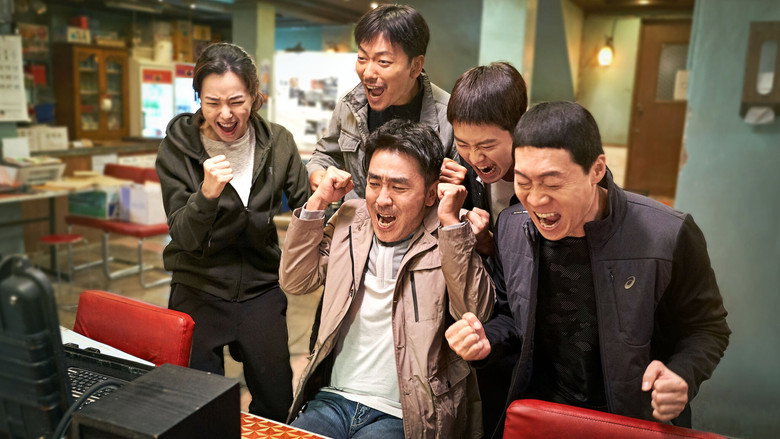
All 5 characters and cast

Symbols & Motifs

Suwon Wanggalbi Fried Chicken

Meaning:

Symbolizes the unpredictable alchemy of luck and working-class ingenuity. It bridges two Korean comfort food staples (fried chicken and marinated beef ribs), embodying how improvised compromises can yield accidental genius.

Context:

Created by Detective Ma using his family recipe to keep up appearances for their stakeout, turning an undercover cover story into an overnight viral sensation.

The Fryer Basket / Hot Cooking Oil

Meaning:

Serves as a visual motif for trial by fire and repetitive labor. The sizzle and physical burns of the kitchen mirror the bruising reality of fieldwork.

Context:

Visualized continually throughout the restaurant scenes as the detectives endure physical labor, burns, and relentless rush hours while balancing surveillance.

The Wire / Window-Washing Harness

Meaning:

Represents the team’s precarious institutional standing—dangling on a thin thread, unable even to afford the cost of a broken window.

Context:

Featured prominently in the opening bust scene where the squad hesitates to breach a window due to budget penalties and ends up suspended mid-air.

The Cash Guillotine / Counting Machine

Meaning:

Symbolizes capitalist temptation, temporarily seducing the squad away from their moral duty.

Context:

Shown rhythmically counting massive piles of paper cash earned from daily sales as the detectives begin to obsess over business profits rather than surveillance.

The "Zombie" Moniker

Meaning:

Highlights survival through brute endurance rather than tactical grace, reflecting the everyday worker who takes blow after blow but refuses to stay down.

Context:

Referenced as Captain Go's police nickname due to his history of surviving twelve stab wounds, later demonstrated during his climactic showdown with the cartel leader.

Memorable Quotes

지금까지 이런 맛은 없었다. 이것은 갈비인가 통닭인가? 예, 수원왕갈비통닭입니다.
— Captain Go

Context

Spoken repeatedly over the telephone by Captain Go as orders pour into the restaurant, marking the squad's transition into viral restaurateurs.

Meaning

The deadpan greeting Captain Go delivers whenever answering the restaurant's phone. It became an explosive nationwide pop-culture catchphrase across South Korea.

왜 자꾸 장사가 잘 되는데?!
— Detective Young-ho

Context

Exclaimed during a frantic rush hour as the squad is completely overwhelmed by endless chicken orders from customers.

Meaning

Perfectly captures the existential comedy of their accidental entrepreneurship and the frustration of being derailed from their police duties by runaway commercial success.

All 4 quotes

Philosophical Questions

What defines professional vocation versus economic survival?

The film investigates whether human dignity lies in high-minded civic duty or in the practical ability to provide food and safety for one's family, highlighting the moral compromises forced upon underpaid public servants.

Is success in modern society governed by merit or sheer serendipity?

Explored through the detectives, who are elite martial artists and dedicated officers whose actual professional breakthrough stems entirely from an improvised, accidental marinade recipe rather than their institutional training.

How does institutional neglect distort human ethics?

Examines how state underfunding and administrative indifference erode public institutions, blurring the line between legal enforcement, economic survival, and illicit opportunism.

Alternative Interpretations

The film can be evaluated through two distinct critical lenses:

Full ending explanation

Cultural Impact

Released in early 2019 during the Lunar New Year holiday season, Extreme Job tapped directly into widespread anxieties over job insecurity, retirement insolvency, and the hyper-saturated small-franchise market in South Korea. Starting a fried chicken business is a recognized cultural rite of passage for early retirees and laid-off salarymen in Korea.

The film achieved historic milestones, becoming the second most-watched film in South Korean cinema history by total admissions (16.26 million) and the #1 highest-grossing South Korean film of all time by total domestic box office revenue. Its signature "Suwon Wanggalbi" catchphrase spawned hundreds of parodies across Korean variety shows, commercials, and political campaigns.

Audience Reception

Extreme Job was universally lauded for its razor-sharp screenplay, impeccably timed banter, complete absence of forced melodrama, and the brilliant ensemble chemistry of the five leads. Critics particularly commended the climactic final fight sequence for delivering genuine action excellence and high-level choreography rather than cheap gag-fighting.

A minor critique noted that the mid-film transition—shifting from restaurant antics to corporate franchise plotting—briefly slows the comedic momentum with exposition. However, the film encountered no significant controversies and is widely recognized as the definitive gold standard of modern South Korean action-comedy filmmaking across demographic lines.

Interesting Facts

  • Jin Sun-kyu took intensive cooking and culinary knife-skills classes prior to filming to ensure his slicing and wok-tossing looked authentic on camera without hand doubles.
  • The fictional "Suwon Wanggalbi Chicken" became a real-life food trend across South Korea. Restaurants in Suwon and Seoul added the sweet-savory beef-rib sauce fried chicken to their menus, and CJ Foods released DIY bottled sauces.
  • The core script idea originated from the "Korea-China Story Creation" project by writer Moon Choong-il. The concept was developed simultaneously in China as Lobster Cop (2018) and in Korea as Extreme Job (2019), with director Lee Byeong-heon heavily rewriting the dialogue to inject his trademark deadpan rhythm.
  • Produced on a modest budget of approximately ₩6.5 billion (~$5.8 million), the film grossed over ₩139.6 billion (~$120 million) worldwide, surpassing 16.26 million admissions.
  • Ryu Seung-ryong had suffered several consecutive box-office disappointments prior to 2019; Extreme Job revitalized his career, reaffirming his status as one of South Korea's premier comedic and dramatic box-office draws.

Easter Eggs

Homage to A Better Tomorrow (1986)

The film's climactic ending explicitly pays tribute to John Woo’s iconic heroic bloodshed classic. Leslie Cheung’s theme song "A Better Tomorrow" (當年的情) plays on the soundtrack as the battered detectives sit together on a docked boat, visually mimicking the iconic final poses of Chow Yun-fat and Ti Lung.

"Jang Bak" Nickname

Detective Jang’s martial arts background earns her the nickname "Jang Bak" within the police department—a direct nod to Tony Jaa’s martial arts classic Ong-Bak (2003).

The "Bus Crash" Trope Subversion

In typical action blockbusters, the hero dramatically tackles a fleeing suspect. In the opening chase, the fleeing criminal is abruptly knocked out by a passing local town bus, completely robbing the detectives of their heroic arrest and highlighting their comical bad luck.

Frequently Asked Questions

Explore More About This Movie

Dive deeper into specific aspects of the movie with our detailed analysis pages

Comments (0)

Leave a comment

No comments yet. Be the first to share your thoughts!

Similar Movies