Skip to content
Seoul Vibe
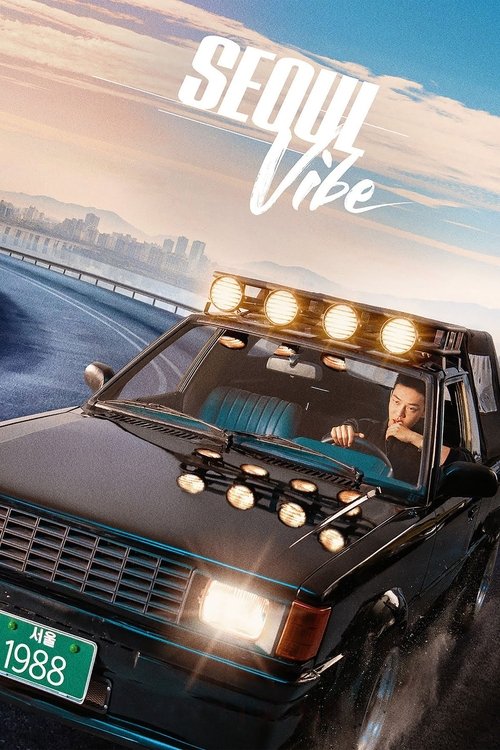
Drenched in neon retro-funk nostalgia and roaring engines, Seoul Vibe is an electric joyride of youthful defiance where five misfits drift through 1988 political shadows in search of freedom.
Seoul Vibe

Seoul Vibe

서울대작전

"Drive back to 1988."

26 August 2022 South Korea 140 min 6.5 (181)

Director: Moon Hyun-sung

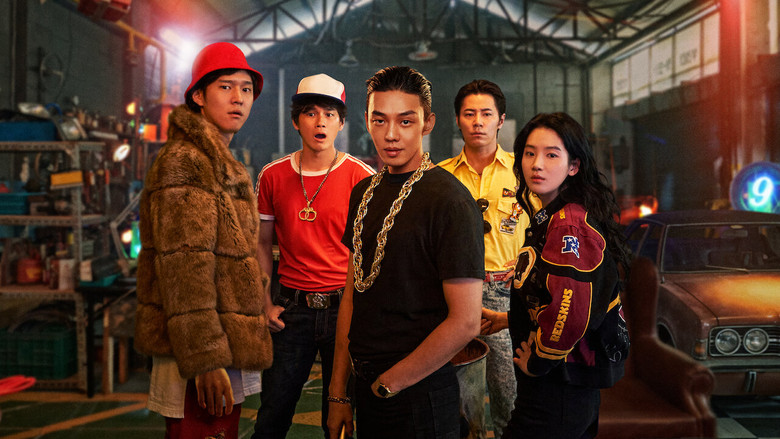
Cast: Yoo Ah-in, Go Kyung-pyo, Lee Kyoo-hyung, Park Ju-hyun, Ong Seong-wu

Crime Action Comedy Freedom, Aspiration, and the "American Dream" Chosen Family and Grassroots Solidarity Institutional Corruption and Oligarchical Slush Funds Cultural Transformation and Retro Identity

Overview

Set against the backdrop of the 1988 Summer Olympic Games in Seoul, Seoul Vibe captures South Korea at a pivotal crossroads of political transition and cultural transformation. Following decades of authoritarian military dictatorship, the country opens its doors to the global stage and Western popular culture. In this electric climate, ace drift racer Park Dong-wook returns from dangerous contraband-hauling gigs in Saudi Arabia alongside his loyal mechanic Joon-ki, dreaming of securing US visas to race at Daytona.

Upon returning, Dong-wook reunites with his close-knit crew, the Sanggyedong Supreme Team: his motorcycle-riding sister Yoon-hee, smooth-talking aspiring DJ Oh Woo-sam (alias "John Woo"), and Bok-nam, a yellow-cab driver with a photographic memory of Seoul's alleys. However, their reunion is cut short when ambitious prosecutor Ahn Pyung-wook corners them with evidence of past illicit activities, offering an ultimatum: clear their criminal records and earn US visas by going undercover into a high-stakes money-laundering network.

To fulfill the mission, the crew must win a high-speed driving audition to become elite VIP couriers for Chairwoman Kang In-sook, a ruthless underground financial broker managing illicit slush funds for ousted military elites, and her brutal enforcer, Director Lee Hyun-kyun. As the crew navigates lethal power struggles, shootouts, and dizzying car chases through neon streets, they must balance high-stakes espionage with their quest for personal freedom.
Core Meaning

Director Moon Hyun-sung utilizes the vibrant aesthetic of 1988 to examine the friction between youthful idealism and institutional corruption. The film emphasizes how ordinary, working-class youths—marginalized by rapid urban redevelopment and autocratic systems—reclaim agency by outsmarting corrupt power brokers who exploit national milestones for illicit gain. Moon's central message celebrates grassroots solidarity and chosen family, arguing that true liberation is achieved not through serving authoritarian institutions or legal authorities, but through audacious self-determination and unwavering loyalty to one's community.

Thematic DNA

Freedom, Aspiration, and the "American Dream" 35%
Chosen Family and Grassroots Solidarity 25%
Institutional Corruption and Oligarchical Slush Funds 20%
Cultural Transformation and Retro Identity 20%

Freedom, Aspiration, and the "American Dream"

Dong-wook's fixation on Daytona, American sneakers, and muscle cars encapsulates the late-1980s South Korean youth generation, which viewed Western pop culture as a conduit for individual liberty away from strict state control.

Chosen Family and Grassroots Solidarity

The Sanggyedong crew embodies an unbreakable, self-made family unit whose mutual trust, loyalty, and complementary talents consistently outmatch transactional alliances among criminal syndicates and calculating politicians.

Institutional Corruption and Oligarchical Slush Funds

The narrative exposes how VIPs and military holdovers laundered national wealth behind the glitz of the 1988 Olympics, juxtaposing elite greed with the forced demolition of working-class neighborhoods like Sanggye-dong.

Cultural Transformation and Retro Identity

Through hip-hop mixtapes, boomboxes, customized domestic vehicles, and street fashion, the film demonstrates how urban youth synthesized incoming global media into their own distinct, localized pop identity.

Character Analysis

Park Dong-wook

Yoo Ah-in

Archetype: The Maverick Driver / Reluctant Hero Key Trait: Fearless drift racing instincts and quick-thinking composure under pressure.

Motivation

To obtain US visas, race at Daytona, and secure a safe future for his sister and friends.

Character Arc

Evolves from an individualistic smuggler obsessed with foreign racing into a protective leader willing to risk everything for collective justice and his crew's safety.

Oh Woo-sam ("DJ John Woo")

Go Kyung-pyo

Archetype: The Trickster / Cultural Spy Key Trait: Smooth charisma, musical curation, and effortless social infiltration.

Motivation

To achieve international DJ fame and secure safe passage to the United States.

Character Arc

Transitions from comic relief and aspiring disc jockey into a crucial undercover operative inside the syndicate's inner social circle.

All 5 characters and cast

Symbols & Motifs

The Custom Hyundai Grandeur & Pony Pick-up

Meaning:

Represents indigenous Korean automotive ingenuity upgraded to compete directly against foreign supercars, reflecting national pride and technical resourcefulness.

Context:

Modified by Joon-ki with nitrous systems and armor to outrun high-end syndicate vehicles during high-speed delivery missions.

The Mixtape Cassette

Meaning:

Serves as a metaphor for kinetic rhythm, individual swagger, and psychological focus amidst high-stress chaos.

Context:

Created by DJ Woo-sam and played by Dong-wook in the tape deck to dictate the tempo and timing of his drift maneuvers.

Nike Air Jordan Sneakers & Western Streetwear

Meaning:

Material artifacts symbolizing the hunger for global recognition, modern autonomy, and the commercial influx accompanying the Olympic era.

Context:

Worn and prized by Dong-wook as emblems of his ultimate dream to race at Daytona in the United States.

The 1988 Olympic Mascot (Hodori) & Parades

Meaning:

A satirical motif representing state-sponsored spectacle and nationalist distraction used to mask structural corruption.

Context:

Featured prominently in public celebrations occurring directly above the underground slush fund operations.

Sanggye-dong Neighborhood Demolition

Meaning:

Visual shorthand for the collateral damage, forced displacement, and social costs of rapid authoritarian modernization.

Context:

Serves as the home base for the protagonist crew, establishing their working-class roots and anti-establishment motivation.

Memorable Quotes

Yo yo! Mix tape to make you drive faster. You get it. Your own vibe. Drift the car with tempo, OK?
— Oh Woo-sam / DJ John Woo

Context

Woo-sam hands Dong-wook a custom-curated cassette tape right before a dangerous driving operation.

Meaning

Establishes the film's signature synergy between hip-hop rhythm and high-speed automotive precision.

상계동 슈프림, 우리가 진짜 레이싱이 뭔지 보여주자! (Sanggye-dong Supreme, let's show them what real driving looks like.)
— Park Dong-wook

Context

Dong-wook rallies the entire squad before initiating their climactic heist during the Olympic opening ceremony.

Meaning

Cements the crew's collective identity and neighborhood pride against elite, institutional adversaries.

All 3 quotes

Philosophical Questions

Can individual morality survive within deeply corrupt institutional systems?

The film examines whether ordinary citizens can retain personal integrity when compelled to operate in an exploitative socio-political system where survival requires adopting compromised rules.

Is global Westernization synonymous with true liberation?

The crew's idolization of Daytona and American culture is weighed against their deep communal roots in Sanggye-dong, probing whether international escape truly resolves the quest for belonging and freedom.

Alternative Interpretations

The Anti-Establishment Reading: Dong-wook and his team outwitting both the criminal syndicate and the state prosecution suggests that institutional structures—legal or illegal—are fundamentally predatory; true freedom requires bypassing compromised official systems entirely.

Full ending explanation

Cultural Impact

The film is grounded in 1988, a watershed moment in modern Korean history following the June Democratic Struggle of 1987 that ended decades of direct military dictatorship. While the 1988 Seoul Olympics served as a global showcase for national economic modernization, authoritarian elites simultaneously attempted to launder enormous political slush funds (chongsaengho). Seoul Vibe reflects contemporary pop culture's nostalgic re-examination of this era, celebrating the rise of Korean street fashion and hip-hop while critiquing the dark political corruption and forced urban clearances of the late authoritarian period.

Audience Reception

Upon its global Netflix premiere on August 26, 2022, Seoul Vibe garnered praise for its hyper-stylish 1980s visual palette, charismatic cast chemistry, dynamic soundtrack curated by DJ Soulscape, and entertaining drift choreography. However, critics and viewers noted shortcomings, including an overextended runtime of approximately 138 minutes, formulaic heist tropes, tonal unevenness between light comedy and gritty violence, and noticeable CGI driving effects during complex stunt set-pieces. Overall, it was received as a flashy, fun popcorn action film elevated by retro charm.

Interesting Facts

  • Principal photography took place between August 2021 and February 2022 in Eurwang-dong, Jung-gu, Incheon, produced on a budget estimated under $10 million.
  • The production team restored and custom-modified period-accurate vehicles, including the first-generation Hyundai Grandeur, Hyundai Pony pickup, Hyundai Sonata, and BMW M3 E30 to perform real drift maneuvers.
  • Moon So-ri chose to portray Chairwoman Kang with an aggressive, abrasive persona rather than the scripted elegant approach to accentuate the character's unvarnished greed.
  • The film's retro soundtrack was co-curated by legendary Korean hip-hop pioneer DJ Soulscape alongside Nene Kang, blending late-80s breakbeats, city pop, and electro-funk.

Easter Eggs

K-pop star Song Min-ho (Mino) debut and soundtrack contribution

WINNER's Song Min-ho makes his feature film acting debut as Dong-wook's gaudy rival racer "Galchi" and contributed original songs to the movie's official soundtrack.

Stylistic homage to Edgar Wright and Fast & Furious

The split-screen montages, rhythm-synced gear shifting, and cassette audio cues directly reference Baby Driver and early Fast & Furious installments.

"DJ John Woo" character alias

Go Kyung-pyo's character nickname pays tribute to iconic Hong Kong director John Woo, mirroring the immense popularity of Hong Kong heroic bloodshed cinema in late-1980s South Korea.

1988 historical set replicas and archival footage

Background set dressings incorporate authentic 1988 Olympic promotional posters, retro snack brands, vintage CRT televisions, and actual broadcast footage from the era.

Frequently Asked Questions

Explore More About This Movie

Dive deeper into specific aspects of the movie with our detailed analysis pages

Comments (0)

Leave a comment

No comments yet. Be the first to share your thoughts!

Similar Movies