Skip to content
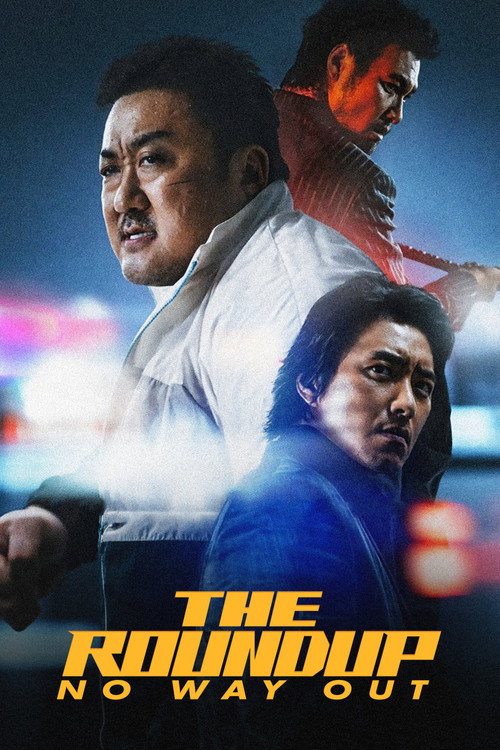
The Roundup: No Way Out
Drenched in neon-lit urban grit and surging with high-octane catharsis, this action thriller strikes like an iron fist shattering glass, delivering relentless adrenaline through an unstoppable force crushing modern criminal underworlds.
The Roundup: No Way Out

The Roundup: No Way Out

범죄도시 3

"Wipe out all the bastards!"

31 May 2023 South Korea 105 min 7.2 (552)

Director: Lee Sang-yong

Cast: Don Lee, Lee Jun-hyuk, Munetaka Aoki, Lee Beom-soo, Kim Min-jae

Crime Action Thriller Comedy Cathartic Justice and Moral Clarity Institutional Corruption vs. Uncompromising Duty Transnational Crime and Urban Syndicate Intrusion Street-Level Pragmatism over Bureaucratic Red Tape Camaraderie and Mutual Trust
Box Office: $83,410,298

Overview

Set seven years after the events in Vietnam, The Roundup: No Way Out (Korean: 범죄도시3) follows the formidable detective Ma Seok-do as he transfers to the Metropolitan Investigation Unit in Seoul. Tasked with solving a mysterious homicide linked to a young woman's fall from a building, Ma and his new squad uncover a lucrative narcotics syndicate distributing a potent new synthetic drug called "Hiper" throughout Seoul's high-end nightclub scene.

As Detective Ma digs deeper into the city's murky underbelly, he discovers that the operation is far more complex than standard street-level drug dealing. The supply chain is controlled by a dangerous coalition: corrupt law enforcement officials operating within the Korean police force, alongside brutal factions of the Japanese Yakuza competing for control over the $30 million drug stash.

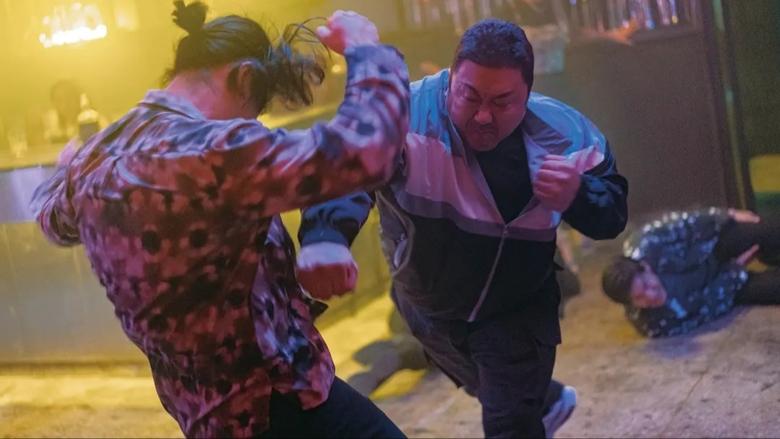
Facing pressure from both institutional corruption and ruthless foreign assassins, Ma Seok-do must navigate a web of betrayals and backroom deals. Relying on his signature heavy-handed interrogation methods and crushing physical power, Ma barrels through waves of armed goons and corrupt figures to bring righteous street justice to the metropolis.
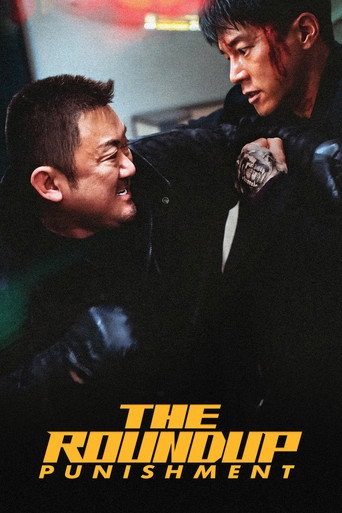
Core Meaning

At its core, The Roundup: No Way Out serves as a populist fantasy of unyielding moral clarity and cathartic justice in an era plagued by institutional rot and systemic corruption. Director Lee Sang-yong uses the unstoppable juggernaut of Detective Ma Seok-do to convey that when bureaucratic protocols and corrupt authorities fail the public, raw, uncompromising integrity—backed by overwhelming force—will inevitably dismantle evil. The film highlights the threat of modern transnational crime while reassuring audiences that true justice cannot be bribed, intimidated, or co-opted.

Thematic DNA

Cathartic Justice and Moral Clarity 35%
Institutional Corruption vs. Uncompromising Duty 25%
Transnational Crime and Urban Syndicate Intrusion 20%
Street-Level Pragmatism over Bureaucratic Red Tape 10%
Camaraderie and Mutual Trust 10%

Cathartic Justice and Moral Clarity

Revealed through Ma Seok-do's single-minded pursuit of criminals without moral compromise. His heavy fists act as a symbolic equalizer against violent syndicate bosses and corrupt officials who believe they operate above the law.

Institutional Corruption vs. Uncompromising Duty

Contrasted through the characters of Detective Ma and corrupt narcotics officer Joo Sung-cheol. While Joo abuses his badge and legal authority for personal wealth and power, Ma uses his position strictly to protect innocent citizens and enforce morality.

Transnational Crime and Urban Syndicate Intrusion

Illustrated through the dangerous alliance and conflict between Korean narcotics dealers, Japanese Yakuza syndicates, and Chinese Triads vying for dominance over Seoul's club culture.

Street-Level Pragmatism over Bureaucratic Red Tape

Shown through Ma's informal policing tactics—such as relying on colorful street informants, off-the-books interrogations, and physical intimidation—which bypass official sluggishness to yield immediate results.

Camaraderie and Mutual Trust

Explored via the dynamic within Ma's new Metropolitan Investigation Unit, where loyalty, mutual support, and lighthearted banter sustain team morale against overwhelming criminal threats.

Character Analysis

Ma Seok-do

Don Lee / Ma Dong-seok

Archetype: Unstoppable Hero / Crusading Supercop Key Trait: Superhuman heavy boxing power paired with deadpan humor and an easygoing demeanor.

Motivation

Eradicate violent crime, clean up Seoul's streets, and protect innocents.

Character Arc

Adapts to his new post at the Metropolitan Investigation Unit, proving that his hands-on, moral philosophy remains effective even against complex corporate and police corruption.

Joo Sung-cheol

Lee Jun-hyuk

Archetype: Corrupt Executive / Double-Agent Villain Key Trait: Ruthless calculation, cold violence, and hypocritical authority under the cover of a police badge.

Motivation

Amass massive personal fortune and control the narcotics trade in Korea.

Character Arc

Evolves from a smooth, high-ranking narcotics officer secretly pulling strings to a cornered, desperate criminal as Ma closes in.

All 4 characters and cast

Symbols & Motifs

The One-Punch Knockout / Iron Fist

Meaning:

Symbolizes absolute, unyielding moral force and immediate cathartic resolution.

Context:

It appears during crucial fight climaxes, demonstrating that criminal arrogance is swiftly flattened by righteous power.

"Hiper" (Synthetic Drug)

Meaning:

Symbolizes urban decay, greed, and the corrupting nature of illicit wealth.

Context:

It acts as the narrative catalyst that draws diverse criminal factions together into violent collision.

The Samurai Katana

Meaning:

Wielded by the Yakuza assassin Riki, the katana symbolizes lethal, calculated, foreign violence.

Context:

It contrasts sharp, deadly precision against Ma Seok-do's blunt, heavy-handed boxing style.

The "Truth Room" (진실의 방)

Meaning:

Symbolizes pragmatic, street-level enforcement bypassing legal loopholes.

Context:

A recurring franchise motif where police blinds, curtains, or cameras are covered to conduct off-the-record physical interrogations.

The Leather Jacket / Suit Contrast

Meaning:

Symbolizes real, gritty working-class dedication versus slick, hypocritical institutional corruption.

Context:

Expressed through Ma's rugged casual wear vs. Joo Sung-cheol's polished tailored suits.

Memorable Quotes

경찰이란 게 뭐야? 민중의 몽둥이 아니야?
— Ma Seok-do

Context

Defending his heavy-handed interrogation tactics to his squad members.

Meaning

A comedic play on the official Korean police slogan "Rod of the People" (민중의 지팡이), twisting it to "Stick/Baton of the People," encapsulating Ma's belief in forceful street justice.

진실의 방 청소하자.
— Ma Seok-do / Kim Man-jae

Context

Delivered before covering up security cameras and blinds to physically interrogate uncooperative suspects.

Meaning

The iconic franchise catchphrase signaling that off-the-record physical coercion is about to begin.

All 5 quotes

Philosophical Questions

Does the end justify the means in public safety?

The film constantly shows Ma Seok-do violating constitutional procedures and committing police brutality to catch dangerous murderers. It asks viewers whether extrajudicial force is morally acceptable when legal systems fail to protect citizens.

Can justice genuinely exist within corrupt institutions?

Through Joo Sung-cheol’s leadership of the Narcotics unit while operating a drug ring, the film asks whether law enforcement institutions are inherently vulnerable to moral decay.

What distinguishes righteous violence from criminal violence?

Both Ma Seok-do and his adversaries use extreme physical force. The film explores how intent, empathy, and selfless dedication to public protection separate noble strength from predatory brutality.

Alternative Interpretations

The film can be analyzed through three interpretive angles:

Full ending explanation

Cultural Impact

Releasing in May 2023, The Roundup: No Way Out arrived at a critical moment for South Korean cinema. Local box office attendance had slumped post-pandemic, and domestic theaters were heavily dominated by Hollywood and Japanese animated films. The movie's rapid accumulation of 10.6 million admissions invigorated the South Korean film industry, proving the enduring power of local star-driven blockbusters.

Culturally, the film resonated with Korean audiences frustrated by real-world scandals involving club drugs, gang proliferation in Gangnam, and high-profile institutional corruption. Ma Seok-do's blunt, uncompromising destruction of double-dealing officials provided immense populist catharsis. Dialogue snippets and comedic ad-libs quickly transformed into viral memes across Korean social media.

Audience Reception

Praised Aspects:

  • Don Lee’s unmatched screen charisma, hilarious comedy ad-libs, and powerful heavyweight boxing action sequences.
  • Standout comedic performances, particularly Ko Kyu-pil as the reluctant informant Cho-rong.
  • Fast pacing, visceral punch sound effects, and pure crowd-pleasing catharsis.

Main Points of Criticism:

  • Predictable plot structure following the exact same template as previous installments.
  • Villain development felt slightly less iconic compared to previous antagonists like Jang Chen (The Outlaws) or Kang Hae-sang (The Roundup).
  • Over-reliance on police brutality gags.

Overall Verdict: An exceptionally fun, highly entertaining action-comedy blockbuster that expertly delivers what fans desire, even if it sticks comfortably to its established franchise formula.

Interesting Facts

  • Don Lee, a former real-life MMA coach and boxer, personally overhauled the fight choreography for this entry, shifting Ma Seok-do’s style from open-palm slaps and brawling to refined, heavyweight boxing mechanics (heavy hooks, body blow slips, and weaves).
  • To portray villain Joo Sung-cheol as a believable physical match for Don Lee, actor Lee Jun-hyuk gained over 20 kg (44 lbs) of muscle and underwent vocal pitch training to deepen his voice.
  • The plot was loosely based on a actual 2017–2018 international drug smuggling investigation involving methamphetamine trafficking across Japan, South Korea, and Taiwan.
  • Unlike previous entries featuring a single main antagonist (The Outlaws, The Roundup), director Lee Sang-yong introduced two distinct main villains operating independently (corrupt officer Joo Sung-cheol and Japanese executioner Riki).
  • The film achieved over 10.6 million theater admissions in South Korea, making it the second consecutive movie in the franchise to surpass the historic 10-million-ticket milestone.
  • Acclaimed Japanese veteran actor Jun Kunimura made a special guest appearance as Chairman Ichijo, head of the Japanese Yakuza syndicate.

Easter Eggs

Jun Kunimura Cameo

Plays Yakuza Chairman Ichijo. This marks his second major appearance in a Korean film after his famous role as the stranger in Na Hong-jin's The Wailing (2016).

Mid-Credits Cameo (Jang I-soo)

Fan-favorite franchise character Jang I-soo (Park Ji-hwan) makes a surprise appearance during the mid-credits scene. Ma tracks him down at an arcade to recruit his assistance, setting up his full return in The Roundup: Punishment.

Weapon Bag Homage

In a fight scene with Riki, Ma hands him a tiny plastic evidence bag and tells him to put his long katana inside. This is a direct comedic throwback to The Outlaws (2017), where Ma handed the same tiny bag to a gangster holding a small pocket knife.

Frequently Asked Questions

Explore More About This Movie

Dive deeper into specific aspects of the movie with our detailed analysis pages

Comments (0)

Leave a comment

No comments yet. Be the first to share your thoughts!

Similar Movies