Skip to content
Fairy Tail
A whirlwind of high-fantasy adventure and roaring camaraderie, burning with the fierce warmth of an indomitable hearth against an encroaching sea of eternal twilight.
Fairy Tail

Fairy Tail

FAIRY TAIL

12 October 2009 — 29 September 2019 Japan 8 season 328 episode Ended 7.9 (1,048)

Cast: Tetsuya Kakihara, Aya Hirano, Rie Kugimiya, Yuichi Nakamura, Sayaka Ohara

Animation Sci-Fi & Fantasy Action & Adventure Comedy Found Family & Unconditional Belonging Trauma, Atonement, and Redemption Magic as the Embodiment of Human Emotion Defiance of Fate, Despair, and Immortality

Overview

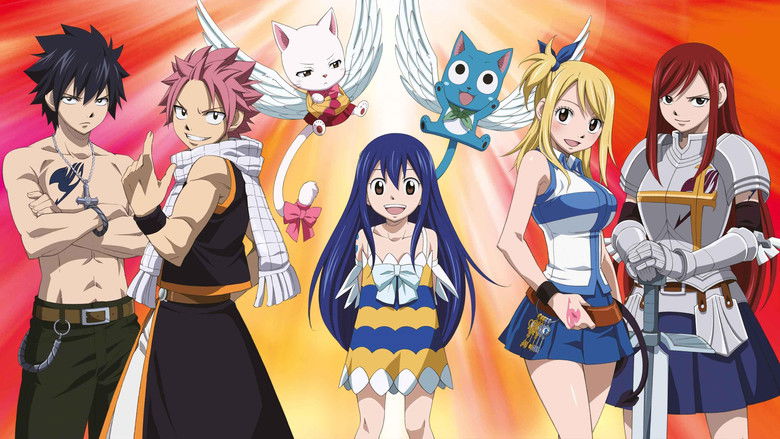
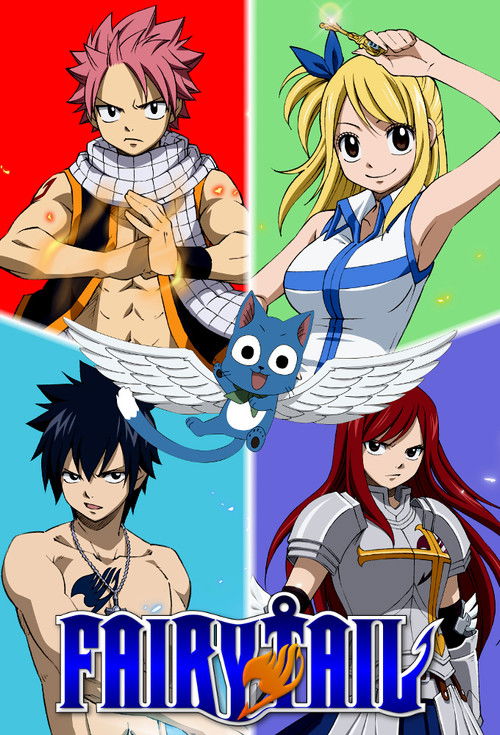
Fairy Tail is an epic fantasy adventure set in the magical realm of Earth-land, predominantly within the Kingdom of Fiore. The story centers on the titular guild—a notoriously rambunctious yet fiercely tight-knit collective of spellcasters who take on freelance mercenary quests ranging from mundane pest exterminations to combating illicit syndicates. The journey begins when Lucy Heartfilia, an aspiring celestial spirit mage fleeing an overbearing aristocratic heritage, encounters Natsu Dragneel, a reckless Dragon Slayer wizard searching for his surrogate father, the dragon Igneel. Alongside Natsu’s feline Exceed companion Happy, the ice-make wizard Gray Fullbuster, and the armored swordswoman Erza Scarlet, they coalesce into the guild's strongest team.

Across 328 episodes, the narrative expands from localized adventures into global conflicts. The guild faces escalating external threats, including rival guilds, ancient curses, militaristic empires, and sinister shadow organizations operating in the underworld. Over time, the guild members are forced to confront personal traumas, historic feuds, and long-buried mystical artifacts, uniting not merely through contractual loyalty, but through deep fraternal kinship.

In its concluding acts, disparate plot threads from across the centuries weave into a unified struggle between human free will, primeval dragons, and immortal dark magic. As continental wars threaten their very existence, Fairy Tail balances comedic guild-hall antics and high-stakes magical warfare, tracing how an unorthodox band of misfits defends their right to exist as a family.
Core Meaning

The fundamental thesis of Fairy Tail is that true strength does not stem from solitary power or ruthless ambition, but from the radical empathy and emotional resilience nurtured in a chosen family. Creator Hiro Mashima and the series production team consistently communicate that vulnerability is not a liability—magic in Earth-land is explicitly powered by human emotions and interpersonal connections. Across all seasons, the show rejects nihilism and individualistic isolation, asserting that trauma and dark lineages do not dictate one's destiny when illuminated by belonging and mutual trust.

Thematic DNA

Found Family & Unconditional Belonging 35%
Trauma, Atonement, and Redemption 25%
Magic as the Embodiment of Human Emotion 20%
Defiance of Fate, Despair, and Immortality 20%

Found Family & Unconditional Belonging

The central pillar of the series. Most guild members are orphans, runaways, or outcasts who discover sanctuary within Fairy Tail. The guild’s master, Makarov Dreyar, treats every member as his own child. This theme evolves from simple camaraderie in early arcs into an unbreakable philosophy that dismantles rigid bloodline loyalties and societal alienation.

Trauma, Atonement, and Redemption

Characters continually confront guilt and past atrocities. From Gray coping with his mentor Ur’s sacrifice, to Erza liberating herself from child enslavement, and former antagonists like Gajeel, Juvia, and Jellal seeking moral rehabilitation, the series insists that past sins can be redeemed through active protection of others.

Magic as the Embodiment of Human Emotion

Magic is not depicted as dry scientific computation, but as an expression of the heart and mind. Spells fluctuate in strength according to resolve, grief, love, and fury. The narrative constantly contrasts sterile, cold magical ambition with the warm, unpredictable power fueled by love and mutual sacrifice.

Defiance of Fate, Despair, and Immortality

Through immortal figures such as Zeref and ancient prophecies like the Dragon King Festival, the narrative explores the existential weariness of predestination and endless life. The protagonists assert that living a mortal, ephemeral life with cherished companions is vastly superior to an eternity consumed by emotional paralysis and despair.

Character Analysis

Natsu Dragneel

Tetsuya Kakihara

Archetype: The Heroic Catalyst / Fiery Paragon Key Trait: Indomitable willpower and fiery empathy

Motivation

Initially motivated to locate Igneel; broadens into safeguarding his guild family and shielding the future from existential destruction.

Character Arc

Evolves from a brash, motion-sick brawler looking for his lost foster father into a mature protector who confronts the truth of his resurrection as E.N.D. and chooses his humanity.

Lucy Heartfilia

Aya Hirano

Archetype: The Viewpoint Hero / Chronicler Key Trait: Unyielding compassion and intellectual creativity

Motivation

Began seeking independence and guild membership; evolves into preserving the bonds of the guild and writing the chronicle of their journey.

Character Arc

Matures from an insecure runaway reliant on others into an exceptionally powerful, self-sacrificing Celestial Mage and the guild's emotional anchor and historian.

All 4 characters and cast

Symbols & Motifs

The Fairy Tail Guildmark

Meaning:

Branded upon the skin of each member in their color and location of choice, the guild mark serves as the definitive symbol of unconditional sanctuary, identity, and shared purpose. The gesture of raising the index finger with the thumb extended serves as an iconic non-verbal motif signaling, "Even if I cannot see you, I am always watching over you".

Context:

Worn on the bodies of all guild members and displayed prominently throughout guild battles, farewell ceremonies, and the Fantasia parade.

Dragon Scales and Igneel’s Scarf

Meaning:

Represents paternal devotion, dragon heritage, and physical protection. It absorbs dark curses, serving as a tangible talisman linking ancient draconic lineage to the mortal world.

Context:

Worn constantly by Natsu Dragneel as a gift left behind by his foster father, the fire dragon Igneel.

Celestial Spirit Keys (Gold and Silver)

Meaning:

Represent relational contracts and mutual trust between worlds rather than dominion or enslavement.

Context:

Carried and wielded by celestial spirit mages, primarily Lucy Heartfilia, to summon spirit allies across dimensional boundaries.

The Question of Fairy Wings (Guild Metaphor)

Meaning:

Symbolizes eternal adventure, endless discovery, and the mystery of existence.

Context:

First articulated by Master Mavis Vermillion when naming the guild based on whether fairies possess tails or if they even exist.

The Teru Teru Bōzu Doll

Meaning:

Symbolized inner sorrow and the constant downpour that haunted childhood, transforming into a motif of clear skies and emotional liberation upon finding acceptance.

Context:

Carried by Juvia Lockser prior to joining Fairy Tail during her period of profound isolation.

Memorable Quotes

「仲間の為なら、たとえ世界を敵に回したって構わない!それがフェアリーテイルだ!!」
— Natsu Dragneel

Context

Delivered during Season 1 in the Phantom Lord Arc.

Meaning

Defines the guild's radical collective ethos: prioritizing emotional bonds above geopolitical laws or mortal threats.

「私が弱くても構わない。仲間を守る力さえあればいい。」
— Erza Scarlet

Context

Spoken during Season 1 during the climax of the Tower of Heaven Arc.

Meaning

Captures Erza’s selfless warrior philosophy, rejecting ego in favor of protective devotion.

All 4 quotes

Episode Highlights

Fantasia

S1E48

Concludes the Battle of Fairy Tail arc, featuring the Fantasia festival parade.

Significance:

Establishes the guild's unconditional forgiveness as Laxus is expelled but serenaded by the silent hand-sign farewell from Makarov and the guild members.

Let's Hold Hands

S1E122

The dramatic climax of the Tenrou Island Arc where Acnologia assaults the guild.

Significance:

Faced with Acnologia’s breath attack, the guild joins hands in unity to trigger Fairy Sphere, putting the core members into a seven-year stasis.

Natsu vs. the Twin Dragons

S1E175

The climactic duel of the Grand Magic Games pitting Natsu against Sabertooth's Twin Dragon Slayers.

Significance:

Serves as the pivotal turning point and broadcast transition between series runs, showcasing Fairy Tail's resurrection back to the zenith of Fiore.

Tartaros Chapter: Father and Son

S2E248

Lucy is left as the sole standing defender against the demonic guild Tartaros.

Significance:

Features Lucy's ultimate sacrifice of breaking Aquarius's golden key to summon the Celestial Spirit King to save her comrades.

Tartaros Chapter: That Is the Power of Courage

S2E264

Igneel emerges from inside Natsu’s body to confront the Dragon King Acnologia.

Significance:

Igneel is slain in combat, stripping Natsu of his lifelong search and shifting the narrative into a darker war for survival.

Dearest Friends

S3E328

The grand series finale concluding the war against Acnologia and Zeref.

Significance:

Dragon Slayers vanquish Acnologia while Lucy casts Fairy Sphere in Earth-land, leading into the guild embarking upon the 100 Years Quest.

Philosophical Questions

Can Immortality Coexist with Empathy?

Explored through Zeref and Mavis, investigating whether an endless lifespan inevitably corrodes human compassion and yields destructive nihilism.

Is Nature Determined by Origin or Choice?

Examined through Natsu discovering he is the demonic creation E.N.D., questioning whether bloodlines and metaphysical origins dictate morality over chosen actions.

What is the True Weight of Atonement?

Explored via Jellal and Crime Sorcière, asking whether redemption requires public punishment, self-flagellation, or dedicated service to protect future generations.

Alternative Interpretations

The series can be analyzed through several distinct thematic lenses:

Full ending explanation

Cultural Impact

Premiering in the late 2000s during the golden era of the "Big Three" (Naruto, Bleach, One Piece), Fairy Tail established itself as one of the definitive gateway shōnen anime worldwide. It broke from grim, lone-avenger tropes by offering a warm, community-centric aesthetic celebrating found family and cheerful solidarity. The series’ expansive merchandise lines, chart-topping soundtrack releases, and multi-generational fan following cemented its legacy as an enduring powerhouse in modern Japanese pop culture, spawning animated feature films (Phoenix Priestess, Dragon Cry) and the sequel anime Fairy Tail: 100 Years Quest.

Audience Reception

Audience reception evolved over the anime's long broadcast history:

  • Early Seasons (2009–2013): Universally praised for vibrant world-building, high-energy soundtrack, and infectious emotional warmth, though occasionally critiqued for repetitive combat conclusions and non-lethal stakes.
  • Tartaros Arc (Season 2): Widely regarded by fans and critics as the dramatic peak of the series, acclaimed for darker stakes, genuine loss (Igneel, Aquarius' key), and major character maturation.
  • Final Season (2018–2019): Received mixed-to-positive reactions; viewers celebrated the emotional payoff and grand scale of the Alvarez war, while criticizing rushed fight resolutions, static animation shortcuts, and reliance on death fake-outs.

Interesting Facts

  • The anime was produced through a multi-studio collaboration across its run, beginning with A-1 Pictures and Satelight, continuing with Studio Bridge, and concluding with CloverWorks.
  • The iconic Celtic-rock soundtrack was composed by Yasuharu Takanashi, blending electric guitars and bagpipes with traditional Celtic folk instruments.
  • In the Japanese version, the overarching series narrator is voiced by Banjō Ginga, who also voices the dragon Igneel.
  • Hiro Mashima originally intended for Lisanna Strauss to remain permanently deceased, but reintroduced her through Edolas due to character popularity and production feedback.
  • Mashima named protagonist Natsu after Summer in Japanese, following his tradition from Rave Master's Haru (Spring).

Easter Eggs

Plue and Rave Master Creatures

Lucy's spirit Plue served as the main mascot of Hiro Mashima’s previous work Rave Master, with numerous other creatures from the manga hidden throughout background frames of the anime.

Beatles Homage in Lucy’s Name

Hiro Mashima revealed that Lucy Heartfilia was named after the Beatles song "Lucy in the Sky with Diamonds".

Shakespearean Nomenclature for Erza

Erza Scarlet's moniker "Titania" directly references the Queen of the Fairies from William Shakespeare's A Midsummer Night's Dream.

Juvia’s Etymological Design

Juvia's name and character design are an intentional phonetic play on the Spanish word for rain (lluvia).

Frequently Asked Questions

Explore More About This Movie

Dive deeper into specific aspects of the movie with our detailed analysis pages

Comments (0)

Leave a comment

No comments yet. Be the first to share your thoughts!

Similar Movies