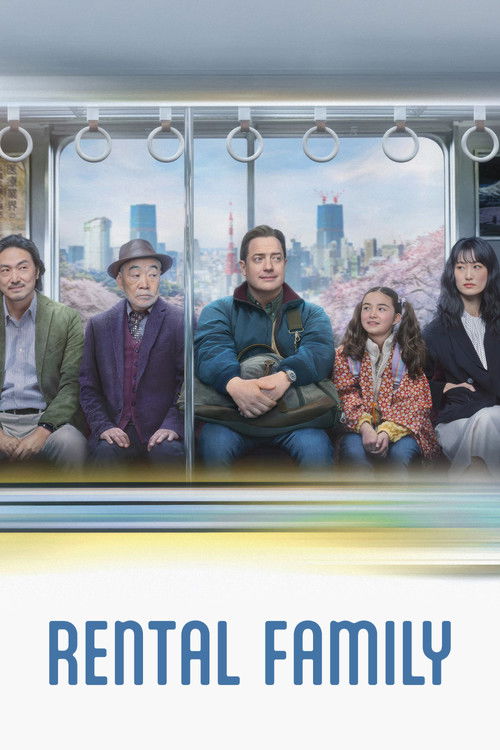
Rental Family
"Happiness tailored to you!"
Overview
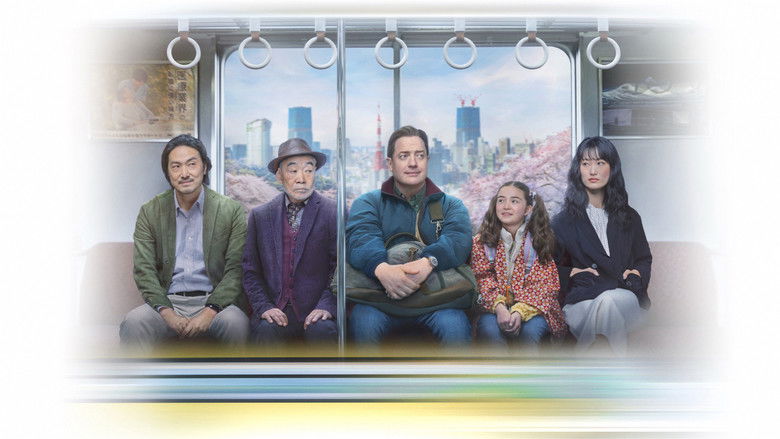
Rental Family follows Phillip Vanderploeg, an out-of-work American actor who has been adrift in Tokyo for seven years following a brief stint of fame in a quirky toothpaste commercial. Facing financial ruin and profound loneliness, his agent pushes him to take a bizarre job with a local "rental family" agency run by a pragmatic businessman named Shinji. The agency provides actors to play the roles of friends, family members, or colleagues for clients desperate to keep up appearances or fill an emotional void.
Initially hesitant, Phillip begins taking on increasingly intimate roles, from a mourner at a fake funeral to a stand-in father for an 11-year-old biracial girl named Mia. As he immerses himself in the lives of his clients, including an aging, dementia-stricken actor, the boundary between performance and reality begins to dangerously blur. What starts as a transactional gig forces Phillip to confront his own profound isolation and the moral complexities of commodifying human emotion.

Core Meaning
The film argues that while modern society is more digitally connected than ever, it suffers from a profound epidemic of loneliness and emotional isolation. Director Hikari suggests that the human need for connection is so fundamental that people will seek it out even if it is entirely fabricated. However, the core message warns that true healing cannot come from transactional relationships or hiding behind a mask; it requires vulnerability, honesty, and the courage to face reality, even when it is messy or painful.
Thematic DNA
The Commodification of Emotion
The film intricately explores how capitalism has found a way to monetize even our most primal needs for love, grief, and companionship [1.3]. Through Shinji's agency, emotions are packaged and sold by the hour, raising deep ethical questions about the authenticity of transactional comfort.
Loneliness and Modern Alienation
Set against the sprawling, densely populated backdrop of Tokyo, the narrative highlights the paradox of feeling utterly alone in a sea of people. Phillip's isolation as an expat mirrors the internal isolation of his Japanese clients, emphasizing loneliness as a universal human condition.
The Blurring of Performance and Reality
As an actor, Phillip struggles with the line between pretending to care and genuinely caring. The film questions whether acting as a father or a friend for long enough inevitably transforms the lie into a profound emotional truth.
The Search for Purpose
Phillip's journey is fundamentally about finding meaning after the collapse of his career aspirations. By stepping into the broken lives of others, he unexpectedly finds the redemption and purpose that eluded him on the stage and screen.
Character Analysis
PhillipVanderploeg
BrendanFraser
Motivation
Initially driven by financial desperation and a lack of acting work, his motivation shifts to a deep, paternal desire to protect and care for his clients, particularly Mia and Kikuo.
Character Arc
Philliptransitionsfromadepressed, isolatedexpatclingingtoadeadactingcareertoamanwhorediscovershishumanity[1.4]. By playing fake roles in people's lives, he learns what it means to be genuinely present and responsible for others.
Shinji Tada
Takehiro Hira
Motivation
To maintain order, profit from the loneliness of others, and avoid genuine emotional vulnerability in his own life.
Character Arc
Shinji starts as the cynical, detached operator of the rental agency who views human connection purely as a product. His worldview is challenged when Phillip goes off-script, forcing Shinji to confront the emptiness of his own manufactured life.
Mia Kawasaki
Shannon Mahina Gorman
Motivation
To find a stable father figure and alleviate the intense societal pressure placed on her by her mother and the Japanese schooling system.
Character Arc
Mia begins as a skeptical, guarded child navigating the pressure of private school interviews. She slowly opens her heart to Phillip, suffers betrayal when the illusion shatters, but ultimately learns the complex reality of imperfect adult relationships.
Kikuo Hasegawa
Akira Emoto
Motivation
To grasp onto his fading identity and find closure regarding the wife he left behind for his career.
Character Arc
As an aging actor losing his memories to dementia, Kikuo finds unexpected solace and clarity through Phillip's unauthorized, deeply personal intervention, allowing him to face his past before it disappears.
Symbols & Motifs
The"ClearBright"ToothpasteCommercialCutout
ItsymbolizesPhillip'spastfleetingsuccessandhisstatic, frozenidentityasacaricature—the"tokenAmerican"—inJapanesesociety[1.4].
Cardboard cutouts of the old commercial clutter Phillip's tiny shoebox apartment, serving as a constant, mocking reminder of his stalled career and past glory.
The Fake Funeral
This represents the ultimate performative nature of societal expectations and the deep-seated fear of being unloved or forgotten in death.
Phillip's very first gig for the agency involves attending a mock wake for a living man who simply wants to witness how people will react to his passing.
The Time Capsule in Amakusa
It embodies genuine, buried memories and inescapable truths, directly contrasting with the fabricated, surface-level memories the rental agency sells to its clients.
Phillip takes Kikuo, the aging actor with dementia, on an unauthorized trip to his hometown to unearth the capsule, finding photos of Kikuo's first wife.
Memorable Quotes
Weneedatokenwhiteguy.
— ShinjiTada
Context:
Shinji says this bluntly to Phillip when explaining why he is hiring him despite his lack of experience in the rental family business.
Meaning:
Thislinehighlightsthecommodificationofraceandidentitywithintherentalindustry, boilingPhillip'sentireexistencedowntoanaestheticrequirementforspecificclientele[1.2].
Lying is easier than telling the truth.
— Phillip Vanderploeg
Context:
Phillip solemnly delivers this line near the end of the film while grappling with the ethical fallout of deceiving Mia about his true identity.
Meaning:
It encapsulates the core moral conflict of the film—the seductive, painless nature of the illusions the agency provides versus the difficult, messy reality of genuine human relationships.
We sell emotion.
— Shinji Tada
Context:
Shinji uses this phrase to explain the fundamental business model of his agency to a bewildered Phillip.
Meaning:
A stark, cynical summary of the modern condition, reducing the profound depths of human connection to a simple capitalist transaction.
Philosophical Questions
Isfabricatedcomfortethicallysuperiortopainfulreality?
Thefilmconstantlyaskswhetheritisrighttolietosomeone—suchasanoldmanwithdementiaorafatherlesschild—ifthatliepreventsthemfromsufferingandbringsthemgenuinejoyinthemoment[1.4].
Can genuine emotional truth be born from a lie?
Through Phillip's arc with Mia, the story explores whether pretending to love someone as a father can eventually transform into authentic, undeniable paternal love, blurring the line between acting and being.
Does capitalism corrupt human connection, or merely adapt to our flaws?
Shinji's business model prompts the audience to consider whether monetizing empathy is a dystopian corruption of the human soul, or simply a pragmatic service fulfilling a fundamental biological need in an isolating modern world.
Alternative Interpretations
While broadly viewed as a heartwarming redemption story, Rental Family has sparked darker alternative interpretations among critics.
- The Dystopian Read: Some argue the ending is actually quite bleak. Despite Phillip's moral crisis, the agency continues to thrive, implying that society has fully surrendered to transactional relationships. The "happy" resolutions are built on a foundation of unaddressed, systemic societal trauma.
- A Meta-Commentary on Acting: The film can be viewed as an allegory for the profession of acting itself. Phillip's guilt over "lying" to his clients mirrors the inherent absurdity of cinema—where actors sell fabricated emotions to an audience desperate for real catharsis, challenging whether art is just another form of a "rental family".
Cultural Impact
Rental Family premiered at a time when global discussions around the "loneliness epidemic" were at an all-time high. Releasing in late 2025, the film resonated deeply with audiences recovering from an increasingly digital, disconnected world. It cemented the "Brenaissance"—Brendan Fraser's career revival—proving his enduring appeal as an incredibly empathetic, sensitive leading man. Culturally, it brought mainstream Western attention to the uniquely Japanese phenomenon of "rental companions," sparking widespread philosophical debates in the media about the ethics of commodified intimacy and the universal nature of grief. The film's critical success, including being named one of the National Board of Review's top 10 films of the year, positioned it as a significant contributor to the modern canon of cross-cultural cinema.
Audience Reception
Audience reception for Rental Family was overwhelmingly positive, earning a rare "A" CinemaScore and a 96% Popcornmeter on Rotten Tomatoes. Viewers universally praised Brendan Fraser's tender, vulnerable performance, noting that his natural charisma and "teddy bear" persona perfectly anchored the film's emotional weight. The cinematography and respectful depiction of Tokyo were also highly commended. However, critical reception was slightly more divided (87% on RT). While most critics loved the ensemble cast and Hikari's compassionate direction, some detractors felt the film leaned too heavily into sentimentality, accusing it of glossing over the darker, creepier ethical implications of deceiving children and the elderly for profit.
Interesting Facts
- The film is heavily inspired by the very real Japanese industry of 'rental families' (such as Family Romance, LLC), which first launched in Japan in 1991 and has grown to include hundreds of operating businesses [1.3].
- This marks Brendan Fraser's first major leading film role since his Oscar-winning performance in the 2022 film 'The Whale'.
- Director Hikari previously gained international recognition for directing multiple episodes of the critically acclaimed Netflix series 'BEEF'.
- The film features an original score composed by Jónsi (of Sigur Rós) and Alex Somers, lending the picture a distinctly ethereal and emotional atmosphere.
- During the film's world premiere at the 2025 Toronto International Film Festival, it received an extended standing ovation, moving Brendan Fraser to tears.
Easter Eggs
The"ToothpasteMan"commercial.
Phillip'sembarrassingbutlucrative"ClearBright"toothpastecommercialactsasasubtlehomagetoBillMurray'sfamous"SuntoryWhiskey"commercialinLostinTranslation, drawingaclearparallelbetweenthetwofilms'explorationsofAmericanisolationinTokyo[1.10].
The thematic subject matter of the rental agency.
The film serves as a spiritual companion to Werner Herzog's 2019 film Family Romance, LLC, which explored the exact same real-life Japanese company and its founder.
⚠️ Spoiler Analysis
Click to reveal detailed analysis with spoilers
Frequently Asked Questions
Explore More About This Movie
Dive deeper into specific aspects of the movie with our detailed analysis pages
Comments (0)
No comments yet. Be the first to share your thoughts!