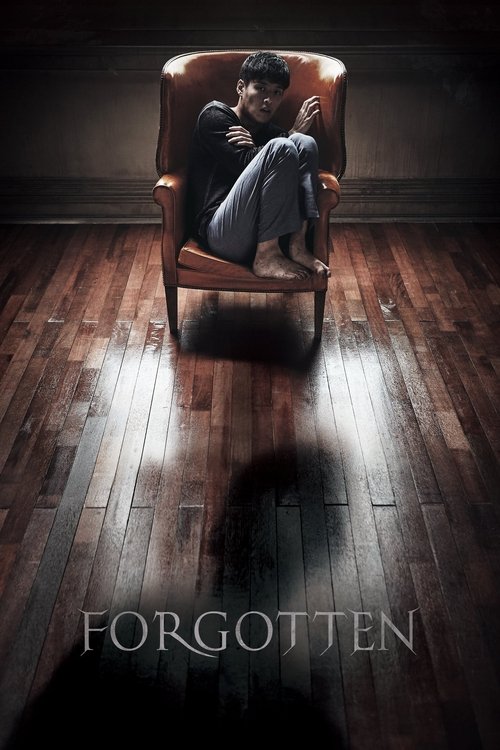
Forgotten
A haunting psychological thriller where the warmth of a perfect family slowly chills into a labyrinth of fractured memories and dreadful secrets.
Forgotten

Forgotten

기억의 밤

"Locked. Erased. Controlled. Isolated. Blurred."

29 November 2017 South Korea 108 min ⭐ 7.9 (1,234)
Director: Jang Hang-jun
Cast: Kang Ha-neul, Kim Moo-yul, Moon Sung-keun, Na Young-hee, Nam Myung-ryeol
Crime Thriller Mystery
Memory, Trauma, and Identity Guilt and Atonement The Facade of Family Socio-Economic Desperation
Box Office: $9,968,972

Overview

Jin-seok, a young man suffering from anxiety, moves into a new home with his seemingly perfect family: a loving mother, a stoic father, and an idolized older brother, Yoo-seok. The idyllic life is shattered one rainy night when Jin-seok witnesses Yoo-seok being violently abducted.

After 19 agonizing days, Yoo-seok returns, but he is unsettlingly different and claims to have no memory of his disappearance. As Jin-seok's paranoia intensifies, he notices bizarre changes in his brother's behavior and inconsistencies within his family, making him question his own sanity and the reality of his surroundings. His investigation into his brother's kidnapping leads him down a dark path, forcing him to confront a shocking truth that is far more terrifying than he could ever have imagined.
Core Meaning

At its core, Forgotten is a tragic exploration of how societal pressures and economic desperation can lead ordinary people to commit monstrous acts. The film uses the backdrop of the 1997 Asian Financial Crisis to examine the devastating ripple effects of one desperate choice. Director Jang Hang-jun delves into the fragile nature of memory and identity, questioning whether forgetting a traumatic past is a form of salvation or a curse that prevents true atonement. Ultimately, the film is a powerful commentary on guilt, the inescapable nature of truth, and the profound, long-lasting consequences of actions born from desperation, showing how two families can be tragically intertwined and destroyed by a single event.

Thematic DNA

Memory, Trauma, and Identity 35%
Guilt and Atonement 30%
The Facade of Family 20%
Socio-Economic Desperation 15%

Memory, Trauma, and Identity

The film's central conflict revolves around Jin-seok's fractured memory. He suffers from dissociative amnesia, having repressed the traumatic events of 1997. The entire setup by the fake family is an elaborate attempt to force him to remember. The narrative constantly plays with the audience's perception of reality, aligning us with Jin-seok's confusion. It explores how identity is built on memories, and when those memories are false or missing, a person's entire sense of self collapses.

Guilt and Atonement

Guilt is the driving force behind the film's tragic conclusion. Jin-seok's repressed guilt over the murders is the reason for his amnesia. Once his memory returns, the weight of his actions becomes unbearable, leading him to seek atonement through suicide. Similarly, the fake brother, Choi Seung-uk, is driven by a quest for truth that is intertwined with a desire for vengeance. The film's bleak ending suggests that for some sins, the only possible atonement is death, offering a dark resolution for both characters who are trapped by the past.

The Facade of Family

Forgotten masterfully contrasts the idealized image of a perfect, loving family with a horrifying reality. Jin-seok's family is revealed to be a complete fabrication, a group of actors hired to stage a psychological experiment. This deception highlights the theme that appearances can be profoundly misleading. The film deconstructs the concept of a happy home, showing it as a fragile construct that can hide immense pain and dark secrets, ultimately revealing the story of two families destroyed by tragedy.

Socio-Economic Desperation

The catalyst for the entire tragedy is the 1997 Asian Financial Crisis. This historical event is not just a backdrop but the fundamental reason for the characters' desperate choices. Jin-seok agrees to the murder-for-hire plot because he cannot afford his brother's surgery, and the doctor arranges his own wife's murder for the insurance money due to financial ruin. The film serves as a critique of a society where economic collapse can push individuals past their moral limits, leading to devastating consequences.

Character Analysis

Jin-seok

Kang Ha-neul

Archetype: Unreliable Narrator / Tragic Antihero
Key Trait: Paranoid and Guilt-Ridden

Motivation

Initially, his motivation is to uncover the truth about his brother's strange transformation. After his memories return, his motivation shifts to grappling with the overwhelming guilt of his past actions and protecting the man who sought revenge on him from the full, terrible truth of his father's complicity.

Character Arc

Jin-seok begins as a seemingly fragile but ordinary young man in 1997. His journey is a harrowing descent into confusion and paranoia as his reality is deconstructed. The arc culminates in the shocking revelation that he is a 41-year-old man who has suppressed the memory of committing a horrific crime. His final act of remembering leads not to freedom, but to an acceptance of his immense guilt, which he resolves through suicide, thus completing his tragic arc from perceived victim to acknowledged perpetrator seeking atonement.

Yoo-seok (Imposter)

Kim Moo-yul

Archetype: Avenger / Antagonist
Key Trait: Vengeful and Determined

Motivation

His sole motivation for two decades has been to find the man who murdered his mother and sister and to understand why. He stages the elaborate deception to break Jin-seok's amnesia and force a confession, seeking closure for his lifelong trauma.

Character Arc

Initially presented as the perfect, loving older brother, 'Yoo-seok' is revealed to be an imposter, Choi Seung-uk, the surviving son from the 1997 murder. He has dedicated his life to finding his family's killer. His arc is a single-minded quest for vengeance and truth. After finally extracting a confession from Jin-seok, his life's purpose is fulfilled. Exhausted and with nothing left to live for, he finds his own tragic end by taking his life, mirroring Jin-seok's despair.

The 'Father' / 'Mother'

Moon Sung-keun / Na Young-hee

Archetype: Deceiver / Enabler
Key Trait: Deceptive

Motivation

Their motivation is professional and financial. They have been hired by Choi Seung-uk (the fake Yoo-seok) to play their roles in the psychological experiment designed to make Jin-seok remember the murders.

Character Arc

These characters initially appear as loving, albeit slightly distant, parents. Their arc is a sharp turn from caregivers to conspirators. They are revealed to be hired actors (a psychiatrist and an actress) participating in the elaborate ruse to manipulate Jin-seok. Their development is minimal; they exist primarily as tools of the deception and symbols of the film's theme of false reality.

Symbols & Motifs

The Locked Room

Meaning:

The forbidden room in the new house symbolizes Jin-seok's repressed memories and the dark, inaccessible truth of his past. It is a physical manifestation of the part of his mind he cannot enter.

Context:

Jin-seok is repeatedly told not to enter the room, which supposedly contains the previous owner's belongings. He hears strange noises from it, heightening the mystery and his paranoia. Eventually, he breaks in to find a recreation of the murder scene, which is the first major crack in his perceived reality.

Rain

Meaning:

Rain consistently appears during moments of trauma, transition, and terrible revelations. It acts as a visual motif for impending doom and the washing away of innocence or illusion.

Context:

It is raining on the night Yoo-seok is kidnapped. More significantly, the original murders in 1997 take place on a rainy night. The sound and presence of rain create an atmosphere of dread and are tied to Jin-seok's most traumatic memories.

The Song 'An Old Love' (옛사랑)

Meaning:

The song by Lee Moon-sae, which Jin-seok listens to on his Discman, represents his lost innocence and the idyllic past of 1997 that his mind desperately clings to. It is a relic of the last happy moments before his life was destroyed.

Context:

The film opens and closes with Jin-seok listening to this song. In the beginning, it establishes his supposed youth and the 1997 setting. In the final scene, a flashback, it underscores the profound tragedy of his last moments of peace, just before the car accident that would set everything in motion.

Philosophical Questions

Is ignorance bliss when it comes to past traumas?

The film deeply explores this question through Jin-seok's dissociative amnesia. For 20 years, he lives in a state of manufactured innocence, free from the crushing guilt of his actions. His captors believe the only path to justice is to force him to remember. However, the act of remembering leads directly to his suicide. The film presents a paradox: while the truth is necessary for justice and accountability, the 'bliss' of ignorance was the only thing allowing Jin-seok to live. It forces the audience to question whether a painful truth is always preferable to a comforting lie.

How do extreme circumstances, like economic collapse, redefine morality?

Forgotten posits that societal structures and economic stability are critical pillars of morality. The 1997 financial crisis is the catalyst that pushes both Jin-seok and the doctor to make unthinkable choices. Jin-seok, desperate to save his brother, agrees to kill for money. The doctor, facing financial ruin, conspires to have his wife murdered for insurance. The film doesn't necessarily excuse their actions but explores them as tragic outcomes of a broken system, asking where the line is between personal responsibility and societal failure.

Can revenge ever lead to true closure?

The character of Choi Seung-uk (the fake Yoo-seok) embodies the pursuit of revenge. He spends 20 years planning to find his family's killer. When he finally succeeds and gets a confession, the moment brings no relief or peace. Instead, he is left exhausted and empty, his life's purpose fulfilled but his life devoid of meaning. His subsequent suicide suggests that the act of vengeance destroyed him as much as it did his target, arguing that such a pursuit is ultimately a hollow and self-destructive path.

Alternative Interpretations

The most discussed area for alternative interpretation is the film's final scene. After the dual suicides, the film flashes back to 1997, showing a young, happy Jin-seok by a river just before his family's car accident. He has a brief, pleasant encounter with a little boy, who is revealed to be the doctor's son (the future fake Yoo-seok) with his family, all happy and alive.

One interpretation sees this scene as simply the last happy memory Jin-seok has before his life is irrevocably destroyed, a final moment of tragic irony showing him crossing paths with the very people whose lives he will later ruin.

Another reading views it as a poignant 'what if' scenario, a glimpse into an alternate reality where tragedy didn't strike, highlighting the cruel role of fate. It emphasizes that these were two separate, happy families whose paths crossed by chance with devastating consequences. A darker interpretation suggests that fate is inescapable; their meeting was not a coincidence but a precursor to an inevitable, intertwined doom.

Cultural Impact

Forgotten was released in the context of a thriving South Korean film industry, particularly known for its high-concept thrillers that often contain sharp social commentary. The film's use of the 1997 Asian Financial Crisis as a core plot device resonated deeply with domestic audiences, as the event was a period of significant national trauma and economic hardship that reshaped South Korean society. This historical anchor grounds the film's extreme events in a real-world desperation that audiences could understand.

Critically, the film was praised for its intricate plotting, suspenseful first half, and powerful performances, particularly from Kang Ha-neul. It stands as a strong example of the Korean mystery-thriller genre, known for its ability to blend horror elements, psychological drama, and shocking plot twists. Its subsequent release on Netflix introduced it to a global audience, contributing to the international popularity of Korean cinema. While not as paradigm-shifting as films like Parasite, Forgotten is a significant work that effectively uses genre conventions to tell a deeply tragic and socially relevant story.

Audience Reception

Audiences largely praised Forgotten for its gripping and suspenseful narrative, particularly its first half, which masterfully builds an atmosphere of paranoia and mystery. The numerous plot twists were a significant point of discussion, with many viewers finding them shocking and effective at keeping them on the edge of their seats. The performances of the lead actors, Kang Ha-neul and Kim Moo-yul, received widespread acclaim for their emotional depth and intensity.

However, some viewers criticized the film's second half, arguing that it relies on too many twists, which can make the plot feel convoluted or overly melodramatic. The bleak and tragic ending was also a point of contention; while some found it to be a powerful and fitting conclusion, others felt it was excessively depressing. Overall, it is considered a must-watch for fans of the mystery-thriller genre, celebrated for its clever storytelling and emotional impact.

Interesting Facts

  • The film was written and directed by Jang Hang-jun.
  • Filming took place from March 11, 2017, to June 8, 2017.
  • This was actor Kang Ha-neul's last film before beginning his mandatory military service.
  • Following its theatrical run in South Korea, the film was released globally on Netflix, making it available in 190 countries.
  • The film's original Korean title is '기억의 밤' (Gieogui bam), which literally translates to 'Night of Memory'.
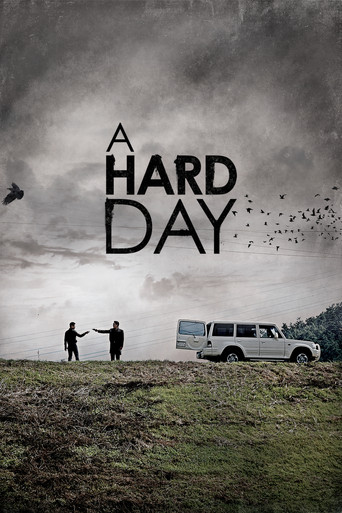
  • Director Jang Hang-jun co-wrote the script for the acclaimed 2014 crime thriller 'A Hard Day'.
  • The director's wife, Kim Eun-hee, is one of South Korea's most famous and highest-paid screenwriters, known for works like 'Signal' and 'Kingdom'.

⚠️ Spoiler Analysis

Click to reveal detailed analysis with spoilers

Frequently Asked Questions

Explore More About This Movie

Dive deeper into specific aspects of the movie with our detailed analysis pages

Comments (0)

Leave a comment

No comments yet. Be the first to share your thoughts!