V for Vendetta
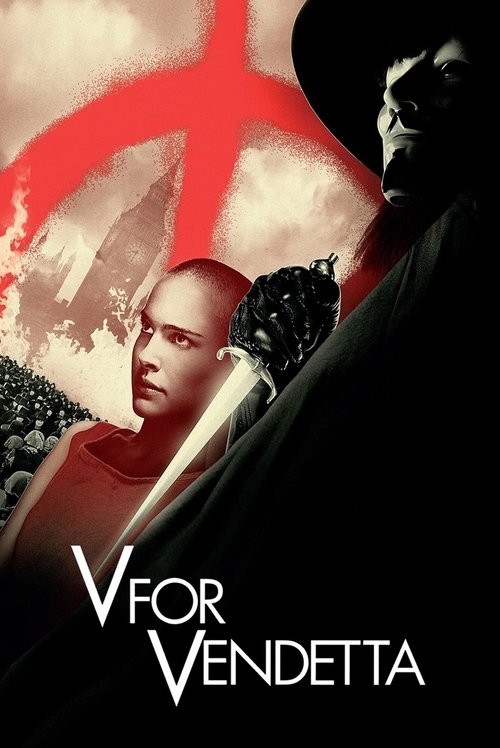
A dystopian action thriller where a masked freedom fighter's righteous fury ignites a revolution, painting a canvas of rebellion against a somber, oppressive regime.
V for Vendetta

V for Vendetta

"People should not be afraid of their governments. Governments should be afraid of their people."

23 February 2006 Germany 132 min ⭐ 7.9 (15,075)
Director: James McTeigue
Cast: Natalie Portman, Hugo Weaving, Stephen Rea, Stephen Fry, John Hurt
Action Thriller Science Fiction
Freedom vs. Tyranny The Power of Ideas Identity and Anonymity Revenge and Justice
Budget: $54,000,000
Box Office: $134,686,457

Overview

In a futuristic, totalitarian Britain, a mysterious masked figure known as "V" wages a revolutionary campaign against the oppressive government. He finds an unlikely ally in Evey Hammond, a young woman he saves from the secret police. As V orchestrates a series of elaborate and theatrical attacks on state symbols, he encourages his fellow citizens to overcome their fear and rise up against their tyrannical leaders.

The film follows V's meticulously planned vendetta against those who wronged him and created the oppressive society he now seeks to dismantle. At the same time, it traces Evey's transformation from a timid, compliant citizen into a courageous woman who understands the importance of fighting for freedom. V's ultimate goal is to have the people themselves reclaim their power on the fifth of November, a date with historical significance.

Core Meaning

The central message of "V for Vendetta" is that ideas are indestructible and have the power to change the world. The film posits that governments should fear their people, not the other way around. It explores the concept that a single individual's actions, when fueled by a powerful idea, can inspire a mass movement capable of toppling even the most oppressive regimes. The narrative champions the importance of individual liberty and the necessity of resisting tyranny, even in the face of overwhelming odds. Ultimately, the film suggests that while a person can be killed, the ideals they represent can live on and inspire future generations to continue the fight for freedom and justice.

Thematic DNA

Freedom vs. Tyranny 35%
The Power of Ideas 30%
Identity and Anonymity 20%
Revenge and Justice 15%

Freedom vs. Tyranny

The primary theme is the struggle between individual liberty and an oppressive, totalitarian state. The Norsefire government exercises absolute control through surveillance, propaganda, and fear. V's actions are a direct challenge to this tyranny, aiming to awaken the populace to the freedoms they have lost and inspire them to reclaim their autonomy.

The Power of Ideas

A core tenet of the film is that ideas are "bulletproof." V represents not just a man seeking revenge, but an idea of freedom and resistance. His Guy Fawkes mask becomes a symbol that transcends his personal vendetta, allowing anyone to embody the spirit of rebellion. The film emphasizes that while individuals are mortal, the ideals they champion can endure and inspire revolution.

Identity and Anonymity

V's mask conceals his identity, making him a symbol rather than a person. This anonymity is crucial to his cause, as it allows the idea of resistance to be bigger than any one individual. The film explores how shedding one's personal identity can empower them to act for a greater cause. Evey's journey also involves a transformation of her identity as she sheds her fear and embraces V's ideals.

Revenge and Justice

While V's actions are framed as a fight for freedom, they are also deeply rooted in personal revenge against those who experimented on him at the Larkhill resettlement camp. The film blurs the line between a personal vendetta and a revolutionary crusade, questioning whether justice can be achieved through acts of vengeance and if the ends justify the violent means.

Character Analysis

V

Hugo Weaving

Archetype: Anti-hero / Revolutionary
Key Trait: Charismatic and Theatrical

Motivation

V is motivated by a dual purpose: to exact revenge on the individuals who tortured and experimented on him at the Larkhill Resettlement Camp, and to dismantle the fascist Norsefire regime that rose to power through fear and oppression. He seeks to liberate the people of Britain and inspire them to govern themselves.

Character Arc

V's character remains largely static throughout the film, as he is already a fully formed revolutionary driven by his past trauma and ideals. His primary role is to act as a catalyst for change in both Evey and society. While his methods are violent and rooted in personal revenge, his ultimate goal is to empower the people to rule themselves. He begins as a lone avenger and ends as a symbol that has ignited a revolution, sacrificing himself for the idea he represents.

Evey Hammond

Natalie Portman

Archetype: The Everywoman / The Initiate
Key Trait: Resilient

Motivation

Initially, Evey is motivated by survival and a desire to remain unnoticed by the authorities. As the story progresses, her motivation shifts to understanding V and his cause. After her 'rebirth', her motivation becomes the pursuit of freedom and justice, not just for herself but for all of society, leading her to continue V's legacy.

Character Arc

Evey undergoes the most significant character arc in the film. She begins as a timid and fearful young woman, traumatized by the loss of her parents and compliant with the oppressive regime. Through her interactions with V, particularly her simulated imprisonment and torture, she is forced to confront her deepest fears. This ordeal transforms her into a strong, self-possessed individual who understands the necessity of resistance. By the end of the film, she has embraced V's ideals and willingly takes up his mantle to complete his mission.

Inspector Finch

Stephen Rea

Archetype: The Detective / The Seeker of Truth
Key Trait: Inquisitive

Motivation

Finch's primary motivation is to solve the case and stop V. However, he is also driven by a genuine desire for the truth. He is a methodical and intuitive investigator who is not satisfied with the government's sanitized version of events. His pursuit of the truth ultimately leads him to question the legitimacy of the entire regime.

Character Arc

Inspector Finch starts as a loyal, albeit weary, detective for the Norsefire regime, tasked with capturing V. As he delves deeper into the investigation, he uncovers the dark secrets behind the government's rise to power, including the truth about the St. Mary's virus and the Larkhill camp. This knowledge leads to his disillusionment with the regime he serves. In the end, he chooses to stand aside and allow V's plan to succeed, signifying his shift in allegiance from the state to the people.

Adam Sutler

John Hurt

Archetype: The Tyrant / The Dictator
Key Trait: Authoritarian

Motivation

Sutler is motivated by a lust for absolute power and control. He believes in order and conformity, and sees any form of dissent or individuality as a threat to his authority. He uses fear and manipulation to maintain his grip on the nation, believing that his way is the only way to ensure security and stability.

Character Arc

High Chancellor Adam Sutler's character does not have a developmental arc; he is the embodiment of the fascist, totalitarian regime. He is portrayed as a power-hungry, paranoid, and ruthless leader who maintains control through fear and propaganda. His presence in the film is primarily through large video screens, emphasizing his detached and imposing nature. He remains an unwavering tyrant until his downfall.

Symbols & Motifs

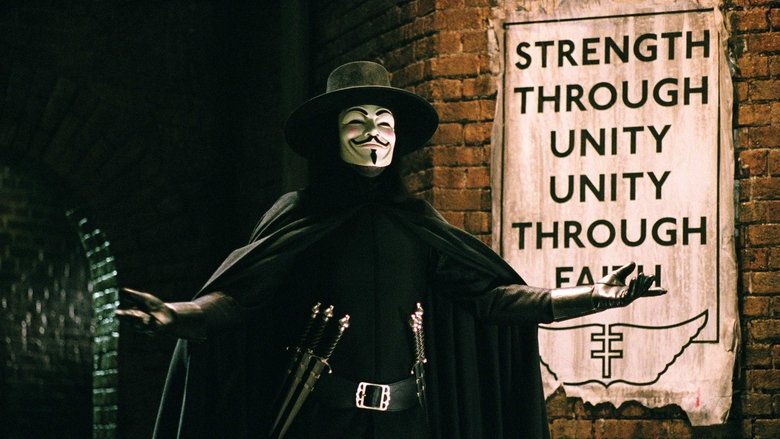
The Guy Fawkes Mask

Meaning:

The Guy Fawkes mask is the most prominent symbol in the film, representing rebellion, anonymity, and the power of ideas. Historically associated with the failed Gunpowder Plot of 1605, the film recontextualizes it as a symbol of resistance against tyranny. The mask allows V to become an idea rather than a man, and when the populace dons the mask, they become a unified force for change.

Context:

V wears the mask throughout the film to hide his disfigurement and his identity. He also sends masks to the public, and in the film's climax, thousands of citizens wearing the mask march on Parliament, demonstrating the widespread adoption of the idea of resistance.

The Letter 'V'

Meaning:

The letter 'V' is a recurring motif representing V himself, his vendetta, and the Roman numeral for five, referencing his cell number at Larkhill. It is also an inverted symbol for anarchy. It is a symbol of his identity and his revolutionary cause, which he leaves as a calling card.

Context:

V introduces himself with a monologue of words beginning with 'V'. He carves the 'V' symbol at the sites of his actions. The dominoes he arranges form a giant 'V'.

Dominoes

Meaning:

The falling dominoes are a powerful visual metaphor for the chain reaction of V's actions. They symbolize how a single act of defiance can trigger a cascade of events leading to the downfall of an oppressive regime. It represents the interconnectedness of events and the unstoppable momentum of a revolution once it has begun.

Context:

V sets up a large and intricate pattern of black and red dominoes that, when toppled, form his 'V' symbol. This scene is intercut with news reports of growing unrest and defiance among the population, visually linking V's plan to the people's awakening.

Valerie's Letter

Meaning:

Valerie's autobiography, written on toilet paper, symbolizes hope, integrity, and the endurance of the human spirit in the face of horrific oppression. It represents the importance of holding onto one's true self and values, even in the darkest of times. For Evey, it is a catalyst for her transformation, giving her the strength to overcome her fear.

Context:

Evey reads Valerie's letter while she is being held and tortured by V in a simulated prison. The letter, from a former Larkhill inmate, inspires her to find her own courage and integrity, ultimately leading to her rebirth as a fearless individual.

Memorable Quotes

People should not be afraid of their governments. Governments should be afraid of their people.

— V

Context:

V broadcasts this message to the people of London after taking over the BTN television network. It is a central part of his call to action for the public to join him in a year's time to overthrow the government.

Meaning:

This quote encapsulates the core political philosophy of the film. It argues for a society where the power lies with the people and the government is accountable to them. It is a direct challenge to the fear-mongering tactics of the Norsefire regime.

Beneath this mask there is more than just flesh. Beneath this mask there is an idea, Mr. Creedy, and ideas are bulletproof.

— V

Context:

V says this to Mr. Creedy, the head of the secret police, during their final confrontation. Creedy has shot V multiple times, but V appears unfazed, explaining that his physical form is secondary to the idea he embodies.

Meaning:

This line emphasizes the film's central theme that ideas are indestructible. V asserts that even if his physical body is destroyed, the idea of freedom and resistance that he represents will live on. It highlights the transcendent power of ideals over brute force.

Voilà! In view, a humble vaudevillian veteran, cast vicariously as both victim and villain by the vicissitudes of Fate. This visage, no mere veneer of vanity, is a vestige of the vox populi, now vacant, vanished. However, this valorous visitation of a by-gone vexation stands vivified and has vowed to vanquish these venal and virulent vermin vanguarding vice and vouchsafing the violently vicious and voracious violation of volition!

— V

Context:

V delivers this speech to Evey after rescuing her from the Fingermen. It is his first direct communication with her and sets the stage for his revolutionary persona.

Meaning:

This quote, filled with alliteration, showcases V's theatrical and highly intelligent nature. It serves as his introduction to Evey and the audience, establishing his character as eloquent, and vengeful. It also lays out his mission to fight against the oppressive forces that have silenced the voice of the people.

Artists use lies to tell the truth, while politicians use them to cover the truth up.

— V

Context:

V says this to Evey while in his Shadow Gallery, surrounded by forbidden art. It is part of his explanation of why he has collected these items and his philosophy on the role of art and politics in society.

Meaning:

This quote explores the nature of truth and deception. V is justifying his own elaborate deceptions, such as Evey's fake imprisonment, as a means to reveal a deeper truth to her. It contrasts this with the self-serving lies of the government, which are designed to conceal their crimes and maintain control.

Philosophical Questions

Do the ends justify the means?

The film constantly forces the audience to question the morality of V's actions. He murders government officials, destroys property, and manipulates Evey through psychological torture. While his ultimate goal is the liberation of the people, the film asks whether such noble ends can justify his violent and often brutal means. The debate over whether V is a hero or a terrorist is central to this question.

What is the nature of freedom?

"V for Vendetta" explores the idea that true freedom is not just the absence of physical restraint but also freedom from fear. V's 're-education' of Evey is designed to strip her of her fear, which he sees as the ultimate prison. The film questions whether a society that has traded its freedom for security is truly safe, and what individuals must be willing to sacrifice to reclaim their liberty.

Can violence be a legitimate tool for political change?

The film presents a scenario where all democratic avenues for change have been eliminated, and the government itself is a terrorist entity. In this context, it asks whether violence becomes a necessary and legitimate tool for revolution. V's actions, which would be classified as terrorism in a democratic society, are portrayed as a justifiable response to a fascist regime.

Alternative Interpretations

One of the most debated aspects of the film is whether V should be viewed as a hero or a terrorist. Some interpretations see him as a necessary evil, a freedom fighter whose violent methods are justified by the tyrannical nature of the Norsefire regime. This perspective emphasizes that V targets only those responsible for the oppression and takes care to avoid harming innocent civilians. Another interpretation views V as a morally ambiguous anti-hero, whose personal vendetta and use of violence, regardless of the target, place him in a grey area. A more critical perspective argues that V is a terrorist who employs fear and violence to achieve his political aims, essentially using the same tools as the government he opposes. Alan Moore, the author of the graphic novel, was critical of the film's adaptation, suggesting it turned his anarchist-versus-fascist narrative into a more simplistic American-centric conflict between liberalism and neoconservatism.

Cultural Impact

"V for Vendetta" has had a significant and lasting cultural impact, most notably through the popularization of the Guy Fawkes mask. The stylized mask has been adopted by various protest groups and social movements around the world, including the hacktivist collective Anonymous and participants in the Occupy movement, as a symbol of anonymity and resistance against government and corporate overreach. The film's release in the mid-2000s resonated with contemporary anxieties about government surveillance, the erosion of civil liberties, and the use of fear to control populations, particularly in the post-9/11 era. Critics and audiences alike have noted the film's continued relevance in discussions about freedom, power, and the individual's role in holding authority accountable. Its themes and imagery have become a part of the modern lexicon for political dissent and anti-authoritarianism.

Audience Reception

Audience reception for "V for Vendetta" has been largely positive, with many praising its thought-provoking themes, compelling performances, and stylish action sequences. Hugo Weaving's portrayal of V, despite being behind a mask for the entire film, is often highlighted for its charisma and emotional depth. Natalie Portman's performance as Evey is also frequently commended for her powerful depiction of the character's transformation. The film's political and philosophical messages have resonated with many viewers, who find its themes of resistance to be timeless and increasingly relevant. However, the film has also drawn criticism. Some viewers found its political message to be heavy-handed and its portrayal of V's methods as heroic to be problematic, with some Christian reviewers finding its themes to be anti-Christian and pro-homosexual. The film's deviation from the source material, particularly the toning down of the graphic novel's more radical anarchist themes, was a point of contention for some fans of Alan Moore's original work.

Interesting Facts

  • The Wachowskis wrote the initial script for "V for Vendetta" in the mid-1990s, before they worked on "The Matrix".
  • James Purefoy was originally cast as V but left the production about four weeks into filming due to difficulties with wearing the mask for the entire performance. Hugo Weaving replaced him, and some of Purefoy's scenes were dubbed over by Weaving.
  • Natalie Portman's head-shaving scene was done in a single take.
  • The dominoes scene, which features 22,000 dominoes, took four professional domino assemblers 200 hours to set up.
  • The filmmakers were granted unprecedented permission to film around the Houses of Parliament and Whitehall between midnight and 5 a.m. for several nights.
  • The film was the final work of cinematographer Adrian Biddle, who passed away before its release.
  • Alan Moore, the author of the original graphic novel, was dissatisfied with previous adaptations of his work and asked for his name to be removed from the film's credits and to not receive any royalties.

Easter Eggs

In V's Shadow Gallery, a poster for the film "The Count of Monte Cristo" can be seen.

This is a direct reference to one of the film's primary literary influences. The story of "The Count of Monte Cristo" parallels V's own story of a man who is unjustly imprisoned, escapes, and meticulously plans his revenge against those who wronged him.

The motto on V's mirror is "Vi Veri Veniversum Vivus Vici".

This is a Latin phrase attributed to the occultist Aleister Crowley, which translates to "By the power of truth, I, while living, have conquered the universe." This reflects V's belief in the power of truth to overcome oppression.

When Inspector Finch is looking through old records, the names Rookwood, Percy, and Keyes can be seen.

These are the names of three of the actual conspirators in the 1605 Gunpowder Plot, along with Guy Fawkes, further strengthening the film's historical parallels.

⚠️ Spoiler Analysis

Click to reveal detailed analysis with spoilers

Frequently Asked Questions

Explore More About This Movie

Dive deeper into specific aspects of the movie with our detailed analysis pages

Comments (0)

Leave a comment

No comments yet. Be the first to share your thoughts!