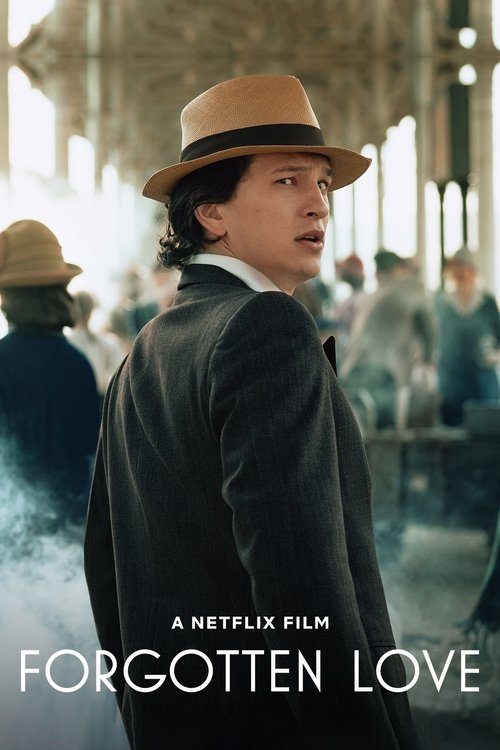
Forgotten Love
Znachor
Overview
"Forgotten Love" (original title: "Znachor") tells the poignant story of Professor Rafał Wilczur, a brilliant and renowned surgeon in 1930s Poland. At the height of his career, his life shatters when his wife leaves him, taking their beloved young daughter, Marysia. While desperately searching for them, he is brutally mugged, suffering a severe head injury that results in total amnesia.
Fifteen years later, Wilczur, now living as an itinerant named Antoni Kosiba, wanders the countryside with no memory of his past. Despite his amnesia, his innate medical genius remains. He becomes known as a local "quack" or folk healer, using his forgotten skills to help the rural poor. Fate intervenes when he crosses paths with a young woman, none other than his now-grown daughter Marysia, though neither recognizes the other. Their lives become intertwined through shared hardships, romance, and the unconscious bond that pulls them together, setting the stage for a dramatic and emotional journey of rediscovery.
Core Meaning
The core meaning of "Forgotten Love" revolves around the ideas that true identity and innate goodness can endure even when memory is lost, and that love, particularly the profound bond between a parent and child, is a force that can transcend time and tragedy. The director, Michał Gazda, emphasizes the theme of resilience, showing how a person stripped of status, wealth, and memory can rediscover their purpose through selfless service to others. The film carries a message of hope, suggesting that even after immense suffering, redemption and reunion are possible, and that inherent human decency will ultimately triumph over adversity.
Thematic DNA
Identity and Memory
The central theme is the fragile nature of identity and its deep connection to memory. Professor Wilczur loses his name, status, and personal history, becoming Antoni Kosiba. However, his core identity as a healer and a compassionate man remains intact. The film explores whether identity is purely a collection of memories or an intrinsic quality of the soul. His journey shows that while memory can be erased, a person's fundamental character and skills can persevere.
The Enduring Power of Love
"Forgotten Love" is, at its heart, a story about the unbreakable bond between a father and daughter. Even without recognition, Rafał and Marysia are drawn to each other. Their connection is instinctual, suggesting that familial love operates on a level deeper than conscious memory. The film also features powerful romantic subplots that reinforce the idea that love is worth fighting for against societal barriers and misfortune.
Social Class and Injustice
The narrative starkly contrasts the world of the urban elite with the struggles of the rural poor in pre-war Poland. As Antoni Kosiba, the former professor experiences life at the bottom of the social ladder. The film critiques a rigid class structure where a person's worth is judged by their status rather than their actions. Marysia's forbidden romance with a Count and Antoni's prosecution for practicing medicine without a license highlight the injustices faced by those without wealth or official standing.
Redemption and Second Chances
The film is a profound tale of redemption. After losing everything, Rafał gets a second chance at life, not as a celebrated surgeon, but as a humble healer who finds fulfillment in helping others. His journey is one of rediscovering his purpose in the most unexpected of circumstances. The ending, with its reunions and resolutions, reinforces the belief that it is never too late to reclaim a lost life and find happiness.
Character Analysis
Rafał Wilczur / Antoni Kosiba
Leszek Lichota
Motivation
Initially, his motivation is to find his wife and daughter. After losing his memory, his motivation becomes an instinctual, nameless quest for something he has lost. As Antoni, he is driven by a deep-seated compassion and an innate need to heal the sick and injured, a core part of his identity that memory loss could not erase.
Character Arc
Professor Rafał Wilczur begins as a confident, elite surgeon who is emotionally distant from his wife but deeply loving toward his daughter. After his trauma, he is reborn as Antoni Kosiba, a humble, wandering amnesiac. Through his selfless acts of healing in the countryside, he rediscovers his purpose and a more profound sense of humanity, stripped of ego and status. His journey culminates in the dramatic recovery of his memory and identity, allowing him to reclaim his past while retaining the humility he learned in his second life.
Marysia Wilczur
Maria Kowalska
Motivation
Marysia is motivated by a desire for a better life and her promise to her late mother to pursue an education. Her primary motivation becomes her love for Count Leszek, for whom she is willing to defy his disapproving mother and societal expectations. She is also fiercely loyal to Antoni, whom she sees as a father figure long before she knows the truth.
Character Arc
Separated from her father as a child, Marysia grows into a kind, hardworking, and independent young woman, despite her humble circumstances as a shop girl. She falls in love with Count Leszek Czyński, challenging class boundaries. After a near-fatal accident, she is saved by Antoni (her father), an event that deepens their mysterious bond. Her arc is about enduring hardship and fighting for her love, culminating in the joyous, shocking discovery of her father's identity.
Count Leszek Czyński
Ignacy Liss
Motivation
His sole motivation is his all-consuming love for Marysia. He is willing to sacrifice his inheritance, social standing, and family approval to be with her, demonstrating a commitment that transcends class differences.
Character Arc
Leszek begins as a somewhat arrogant young aristocrat who is used to getting what he wants. However, his genuine love for Marysia transforms him. He learns to defy his formidable mother and reject the suffocating conventions of his social class. He proves his love is not fleeting by searching for Marysia after they are cruelly separated and ultimately choosing a life with her over his family's wealth and status.
Zośka
Anna Szymańczyk
Motivation
Zośka is motivated by her compassion and a straightforward desire for companionship and love. She sees the kind man beneath Antoni's ragged exterior and is motivated to care for him and build a life with him, accepting him completely for who he is in the present moment.
Character Arc
Zośka is a strong, pragmatic, and warm-hearted miller who takes Antoni in. She is unencumbered by social pretense and is the first to see the inherent goodness and value in the wandering amnesiac. She falls in love with him and provides him with stability and affection, helping to anchor him in his new life. Her arc is one of finding unexpected love and creating a family, which culminates in her marriage to the restored Rafał, bridging his two lives.
Symbols & Motifs
Surgical Tools
The surgical tools, particularly the ones Antoni borrows and is later prosecuted for stealing, symbolize his lost identity and innate skill. They are the physical link to his past life as Professor Wilczur. His ability to use them expertly, despite his amnesia, represents the part of him that can never be truly erased.
Antoni uses makeshift and later actual medical instruments to perform miraculous healings on villagers, including setting a young boy's legs correctly and later operating on his own daughter after an accident. His trial for the theft of these instruments becomes the climactic setting for the revelation of his true identity.
The Locket/Photograph
The faint, fragmented memories Rafał has of his daughter, often visualized as a fleeting image, function like a symbolic locket. It represents the piece of his past that his subconscious clings to, the driving force behind his years of wandering and searching, even when he doesn't know what he is looking for. It's the 'forgotten love' that guides him back to his destiny.
Throughout his time as Antoni Kosiba, he has vague, recurring flashes of his daughter's face. This internal image is what connects him to Marysia on an instinctual level when they finally meet again, long before his memory fully returns.
The Watermill
The watermill, where Antoni finds work and shelter, symbolizes a place of transition, healing, and rebirth. It is here that he begins to build a new life and where his reputation as a healer starts. The constant, cyclical motion of the mill mirrors the slow, persistent turning of fate that will eventually bring his past and present together.
After years of wandering, Antoni is given a job and a home at a mill run by a kind family. It is in this rural community that he performs his first major healings and meets Zośka, who becomes his companion, marking the start of his second life.
Memorable Quotes
Proszę państwa, wysoki sądzie, to jest profesor Rafał Wilczur.
— Jerzy Dobraniecki
Context:
During Antoni Kosiba's trial for quackery and theft of surgical tools, his former colleague, Doctor Dobraniecki, is called as an expert witness. Upon seeing the defendant, Dobraniecki is stunned into silence before uttering this dramatic declaration, which exonerates Antoni and restores his true identity as the brilliant surgeon Rafał Wilczur.
Meaning:
"Ladies and gentlemen, your honor, this is Professor Rafał Wilczur." This is the climactic line of the film, where Rafał's forgotten identity is publicly revealed during his trial. It represents the story's turning point, where truth triumphs, memory returns, and justice is served. It is the moment the entire narrative has been building towards.
Philosophical Questions
What constitutes the core of a person's identity?
The film delves into this question by stripping its protagonist of everything that societally defines a person: his name, profession, family, and memories. Yet, his essence—his kindness, his drive to heal, and his subconscious love for his daughter—remains. "Forgotten Love" explores whether our identity is a social construct based on our experiences and relationships, or if there is an immutable self that exists independently of memory. Rafał's journey suggests the latter, positing that character and soul are more fundamental than recollection.
Can true empathy exist without shared experience?
As a wealthy professor, Rafał Wilczur was compassionate, but his understanding of poverty was abstract. By being forced to live as one of the disenfranchised, he gains a profound, firsthand understanding of their suffering. The film questions the nature of empathy, suggesting that while one can be inherently kind, true, deep empathy is forged through shared hardship. His transformation from an elite surgeon to a humble folk healer allows him to connect with his patients on a much more human level, making his service not just a profession but a calling.
Alternative Interpretations
While the film presents a fairly straightforward narrative, some alternative readings focus on its subtext. One interpretation views the story as an allegory for Poland's own historical struggles. Professor Wilczur, a brilliant mind (representing Poland's cultural and intellectual heritage), is brutally assaulted and loses his memory (symbolizing the partitions, wars, and occupations that sought to erase Polish identity). He then wanders as a humble commoner, rediscovering his intrinsic worth through service to the people (the enduring spirit of the nation). His eventual restoration can be seen as a metaphor for Poland's own resilience and reclamation of its identity on the world stage.
Another interpretation focuses on the character of Jerzy Dobraniecki. While portrayed as a rival who benefits from Wilczur's disappearance, his final act of identifying Wilczur in court can be read in different ways. Is it a simple moment of shocked recognition and professional duty? Or is it an act of ultimate redemption for a man who has lived with the guilt of his ambition for 15 years? This ambiguity adds a layer of complexity to a secondary character, suggesting a deeper story of rivalry and conscience.
Cultural Impact
"Forgotten Love" tapped into a deep well of Polish cultural nostalgia by reinterpreting a story that is considered a national classic. The 1937 novel and especially the 1982 film adaptation hold a special place in the hearts of many Poles, akin to classics like "It's a Wonderful Life" in the United States. The announcement of a new Netflix adaptation was met with both excitement and trepidation from fans protective of the beloved original.
By respecting the source material while offering a modern production value and slightly altered character dynamics, the 2023 film succeeded in introducing the timeless story to a new generation and a global audience. Its success on Netflix demonstrated the universal appeal of its themes of love, loss, and redemption. Critics noted that the story's structure is reminiscent of great 19th-century novels like Victor Hugo's "Les Misérables," giving it a classic, epic feel. The film sparked discussions comparing the different adaptations and reaffirmed the enduring power of Dołęga-Mostowicz's original narrative.
Audience Reception
Audience reception for "Forgotten Love" has been overwhelmingly positive. Viewers frequently praise its beautiful cinematography, heartfelt storytelling, and strong performances, particularly by Leszek Lichota as Rafał Wilczur. Many describe it as a classic, feel-good melodrama that is deeply moving and uplifting. The emotional payoff of the ending is a commonly cited highlight. The film's long runtime of 2 hours and 20 minutes is sometimes mentioned, but most viewers feel the patient, slow-burn narrative is justified and rewarding. As a remake of a beloved Polish classic, it successfully navigated the high expectations, with many fans of the original 1982 film appreciating this version's high production value and respectful approach.
Interesting Facts
- The film is the third adaptation of the beloved 1937 Polish novel "Znachor" by Tadeusz Dołęga-Mostowicz. The title "Znachor" translates to "The Quack" or "Folk Healer".
- The 1982 adaptation, directed by Jerzy Hoffman, is considered a cult classic in Poland and is traditionally broadcast on television during Christmas or Easter, making it a cherished piece of national culture.
- The lead actor, Leszek Lichota, mentioned in an interview that he grew up with the story and felt privileged to play a character so important to Polish culture.
- The production involved over 2,300 people, including approximately 1,700 extras, to recreate the atmosphere of 1930s Poland.
- To ensure authenticity, the costume design team, led by Małgorzata Zacharska, sewed and imported period costumes from warehouses in London, Madrid, and the Czech Republic.
- Upon its release on Netflix on September 27, 2023, "Forgotten Love" quickly became a global hit, reaching the Top 10 of most-watched non-English films in 59 countries.
⚠️ Spoiler Analysis
Click to reveal detailed analysis with spoilers
Frequently Asked Questions
Explore More About This Movie
Dive deeper into specific aspects of the movie with our detailed analysis pages
Comments (0)
No comments yet. Be the first to share your thoughts!