One Piece
A swashbuckling, emotional odyssey across a boundless sea, chasing the horizon of freedom and the echo of a legendary treasure.
One Piece

One Piece

ワンピース

"Set sail for One Piece!"

20 October 1999 — 28 September 2025 Japan 22 season 1147 episode Returning Series ⭐ 8.7 (4,997)
Cast: Mayumi Tanaka, Kazuya Nakai, Akemi Okamura, Kappei Yamaguchi, Hiroaki Hirata
Animation Action & Adventure Comedy
Freedom and Dreams Friendship and Loyalty (Nakama) Opposition to Oppression and Corruption Inherited Will

Overview

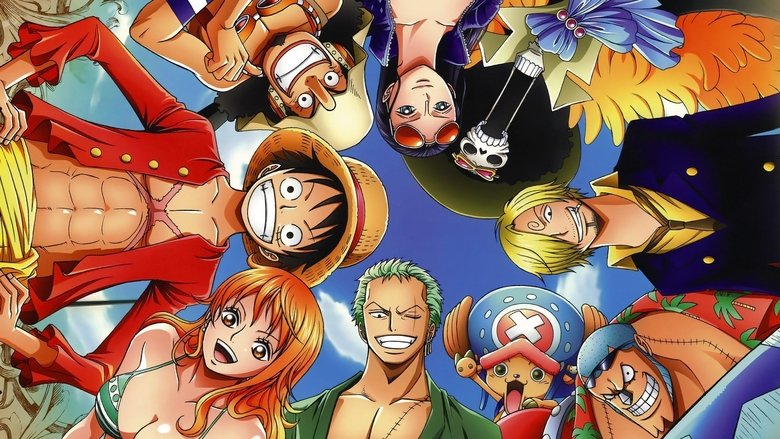
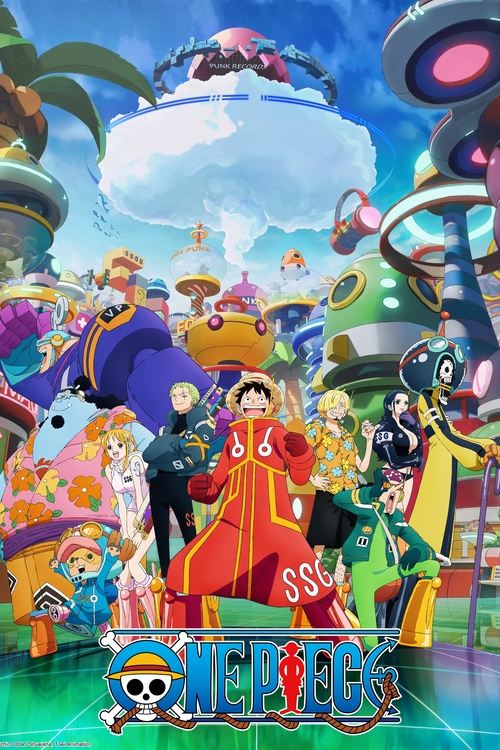
"One Piece" chronicles the grand adventure of Monkey D. Luffy, a spirited young man whose body gains the properties of rubber after unintentionally eating a Devil Fruit. Inspired by his childhood hero, the powerful pirate "Red-Haired" Shanks, Luffy sets off from the East Blue Sea to find the ultimate treasure, the "One Piece", left by the late Pirate King, Gol D. Roger. To achieve his dream of becoming the next Pirate King, Luffy assembles a diverse and loyal crew known as the Straw Hat Pirates.

Together, they sail the treacherous and fantastical seas of the Grand Line, exploring countless islands, each with its own unique culture, conflicts, and inhabitants. Along their journey, they confront powerful Marines, rival pirate crews, and the corrupt World Government that rules the world with an iron fist. The series is an epic saga that masterfully blends high-stakes action, heartfelt comedy, and deep emotional drama, exploring the backstories of each crew member and the overarching mysteries of the world, including the meaning of the "Will of D." and the secrets of the forgotten Void Century.
Core Meaning

At its heart, "One Piece," created by Eiichiro Oda, is a profound exploration of the ultimate meaning of freedom. It posits that true wealth isn't gold or power, but the bonds of friendship (nakama), the pursuit of one's dreams without restraint, and the courage to challenge oppressive systems. The series champions the idea of "Inherited Will," suggesting that the dreams and ambitions of one generation are passed to the next, creating a continuous tide of history that pushes towards liberation and truth. Through the Straw Hat Pirates' journey, the show delivers a powerful message: that a found family built on unwavering loyalty and mutual respect can overcome any adversity and that fighting for the freedom of others is the noblest adventure of all.

Thematic DNA

Freedom and Dreams 35%
Friendship and Loyalty (Nakama) 30%
Opposition to Oppression and Corruption 25%
Inherited Will 10%

Freedom and Dreams

This is the central pillar of the series. Monkey D. Luffy's ambition to become the Pirate King is not about ruling but about being the freest person on the sea. Each member of his crew has a personal dream they are chasing, and their journey is a testament to the idea that one should pursue their ambitions regardless of how impossible they may seem. The narrative consistently contrasts the Straw Hats' pursuit of absolute freedom with the World Government's oppressive control, questioning the nature of justice and authority.

Friendship and Loyalty (Nakama)

The concept of "nakama" (comrades or crewmates) is paramount in "One Piece." The bond between the Straw Hat Pirates is unbreakable, often depicted as a chosen family. They repeatedly risk their lives for one another without hesitation. The emotional peaks of the series often stem from moments of profound loyalty, such as Robin's desperate plea to live during the Enies Lobby arc or Zoro taking on all of Luffy's pain in Thriller Bark. This theme emphasizes that strength comes from unity and trusting in one's friends.

Opposition to Oppression and Corruption

Throughout their journey, the Straw Hats invariably find themselves fighting against tyrannical figures and corrupt systems. From dictators on isolated islands to the systemic injustice of the World Government and the Celestial Dragons, the series is a powerful allegory for challenging oppression. It delves into complex issues like racism (the Fish-Men), state-sanctioned violence, and the manipulation of history, encouraging viewers to question established notions of justice and morality.

Inherited Will

A recurring motif is the idea that the ambitions and spirits of individuals are passed down through generations. Characters often carry the dreams of their predecessors, like Chopper fulfilling Dr. Hiriluk's dream of making cherry blossoms bloom. The mysterious "Will of D.," a trait shared by Luffy and other pivotal characters, is the ultimate representation of this theme, hinting at a long-running historical struggle against the current world order that is passed down through bloodlines.

Character Analysis

Monkey D. Luffy

Mayumi Tanaka

Archetype: Hero
Key Trait: Unwavering Optimism and Determination

Motivation

Luffy's primary motivation is to find the One Piece and become the King of the Pirates, which to him means being the freest person in the world. This desire for freedom extends to others; he cannot stand to see people oppressed and is compelled to fight for their liberation. His motivation evolves from a personal dream to a responsibility he feels towards his friends and the people he meets, promising to create a world where his friends can live without fear.

Character Arc

Luffy's arc is one of maturation from a naive, adventure-seeking boy into a formidable leader and liberator, without losing his core optimistic and carefree nature. Initially driven by a simple desire for adventure and to become Pirate King, his journey forces him to confront the harsh realities of the world. The devastating loss of his brother, Ace, at Marineford is a critical turning point, shattering his innocence and forcing him to train rigorously to protect his crew. Post-timeskip, he is more strategic but still fundamentally believes in freedom and friendship. His growth culminates in the awakening of his Devil Fruit's true power (Gear 5), embodying the warrior of liberation, Joy Boy, solidifying his arc from a simple adventurer to a world-changing figure.

Roronoa Zoro

Kazuya Nakai

Archetype: Antihero / The Lancer
Key Trait: Indomitable Willpower and Loyalty

Motivation

Zoro's singular motivation is to defeat Dracule Mihawk and claim the title of the World's Greatest Swordsman, a promise he made to his deceased childhood rival, Kuina. This personal ambition is intertwined with his absolute loyalty to Luffy; he believes that the future Pirate King's first mate cannot be anything less than the strongest swordsman.

Character Arc

Zoro begins as a lone, ambitious bounty hunter aiming to become the world's greatest swordsman. His arc is defined by his unwavering loyalty to Luffy and his strict adherence to his personal code of honor (Bushido). His defining moment of growth comes in the Thriller Bark arc, where he willingly takes on all of Luffy's accumulated pain and fatigue, demonstrating that his captain's dream has become as important as his own. Post-timeskip, his power grows immensely, but his core remains the same: the steadfast, reliable vice-captain who will cut down any obstacle for his crew. His journey is a relentless pursuit of strength, not for its own sake, but to protect his nakama and fulfill his promise to his childhood friend, Kuina.

Nami

Akemi Okamura

Archetype: The Smart Guy / Reformed Thief
Key Trait: Exceptional Intelligence and Resilience

Motivation

Initially, her motivation is to amass 100 million Berries to free her village from the pirate Arlong. After her liberation, her motivation transforms into her true dream: to navigate the entire world and draw a complete map of it. She is also driven by a deep desire to protect her crew, who she considers her true family.

Character Arc

Nami's arc is a powerful story of liberation from trauma and learning to trust others. Introduced as a money-obsessed thief who distrusts pirates, her backstory reveals she was forced to work for the pirate Arlong to buy back her village. Luffy's defeat of Arlong shatters her cynical worldview and frees her from her past, allowing her to truly join the crew and pursue her dream. Over the series, she evolves from a manipulative but vulnerable girl into the crew's brilliant navigator and a confident fighter in her own right. She becomes the compassionate heart of the crew, often grounding Luffy's reckless tendencies, but never hesitates to fight for her friends.

Vinsmoke Sanji

Hiroaki Hirata

Archetype: The Lover / The Lancer
Key Trait: Passionate Kindness and Chivalry

Motivation

Sanji's lifelong dream is to find the All Blue, a legendary sea where fish from all four oceans can be found. This dream is born from his passion as a chef to feed anyone who is hungry. His motivation is also deeply rooted in his chivalry; he has a strict code to never harm a woman and to protect his friends, especially the female members of the crew.

Character Arc

Sanji's arc revolves around reconciling his chivalrous code and chosen identity as a chef with his traumatic royal past. He begins as a suave, girl-crazy cook from the Baratie. His development deepens significantly during the Whole Cake Island arc, where his family, the Vinsmokes, resurfaces to force him into a political marriage. This forces him to confront the abuse and trauma he fled as a child. By rejecting his family's emotionless, militaristic ideology and relying on Luffy and his crew, Sanji reaffirms his identity and values. He learns that true strength lies not in his royal bloodline or genetic enhancements, but in his kindness, his cooking, and his willingness to sacrifice for others.

Symbols & Motifs

The Straw Hat (Mugiwara)

Meaning:

The Straw Hat is a powerful symbol of promise, legacy, and ambition. It represents the inherited will passed from Gol D. Roger to Shanks, and then to Luffy. It symbolizes Luffy's dream to become the Pirate King and his deep connection to Shanks. Metaphorically, it also represents the "Dawn," signifying Luffy's role in bringing freedom and liberation to the oppressed, much like a rising sun after a dark night.

Context:

The hat is given to Luffy by Shanks in the first episode. Luffy treasures it above all else and it becomes the namesake and symbol of his pirate crew. It is a constant visual reminder of his promise and the catalyst for his entire journey. The hat's significance is deepened by the revelation of a giant, frozen straw hat hidden by the World Government, connecting it to the mysterious Joy Boy from the Void Century.

The Jolly Roger (Pirate Flag)

Meaning:

Each pirate crew's Jolly Roger symbolizes their identity, dreams, and convictions. For the Straw Hat Pirates, their flag—a skull wearing Luffy's hat—represents their rebellious spirit, their defiance of the World Government, and their commitment to living freely. It is a symbol of hope for those they help and a declaration of their presence. The raising of a pirate flag is often an act of declaring war or claiming territory under one's protection.

Context:

The Straw Hat Jolly Roger is first created by Usopp and is flown on all their ships. In a pivotal moment during the Drum Island arc, Luffy raises the flag on the castle, declaring it as a symbol that a country can be reborn under a belief. In the Enies Lobby arc, the Straw Hats burn the World Government's flag, an act of declaring war on the world to save a single friend, cementing the flag's symbolic power.

Devil Fruits

Meaning:

Devil Fruits symbolize the acquisition of great power at a significant cost. Eating one grants a person superhuman abilities but takes away their ability to swim, making them helpless in the sea—a pirate's primary domain. This trade-off represents the sacrifices one must make to achieve their dreams. The mysterious origins of the fruits and their connection to the series' deepest lore also symbolize the unknown and the fantastical nature of the world.

Context:

Luffy's Gum-Gum Fruit is the first one introduced. Throughout the series, hundreds of different Devil Fruits are shown, categorized into Paramecia, Zoan, and Logia types. A major plot twist later reveals that Luffy's fruit is actually a mythical Zoan, the Human-Human Fruit, Model: Nika, connecting him to a legendary figure of liberation, the Sun God Nika.

Memorable Quotes

“When do you think people die? When they are shot through the heart by the bullet of a pistol? No. When they are ravaged by an incurable disease? No. When they drink a soup made from a poisonous mushroom? No! It’s when… they are forgotten.”

— Dr. Hiriluk

Context:

Spoken during the Drum Island arc (Season 5, Episode 86). Dr. Hiriluk says this to Dalton before taking his own life in a way that defies his enemies, knowing that his dream of curing the country's heart will be inherited by Chopper and Dr. Kureha.

Meaning:

This quote encapsulates the series' theme of Inherited Will. It posits that a person's true existence and legacy live on as long as their dreams and memory are carried by others. A person only truly 'dies' when they and their ambitions are forgotten by the world.

“I want to live! Take me out to sea with you!”

— Nico Robin

Context:

Shouted from the Tower of Justice in Enies Lobby (Season 9, Episode 278). Robin screams this to Luffy and the crew after Luffy orders Sogeking (Usopp) to shoot down the World Government's flag, symbolizing their defiance.

Meaning:

This is the emotional climax of the Enies Lobby arc and a defining moment for both Robin and the Straw Hat crew. After a lifetime of being hunted and betrayed, believing her existence was a sin, Robin finally finds a group of people willing to declare war on the entire world for her sake. Her desperate cry is her first true affirmation of her own desire to live and her complete trust in her new friends.

“Inherited Will, the Tide of the Times, and People's Dreams. As long as people continue to pursue the meaning of Freedom, these things will never cease to be.”

— Gol D. Roger (Narrator)

Context:

This is part of the opening narration of many episodes, attributed to the Pirate King, Gol D. Roger, summarizing the spirit that fuels the Great Pirate Era.

Meaning:

This quote, often used to open episodes, lays out the core philosophical tenets of the entire series. It establishes that the driving forces of the world—ambition, historical momentum, and the innate human desire for freedom—are unstoppable concepts that transcend individual lives and will always push the world forward.

Episode Highlights

I'm Luffy! The Man Who's Gonna Be King of the Pirates!

S1E1

The inaugural episode introduces the protagonist, Monkey D. Luffy, his Devil Fruit powers, and his unwavering dream. It establishes the core tone of the series—a blend of comedy, adventure, and heartfelt emotion—and introduces the pivotal character of Koby, who is inspired by Luffy to pursue his own dream.

Significance:

This episode sets the entire saga in motion. It establishes the central goal of the protagonist and the fundamental theme of pursuing one's dreams. The flashback showing Shanks giving Luffy his iconic straw hat is the foundational moment for Luffy's character and motivation.

Say You Want to Live! We Are Friends!!

S9E278

The climax of the Enies Lobby arc. This emotionally charged episode sees the Straw Hats declare war on the World Government to save Nico Robin. It features Robin's tragic backstory and her climactic, tearful declaration that she wants to live, finally accepting the crew as her true family.

Significance:

This episode is a watershed moment for the theme of 'nakama'. It demonstrates the lengths the crew will go for a single member, solidifying their bond as a family and marking a point of no return in their conflict with the world's highest authority.

The Pain of My Crewmates Is My Pain! Zoro's Desperate Fight!

S10E377

Following a grueling battle, the Warlord Bartholomew Kuma offers to spare Luffy if someone else takes on all the pain and exhaustion Luffy has accumulated. Zoro volunteers without hesitation. The episode culminates in the iconic scene of Zoro standing bloodied but alive, having endured unimaginable pain, stating "Nothing... happened."

Significance:

This episode is the ultimate testament to Roronoa Zoro's loyalty and sacrifice. It defines his role as the vice-captain and showcases the crew's profound commitment to their captain's life and dream, elevating the theme of loyalty to a legendary status.

The End of the Navy Headquarters Arc! Whitebeard's Final Captain's Order!

S14E483

In the climax of the Marineford War, Portgas D. Ace sacrifices himself to save Luffy from Admiral Akainu. The episode is a brutal and heartbreaking turning point, showing the death of a beloved major character and Luffy's subsequent mental breakdown.

Significance:

Ace's death marks the end of Luffy's innocence and the single greatest failure of his journey. This event directly leads to the two-year time skip, where the crew dedicates themselves to becoming stronger to survive the New World. It fundamentally shifts the tone of the series, proving that the stakes are real and that profound loss is possible.

Straw Hat Luffy! The Man Who Will Become the King of the Pirates!

S20E1015

Often cited as one of the best-directed episodes of the entire anime, it beautifully adapts Chapter 1000 of the manga. It masterfully interweaves a flashback of Ace and Yamato with Luffy's arrival on the rooftop to confront Kaido and Big Mom. The episode culminates in Luffy declaring he will surpass them and become the Pirate King.

Significance:

This episode is a cinematic masterpiece that brings over two decades of storytelling full circle. It parallels Luffy with Gol D. Roger, reinforces the theme of inherited will through Ace's memory, and marks the beginning of the final confrontation of the Wano arc, a pivotal moment for the entire saga.

Luffy's Peak – Attained! Gear Fifth

S20E1071

This highly anticipated episode reveals Luffy's Devil Fruit awakening: Gear 5. It features the stunning revelation that his fruit is not the Gum-Gum Fruit, but the mythical Human-Human Fruit, Model: Nika. The animation style shifts dramatically to reflect the cartoonish, reality-bending freedom of his new form.

Significance:

This episode unveils one of the biggest plot twists in the series, re-contextualizing Luffy's powers and his destiny. It signifies the peak of his strength and his full embodiment of the "Warrior of Liberation," Joy Boy. The reveal has massive implications for the series' endgame and the nature of Devil Fruits themselves.

Philosophical Questions

What is the true nature of justice?

"One Piece" constantly explores the ambiguity of justice. It presents multiple, conflicting ideologies: the "Absolute Justice" of the Marines, which can be brutal and uncompromising (e.g., Akainu); the "Moral Justice" of figures like Fujitora, who question the system from within; and the "Pirate's Justice" of Luffy, which is based on personal freedom and loyalty to friends. The series avoids easy answers, forcing the audience to question whether justice is a universal concept or a matter of perspective, and whether lawful actions are always morally right.

Does history belong to the victors?

The concept of the Void Century—a 100-year gap in history intentionally erased by the World Government—is central to this question. The existence of the Poneglyphs, indestructible stones containing the 'true history,' suggests that the official narrative is a fabrication designed to maintain power. Nico Robin's entire life goal is to uncover this truth, highlighting the idea that understanding the past is essential for liberating the future. The series argues that those in power often write history to serve their own ends and that true knowledge is a revolutionary act.

What defines a family?

The series consistently elevates the theme of the found family over biological ties. The Straw Hat Pirates are the most prominent example, a crew of misfits who form a bond deeper than blood. This is contrasted with dysfunctional biological families, such as Sanji's abusive Vinsmoke family. The Whitebeard Pirates, who call their captain "Pops," further reinforce this idea. "One Piece" suggests that family is not defined by blood but by shared dreams, loyalty, and unconditional acceptance.

Alternative Interpretations

While the primary interpretation of "One Piece" is a grand adventure about friendship and freedom, several alternative readings are popular among critics and fans. One interpretation views the story as a post-colonial allegory. The World Government, with its absolute authority and history of conquest (symbolized by the Void Century), can be seen as a stand-in for colonial powers. The pirates, particularly revolutionaries like Monkey D. Dragon, represent indigenous or colonized peoples fighting to reclaim their history, culture, and autonomy.

Another common interpretation is to view the entire saga through a political lens, as a critique of unchecked authority and fascism. The Celestial Dragons, with their belief in their divine right to rule and their dehumanization of common people, are clear analogs for aristocratic or fascist elites. The Marines represent a militarized police force struggling with internal moral conflicts, caught between a desire for true justice and their duty to a corrupt system. Luffy's journey, in this reading, is less about treasure and more about a global revolution against a totalitarian world order.

A more metaphysical interpretation suggests the Devil Fruits are not just random magical items but a representation of dreams and desires made manifest. Each fruit's power reflects a fundamental aspect of human will or nature. The mystery of their origin and the sea's rejection of their users could symbolize a conflict between humanity's ambitions and the natural order of the world.

Cultural Impact

"One Piece" is a global cultural phenomenon that has transcended its medium to become one of the best-selling manga series in history and a cornerstone of Japanese pop culture. Created by Eiichiro Oda, its serialization began in 1997, a time when shonen manga was dominated by series like 'Dragon Ball'. 'One Piece' carved its own niche with its unique art style, vast world-building, and profound emotional depth, influencing countless manga and anime that followed.

Its influence on television and other shows is immense. The anime, which began in 1999, has been broadcast continuously for over two decades, becoming a weekly touchstone for millions worldwide. Its success paved the way for other long-running anime series and demonstrated the global marketability of Japanese animation. The recent live-action adaptation by Netflix received positive reviews, a rare feat for anime adaptations, and brought the story to a new, mainstream Western audience, further cementing its global reach.

The series is rich with philosophical and cultural references. It tackles complex social issues like racism, authoritarianism, propaganda, and class struggle, resonating with audiences on a level deeper than a simple adventure story. The Straw Hat Pirates' Jolly Roger has been adopted in real-world political protests in Asia as a symbol of resistance against corruption and oppression, demonstrating the story's powerful real-world impact. In pop culture, 'One Piece' has inspired fashion collaborations, viral social media trends, and a massive fan community dedicated to discussing its intricate plot and theories. Its legacy is that of a masterfully told epic that champions freedom, friendship, and the relentless pursuit of dreams, uniting fans across cultural and generational divides.

Audience Reception

"One Piece" has enjoyed overwhelmingly positive audience reception for the vast majority of its run, making it one of the most beloved anime series of all time. Early seasons were praised for their perfect blend of adventure, comedy, and emotional character backstories. Arcs like Arlong Park and Alabasta are remembered fondly for establishing the series' powerful themes of fighting oppression and the strength of friendship. The Water 7 and Enies Lobby sagas are often cited by fans as the pinnacle of the series' storytelling, masterfully weaving action, political intrigue, and perhaps the most emotional moments in the show's history.

The main points of criticism from viewers often revolve around the anime's pacing, particularly in later arcs like Dressrosa and Whole Cake Island. Due to the anime running concurrently with the weekly manga, some episodes were perceived as being stretched out with long reaction shots and filler content to avoid catching up to the source material. However, the reception of the Wano arc saw a significant upswing, with many praising the dramatic improvement in animation quality, which adopted a more cinematic and dynamic style.

Controversial moments are rare, but the death of Portgas D. Ace during the Marineford arc was a polarizing event that shocked the fanbase, many of whom were accustomed to the series avoiding major character deaths. Over its 25+ year run, audience opinion has evolved from viewing it as a fun, adventurous shonen to recognizing it as a complex epic with profound thematic depth. The overall verdict from its global fanbase is one of deep admiration for its intricate world-building, emotional storytelling, and Eiichiro Oda's unparalleled long-term narrative planning.

Interesting Facts

  • The series' creator, Eiichiro Oda, holds the Guinness World Record for 'the most copies published for the same comic book series by a single author'.
  • Eiichiro Oda originally planned for 'One Piece' to last for five years, but the story grew far beyond his initial expectations.
  • Oda is a huge fan of Akira Toriyama's 'Dragon Ball' and has done crossover works with him. His love for 'Dragon Ball' was a major influence on his decision to become a manga artist.
  • Many character designs are inspired by real-life figures, including historical pirates. For example, Roronoa Zoro is inspired by the French pirate François l'Olonnais.
  • The anime is produced by Toei Animation, the same studio responsible for iconic series like 'Dragon Ball' and 'Sailor Moon'.
  • Oda reportedly knows the ending of 'One Piece' and has since the beginning. There's a persistent, though unconfirmed, urban legend that he shared the ending with a terminally ill child who was a fan of the series.

Easter Eggs

Pandaman is a recurring background character created by Oda who appears hidden in countless scenes throughout both the manga and anime, often in crowded areas or wanted posters.

Pandaman started as a fan submission for another manga and was later adopted by Oda as a running gag. Finding him has become a popular pastime for dedicated fans, serving as a testament to the detailed and playful world-building of the series.

In the anime, there are several subtle references and homages to other Toei Animation properties, such as 'Dragon Ball'. For example, character voice actors who worked on 'Dragon Ball' often voice characters in 'One Piece'.

These nods serve as an acknowledgment of the studio's and Oda's shared history and influences within the anime industry, creating a sense of a larger, connected world of classic shonen anime.

⚠️ Spoiler Analysis

Click to reveal detailed analysis with spoilers

Frequently Asked Questions

Explore More About This Movie

Dive deeper into specific aspects of the movie with our detailed analysis pages

Comments (0)

Leave a comment

No comments yet. Be the first to share your thoughts!