Skip to content
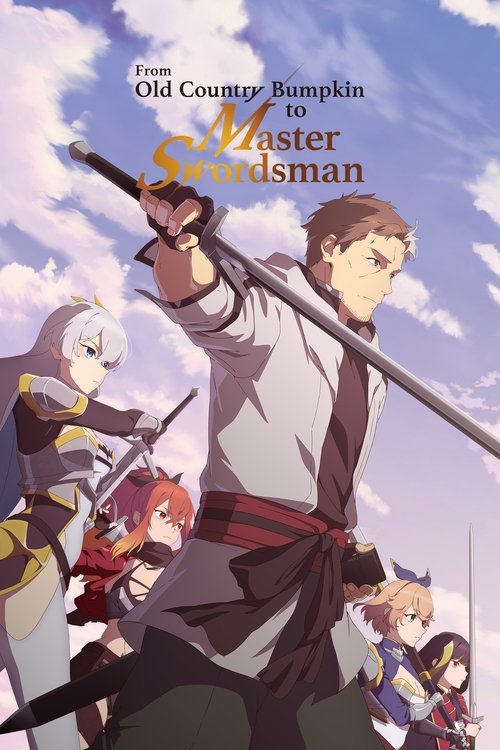
From Old Country Bumpkin to Master Swordsman
A heartwarming high-fantasy journey steeped in quiet humility, where an unassuming veteran finds purpose not in the glory of steel, but as the steady oak whose fallen leaves nourish a rising forest of champions.
From Old Country Bumpkin to Master Swordsman

From Old Country Bumpkin to Master Swordsman

片田舎のおっさん、剣聖になる

05 April 2025 — 15 July 2026 Japan 2 season 24 episode Returning Series 7.3 (100)

Cast: Hiroaki Hirata, Arisa Nakada, Nao Toyama, Yuuki Hirose, Hinaki Yano

Animation Sci-Fi & Fantasy Action & Adventure Comedy Quiet Mastery vs. Imposter Syndrome The Multi-Generational Legacy of Mentorship Aging, Grace, and Late-Blooming Purpose Found Family, Compassion, and Duty Purity of Fundamentals over Supernatural Might

Overview

From Old Country Bumpkin to Master Swordsman (Katainaka no Ossan, Kensei ni Naru) centers on Beryl Gardinant, a middle-aged, self-effacing sword instructor living a quiet rural life in the remote village of Bidden. Having made peace with his perceived mediocrity and the fading of his youthful dreams of becoming a legendary master, Beryl is suddenly uprooted when his star former pupil, Allucia Citrus—now the Commander of the Royal Knights of the Liberion Order—appoints him as the Order's special grand instructor.

Reluctantly arriving at the capital of the Revelis Kingdom, Beryl finds himself reunited with several of his former students who have ascended to high positions in society: elite knight commanders, supreme guild adventurers, and grand arcana sorceresses. As conspiracies brew, dangerous monsters threaten the kingdom, and dark magical forces emerge, Beryl is repeatedly thrown onto the front lines. Despite his belief that his skills are ordinary, his decades of fundamentals, practical combat instinct, and empathetic mentorship continually prove superior to the realm's fiercest warriors and monsters.

Across both seasons, the overarching narrative progresses from Beryl’s initial shock and imposter syndrome in urban high society to an expansive journey of duty, fatherhood, and legacy. As he adopts an orphaned street child named Mewi (Myui) and confronts domestic uprisings, corrupt guilds, magical academia, and border tensions, Beryl evolves from a reluctant relic into the true moral compass and living legend of the Liberion Kingdom.

Core Meaning

The core philosophical thesis of the series is that true mastery does not lie in flashy supernatural talent, self-aggrandizing ambition, or youthful arrogance, but in the relentless, humble dedication to foundational discipline, life-long learning, and selfless mentorship. The creators challenge conventional fantasy power-fantasies by framing real strength not through divine gifts or video-game mechanics, but through patience, emotional maturity, empathy, and the enduring impact one generation leaves upon the next.

Thematic DNA

Quiet Mastery vs. Imposter Syndrome 30%
The Multi-Generational Legacy of Mentorship 25%
Aging, Grace, and Late-Blooming Purpose 20%
Found Family, Compassion, and Duty 15%
Purity of Fundamentals over Supernatural Might 10%

Quiet Mastery vs. Imposter Syndrome

Beryl consistently undervalues himself due to losing duels against his superhumanly powerful father, Mordea. Across both seasons, this internal disconnect drives dramatic irony: while high-tier knights, sorcerers, and villains revere Beryl's technique as divine, he considers himself just an "old man" holding onto basic drills. The arc gradually brings Beryl to accept his own worth without losing his grounding humility.

The Multi-Generational Legacy of Mentorship

Mentorship is a reciprocal, living thread in the story. Beryl gave his students emotional stability and tailored guidance when they were struggling youth; in turn, those grown students advocate for him, defend his honor, and pull him into situations where his wisdom can save the realm. Season 2 broadens this by showing Beryl mentoring new generations, including magic students and orphaned apprentices.

Aging, Grace, and Late-Blooming Purpose

Contrasting standard fantasy tropes focused on chosen teenagers, the narrative explores aging bodies, stiff joints, accumulated regrets, and the realization that one’s most impactful chapters can begin in middle age.

Found Family, Compassion, and Duty

Beryl’s warmth extends beyond blade craft. When he encounters victims of corruption, such as Mewi (Myui), he steps up as a paternal guardian, balancing military duties with domestic warmth, showing that true protectors care for individual souls, not just abstract political states.

Purity of Fundamentals over Supernatural Might

Throughout the combat sequences, opponents wielding devastating ancient magic, inhuman speed, or brute force are outmatched by Beryl’s mastery of distance (maai), weight shifting, anticipation, and fundamental parrying.

Character Analysis

Beryl Gardinant

Hiroaki Hirata

Archetype: Reluctant Mentor / Accidental Living Legend Key Trait: Extreme modesty masking transcendental swordsmanship fundamentals.

Motivation

Initially seeks only to avoid causing embarrassment for his former pupils; evolves into a desire to safeguard his students and foster the next generation.

Character Arc

Begins as a resigned dojo instructor who believes his prime is long gone and his life has stalled. Through navigating the intrigue of the Royal Capital, dueling elite knights, taking down high-tier monsters, raising Mewi, and returning home to face his father, he gains confidence, finding purpose as an educator, father figure, and guardian.

Allucia Citrus

Nao Tōyama

Archetype: Devoted Disciple / Paragon Knight Commander Key Trait: Uncompromising tactical authority coupled with transparent favoritism toward her master.

Motivation

Wants to bring Beryl the nationwide recognition he deserves and keep him by her side.

Character Arc

From an insecure young girl taught by Beryl into the iron-willed Commander of the Royal Liberion Knights. Despite commanding thousands, she remains entirely devoted to Beryl, strategically orchestrating his promotion while concealing deep affection.

All 5 characters and cast

Symbols & Motifs

The Wooden Practice Sword (Bokken) / Simple Straight Blade

Meaning:

Symbolizes unadorned fundamental discipline and purity of technique. While other elite figures wield ornate enchanted armaments, Beryl's reliance on standard blades highlights that skill originates in the human spirit, not the weapon.

Context:

Used repeatedly by Beryl in duels against high-ranking knights wielding enchanted weapons, demonstrating superiority through fundamental form.

Autumn Foliage / Falling Crimson Leaves (Kurenai no Ha)

Meaning:

Represents middle age, maturity, and the bittersweet beauty of life’s autumn, which provides fertility and guidance for spring’s new growth.

Context:

Featured as a persistent visual motif and highlighted as the central theme and title of the Season 2 opening sequence.

The Bidden Village Dojo

Meaning:

Represents Beryl’s roots, moral baseline, and uncorrupted sanctuary, acting as a mirror reflecting spiritual growth.

Context:

Serves as the opening setting of Beryl's rural life and the arena where he returns in Season 2 to confront his unresolved past.

The Master’s Back / Silhouette

Meaning:

Stands for unwavering safety, reliable leadership, and an aspirational standard of strength.

Context:

A recurring visual framing motif seen from the perspective of his devoted disciples: Allucia, Surena, Ficelle, and Curuni.

Memorable Quotes

俺みたいな峠を過ぎたおっさんには、荷が重すぎるよ……
— Beryl Gardinant

Context

Spoken in Season 1, Episode 1 upon receiving high-status commissions from the Royal Capital.

Meaning

Defines Beryl's characteristic self-effacing mindset before demonstrating masterclass feats, serving as his signature catchphrase.

先生の剣こそが、私のすべての始まりです。
— Allucia Citrus

Context

Spoken in Season 1, Episode 2 when rebuffing nobles and subordinate knights who question why she appointed an unknown rural commoner as Grand Instructor.

Meaning

Affirms the foundational impact of Beryl's mentorship and validates his supreme authority despite his rural background.

All 5 quotes

Episode Highlights

The Old Country Bumpkin Goes to the Capital

S1E1

Introduces Beryl's quiet country life, Allucia’s surprise arrival, and his reluctant transition to the Royal Capital, featuring his initial duel with Vice-Commander Henblitz.

Significance:

Establishes the core premise, character dynamics, and Beryl's comedic gap between self-perception and actual combat skill.

The Old Country Bumpkin Weathers a Fierce Attack

S1E3

Features a masterclass exhibition of defensive swordsmanship as Beryl parries complex attacks with effortless fundamentals.

Significance:

Demonstrates Beryl's complete mastery over conventional military combat in a display of pure parrying fundamentals, silencing skeptics within the Liberion Order.

The Old Country Bumpkin Faces the Dead

S1E6

Presents high-stakes combat against dark cults and necromantic monsters alongside S-rank adventurer Surena.

Significance:

Explores Beryl's inner trauma regarding mortality and shows Surena coordinating with him in full battle synergy.

The Old Country Bumpkin Learns the Challenges of Parenting

S1E7

Focuses on the aftermath of rescuing the orphaned street child Mewi (Myui) and welcoming her into Beryl's household.

Significance:

Shifts the show's dynamic into a poignant balance between high military duty and everyday domestic guardianship.

The Old Country Bumpkin Becomes the Master Swordsman

S1E12

Beryl and his disciples thwart a dangerous high-stakes conspiracy threatening the safety of the entire capital.

Significance:

Serves as the Season 1 finale where the King and populace formally recognize Beryl as the "Sword Saint of the Backwaters".

The Old Country Bumpkin Goes to a New Workplace

S1E1

Follows Beryl as he integrates into the Royal Magic Academy alongside his former student Ficelle.

Significance:

Serves as the Season 2 premiere, expanding Beryl's jurisdiction into the Royal Magic Academy and broader national defense affairs.

The Old Country Bumpkin Lets Out a War Cry

S2E5

Depicts a major tactical confrontation in Bidden Village against a dangerous outbreak of mutant Saber Boars.

Significance:

Showcases Curuni's emotional graduation into a self-reliant warrior capable of slaying the alpha beast.

The Old Country Bumpkin Confronts His Father

S2E6

Beryl engages in an intense, long-awaited rematch against his father Mordea in the family dojo.

Significance:

Marks the thematic high point of Season 2, resolving the psychological root of Beryl's imposter syndrome.

Philosophical Questions

What is the difference between genuine competence and self-perception?

Explored through Beryl's persistent imposter syndrome, showing how internalized comparison with formidable childhood authority figures like parents can blind an individual to their own extraordinary growth and mastery.

Can true strength exist without emotional empathy?

Explored through Beryl’s combat style, where his greatest martial asset is the empathetic ability to read an opponent's emotional state, insecurity, and intent before their blades make physical contact.

How does society define late-stage purpose?

Explored by challenging the societal assumption that human potential peaks in youth, demonstrating that wisdom, physical maturity, and life experience enable middle-aged individuals to begin their most impactful chapters.

Alternative Interpretations

The series can be analyzed through two distinct thematic lenses:

Full ending explanation

Cultural Impact

Emerging during an era saturated with reincarnated teenage protagonists receiving cheat skills, From Old Country Bumpkin to Master Swordsman was embraced by audiences as a refreshing palate cleanser. It resonated strongly with millennial and older anime fans experiencing the realities of aging, work fatigue, and family life.

Streaming exclusively worldwide on Amazon Prime Video, the series became an unexpected sleeper hit across both Western and Asian markets, consistently ranking in top television viewership charts next to mainstream live-action tentpoles.

Audience Reception

The series has received strong critical praise for its grounded fight animation direction, Hiroaki Hirata’s vocal performance, and its emotionally mature storytelling. On aggregate platforms, it maintains robust ratings (~4.5/5 on Prime Video and high 70s on anime databases), with viewers highlighting the wholesome dynamic between Beryl and his fiercely loyal disciples.

Minor criticisms focus on slight pacing issues related to the romantic infatuations of female disciples and occasional CGI blending in secondary monster encounters, though the overall consensus celebrates the title as a standout hidden gem.

Interesting Facts

  • The animation is a co-production between Passione and Hayabusa Film, blending character-driven comedic pacing with intricate swordplay choreography.
  • The casting of Hiroaki Hirata was intentional to capture the warm, gravelly, self-deprecating yet instantly authoritative tone of an authentic middle-aged man.
  • Director Akio Kazumi and the fight choreographers prioritized real-world historical European and Japanese swordsmanship concepts over stylized magical energy beams.
  • The orchestral and heavy rock-infused folk score was composed by Yasuharu Takanashi, known for Naruto Shippuden and Fairy Tail.
  • For Season 2, iconic Japanese rock band UNICORN composed the opening theme 'Kurenai no Ha' with lyrics centered on autumn foliage.
  • Complex multidirectional monster encounters and mass formations were co-produced by 3D studio YAMATO WORKS to ensure smooth continuous camera movements.

Easter Eggs

Tribute to Classic Chanbara and Jidaigeki

Beryl's posture, sheath manipulation, and quick-draw counterattacks draw direct inspiration from classic Japanese samurai cinema (notably Zatoichi and Sanjuro), transposed into a Western high-fantasy setting.

The 'Ossan' Naming Convention Subversion

Directly riffs on the famous Shōsetsuka ni Narō trend of middle-aged male revitalization stories, yet subverts it by removing game-like stat sheets, cheat codes, or harem mechanics in favor of authentic martial craft.

Voice Actor Inside Jokes

Dialogue exchanges between Hiroaki Hirata (Beryl) and Kaito Ishikawa (Henblitz) subtly echo their dynamic as veteran mentors challenging hot-headed elites in other famous anime franchises.

Frequently Asked Questions

Explore More About This Movie

Dive deeper into specific aspects of the movie with our detailed analysis pages

Comments (0)

Leave a comment

No comments yet. Be the first to share your thoughts!

Similar Movies