Skip to content
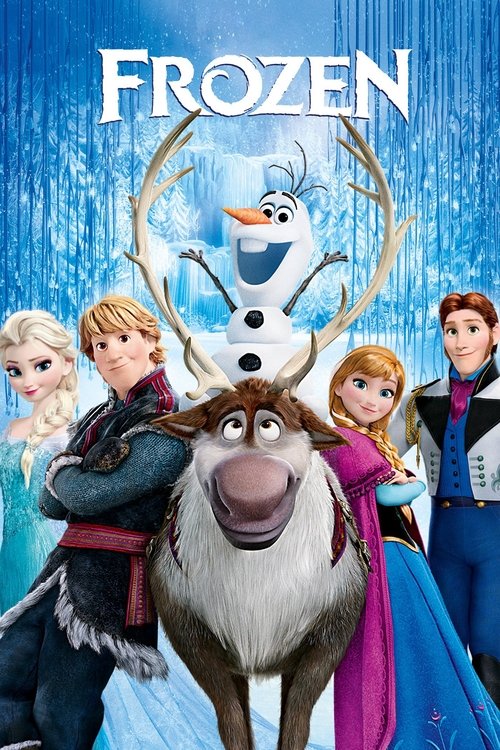
Frozen
Beneath the shimmering aurora of an enchanted Scandinavian winter, a tender fairy tale of isolation and longing blooms like a wild crocus cracking through crystalline permafrost to find the sun.
Frozen

Frozen

"Who will save the day? The ice guy? The nice guy? The snow man? Or no man?"

20 November 2013 United States of America 102 min 7.2 (17,847)

Director: Chris Buck, Jennifer Lee

Cast: Kristen Bell, Idina Menzel, Jonathan Groff, Josh Gad, Santino Fontana

Animation Family Fantasy Adventure Familial Love vs. Romantic Idealism Fear vs. Authentic Self-Acceptance Isolation, Repression, and Mental Health Altruism and Self-Sacrifice
Budget: $150,000,000
Box Office: $1,274,219,009

Overview

Set in the fjord kingdom of Arendelle, Frozen follows two royal sisters, Elsa and Anna, who grow up separated by palace walls and a guarded childhood secret. Elsa possesses the innate, supernatural ability to create ice, frost, and snow. After an innocent childhood accident injures Anna, the king and queen wipe Anna’s memory of the magic and shutter the castle gates to protect Elsa, compelling her to hide her growing abilities behind gloves and closed doors.

Years later, after their parents are lost at sea, the kingdom opens its gates for Elsa’s coronation day. Anna, starved for affection and companionship, embraces the world with reckless optimism, while Elsa lives in quiet dread of losing control. When high-strung emotions inevitably trigger an accidental, public display of Elsa's sorcery, the startled queen flees into the northern mountains, inadvertently casting Arendelle into an unseasonal, eternal winter.

Determined to mend her bond with her sister and bring back summer, Anna embarks on a perilous mountain expedition. Along her trek, she enlists the help of an unsociable ice harvester named Kristoff, his loyal reindeer Sven, and a whimsical enchanted snowman named Olaf. Together, they race across treacherous blizzards and jagged peaks to reach Elsa’s solitary ice haven before the cold engulfs everything they know.
Core Meaning

Directed by Chris Buck and Jennifer Lee, Frozen deconstructs traditional fairy tale tropes to explore the dialectic between fear and love. The film argues that emotional suppression—typified by the trauma-driven mandate to "conceal, don't feel"—isolates the self and turns natural vulnerability into destructive chaos.

Instead of presenting true love as an instantaneous romantic rescue by an external savior, the film asserts that authentic love is defined by unselfish empathy and sacrificial action. In doing so, the filmmakers reposition familial and sisterly solidarity as the catalyst for redemption, illustrating that healing requires dismantling emotional fortresses and embracing acceptance over fear.

Thematic DNA

Familial Love vs. Romantic Idealism 35%
Fear vs. Authentic Self-Acceptance 25%
Isolation, Repression, and Mental Health 20%
Altruism and Self-Sacrifice 20%

Familial Love vs. Romantic Idealism

Deconstructs the classic Disney trope of love-at-first-sight. Anna’s impulsive infatuation with Prince Hans contrasts sharply with the durable, unpolished bond she shares with Elsa and the grounded companionship she builds with Kristoff. The ultimate salvation of the kingdom stems not from a prince’s kiss, but from a sisterly sacrifice.

Fear vs. Authentic Self-Acceptance

Elsa’s magic acts as an emotional barometer: whenever she experiences panic, guilt, or terror, ice spikes violently outward. The royal decree of repression causes psychological trauma, proving that when fear dictates human behavior, it freezes compassion and distorts identity.

Isolation, Repression, and Mental Health

Explored through the motif of closed doors and physical barricades. Elsa’s self-imposed quarantine manifests as severe anxiety and agoraphobia, while Anna suffers from acute loneliness and emotional starvation, which leaves her vulnerable to predatory affection.

Altruism and Self-Sacrifice

Defined explicitly by Olaf’s philosophy that true affection means putting another's needs ahead of your own. Sacrificial action is framed as the single force capable of breaking cycles of trauma, fear, and coldness.

Character Analysis

Anna

Kristen Bell

Archetype: The Reluctant Fairy Tale Hero / Free Spirit Key Trait: Fierce, resilient optimism and unyielding loyalty

Motivation

To reconnect with Elsa, restore summer to Arendelle, and find authentic connection.

Character Arc

Begins as an impetuous, romance-obsessed girl craving external validation; matures through hardship into a courageous young woman who realizes true love is demonstrated through selfless sacrifice rather than infatuation.

Elsa

Idina Menzel

Archetype: The Tragic Monarch / Deconstructed "Snow Queen" Key Trait: Profound protective instinct shadowed by paralyzing fear

Motivation

To protect her sister and kingdom from her destructive powers, and to live unburdened.

Character Arc

Moves from a terrified recluse governed by anxiety to an unapologetic but alienated sovereign, finally finding emotional equilibrium when she learns that love controls her gifts.

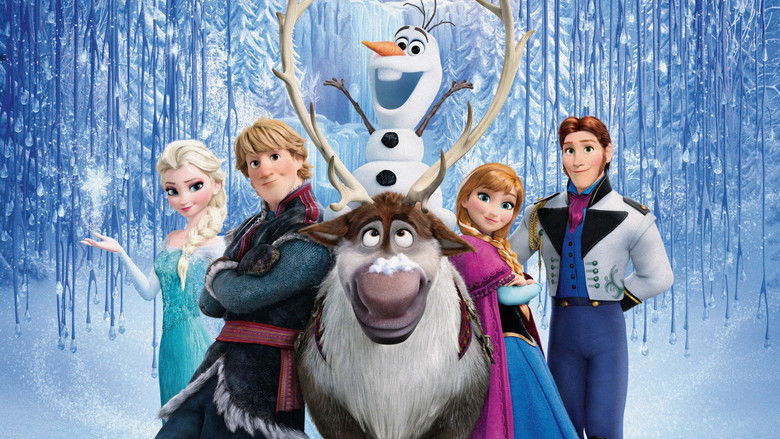
All 5 characters and cast

Symbols & Motifs

Doors and Gates

Meaning:

Used extensively to track emotional accessibility, estrangement, vulnerability, and openness.

Context:

Closed doors in "Do You Want to Build a Snowman?" highlight estrangement, while opened gates symbolize hope and vulnerability ("For the First Time in Forever", "Love Is an Open Door"). At the film's climax, Elsa vows that the kingdom's gates will never close again.

Gloves

Meaning:

Represent emotional suppression and artificial control.

Context:

Given to Elsa by her father to hide her touch, removing the gloves during "Let It Go" signals total release of social restraint, while losing one at the coronation triggers her exposure.

Ice and Snow

Meaning:

Function as reflections of Elsa’s psyche and emotional state.

Context:

Delicate, beautiful snowflakes signify wonder and play; sharp, red-tinted icicles denote terror and defense; swirling blizzards manifest deep panic.

Olaf the Snowman

Meaning:

Symbolizes innocent sisterly love, pure optimism, and selfless devotion, emphasizing innocence and the willingness to risk destruction for warmth.

Context:

Built together by the sisters in childhood, Olaf's paradoxical yearning for summer emphasizes his altruistic nature, illustrated through lines such as "Some people are worth melting for."

The Ice Palace

Meaning:

Represents Elsa's liberation, yet quickly reveals itself as an opulent prison of cold isolation, demonstrating that absolute detachment is not genuine freedom.

Context:

Built on the North Mountain during "Let It Go" as a crystalline fortress.

Memorable Quotes

The cold never bothered me anyway.
— Elsa

Context

The defiant closing lyric of "Let It Go," as Elsa slams the balcony door of her newly formed ice palace.

Meaning

Marks her definitive abandonment of societal expectations, shedding her regal inhibitions in favor of unfiltered self-expression.

Some people are worth melting for.
— Olaf

Context

Olaf tends a crackling fire in Arendelle’s library to warm the freezing Anna, despite beginning to liquefy himself.

Meaning

Encapsulates the film's thematic thesis: true love is defined by selfless, voluntary sacrifice for another's well-being.

All 5 quotes

Philosophical Questions

Can suppression ever provide true security?

The film explores how emotional repression intended to protect loved ones invariably produces deeper estrangement and volatility.

What constitutes the true essence of love?

It interrogates whether love is an infatuated feeling of personal satisfaction ("Love Is an Open Door") or an intentional, self-giving sacrifice for another’s survival (Olaf’s fire scene).

Is absolute freedom achievable in solitude?

Elsa believes her mountain exile is liberation, but her ice fortress only isolates her from human connection, asking whether autonomy without empathy is merely another form of confinement.

Alternative Interpretations

Several distinct lenses provide alternative interpretations of the film:

Full ending explanation

Cultural Impact

Frozen premiered in late 2013 during a resurgence of Disney Feature Animation, following successes like Tangled (2010) and Wreck-It Ralph (2012). It grossed over $1.28 billion worldwide, becoming the highest-grossing animated film of all time up to that point and ranking among the top-earning cinematic releases globally. It captured two Academy Awards: Best Animated Feature and Best Original Song for "Let It Go".

The film became a bona fide cultural phenomenon: "Let It Go" dominated global music charts, while merchandise sales and Elsa-Anna costumes sold out globally. Critics hailed it as Disney’s finest animated musical since the 1990s Renaissance, celebrating its visual splendor, memorable soundtrack, modern pacing, and progressive thematic shift away from classic damsel-in-distress conventions.

Audience Reception

Audience and critical reception was overwhelmingly positive, though it featured distinct points of critique:

  • Praise: Universally applauded for Robert Lopez and Kristen Anderson-Lopez’s Broadway-caliber score, Idina Menzel and Kristen Bell’s vocal performances, gorgeous Nordic-inspired digital landscapes, and the subversive, satisfying resolution to the "true love" riddle.
  • Criticisms: Some critics felt the third-act pacing was rushed and that the rock trolls were tonally dissonant comic relief whose musical number ("Fixer Upper") disrupted narrative urgency.
  • Controversies / Mixed Debates: Prince Hans’s abrupt villain twist divided viewers; while some praised it as a sharp critique of romantic speed-dating, others argued his turn lacked sufficient early setup and relied on retroactive villainy.
  • Overall Verdict: Regarded as a modern animated classic that modernized Disney's fairy-tale storytelling for twenty-first-century audiences.

Interesting Facts

  • Walt Disney Studios attempted to adapt Hans Christian Andersen’s "The Snow Queen" as early as 1937 in collaboration with Samuel Goldwyn, but the project remained in development limbo for decades due to difficulties making the cold titular character sympathetic.
  • Elsa was initially conceived as an outright villain with blue hair and a coat made of living weasels. When Kristen Anderson-Lopez and Robert Lopez submitted the empowerment anthem "Let It Go," the directors found her perspective so vulnerable and relatable that they completely rewrote the story to make her a sympathetic co-protagonist.
  • The production design team traveled extensively through Norway to study its landscape, fjords, stave churches, and traditional folk costume (bunad), incorporating native rosemåling floral patterns into clothing and interior architecture.
  • Disney animators created an innovative physics-simulation software called Matterhorn specifically to depict realistic snow dynamics, capturing everything from powdery flakes to heavy, packed snowbanks.
  • Jennifer Lee became the first female director of a Walt Disney Animation Studios feature-length film, joining Chris Buck during production.

Easter Eggs

Homage to Hans Christian Andersen

The sequential names of the four primary characters—Hans, Kristoff, Anna, and Sven—serve as a phonetic tribute when spoken aloud: Hans Christian Andersen.

Rapunzel and Flynn Rider Cameo

During the coronation song "For the First Time in Forever," Rapunzel (sporting her short brunette hair) and Eugene Fitzherbert (Flynn Rider) from Tangled (2010) are visible entering Arendelle’s open gates.

Arrested Development Reference

During "Love Is an Open Door," Hans and Anna sing the line "We finish each other's— / Sandwiches!", a direct nod to Kristen Bell’s favorite joke from the comedy series Arrested Development.

Hidden Mickey

In Wandering Oaken’s Trading Post and Sauna, a miniature wooden Mickey Mouse figurine sits tucked on a merchandise shelf behind Anna.

The Painting by Fragonard

Anna playfully leaps in front of a real painting in the castle gallery: Jean-Honoré Fragonard's 1767 Rococo masterpiece The Swing.

Frequently Asked Questions

Explore More About This Movie

Dive deeper into specific aspects of the movie with our detailed analysis pages

Comments (0)

Leave a comment

No comments yet. Be the first to share your thoughts!

Similar Movies