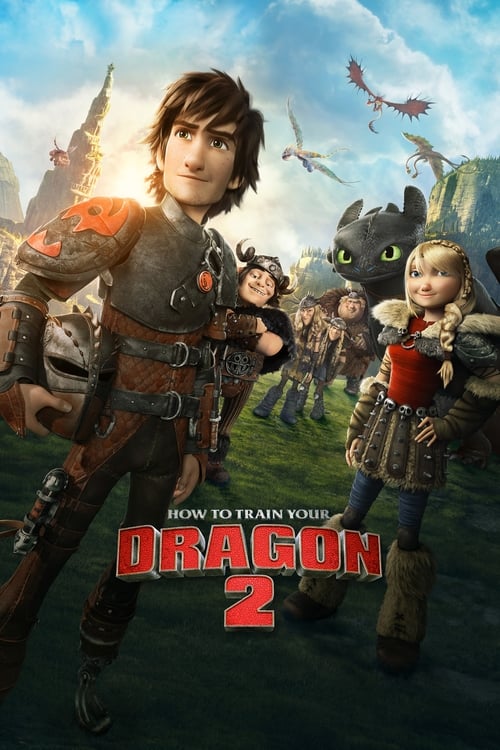
How to Train Your Dragon 2
Overview
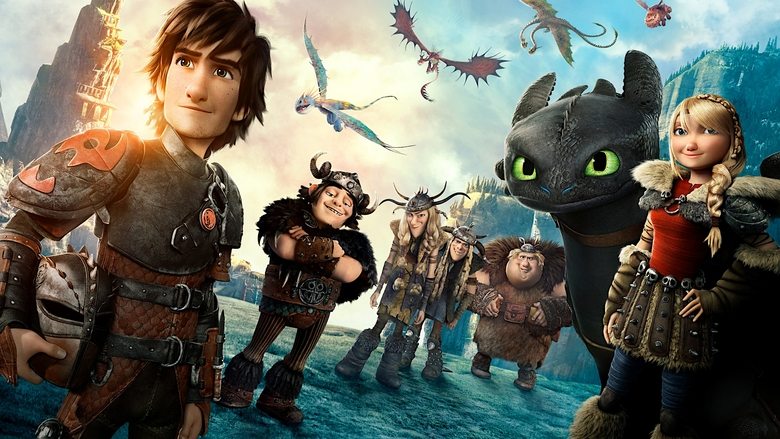
Five years after uniting Vikings and dragons, Hiccup and Toothless are exploring unmapped territories while Stoick pressures his son to accept the mantle of Chief. Their adventures lead them to the discovery of a secret ice cave, home to hundreds of wild dragons and a mysterious Dragon Rider who turns out to be Valka, Hiccup's long-lost mother. This joyous reunion is shadowed by the emergence of Drago Bludvist, a ruthless warlord assembling a dragon army to conquer the world.
Hiccup attempts to reason with Drago, believing peace is possible through dialogue, but his idealism clashes with Drago's brutal philosophy of domination. The conflict escalates into a massive battle involving two colossal Alpha dragons (Bewilderbeasts). In a heartbreaking turn, Drago's Alpha seizes control of Toothless's mind, forcing him to attack Hiccup, but Stoick sacrifices himself to save his son. Grief-stricken but determined, Hiccup must master his role as a leader to break the Alpha's control, save Toothless, and defend Berk from enslavement.
Core Meaning
The Burden of Legacy and the Cost of Peace. Director Dean DeBlois intended this film to be the Empire Strikes Back of the trilogy—a darker middle chapter that forces the hero to grow up. The film argues that true leadership isn't just about inheriting a title, but about the willingness to protect others even at great personal cost. It challenges Hiccup's naive pacifism, showing that while peace is the ultimate goal, some forces of oppression (Drago) cannot be reasoned with and must be actively opposed.
Thematic DNA
Leadership and Responsibility
Hiccup spends the first act running away from his father's expectations, fearing he isn't "Chief material." Through the loss of his father, he learns that leadership is not about being like Stoick, but about protecting his people in his own way. He accepts his destiny not because he is told to, but because the situation demands it.
War vs. Peace
The film presents three philosophies: Hiccup's diplomatic idealism, Drago's tyrannical conquest, and Stoick's protective defensiveness. The narrative deconstructs Hiccup's belief that everyone can be reasoned with, forcing him to fight to preserve peace.
Family and Loss
The film explores the joy of a family reunited (Hiccup, Stoick, Valka) and the immediate, crushing pain of that family being torn apart again. It portrays grief not as a stopping point, but as a catalyst for maturity.
Nature vs. Domination
Contrasts Valka's sanctuary, where dragons live in a natural hierarchy, with Drago's army, where dragons are enslaved by fear. It suggests that authority earned through love (Hiccup/Toothless) is stronger than authority seized through fear (Drago/Alpha).
Character Analysis
Hiccup Horrendous Haddock III
Jay Baruchel
Motivation
To find his identity outside of his father's shadow and to prove that peace with dragons is permanent.
Character Arc
Starts as an explorer fleeing responsibility; ends as a Chief who accepts his duty. He moves from believing words can solve everything to understanding that action is sometimes necessary to protect peace.
Stoick the Vast
Gerard Butler
Motivation
To protect his family and the village of Berk at any cost.
Character Arc
transitions from a demanding father to a proud parent who accepts his son. He finds brief, joyous completion in reuniting with Valka before sacrificing his life for his son.
Valka
Cate Blanchett
Motivation
To liberate and protect dragons from human cruelty.
Character Arc
Re-enters human society after living as a "wild" dragon vigilante. She validates Hiccup's dragon-loving nature but serves as a warning of what happens when you completely abandon human society.
Drago Bludvist
Djimon Hounsou
Motivation
To conquer the world and eliminate the "threat" of dragons by enslaving them.
Character Arc
A static villain who represents the antithesis of Hiccup. He believes only in the power of fear and dominance.
Symbols & Motifs
The Alpha (Bewilderbeast)
Symbolizes absolute power and control. It represents the two ways power can be used: to protect (Valka's Alpha) or to enslave (Drago's Alpha).
The battle between the white and dark Bewilderbeasts mirrors the ideological battle between Hiccup and Drago. Toothless challenging the Alpha symbolizes the triumph of individual will and friendship over totalitarian control.
Hiccup's Flight Suit
Represents Hiccup's independence, ingenuity, and his desire to push boundaries beyond the Viking tradition.
Used in the opening sequence to show he is no longer just riding dragons but becoming one with them, literally 'falling' with style before flying.
The Map
Symbolizes the expanding world and Hiccup's curiosity, but also the encroaching dangers that come with discovery.
Hiccup is constantly adding to it; Drago later uses knowledge of Berk's location to attack. It represents the double-edged sword of exploration.
Memorable Quotes
You have the heart of a chief... and the soul of a dragon.
— Valka
Context:
Spoken to Hiccup during their brief time together in the sanctuary, affirming he doesn't have to choose one or the other.
Meaning:
Validates Hiccup's dual nature, bridging the gap between his human responsibilities and his connection to nature.
A chief protects his own.
— Stoick the Vast
Context:
Stoick says this to Hiccup early in the film to explain why he closed the gates, and Hiccup repeats it at the end when defending Berk.
Meaning:
The central definition of leadership in the film. It foreshadows Stoick's sacrifice and becomes the mantra Hiccup adopts at the end.
Good dragons under the control of bad people do bad things.
— Valka
Context:
Spoken after Stoick's death to help Hiccup understand that Toothless wasn't responsible for his actions under the Alpha's control.
Meaning:
A crucial lesson for Hiccup to forgive Toothless for killing Stoick. It emphasizes that intent matters more than action when free will is stripped away.
You're as beautiful as the day I lost you.
— Stoick the Vast
Context:
Stoick says this immediately upon seeing Valka for the first time in 20 years, disarming her defense mechanisms instantly.
Meaning:
Demonstrates Stoick's enduring love and softness beneath his rough exterior. It is one of the most emotional lines in the franchise.
Philosophical Questions
Can absolute evil be reasoned with?
Hiccup starts the film believing he can change Drago's mind just as he changed Stoick's. The film answers with a tragic "no." It suggests that while diplomacy is ideal, some individuals (Drago) are driven by a will to power that cannot be negotiated with, only defeated.
Does nature belong to humanity?
The film contrasts three views: Drago's domination (nature as a tool), Valka's segregation (nature separate from humans), and Hiccup's symbiosis (nature and humans working together). It ultimately champions the symbiotic relationship as the moral ideal.
Alternative Interpretations
The Failure of Pacifism: A cynical reading suggests the film undermines Hiccup's original philosophy. In the first film, he proved everyone wrong by refusing to kill. In the second, his attempt to reason with Drago fails catastrophically, leading to his father's death. This forces him to adopt a "peace through superior firepower" approach (using the Alpha), which some critics argue is a retreat to the very Viking militarism he originally rejected.
Coming of Age Metaphor: The dragons can be seen as a metaphor for the raw potential and responsibility of adulthood. Drago represents the abuse of power, while Hiccup represents the responsible stewardship of it. Stoick's death signifies the "death of the protector," forcing the child to become the protector.
Cultural Impact
Critical Acclaim and Maturity in Animation: How to Train Your Dragon 2 was widely praised for maturing with its audience. Critics lauded it for not shying away from permanent consequences (death, disability) in a "kids' movie." It won the Golden Globe for Best Animated Feature and was nominated for an Oscar.
Political Interpretations: The film sparked discussions in international relations theory circles. Some critics viewed Drago as a representation of foreign tyranny and Hiccup as a liberal interventionist, while others debated the film's message on whether pacifism is viable against absolute evil. The contrast between Valka's "commune" and Drago's "army" also drew comparisons to various political ideologies.
Technical Milestone: The visual leap taken in this film set a new standard for CGI lighting and skin texture (subsurface scattering), influencing how subsequent animated films were rendered.
Audience Reception
Universal Praise: Audiences gave the film an "A" CinemaScore. It is frequently cited by fans as the best in the trilogy due to its emotional stakes and world-building.
Criticism: Some parents were upset by the darker tone and the death of a beloved parent, feeling it was too intense for younger children. A minority of critics felt the "evil foreigner" coding of Drago was a cliché trope.
Visuals: The flying sequences and the design of the Bewilderbeast were universally acclaimed as some of the best visuals in animation history.
Interesting Facts
- Empire Strikes Back Influence: Director Dean DeBlois agreed to the sequel only if he could turn it into a trilogy, citing The Empire Strikes Back as his inspiration for a darker middle chapter where the hero loses something profound.
- New Animation Technology: This was the first DreamWorks film to use "Premo" and "Torch" software, allowing for "scalable multicore processing." This enabled animators to work with high-resolution characters in real-time and create realistic lighting for the first time.
- Stoick's Fate: Originally, Gobber was the character slated to die. However, Guillermo del Toro (a creative consultant) argued that for the loss to truly impact Hiccup's arc into adulthood, it had to be his father.
- Kit Harington: The character Eret, Son of Eret, was voiced by Kit Harington, known for playing Jon Snow in Game of Thrones. The animators even modeled the character slightly after him.
- Ad-libbed Coming Out: Craig Ferguson (Gobber) ad-libbed the line, "This is why I never married. This and one other reason." Director Dean DeBlois confirmed this was Gobber coming out as gay.
- Hiccup's Handedness: Hiccup is left-handed, just like his voice actor Jay Baruchel. This is a rare trait for animated heroes.
- Box Office Record: It was the highest-grossing animated film of 2014 worldwide, surpassing $600 million.
Easter Eggs
Game of Thrones Reference
When Eret (voiced by Kit Harington) is captured, Astrid asks him sarcastically, "Don't you know anything?" This is a direct nod to the famous line "You know nothing, Jon Snow" from Game of Thrones.
Toothless in the Logo
In the opening DreamWorks Animation logo, the boy on the moon is usually fishing. In this film's variant, Toothless flies through the night sky behind the logo, cementing the franchise as a pillar of the studio.
Drago's Bewilderbeast in Hidden World
While more of a retrospective detail, the dark Alpha dragon defeated in this film can be seen hiding in the background of the Hidden World in the third film, showing it survived but lost its dominance.
⚠️ Spoiler Analysis
Click to reveal detailed analysis with spoilers
Frequently Asked Questions
Explore More About This Movie
Dive deeper into specific aspects of the movie with our detailed analysis pages
Comments (0)
No comments yet. Be the first to share your thoughts!