Frozen Planet
Overview
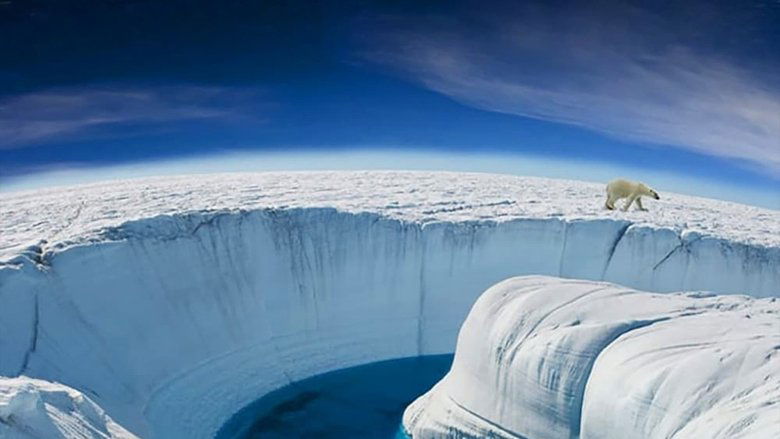
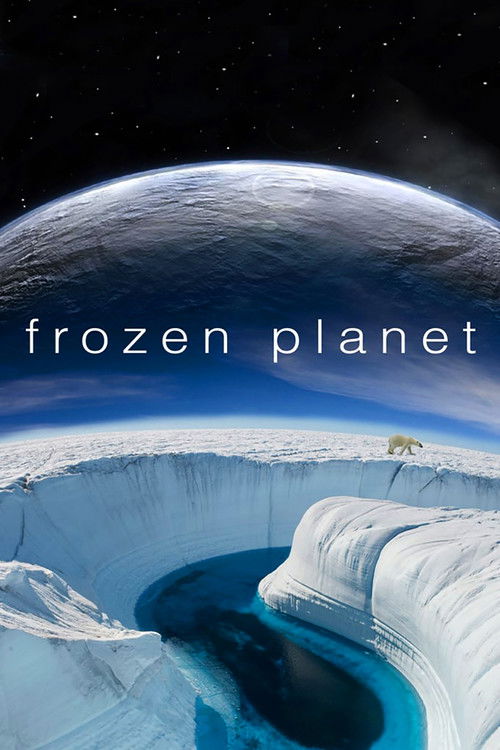
Frozen Planet is a landmark natural history series that takes viewers on an extraordinary journey to the Earth's polar regions: the Arctic and the Antarctic. Narrated by Sir David Attenborough, the series serves as a comprehensive portrait of the last great wildernesses on the planet. The structure follows a seasonal arc, beginning with the return of the sun in Spring, moving through the abundance of Summer and the preparation of Autumn, to the punishing darkness of Winter. It captures the extreme challenges life faces in these sub-zero environments, from the courtship rituals of polar bears to the synchronized hunting of killer whales.
Beyond the seasonal cycle, the series dedicates specific episodes to the human presence in these hostile lands and the overarching threat of climate change. Unlike previous documentaries that might have shied away from the topic, Frozen Planet boldly addresses the fragility of these ecosystems. The final episode, On Thin Ice, presents scientific evidence of melting ice caps and warming oceans, positioning the series not just as a celebration of nature, but as a sombre warning about its potential loss. The show combines intimate animal character studies with sweeping aerial cinematography to convey the vastness and vulnerability of the poles.
Core Meaning
The core meaning of Frozen Planet is the interconnected fragility of the natural world. It posits that the polar regions are not distant, isolated wastelands, but the planet's cooling system and a barometer for the Earth's health. The series illustrates that the struggle for survival—whether by a penguin stealing stones or a wolf pack hunting bison—is dictated by the seasonal ice. Its ultimate message is a call to witness and understand these vanishing worlds before they are irretrievably altered by human-induced climate change, emphasizing that the fate of the poles is inextricably linked to the future of humanity.
Thematic DNA
The Cycle of Seasons
The series is structurally anchored by the annual cycle of the sun. It explores how the extreme oscillation between the 24-hour sunlight of summer and the permanent darkness of winter dictates every aspect of life. This theme evolves from the hope and rebirth of spring to the desperate race against time in autumn, illustrating that time itself is the most precious resource for polar survival.
Endurance and Adaptation
Throughout the series, the theme of evolutionary ingenuity is paramount. It showcases animals pushing physiological limits, such as the woolly bear caterpillar freezing solid or emperor penguins enduring -60°C blizzards. This theme highlights nature's resilience but juxtaposes it against the rapid environmental changes that evolution cannot keep pace with.
Climate Change and Transience
While initially subtle, this theme grows in weight until it dominates the finale. It reveals that the "frozen" planet is actually melting. The series presents the ice not as a permanent geological feature, but as a vanishing habitat, transforming the documentary into an elegy for a disappearing world.
The Brutality of Nature
The series refuses to sanitise the polar existence. It depicts the stark reality of predation and competition, such as orcas washing seals off ice floes or wolves wearing down bison. This theme serves to respect the animals' struggle, showing that even without human interference, life at the poles is a constant battle against death.
Character Analysis
David Attenborough
Himself (Narrator/Presenter)
Motivation
To document the majesty of the polar regions before they change forever and to educate humanity on the urgent reality of global warming.
Character Arc
He begins as an enthusiastic guide introducing the "magical ice worlds." As the series progresses through the seasons, his tone shifts from wonder to concern. In the final episode, he physically steps into the frame (a rarity for the series) at the North Pole to deliver a direct plea to the audience, transforming from a narrator into an advocate for the planet's future.
The Adélie Penguin
Various Wild Individuals
Motivation
To build the most impressive nest possible to secure a mate and pass on his genes.
Character Arc
Introduced in the spring, this male penguin must build a nest of stones to attract a mate. Faced with a shortage of materials, he turns to thievery, stealing pebbles from a distracted neighbor. His arc is a comedic yet desperate struggle for reproductive success in a resource-poor environment.
The Polar Bear
Various Wild Individuals
Motivation
To find food and raise the next generation in a rapidly shrinking habitat.
Character Arc
The undisputed king of the Arctic, yet portrayed as increasingly vulnerable. We see the bear as a tender mother nursing cubs (in the controversial den scene), a lonely wanderer on the melting ice, and a desperate hunter attacking walruses. The arc moves from dominance to an uncertain future as their kingdom literally melts beneath their feet.
The Matriarch Orca
Wild Orca
Motivation
To feed her family using complex, learned behaviors that no other species possesses.
Character Arc
She leads her pod in the Antarctic waters, teaching them a sophisticated culture of hunting. Her arc demonstrates intelligence and coordination as she orchestrates the "wave wash" technique to knock seals off the ice, passing this knowledge down to the younger generation.
Symbols & Motifs
Sea Ice
It symbolizes the foundation of life in the polar regions. It is both a physical platform for hunting and breeding and a metaphorical clock ticking down as the planet warms.
Used throughout every episode as the stage for all action. The extent of the ice determines the polar bear's success and the penguin's migration. Its visual breakup in time-lapses represents the series' central warning.
The Sun
It represents the ultimate dictator of the polar world. Its presence brings life and abundance, while its absence brings death and stasis.
The series tracks the sun's position constantly. The return of the sun is a pivotal moment in the "Spring" episode, while its departure in "Autumn" signals the mass exodus of life.
The Stone
For the Adélie penguin, a simple pebble symbolizes wealth, status, and genetic legacy.
Featured in the iconic "Spring" segment where a male penguin turns to crime, stealing stones from a neighbor to build his nest. It highlights the desperate lengths animals go to for reproduction.
The Brinicle (Icy Finger of Death)
It symbolizes the alien and lethal beauty of the poles. It shows that danger comes not just from predators, but from the physics of the environment itself.
In the "Winter" episode, a time-lapse shows a stalactite of brine freezing its way down to the seafloor, killing starfish and urchins instantly upon contact. It visualizes the silent, creeping power of the cold.
Memorable Quotes
Beneath my feet and for 500 miles in every direction there are several metres of ice. But something significant is likely to happen at the North Pole soon.
— David Attenborough
Context:
Spoken by Attenborough while standing directly on the sea ice at the geographic North Pole in the final episode, On Thin Ice.
Meaning:
This quote anchors the physical reality of the Arctic while foreshadowing the central conflict of the series: the disappearance of the ice. It emphasizes the immediacy of the threat.
The polar bear is the easy one... But climate change is going to affect us much more profoundly than the loss of the polar bear.
— David Attenborough
Context:
From an interview promoting the series, reflecting the core message of the final episode regarding the global impact of polar melt.
Meaning:
Attenborough challenges the audience to look beyond the charismatic animals and understand the broader existential threat to humanity itself. It reframes the narrative from nature conservation to human survival.
These are the last true wildernesses... and they are changing.
— David Attenborough
Context:
Used in the opening introduction of the series, setting the tone for the journey ahead.
Meaning:
A concise summary of the show's dual purpose: to celebrate the pristine nature of the poles and to warn of their fragility.
Episode Highlights
To the Ends of the Earth
The series opener establishes the sheer scale of the Arctic and Antarctic. It features the iconic sequence of orcas creating synchronized waves to wash seals off ice floes. It sets the stage by contrasting the two poles—one an ocean surrounded by continents, the other a continent surrounded by ocean.
It introduces the visual grandeur and the central cast of animals, hooking the audience with never-before-seen hunting behaviors that defined the series' technical ambition.
Spring
As the sun returns, life explodes into action. The highlight is the comedic "criminal penguin" sequence, where an Adélie penguin steals stones from a neighbor's nest. It also features the woolly bear caterpillar thawing out after being frozen solid.
This episode balances the scientific marvel of adaptation with relatable, anthropomorphic humor, making the harsh environment accessible and emotionally engaging for viewers.
Summer
Under the midnight sun, the poles teem with life. A massive wolf pack is seen hunting bison, a rare event to capture on film. The episode emphasizes the brief window of abundance where animals must feed enough to survive the coming dark.
It showcases the peak of the seasonal cycle, providing a stark contrast to the starvation and struggle depicted in later episodes.
Winter
The most brutal episode, focusing on the extreme survivors who remain during the polar night. It features the terrifying "brinicle" (ice finger of death) time-lapse, where a stalactite of super-cooled brine kills everything on the seafloor.
It contains some of the most technically difficult footage to acquire, revealing the alien nature of the poles and the merciless physics of the environment.
On Thin Ice
The controversial finale presented by Attenborough on location. It moves away from pure animal behavior to interview scientists and show the undeniable evidence of glacial retreat and melting sea ice.
It transformed the series from a nature spectacle into a political and environmental statement, causing controversy in the US but solidifying the show's legacy as a truthful account of the planetary crisis.
Philosophical Questions
Does the pursuit of the 'perfect shot' justify artifice in documentary filmmaking?
The series forces viewers to confront the ethics of wildlife filmmaking. The use of a zoo set to depict a polar bear birth raised questions about what is 'real.' Is the truth of the animal's behavior (which is accurate) more important than the literal truth of the location? The series suggests that emotional truth and education sometimes require constructed narratives.
What is humanity's obligation to a world it is destroying?
Through the juxtaposition of innocent animal struggles (like the penguin or the bear) and the human-caused melting of their habitat, the series asks if observation is enough. By ending with a direct plea from Attenborough, it moves from passive observation to an active call for ethical responsibility, suggesting that seeing implies a duty to act.
Alternative Interpretations
While primarily a documentary, Frozen Planet has been interpreted by some critics as a tragedy disguised as a spectacle. The beautiful imagery of melting ice, often accompanied by sweeping orchestral music, creates a cognitive dissonance—seducing the viewer with beauty while showing a catastrophe.
The 'Fake' Nature Controversy: A significant alternative reading arose from the revelation that the polar bear birth scene was filmed in a Dutch zoo. While the BBC defended this as standard industry practice for impossible shots, some audiences interpreted this as a breach of the 'documentary contract,' sparking a debate about authenticity versus storytelling in nature films. Skeptics used this to try and discredit the series' wider message about climate change, though the scientific claims remained robust.
Cultural Impact
Frozen Planet arrived at a pivotal moment in the public discourse on climate change. By 2011, the scientific consensus was solid, but public fatigue was setting in. The series reignited the conversation by providing undeniable visual evidence of the melting poles. Politically, the decision by US networks to initially hesitate on airing the climate change episode highlighted the deep polarization of the issue in America, while the eventual broadcast marked a victory for scientific communication. Culturally, the series set a new benchmark for 'blue chip' natural history filmmaking, winning four Emmy Awards and multiple BAFTAs. It also popularized the 'diary' format at the end of episodes, humanizing the filmmakers. The viral success of the 'criminal penguin' demonstrated how social media would increasingly drive the consumption of nature documentaries.
Audience Reception
Universal Acclaim with a asterisk of Controversy. Upon release, Frozen Planet was a ratings juggernaut in the UK, drawing millions of viewers and receiving near-universal praise for its cinematography and emotional storytelling. The 'criminal penguin' and 'orca wave' clips became instant classics.
However, the reception was nuanced by two factors: the 'Polar Beargate' controversy, where some viewers felt betrayed by the zoo footage, and the Climate Change debate in the US. While UK audiences generally accepted the environmental message, US reception was more polarized, with the final episode becoming a lightning rod for political debate. Ultimately, the series is regarded as one of the finest entries in the BBC Earth canon, praised for its ability to make the remote poles feel intimate and urgent.
Interesting Facts
- The 'criminal penguin' sequence became a viral sensation and was compared to the silent comedy of Charlie Chaplin and the character Feathers McGraw from Wallace and Gromit.
- The 'brinicle' or 'ice finger of death' was filmed for the first time in history for this series, using time-lapse cameras under the ice in Antarctica.
- The US broadcast on Discovery Channel originally planned to drop the 7th episode 'On Thin Ice' due to the political sensitivity of climate change, but aired it after significant public pressure.
- The series was the first to extensively use the Cineflex helicopter camera system in the polar regions, allowing for rock-steady aerial shots from great distances without disturbing animals.
- Filming the orca 'wave wash' sequence required the crew to spend weeks on a small boat in freezing Antarctic waters, waiting for the rare behavior to occur.
- Attenborough was 85 years old during the filming and insisted on traveling to the North Pole to stand on the ice for his pieces to camera.
- Production took four years, with 2,356 days spent in the field and the crew enduring temperatures as low as -58°F.
Easter Eggs
Feathers McGraw Reference
Critics and fans immediately likened the stone-stealing Adélie penguin to the villainous penguin 'Feathers McGraw' from the Wallace and Gromit film The Wrong Trousers, turning a nature clip into a pop-culture meme.
Freeze Frame Diaries
At the end of each episode (in the UK broadcast), a 10-minute 'Freeze Frame' segment revealed the production struggles. This 'breaking of the fourth wall' became a beloved staple, showing the human cost and humor behind the majestic shots.
⚠️ Spoiler Analysis
Click to reveal detailed analysis with spoilers
Frequently Asked Questions
Explore More About This Movie
Dive deeper into specific aspects of the movie with our detailed analysis pages
Comments (0)
No comments yet. Be the first to share your thoughts!