Future Boy Conan
A post-apocalyptic adventure radiating vibrant optimism where a super-powered boy and a telepathic girl traverse a flooded world. It blends high-flying steampunk action with a soulful reverence for nature, establishing the visual poetry of Studio Ghibli.
Future Boy Conan

Future Boy Conan

未来少年コナン

04 April 1978 — 31 October 1978 Japan 1 season 26 episode Ended ⭐ 8.4 (208)
Cast: Noriko Ohara, Mieko Nobusawa, Kazuyo Aoki, Ichiro Nagai, Rihoko Yoshida
Animation Sci-Fi & Fantasy Action & Adventure Family
Nature vs. Industry The Resilience of Youth Redemption and Forgiveness The Danger of Past Technology

Overview

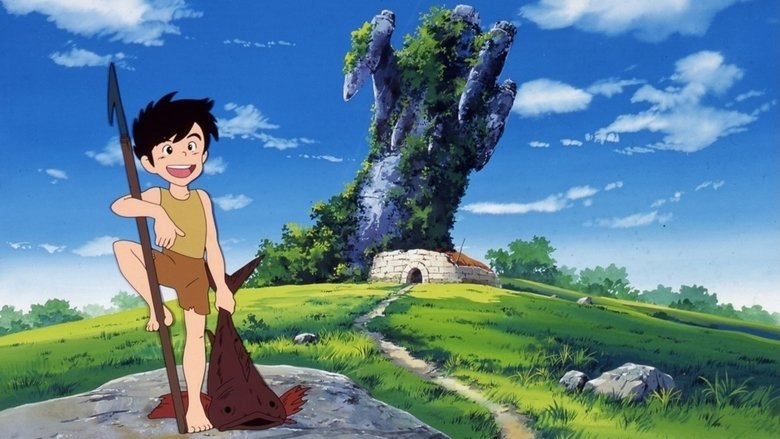
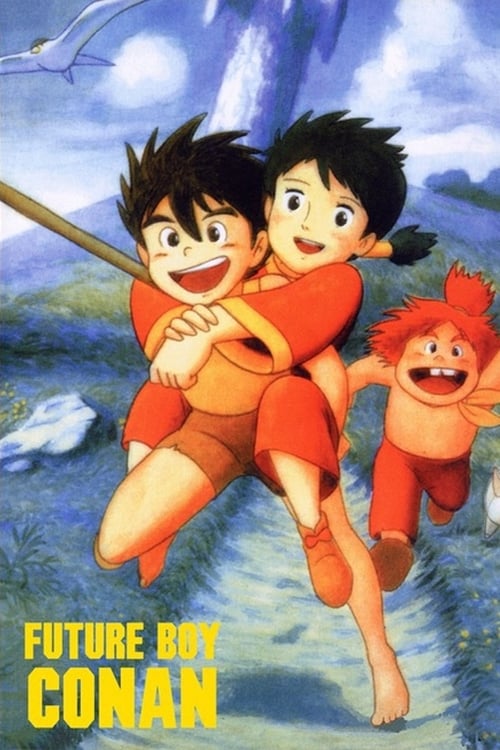
Twenty years after a magnetic war shifted the Earth's axis and sank the continents, a young boy named Conan lives in isolation with his grandfather on Remnant Island. His life changes forever when a mysterious girl named Lana washes ashore, pursued by the technological dictatorship of Industria. When Lana is kidnapped, Conan sets out on a perilous journey across the ocean to rescue her, meeting friends like the wild boy Jimsy and foes-turned-allies along the way.

The series evolves from a simple rescue mission into a global struggle between two ideologies: the pastoral, community-driven life of High Harbor and the industrial, fascist regime of Industria led by the villainous Lepka. As Conan and his companions fight to stop Lepka from reviving the ancient super-weapon "Gigant," they uncover the secrets of solar energy and the history of the old world's destruction, ultimately leading to the collapse of Industria and a new beginning for humanity.
Core Meaning

The series posits that humanity's survival depends not on the technology that destroyed the world, but on the resilience of the human spirit and harmony with nature. Miyazaki rejects the cynicism of the original novel, arguing that even after the apocalypse, the next generation can build a brighter, more compassionate future through community, friendship, and the rejection of authoritarian greed.

Thematic DNA

Nature vs. Industry 30%
The Resilience of Youth 25%
Redemption and Forgiveness 25%
The Danger of Past Technology 20%

Nature vs. Industry

This foundational Miyazaki theme contrasts the cold, steel-clad, and decaying dystopia of Industria—where food is synthetic and people are ranked by caste—with the lush, agrarian paradise of High Harbor. The conflict emphasizes that a society divorced from nature is doomed to collapse, while one that respects the earth flourishes.

The Resilience of Youth

Conan and his friends represent a pure, uncorrupted vitality that the adults of the "old world" have lost. Throughout the series, the children's optimism and physical strength allow them to overcome the cynical machinations of adults like Lepka, suggesting that the future belongs to those who can dream and trust rather than those who seek to control.

Redemption and Forgiveness

The series offers profound redemption arcs for its antagonists. Characters like Captain Dyce and Monsley start as agents of the oppressive Industria but are gradually won over by Conan's sincerity and the peaceful life of High Harbor. This illustrates the belief that people are products of their environment and can change when shown kindness.

The Danger of Past Technology

The "Gigant" and the nuclear/magnetic weapons of the past are treated as horrors that must be buried, not controlled. The narrative explicitly warns against the hubris of trying to harness destructive power for domination, contrasting it with the benevolent use of solar energy for sustenance.

Character Analysis

Conan

Noriko Ohara

Archetype: The Innocent Hero
Key Trait: Superhuman toe strength

Motivation

To keep his promise to protect Lana and find a future where they can live in peace.

Character Arc

Starting as an isolated boy on Remnant Island, Conan ventures into the world driven by his love for Lana. He evolves from a simple survivor into a symbol of hope, whose unwavering morality and superhuman strength inspire former enemies to change their ways. He ultimately leads the survivors to a new land.

Lana

Mieko Nobusawa

Archetype: The Heart / The Mystic
Key Trait: Telepathy with birds

Motivation

To protect her grandfather Dr. Lao and prevent solar energy from being used for war.

Character Arc

Initially a damsel in distress, Lana reveals a deep inner strength and telepathic ability. She serves as the moral compass of the series, refusing to give in to Industria's threats. Her connection to her grandfather and nature makes her the key to the world's future, and she matures into a brave leader who risks her life for Conan.

Captain Dyce

Ichiro Nagai

Archetype: The Lovable Rogue
Key Trait: Opportunistic but good-hearted

Motivation

Self-preservation and profit, eventually shifting to loyalty and affection for Monsley.

Character Arc

Dyce begins as a comical villain kidnapping Lana for Industria but grows disillusioned with Lepka's cruelty. He undergoes a chaotic redemption, shifting from a selfish opportunist to a loyal ally of Conan. His arc concludes with him becoming a dependable figure and marrying Monsley.

Monsley

Rihoko Yoshida

Archetype: The Redeemed Soldier
Key Trait: Cynicism turned to hope

Motivation

Order and survival, later shifting to hope and love.

Character Arc

A hardened commander who views the world with cynicism due to her childhood trauma from the war. Her encounters with Conan's optimism chip away at her armor. She eventually turns against Lepka, reclaiming her humanity and deciding to live peacefully on High Harbor.

Symbols & Motifs

The Gigant

Meaning:

A massive, moth-like bomber plane that symbolizes the destructive hubris of the old civilization and the ultimate manifestation of war.

Context:

It looms as a dormant threat for most of the series until Lepka revives it in the finale, serving as the final boss that Conan must destroy to sever ties with the violent past.

Solar Energy

Meaning:

It represents the dual nature of power: it can be the clean lifeblood of a new civilization or a weapon of mass destruction depending on who wields it.

Context:

Dr. Lao holds the secret to this power, and it drives the central conflict; High Harbor uses natural energy, while Industria seeks the solar secret to power its weapons.

The Sea

Meaning:

The sea is both a destroyer (via the great tsunamis) and a giver of life, symbolizing the indifferent but essential power of nature.

Context:

The characters are constantly interacting with the ocean; it provides food and travel, but also swallowed the old world, reminding the survivors of their fragility.

Tikki the Tern

Meaning:

Lana's bird companion symbolizes freedom, telepathic connection, and the uninhibited spirit of nature that technology cannot cage.

Context:

Tikki is used throughout the series to scout, communicate across distances, and guide Conan, acting as a spiritual link between the characters and the natural world.

Memorable Quotes

I want you to live! Even if the world is destroyed, you must live!

— Conan's Grandfather

Context:

Spoken in the first episode as he dies from injuries sustained protecting Conan and Lana from Industrian soldiers.

Meaning:

These dying words set the tone for the entire series, emphasizing survival and the duty to carry on life despite apocalyptic despair.

If we stay here, we'll just eat ourselves out of house and home... We have to go out and cultivate the land.

— Jimsy

Context:

Spoken when Jimsy realizes that stealing and hunting aren't enough for a sustainable future, marking his maturity.

Meaning:

This reflects the shift from a hunter-gatherer mindset to an agrarian, community-building one, central to the show's theme of civilization rebuilding.

The sun belongs to everyone. It is not something for you to monopolize.

— Dr. Lao

Context:

Dr. Lao confronts Lepka in Industria when demanded to reveal the secret of solar power.

Meaning:

A direct rebuke of Lepka's fascism, asserting that natural resources are a common good, not a tool for domination.

Episode Highlights

Remnant Island

S1E1

The introduction of the post-apocalyptic world. Conan finds Lana washed up on the beach, marking the first time he meets another human besides his grandfather. The episode ends tragically with the grandfather's death, propelling Conan into his adventure.

Significance:

Sets the stakes and the central relationship of the series; establishes Conan's isolation and his destiny to leave the island.

Escape

S1E8

Conan and Lana are trapped underwater. In a pivotal moment of desperation and romance, Lana kisses Conan to transfer her air to him, saving his life. This act gives Conan the strength to break his shackles.

Significance:

Often cited as the most iconic scene of the series, cementing the deep bond between the protagonists and establishing the 'power of love' as a tangible force.

High Harbor

S1E13

The group arrives at High Harbor, a peaceful, agrarian society. This episode sharply contrasts the dystopian Industria with a functioning utopia, showing what humanity is capable of building when living in harmony with nature.

Significance:

Introduces the thematic alternative to Industria and marks the beginning of the redemption arcs for Dyce and Monsley.

Gigant

S1E24

Lepka resurrects the massive ancient warplane, the Gigant. Conan, Jimsy, and Dyce board the massive craft in mid-air to sabotage it in a thrilling, high-stakes action sequence that showcases Miyazaki's mastery of aerial combat.

Significance:

The climax of the action arc, representing the final battle against the ghosts of the past war technology.

Denouement

S1E26

Industria sinks into the ocean as predicted. The survivors, including the redeemed antagonists, set sail on the recovered ship to found a new colony on Remnant Island, which has been raised by tectonic shifts.

Significance:

Provides a definitive, hopeful conclusion where nature reclaims the ruins and humanity gets a fresh start, fulfilling the series' optimistic message.

Philosophical Questions

Can humanity survive without the technology that destroyed it?

The series constantly asks whether reverting to a simpler, agrarian life is a regression or a necessary evolution. It suggests that true progress is social and spiritual (community, empathy) rather than technological.

Is redemption possible for those who enforce tyranny?

Through Monsley and Dyce, the show explores whether "following orders" is an excuse and shows that redemption requires active dismantling of the oppressive systems one served.

Alternative Interpretations

Some critics view the series as a political allegory where Industria represents Soviet-style industrial communism (forced labor, collectivism, gray aesthetic) and High Harbor represents an idealized pre-industrial agrarian society, though Miyazaki has denied specific political mappings. Others interpret the ending—where the technological city sinks—as a radical environmentalist statement that the Earth must literally "wash away" industrial civilization to heal.

Cultural Impact

Future Boy Conan is arguably the most important anime of the late 1970s for the evolution of the medium. It established the "Miyazaki Style"—complex villains, environmental themes, and strong female characters—that would define Studio Ghibli. While it had modest ratings in Japan initially, it became a massive cult classic in Italy, the Arab world (as Adnan wa Lina), and East Asia.

Its influence is visible in the works of Hideaki Anno (Nadia: The Secret of Blue Water is essentially a remix of Conan concepts) and modern adventure anime. It proved that TV anime could have cinema-quality direction and complex, serialized storytelling, paving the way for the golden age of anime in the 80s.

Audience Reception

Initially, the series had low ratings in Japan (averaging around 8%), possibly due to its complex serialization which was uncommon for kids' shows at the time. However, it gained a devoted following through re-runs. In international markets, particularly the Middle East and Europe, it was a smash hit, often remembered more fondly than in its home country. Modern audiences universally praise it as a masterpiece, with a 100% critic rating on Rotten Tomatoes and high scores on MyAnimeList, citing its timeless animation and storytelling.

Interesting Facts

  • This was Hayao Miyazaki's directorial debut for a TV series, laying the groundwork for Studio Ghibli's future masterpieces.
  • NHK censored a scene in Episode 8 where Jimsy smokes a cigarette, as it was deemed inappropriate for a children's show.
  • The series was incredibly popular in the Arab world under the title 'Adnan wa Lina', becoming a cultural touchstone for a generation.
  • Miyazaki disliked the original novel 'The Incredible Tide' for its pessimism and drastically changed the story to be more optimistic for children.
  • The 'underwater kiss' scene was so beloved by Miyazaki that he referenced it in later works like 'Sherlock Hound' and 'Pokémon Ranger and the Temple of the Sea' pays homage to it.
  • A spinoff called 'Future Boy Conan II: Taiga Adventure' was released in 1999, but it had no involvement from Miyazaki and is largely unrelated to the original plot.

Easter Eggs

Jimsy's pig 'Umasou'

The name 'Umasou' literally translates to 'Looks Delicious' in Japanese, a dark joke about Jimsy's appetite that became a fan favorite detail.

Character Prototypes

Conan and Lana are clear visual and thematic prototypes for Pazu and Sheeta in Miyazaki's later film Castle in the Sky (Laputa).

The Gigant vs. Goliath

The design of the massive plane 'Gigant' is heavily reused for the airship 'Goliath' in Castle in the Sky, and later appears in Nausicaä manga art.

Lupin III Connections

Monsley's design and character arc bear a striking resemblance to Fujiko Mine, and the aerial acrobatics mirror Miyazaki's work on Lupin III: Part I.

⚠️ Spoiler Analysis

Click to reveal detailed analysis with spoilers

Frequently Asked Questions

Explore More About This Movie

Dive deeper into specific aspects of the movie with our detailed analysis pages

Comments (0)

Leave a comment

No comments yet. Be the first to share your thoughts!