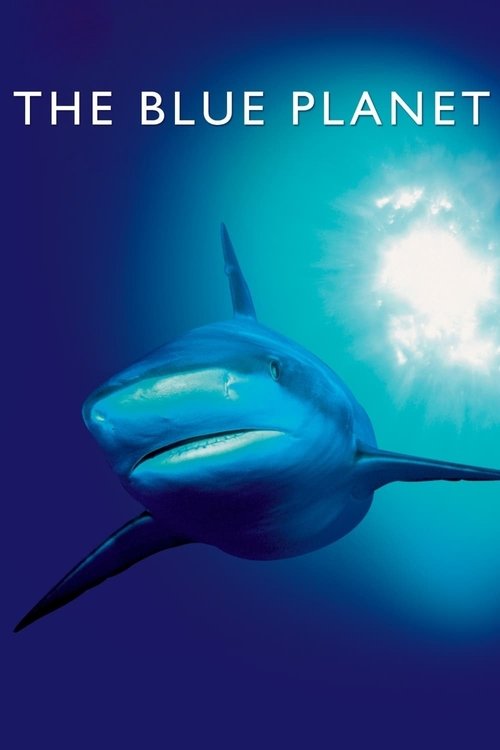
The Blue Planet
"A NATURAL HISTORY OF THE OCEANS."
Overview
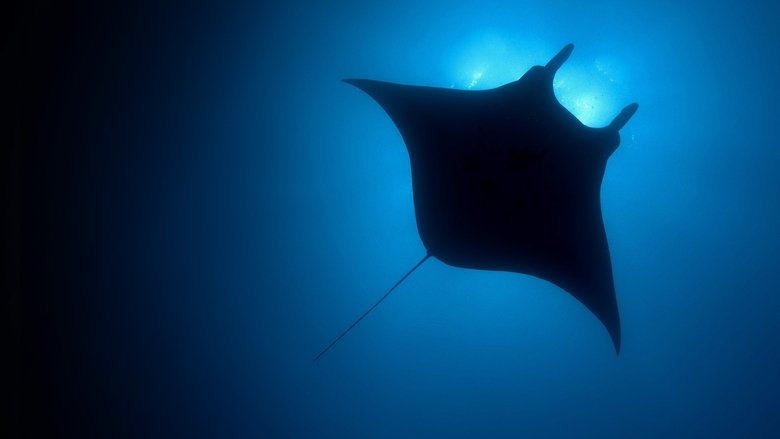
The Blue Planet is a landmark eight-part nature documentary series that explores the natural history of the world's oceans. Narrated by Sir David Attenborough, each episode targets a specific marine habitat, ranging from the sun-drenched coral reefs to the pitch-black depths of the abyss. The series was the first of its kind to offer a comprehensive look at marine life on such a grand scale, utilizing pioneering underwater photography and submersibles to capture behaviors and species never before seen on television.
The narrative arc traverses the globe, moving from the open ocean to the frozen poles, examining the complex web of life regulated by currents, tides, and the sun. It does not shy away from the brutality of nature, featuring visceral scenes of predation and survival that challenged the audience's perception of the ocean as a serene environment. The series culminates in an examination of the coastal boundaries where land and sea meet, leaving viewers with a profound sense of the ocean's vastness and vulnerability.
Core Meaning
The core meaning of The Blue Planet is the revelation of the ocean as the true dominant force of our world—a vast, interconnected, and largely unexplored universe right here on Earth. It seeks to humble humanity by showing that the largest and most mysterious habitats exist beneath the waves, indifferent to human existence.
Ultimately, the series serves as a bridge between the known and the unknown, transforming the ocean from a flat blue surface into a three-dimensional world of complex struggles, alien beauty, and fragile balance. It implicitly asks viewers to recognize their responsibility in protecting this life-sustaining engine of the planet.
Thematic DNA
The Unknown and the Alien
The series consistently frames the ocean, especially the deep sea, as an alien world. By revealing creatures like the hairy anglerfish and Dumbo octopus for the first time, it emphasizes how little we know about our own planet. This theme evolves from curiosity in the early episodes to a sense of awe and slightly terrifying mystery in 'The Deep'.
The Brutality of Survival
Unlike previous gentler documentaries, The Blue Planet highlights the ruthless efficiency of nature. The recurring motif of predation—whether it's orcas hunting gray whale calves or the sardine run feeding frenzy—demonstrates that the ocean is a battlefield where weakness is exploited instantly.
Interconnectedness of Ecosystems
The show illustrates how distant forces like the moon's gravity (tides) and the sun's position (seasons) dictate the rhythm of life for even the smallest marine creatures. It shows that a storm in one part of the ocean can drive nutrients to the surface, feeding plankton that eventually feeds the largest whales.
Cyclical Time
The narrative is driven by the cycles of nature—the breeding migrations, the seasonal ice melts, and the daily vertical migrations of plankton. This theme underscores the permanence and rhythm of the ocean compared to the fleeting nature of individual lives.
Character Analysis
The Blue Whale
Blue Whale (Balaenoptera musculus)
Motivation
To migrate across entire oceans in search of tiny krill, driven by an ancient, instinctual rhythm that spans the globe.
Character Arc
Introduced as the majestic ruler of the ocean, the Blue Whale's arc is one of lonely grandeur. We see it not as a monster, but as a wandering nomad, constantly moving across vast distances to survive. Its presence frames the series, reminding us of the scale of life we are witnessing.
The Gray Whale Calf
Gray Whale (Eschrichtius robustus)
Motivation
To keep up with its mother and reach the feeding grounds of the Arctic.
Character Arc
Represents the harsh reality of nature. In a pivotal and heartbreaking sequence, the calf is born into a dangerous world and must undertake a migration immediately. Its struggle against the orcas is a loss of innocence for the audience, shifting the tone of the series from observation to emotional investment.
The Orca Matriarch
Killer Whale (Orcinus orca)
Motivation
To feed her pod and teach the next generation essential hunting tactics.
Character Arc
She is not a mindless killer but a highly intelligent, calculated hunter. Her arc demonstrates the complexity of marine intelligence. We see her teaching the younger generation how to hunt, complicating the viewer's judgment—she is a villain to the whale calf, but a hero/provider to her own family.
Emperor Penguin
Emperor Penguin (Aptenodytes forsteri)
Motivation
To protect their single egg through the Antarctic winter and return to the sea to feed.
Character Arc
Battling the harshest conditions on Earth, these characters endure an arc of pure resilience. They stand as sentinels in the frozen wasteland, waiting for the return of the sun and the sea. Their survival against the leopard seal represents the constant proximity of death in the polar regions.
Symbols & Motifs
The Blue Whale
Symbolizes the majesty, scale, and mystery of the ocean. As the largest animal ever to exist, it represents the pinnacle of marine evolution and the vastness of the habitat required to sustain it.
Used in the opening sequence of the series to immediately dwarf the viewer and set the scale of the subject matter.
The Deep / The Abyss
Represents the final frontier of human knowledge and the subconscious fear of the unknown. It is the 'anti-world' where light and time seem to behave differently.
Featured prominently in the episode 'The Deep', where the screen often fades to total blackness, punctuated only by bioluminescence.
Bait Ball
Symbolizes the futility of defense and the overwhelming power of cooperative predation. It represents chaos and the transfer of energy in the food web.
Seen in 'Open Ocean' during the sardine run, where fish are corralled into tight spheres by dolphins, sharks, and birds.
Memorable Quotes
Dwarfed by the vast expanse of the open ocean, the biggest animal that has ever lived on our planet. A blue whale... It's far bigger than even the biggest dinosaur.
— David Attenborough
Context:
Spoken in the very first minute of Episode 1, 'The Blue Planet', as the camera reveals a Blue Whale surfacing in the open ocean.
Meaning:
This opening line establishes the scale of the series immediately, anchoring the viewer's imagination by comparing the subject to dinosaurs—the previous benchmark for 'large' in the public consciousness.
More people have traveled to the moon than have gone down to the deepest parts of our own ocean.
— David Attenborough
Context:
Narration during 'The Deep', as the submersible descends into the black abyss.
Meaning:
Highlights the extreme isolation and mystery of the deep sea, emphasizing that Earth still holds frontiers as alien as outer space.
Our planet is a blue planet: over seventy percent of it is covered by the sea.
— David Attenborough
Context:
Part of the introductory sequence in Episode 1, defining the scope of the documentary.
Meaning:
The thesis statement of the entire show. It recontextualizes the viewer's perspective of Earth from a land-based bias to an ocean-centric reality.
Surely we all have a responsibility to care for our blue planet. The future of humanity and indeed, all life on earth, now depends on us.
— David Attenborough
Context:
The closing monologue of the series, marking a shift in Attenborough's career toward more explicit environmental advocacy.
Meaning:
A call to action that shifts the tone from observation to conservation. It places the burden of stewardship directly on the viewer.
Episode Highlights
The Deep
A descent into the abyss using submersibles to film creatures never before seen, including the Dumbo octopus and the hairy anglerfish. The episode captures the eerie bioluminescence and the monstrous physiology required to survive in crushing pressure.
This episode is culturally significant for revealing the 'monsters' of the deep to a global audience, permanently changing the public visualization of deep-sea life.
Open Ocean
Features the iconic 'Sardine Run' sequence. Viewers witness a massive shoal of sardines being attacked from all sides—by dolphins, sharks, whales, and gannets diving from the sky—creating a chaotic 'bait ball'.
The technical achievement of filming this feeding frenzy set a new standard for wildlife cinematography and showcased the complex cooperation between different predator species.
The Blue Planet (Introduction)
Establishes the ocean system. The standout moment is the harrowing hunt of a Gray Whale calf by a pod of Orcas. The predators tirelessly wear down the mother and calf over hours, eventually drowning the baby.
This was the first time such a coordinated hunt had been filmed professionally. It shocked audiences with its brutality and dispelled the myth of the 'gentle' ocean.
Philosophical Questions
Is nature cruel or indifferent?
The series forces viewers to confront this during the Orca vs. Gray Whale sequence. The predators are not 'evil'; they are feeding their own young. The show presents this violence without moral judgment, suggesting that human concepts of cruelty do not apply to the struggle for energy survival.
What is the value of the unseen?
By spending millions to film creatures in the abyss that no human will ever encounter, the series implicitly argues that life has intrinsic value independent of human utility or observation. The existence of the 'hairy anglerfish' is valuable simply because it is a masterpiece of adaptation.
Alternative Interpretations
While primarily a factual documentary, the series has been interpreted as a Horror Story by some critics, particularly the episode 'The Deep', which plays on primal fears of darkness and monsters. Others view it as a Malthusian cautionary tale, where the abundance of life is constantly checked by violent predation, suggesting that harmony in nature is an illusion created by distance.
The ending can be read ambiguously: is the ocean resilient enough to survive us, or is the 'vastness' emphasized throughout the show actually a fragile illusion? The final call to action suggests the latter, reinterpreting the previous 7 hours of grandeur as a eulogy for a vanishing world.
Cultural Impact
The Blue Planet is widely considered a watershed moment in natural history broadcasting. Premiering in September 2001, shortly after the 9/11 attacks, it provided a necessary escape and a perspective-shifting experience for millions of viewers. It was the first series to treat the ocean as a comprehensive, multi-faceted world rather than just a background for whales.
The series is credited with sparking a massive increase in marine biology enrollment and public interest in ocean conservation. Its success paved the way for the 'cinematic documentary' style, leading directly to Planet Earth (2006). Visually, it established the aesthetic of the 'deep blue'—vast, dark, and orchestral—that defines ocean media today. It won multiple Emmy and BAFTA awards, cementing the BBC Natural History Unit's reputation as the global leader in wildlife filmmaking.
Audience Reception
Upon its release, The Blue Planet was a ratings phenomenon, drawing over 12 million viewers in the UK alone. Audiences were mesmerized by the never-before-seen footage of deep-sea creatures and the epic scale of the production.
Praised Aspects: The cinematography, George Fenton's orchestral score, and the soothing yet authoritative narration of David Attenborough were universally acclaimed. The 'Deep' episode is frequently cited as the most memorable.
Criticism/Controversy: The primary criticism came from the revelation that some small-scale shots were filmed in aquariums, which some viewers felt broke the 'documentary contract', though producers defended it as ethical and necessary. Some parents also complained about the graphic nature of the whale calf kill, finding it too traumatic for children.
Legacy: It holds a score of 9.0/10 on IMDb and is regarded as one of the greatest documentaries ever made.
Interesting Facts
- The series took almost five years to make and involved nearly 200 filming locations.
- Filmmakers discovered that Blue Whales have specific migration routes, which were previously unknown to science, by using radio tags.
- The crew spent two years attempting to film the 'Sardine Run' off the coast of South Africa; they missed it entirely the first year.
- Around 2% of the footage, specifically shots of small creatures like lobsters and pipefish, was filmed in aquarium tanks to avoid disturbing their natural breeding, a fact that caused minor controversy.
- A new species of phytoplankton, Syracosphaera azureaplaneta, was named in honor of the show.
- The 'Dumbo octopus' (Grimpoteuthis) was filmed alive in its natural habitat for the very first time during the production of 'The Deep'.
- David Attenborough narrated the series but did not appear on camera, a stylistic choice that immersed the viewer deeper into the visuals.
Easter Eggs
The 'Deep Sea' Submersible Crew
In the 'Making Of' segments (often aired as 'Deep Blue'), you can see the sheer exhaustion and claustrophobia of the crew. The footage of the crew inside the submersibles serves as a meta-commentary on how hostile the environment is to humans.
Symbiotic Relationships
Throughout the series, subtle background details show fish riding on sharks or hiding in jellyfish. These aren't always narrated but reward careful observation, highlighting the theme that nothing in the ocean lives in isolation.
⚠️ Spoiler Analysis
Click to reveal detailed analysis with spoilers
Frequently Asked Questions
Explore More About This Movie
Dive deeper into specific aspects of the movie with our detailed analysis pages
Comments (0)
No comments yet. Be the first to share your thoughts!