The Ox-Bow Incident
A harrowing, claustrophobic anti-Western that trades gunfights for a searing moral examination of mob justice. Its stark, noir-like visuals and tragic inevitability serve as a timeless condemnation of the darkness within the human herd.
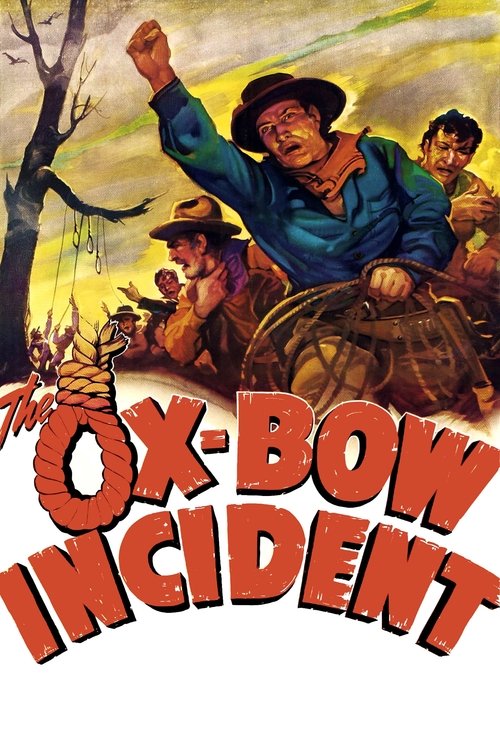
The Ox-Bow Incident

The Ox-Bow Incident

"Lynch law rules the mob!"

11 March 1943 United States of America 76 min ⭐ 7.7 (419)
Director: William A. Wellman
Cast: Henry Fonda, Dana Andrews, Mary Beth Hughes, Anthony Quinn, William Eythe
Drama Western
Mob Mentality vs. Individual Conscience Justice vs. Law Toxic Masculinity and Cowardice The Bystander Effect
Budget: $565,000

Overview

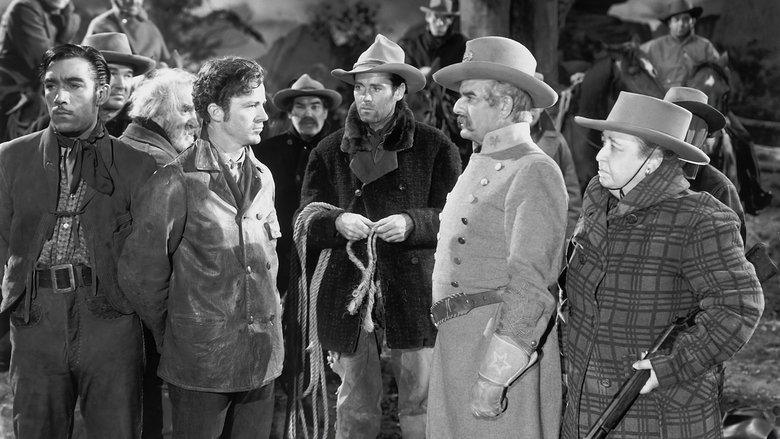
In 1885 Nevada, two weary drifters, Gil Carter (Henry Fonda) and Art Croft (Harry Morgan), ride into the small town of Bridger's Wells. The atmosphere is tense and unwelcoming. When news arrives that a local rancher named Kinkaid has been murdered and his cattle stolen, the townspeople's boredom turns into a dangerous thirst for vengeance. Despite the absence of the sheriff and the protests of a few rational voices, a posse forms under the command of the authoritarian Major Tetley.

The mob tracks three suspects to the Ox-Bow Canyon: a young, articulate family man named Donald Martin (Dana Andrews), a Mexican man, and a senile old man. Despite Martin's desperate pleas of innocence and the lack of concrete evidence, the mob's bloodlust—fueled by Tetley's sadistic leadership—overpowers reason. A heartbreaking vote seals their fate, leading to a dawn lynching that will haunt the executioners forever.
Core Meaning

The Ox-Bow Incident is a brutal indictment of mob mentality and a deconstruction of the traditional Western myth. Director William A. Wellman uses the setting not for adventure, but to explore the fragility of justice and the ease with which ordinary men can be swayed to commit atrocities. Released during World War II, it serves as a powerful allegory for fascism, illustrating how fear, ignorance, and toxic leadership can silence individual conscience and destroy innocent lives.

Thematic DNA

Mob Mentality vs. Individual Conscience 35%
Justice vs. Law 25%
Toxic Masculinity and Cowardice 20%
The Bystander Effect 20%

Mob Mentality vs. Individual Conscience

The film vividly demonstrates how a group's collective rage can override individual morality. Characters like Davies and Sparks represent the voice of reason/conscience, but they are drowned out by the loud, violent majority. The 'mob' becomes a single, mindless entity where individual responsibility is lost.

Justice vs. Law

The film distinguishes between 'law' (procedural justice, due process) and the mob's version of 'justice' (immediate retribution). It argues that without the slow, dispassionate process of law, justice is impossible, and 'vigilante justice' is merely murder.

Toxic Masculinity and Cowardice

Major Tetley bullies his sensitive son, Gerald, equating compassion with weakness and femininity. The film flips the Western trope: the 'strong' men are moral cowards, while the 'weak' son is one of the few with moral courage. Many join the mob simply to avoid appearing weak.

The Bystander Effect

The protagonist, Gil Carter, is not a traditional hero who saves the day. He is a 'bystander' who sees the wrong but fails to stop it. His passivity (until it's too late) indicts the audience, suggesting that silence in the face of injustice is complicity.

Character Analysis

Gil Carter

Henry Fonda

Archetype: The Reluctant Witness / Everyman
Key Trait: Cynical but Consciencous

Motivation

To survive and avoid trouble, later shifting to a desire to see fair play (though he acts too late).

Character Arc

Starts as a cynical drifter looking for a drink and a fight. He initially joins the posse to avoid suspicion but becomes increasingly disturbed by their actions. He fails to stop the hanging but becomes the bearer of the moral lesson at the end.

Donald Martin

Dana Andrews

Archetype: The Innocent / The Scapegoat
Key Trait: Dignity

Motivation

To protect his family and prove his innocence.

Character Arc

The tragic victim. He remains dignified and articulate in the face of death, his sanity contrasting sharply with the mob's madness. His death transforms him into a martyr for justice.

Major Tetley

Frank Conroy

Archetype: The Tyrant / The Sadist
Key Trait: Cruelty

Motivation

To assert dominance and force his son into a mold of toxic masculinity.

Character Arc

A rigid authoritarian who commands the mob to satisfy his own bloodlust and to 'toughen up' his son. When his error is revealed, he cannot live with the shame and commits suicide.

Gerald Tetley

William Eythe

Archetype: The Conscience
Key Trait: Sensitivity

Motivation

To please his father (initially) but ultimately to reject his father's cruelty.

Character Arc

Major Tetley's son. He is coerced into participating but is physically sickened by it. He serves as the film's moral compass, voicing the horror that others suppress.

Symbols & Motifs

The Letter

Meaning:

Symbolizes humanity, truth, and the voice of the innocent. It transcends the physical violence of the lynching to deliver the film's moral verdict.

Context:

Written by the condemned Donald Martin to his wife. Gil reads it in the saloon after the lynching, silencing the guilty mob with its profound message about justice.

Major Tetley's Confederate Uniform

Meaning:

Represents authoritarianism, the 'Lost Cause,' and rigid, outdated militarism. It signifies his desire to impose his will and command others, masking his sadism as duty.

Context:

Tetley wears it to lead the lynching party, treating the murder like a military operation to hide its illegality.

The Noose

Meaning:

The ultimate symbol of irreversible injustice and death.

Context:

Visually prominent throughout the second half, highlighting the grim inevitability of the mob's action.

The Painting in the Saloon

Meaning:

Symbolizes the absence of women/civilization and the repressed desires of the men.

Context:

Gil and others stare at the painting of a woman, emphasizing the rough, male-dominated, and loveless environment of the town.

Memorable Quotes

A man just naturally can't take the law into his own hands and hang people without hurtin' everybody in the world, 'cause then he's just not breaking one law but all laws.

— Gil Carter (reading Donald Martin's letter)

Context:

Read in the silence of the saloon after the posse discovers they hanged innocent men.

Meaning:

The film's central thesis: vigilante justice destroys the very fabric of civilization and law that protects everyone.

Law is a lot more than words you put in a book, or judges or lawyers or sheriffs you hire to carry it out. It's everything people ever have found out about justice and what's right and wrong.

— Gil Carter (reading Donald Martin's letter)

Context:

Continuing the reading of the letter to the shame-faced mob.

Meaning:

Defines law not as a set of rules, but as the collective conscience of humanity.

God better have mercy on you. You won't get any from me.

— Sheriff Risley

Context:

Said to the posse leaders after revealing that Kinkaid is alive and the real rustlers were caught.

Meaning:

Highlights the severity of the crime; the 'law' (Sheriff) will now hunt them down, just as they hunted the innocents.

Philosophical Questions

Is justice possible without due process?

The film argues that 'justice' executed in anger and haste is inherently flawed. It explores the idea that procedural law, however slow, is the only safeguard against human error and emotional bias.

What is the responsibility of the individual within a group?

Through Gil and Art, the film asks whether remaining silent in the face of injustice makes one as guilty as the perpetrators. It challenges the 'bystander' excuse.

Alternative Interpretations

While primarily a critique of mob violence, the film also offers a religious allegory. The character of Sparks (the African-American preacher) acts as a spiritual witness, and the hanging of the three men (one innocent, one old, one foreign) on a hill evokes the Crucifixion, with Martin's letter serving as a testament of forgiveness. Another interpretation focuses on gender roles: Major Tetley's villainy is rooted in his obsession with performative masculinity, while his son Gerald represents the 'feminine' qualities of empathy and conscience, which the rough frontier society violently rejects.

Cultural Impact

The Ox-Bow Incident is a landmark in the Western genre, often cited as the first 'psychological Western' or 'anti-Western.' Released in 1943, it was widely interpreted by critics as a wartime allegory for the dangers of fascism and the Nuremberg defense ('I was just following orders'). While it failed commercially at the time—being too grim for audiences seeking escapism—it has since been recognized as a masterpiece of American cinema. It paved the way for future films that questioned the morality of violence and the myth of the cowboy hero, influencing directors like Clint Eastwood. It was selected for preservation in the National Film Registry in 1998.

Audience Reception

Contemporary: In 1943, audiences and studio executives found the film too depressing and grim. It was a box office failure, as viewers wanted patriotic or escapist fare during WWII.

Modern: Today, it is universally praised. Critics and audiences laud its tight script, atmospheric directing, and powerful performances (especially Fonda and Andrews). It holds a very high rating on review aggregators, recognized as a timeless warning against the dangers of groupthink.

Interesting Facts

  • Henry Fonda regarded this as one of his favorite films and was the only movie he made under his Fox contract that he was truly enthusiastic about.
  • The film was shot almost entirely on studio sets due to budget cuts and wartime restrictions on construction materials. The 'exterior' of the Ox-Bow canyon was a massive indoor set.
  • Orson Welles told actor Harry Morgan at the premiere, 'The audience didn't realize what they just saw,' acknowledging the film's brilliance despite the lackluster initial reception.
  • Gary Cooper was originally offered the role of Gil Carter but turned it down.
  • The film was a box office flop upon release but is now considered a classic; it received only one Academy Award nomination, for Best Picture, which it lost to 'Casablanca'.
  • Clint Eastwood has cited this film as one of his personal favorites.
  • The western street set built for this film was later reused in the Gregory Peck film 'The Gunfighter' (1950).

Easter Eggs

The 'Ox-Bow' Painted Backdrop

Because the film was shot on a soundstage, the 'sky' and distant mountains in the canyon scenes are painted backdrops. This artificiality unwittingly adds to the film's claustrophobic, stage-play atmosphere, intensifying the focus on the moral drama.

Set Reuse in 'The Gunfighter'

The town set created for this film was not destroyed but reused for the 1950 classic The Gunfighter, linking two of the most psychological and revisionist Westerns of the era.

⚠️ Spoiler Analysis

Click to reveal detailed analysis with spoilers

Frequently Asked Questions

Explore More About This Movie

Dive deeper into specific aspects of the movie with our detailed analysis pages

Comments (0)

Leave a comment

No comments yet. Be the first to share your thoughts!