Skip to content
Fury
A grim, claustrophobic war drama steeped in visceral dread and exhaustion, where human souls are forged and pulverized inside an iron tomb rolling through the muddy ash of a dying Reich.
Fury

Fury

"War never ends quietly."

15 October 2014 United States of America 135 min 7.5 (13,172)

Director: David Ayer

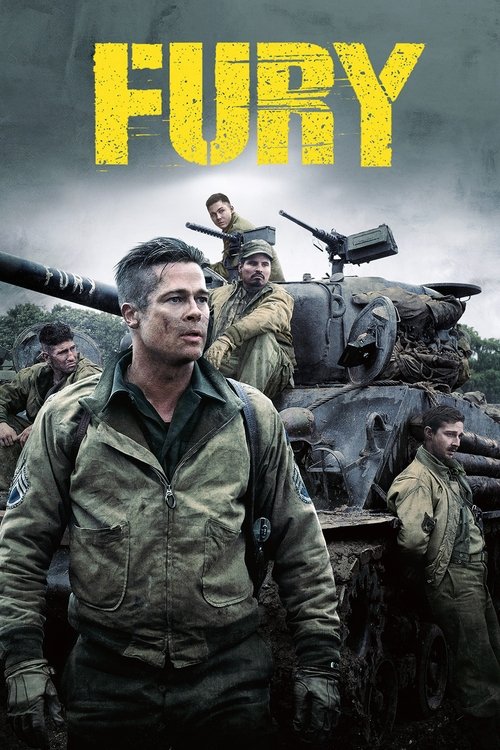
Cast: Brad Pitt, Shia LaBeouf, Logan Lerman, Michael Peña, Jon Bernthal

Drama War Action The Dehumanization and Moral Erosion of War Brotherhood, Shared Trauma, and Tribal Loyalty Faith, Fatalism, and Spiritual Endurance in Hell The Destruction of Innocence / Brutal Rite of Passage The Disconnect Between Peacetime Morality and Survival
Budget: $68,000,000
Box Office: $211,817,906

Overview

Set in April 1945 during the closing weeks of World War II’s European theater, Fury follows a battle-hardened five-man American crew of an M4A3E8 Sherman tank nicknamed "Fury". Commanded by Staff Sergeant Don "Wardaddy" Collier, the veteran unit—which has fought together across North Africa, Sicily, and France—finds itself pushing deep into the German heartland against an enemy that is collapsing yet fighting with fanatical, desperate brutality.

When their bow gunner is killed in combat, the crew is assigned an unexpected replacement: Norman Ellison, a sheltered young Army clerk trained solely in typing who has been in service for only eight weeks and has never stepped inside a tank. The seasoned crew—openly traumatized, desensitized, and coarse—harshly rejects Norman's pacifism and inexperience, forcing him through a trial by fire as they navigate relentless skirmishes, ambushes, and captured towns.

As the unit is ordered on a vital mission to hold an isolated crossroads behind Allied lines, the crew must confront overwhelming enemy numbers and their own psychological fraying. The film examines the suffocating intimacy of armored warfare, the moral erosion inherent in total combat, and the intense surrogate brotherhood that forms within the belly of a steel war machine.
Core Meaning

Writer and director David Ayer sought to de-romanticize the "Good War" mythos and depict the raw psychological, physical, and moral toll experienced by front-line soldiers who bore witness to the grinding endgame of World War II. Drawing inspiration from historical accounts like Belton Y. Cooper's Death Traps as well as the experiences of veterans in his own family, Ayer intended to demonstrate that survival in extreme violence often demands the total surrender of peacetime morality.

The film’s central thesis—encapsulated by the line "Ideals are peaceful. History is violent"—argues that civilization’s high ideals are bought with the grotesque, soul-scarring labor of men who must become monstrous to defeat monstrosity. Rather than celebrating grand geopolitical victory, Fury emphasizes the tragic dehumanization of soldiers and the small, fragile embers of humanity that manage to survive in the ashes.

Thematic DNA

The Dehumanization and Moral Erosion of War 30%
Brotherhood, Shared Trauma, and Tribal Loyalty 25%
Faith, Fatalism, and Spiritual Endurance in Hell 20%
The Destruction of Innocence / Brutal Rite of Passage 15%
The Disconnect Between Peacetime Morality and Survival 10%

The Dehumanization and Moral Erosion of War

The film relentlessly illustrates how prolonged combat strips away civilized empathy. Wardaddy and his crew execute prisoners, desecrate corpses, and treat killing as routine labor. The war machine turns men into tools of survival who no longer recognize civilian norms.

Brotherhood, Shared Trauma, and Tribal Loyalty

Confined within the cramped interior of the tank, the five men function as a dysfunctional, traumatized family. Their abrasive bickering masks an absolute interdependence; their loyalty is no longer to abstract flags or ideals, but to keeping one another alive for one more day.

Faith, Fatalism, and Spiritual Endurance in Hell

Boyd "Bible" Swan's constant recitation of scripture juxtaposes Christian theology with slaughter. The film explores how soldiers reconcile religious beliefs with carnage, framing their ordeal through apocalyptic biblical passages (e.g., Isaiah 6:8, Book of Revelation) where violence is seen as an inescapable crucible.

The Destruction of Innocence / Brutal Rite of Passage

Norman’s trajectory serves as a surrogate for the audience. His progression from an idealistic typist sickened by blood to an unhesitating machine gunner underscores the speed with which war consumes purity.

The Disconnect Between Peacetime Morality and Survival

The domestic sequence in the German apartment highlights the impossible gulf between domestic civilian life and combat reality. Peace is portrayed as a fragile illusion easily obliterated by an incoming artillery shell.

Character Analysis

Don "Wardaddy" Collier

Brad Pitt

Archetype: The Hardened Mentor / Tragic Warrior Key Trait: Stoic, uncompromising lethality masking deep psychological torment.

Motivation

Keeping his crew alive to the end of the war and fulfilling his sworn duty.

Character Arc

Begins as a ruthless, unyielding commander who forces Norman into violence; gradually reveals his internal grief, exhaustion, and hidden compassion, culminating in a sacrificial decision to hold the crossroads to save Allied supply lines.

Norman "Machine" Ellison

Logan Lerman

Archetype: The Reluctant Hero / The Innocent Initiate Key Trait: Initial vulnerability and moral conscience, yielding to desperate resilience.

Motivation

Preserving his moral soul initially; subsequently, protecting his comrades and surviving the war.

Character Arc

Transforms from a timid, moralistic Army typist paralyzed by fear into a ferocious, hardened combat soldier baptized in blood and grief.

All 5 characters and cast

Symbols & Motifs

The Tank "Fury" (The Steel Womb and Coffin)

Meaning:

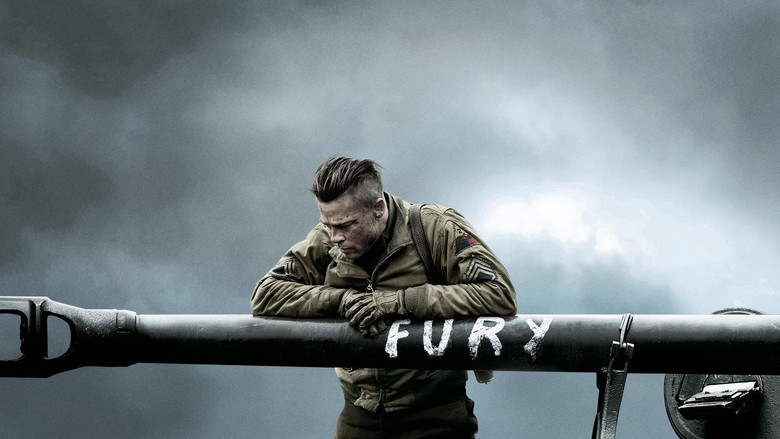
Fury is both a protective home and an inescapable iron trap. Stenciled on the gun barrel, it represents the collective identity and rage of the crew, symbolizing the mechanization that preserves their physical bodies while encasing their spirits.

Context:

Serves as the primary vehicle and setting for the five-man crew throughout their advance across Germany and their eventual last stand.

Norman’s Hands / The Piano

Meaning:

Symbolizes his irreversible transformation from an innocent civilian into a killer.

Context:

Early in the film, Norman's hands are soft and suited for typing or playing Bach on a piano in Emma's apartment; by the conclusion, those same hands are blackened with soot, gunpowder, and blood.

Cigarettes and Eggs

Meaning:

Serves as an ephemeral motif of civilian tranquility and domestic comfort.

Context:

Encountered during the breakfast of fresh eggs and quiet conversation in the captured German town, which is violently interrupted by Norman's crewmates and subsequent bombardment.

The White Horse

Meaning:

Represents pristine nature and innocence caught in industrial devastation, as well as an apocalyptic motif invoking the pale horse of death from Revelation.

Context:

Encountered in the opening and throughout the battlefield.

Wardaddy’s Scarred Back

Meaning:

Symbolizes the deep, unseen trauma and history of suffering he carries beneath his stoic, commanding exterior.

Context:

Revealed privately while Wardaddy is washing himself away from the sight of his crew.

Memorable Quotes

Ideals are peaceful. History is violent.
— Don "Wardaddy" Collier

Context

Spoken to Norman after capturing a German town.

Meaning

It encapsulates the film's philosophical core: human progress and freedom are secured not by pristine moral ideals, but through messy, violent realities.

Best job I ever had!
— Don Collier, Boyd Swan, Grady Travis, Trini Garcia

Context

Repeated sarcastically and sincerely as a crew mantra throughout harrowing artillery barrages and mud-soaked misery.

Meaning

It reflects soldier gallows humor and their coping mechanism for surviving unbearable trauma.

All 4 quotes

Philosophical Questions

Can humanity and moral integrity survive total war?

The narrative asks whether a soldier can preserve their ethical identity when survival requires committing acts of summary execution and ruthless violence.

Where does necessity end and war crime begin?

Through scenes of executing surrendering German soldiers and forcing an unarmed prisoner's death, the film examines whether the brutality of defeating fascism excuses the abandonment of the Geneva conventions.

Is religious faith a comfort or a contradiction in mechanized slaughter?

Boyd’s prayers juxtaposed with explosive carnage question whether faith sanctifies soldierly sacrifice or serves as a psychological shield against overwhelming guilt.

Alternative Interpretations

Critics and viewers have debated whether the film successfully deconstructs war heroism or ultimately falls back into standard Hollywood tropes. The first two acts offer an unsparing, gritty critique of war crimes, rape threats, and moral degradation, while the climactic stand at the crossroads adopts the structure of a stylized, heroic last stand.

Full ending explanation

Cultural Impact

Arriving during the 70th anniversary window of the end of WWII, Fury challenged the nostalgic, sanitized portrayal of the European campaign. Unlike patriotic epics, Ayer highlighted the brutal, unglamorous nature of the late-war advance into Germany, where green recruits were thrown into combat with high attrition rates.

The film set a high technical benchmark for mechanized tank combat in modern cinema, heavily influencing tactical depictions in historical documentaries, video games (such as World of Tanks and War Thunder, which ran official Fury tie-ins), and subsequent war media.

Made on an estimated budget of $68–80 million, Fury earned over $211.8 million worldwide and received generally positive reviews from critics (holding a ~76% approval rating on Rotten Tomatoes), who lauded its visceral action and strong performances.

Audience Reception

Audiences and critics praised the film for its exceptional, intense cinematography by Roman Vasyanov, immersive sound design, outstanding ensemble performances (particularly from Brad Pitt, Shia LaBeouf, and Logan Lerman), and tactically engaging combat choreography featuring the rare tank duel with Tiger 131.

Conversely, criticism centered on a jarring tonal shift in the third act, with several reviewers arguing that the Alamo-like standoff felt overly melodramatic compared to the earlier grounded realism, along with heavy-handed brutality and relentless machismo during the extended town apartment sequence. Overall, it is regarded as one of the most visceral and technically accomplished modern World War II combat films.

Interesting Facts

  • Fury is notable for using Tiger 131, the world's only fully operational German Tiger I tank, on loan from The Tank Museum in Bovington, England, marking the first time a real Tiger tank was featured in a contemporary feature film since the 1950s.
  • Ayer subjected the principal cast to a grueling four-month preparation culminating in an intensive week-long boot camp run by active and former Navy SEALs, where the actors lived together, shared cramped quarters, experienced physical exhaustion, and sparred in fistfights.
  • The production utilized ten authentic World War II Sherman tanks, with the titular tank Fury portrayed primarily by an M4A2 76mm HVSS Sherman named RON/HARRY, also loaned from Bovington.
  • Brad Pitt's character was partially inspired by Staff Sergeant Lafayette G. "Wardaddy" Pool, a legendary 3rd Armored Division tank ace whose crew was credited with destroying over 250 enemy vehicles.
  • While real tanks were used for exterior shots, the tank interior scenes were filmed inside a custom-built, oversized gimbal-mounted set that could shake and rotate to simulate tank motion while accommodating camera rigs.

Easter Eggs

SS Camouflage Uniforms & Insignia

The SS troops in the final battle are depicted wearing authentic late-war Erbsenmuster (pea-dot pattern) camouflage uniforms and carrying Panzerfaust anti-tank weapons and StG 44 assault rifles, reflecting the specific historical kit of Waffen-SS units in April 1945.

Wardaddy’s Captured StG 44

Wardaddy wields a captured German StG 44 assault rifle instead of a standard-issue American Thompson or M3 grease gun, a subtle nod to veteran front-line commanders scavenging superior enemy small arms during the late war.

Tracer Round Colors

The visual effect of green tracer fire for German weapons and red/orange tracer fire for American weapons mimics the real chemical compositions used in WWII ammunition (barium salts for German green, strontium salts for US red).

Frequently Asked Questions

Explore More About This Movie

Dive deeper into specific aspects of the movie with our detailed analysis pages

Comments (0)

Leave a comment

No comments yet. Be the first to share your thoughts!

Similar Movies