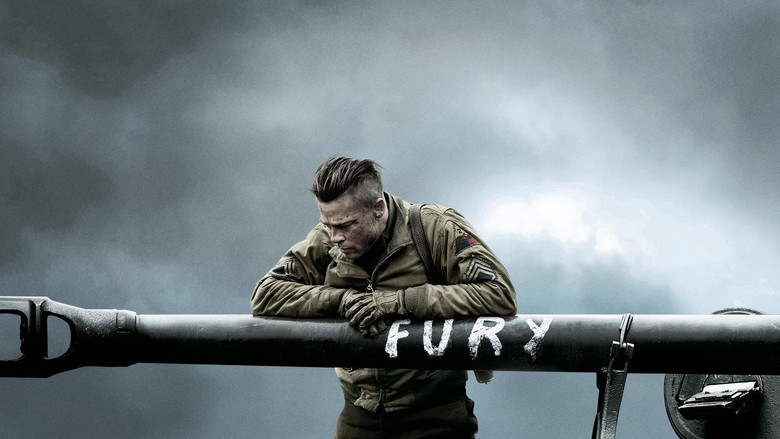
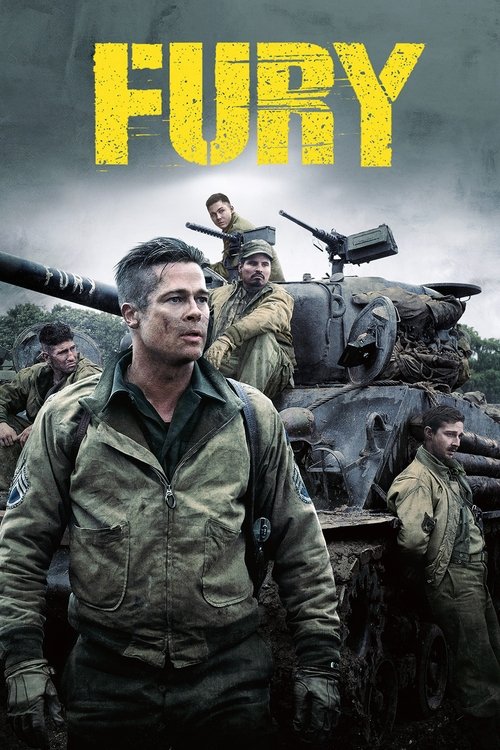
In April 1945, Sgt. Don "Wardaddy" Collier leads Fury back to base after their platoon is wiped out. Their replacement bow gunner is Norman Ellison, an uninitiated typist. When Norman hesitates to shoot an ambush of Hitler Youth wielding Panzerfausts, the lead American tank is destroyed. Wardaddy subsequently forces Norman to execute an unarmed, captured German soldier at gunpoint to break his reluctance to kill.
After capturing a town, Wardaddy and Norman share a meal with two German women, Irma and Emma, where Norman connects intimately with Emma. This domestic calm is shattered when the rest of the crew barges in aggressively. Soon after, German artillery bombards the town, killing Emma and destroying Norman's remaining emotional restraint.
Ordered to defend a strategic crossroads, the platoon encounters a German Tiger I tank. Fury destroys the Tiger by outmaneuvering it, but the other American tanks are lost. Reaching the crossroads alone, Fury hits a landmine and throws a track. When Norman spots 300 approaching Waffen-SS soldiers, Wardaddy resolves to make a stand inside the immobilized tank, and the crew joins him. Disguising the tank as knocked-out, they ambush the column.
During the brutal night battle, the crew is killed one by one: Grady is killed by an anti-tank rocket, Gordo smothers a primed grenade with his body to shield the crew, Bible is shot in the head by a sniper, and Wardaddy is mortally wounded before ordering Norman to escape through the bottom hatch. Wardaddy dies in a grenade explosion, while Norman hides beneath the tank.
The next morning, a young SS soldier spots Norman under the tank with a flashlight but chooses to spare him and move on. Norman is rescued by American reinforcements who hail him as a hero. The overhead final shot reveals the solitary, ruined tank surrounded by enemy corpses, showing that Norman survived not through combat supremacy, but through the arbitrary mercy of an enemy recruit.