Skip to content
Genie, Make a Wish
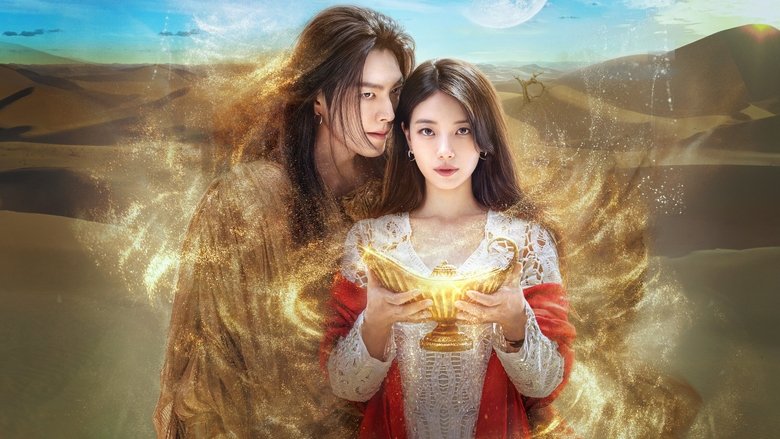
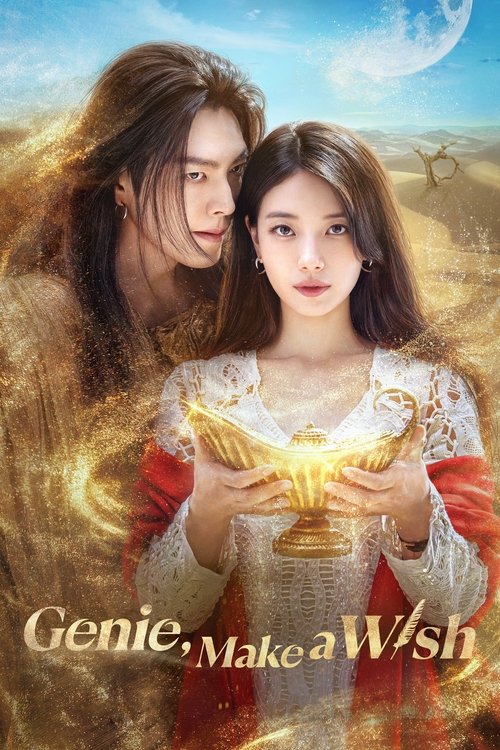
A golden sunburst over desolate desert dunes colliding with the cool, crystalline stillness of modern solitude; an eccentric fantasy rom-com where ancient celestial wagers melt into human vulnerability, painting love as a soul-cleansing oasis within an emotionally barren world.
Genie, Make a Wish

Genie, Make a Wish

다 이루어질지니

"Come now, to corruption!"

03 October 2025 — 03 October 2025 South Korea 1 season 13 episode Ended 7.9 (131)

Cast: Kim Woo-bin, Suzy, Ahn Eun-jin, Steve Sanghyun Noh, Ko Kyu-phil

Drama Sci-Fi & Fantasy Comedy Selflessness vs. Human Corruption Free Will and Learned Morality Reincarnation and Enduring Fate Emotional Awakening and the Pain of Empathy Deconstruction of Supernatural Tropes

Overview

Set across 13 episodes, Genie, Make a Wish follows Ki Ka-young, a brilliant automobile mechanic living in a quiet Korean village who was diagnosed early in life with psychopathic and antisocial traits. During a trip to Dubai, Ka-young inadvertently releases Iblis, an overly emotional Genie who has been imprisoned in an ancient brass lamp for 983 years and offers her three life-changing wishes.

Unbeknownst to her, Iblis is bound by a millennium-long wager with God to prove human corruptibility. However, he is baffled when Ka-young's emotional detachment and rigid ethical routines make her immune to his manipulative temptations, sparking an unpredictable romance as celestial enforcers and supernatural forces clash around them.

Core Meaning

The central thesis is that humanity and goodness are defined not by innate emotional perfection, but by the conscious choice to act morally and selflessly despite trauma and psychological limitation. The series asserts that love is an active, sacrificial commitment capable of dismantling divine wagers and overcoming existential isolation.

Thematic DNA

Selflessness vs. Human Corruption 30%
Free Will and Learned Morality 25%
Reincarnation and Enduring Fate 20%
Emotional Awakening and the Pain of Empathy 15%
Deconstruction of Supernatural Tropes 10%

Selflessness vs. Human Corruption

Revealed through Iblis's wager with God to prove that human desires lead to moral degradation, which evolves into an exploration of altruism as Ka-young refuses to make selfish wishes.

Free Will and Learned Morality

Revealed through Ka-young's reliance on strict village routines and her grandmother's rules, demonstrating how moral character can be constructed through discipline and deliberate choice.

Reincarnation and Enduring Fate

Revealed through connections between the 10th-century Goryeo dynasty and modern Korea, illustrating how soul ties and unfulfilled sacrifices transcend centuries as a second chance for healing.

Emotional Awakening and the Pain of Empathy

Revealed as Ka-young's protective emotional detachment gives way to feeling profound grief alongside joy, showing that vulnerability is essential to a meaningful life.

Deconstruction of Supernatural Tropes

Revealed through meta-humor and self-aware comedy that strips mythical beings of their terrifying mystique by placing them in mundane modern situations.

Character Analysis

Ki Ka-young

Bae Suzy

Archetype: Stoic Heroine / Emotionally Detached Anti-Heroine Key Trait: Unflappable pragmatic logic

Motivation

Maintain peace and avoid hurting others in honor of her grandmother's care; later evolves into protecting Iblis and her village.

Character Arc

Begins as a cold automobile mechanic executing rigid daily routines to control psychopathic tendencies. She evolves into making ultimate selfless sacrifices, choosing to feel the agonizing pain and joy of true human empathy.

Genie / Iblis

Kim Woo-bin

Archetype: Flamboyant Trickster / Fallen Entity / Emotional Anti-Hero Key Trait: Dramatic emotional swings

Motivation

Win his wager against God to secure absolute freedom; shifts to preserving Ka-young's life and soul.

Character Arc

Begins as a volatile, arrogant genie obsessed with proving human worthlessness. As he falls in love with Ka-young, he shifts into a devoted protector willing to submit to divine oblivion to save her.

All 5 characters and cast

Symbols & Motifs

The Ancient Brass Lamp / Vessel

Meaning:

Symbolizes divine imprisonment, accumulated centuries of human greed, and the heavy burden of celestial duty.

Context:

Discovered buried under sand dunes in Dubai and serves as Iblis's prison.

The Desert Sands of Dubai

Meaning:

Represents emotional barrenness, isolation, and the unwritten canvas where ancient myths collide with modern reality.

Context:

Used during the opening episodes in Dubai where Ka-young first encounters Iblis.

The Notebook of Rules

Meaning:

Symbolizes learned ethics, self-control, and a human shield against antisocial impulses.

Context:

Maintained by Ka-young as her personal manual for daily life.

The Black Jaguar (Sade)

Meaning:

Represents wild animalistic instinct transformed into loyal guardianship and warmth within human society.

Context:

Manifested through Sade's character as a spirit in human form.

The Red Scarf / Red Accents

Meaning:

A visual motif referencing fate and destiny, signaling celestial protection and inter-life connections.

Context:

Featured visually throughout the series as a signature element of fate.

Memorable Quotes

다 이루어질지니
— Genie / Iblis

Context

Uttered by Iblis when offering wishes.

Meaning

Serves as the series magic invocation and title, highlighting the double-edged nature of human desire.

슬픔이 기쁨에게
— Ki Ka-young

Context

Recited in Episode 6 from Jeong Ho-seung's famous poem.

Meaning

Encapsulates Ka-young's realization that true joy cannot exist without understanding sorrow.

All 5 quotes

Episode Highlights

Episode 1

S1E1

Ka-young travels to Dubai and discovers Iblis's lamp buried in desert sands.

Significance:

Establishes the clash between Ka-young's emotional detachment and Iblis's magic, featuring a cameo by Song Hye-kyo.

Episode 3

S1E3

Iblis agrees to grant Ka-young's first wish to corrupt others.

Significance:

Ka-young's moral resistance sets their high-stakes wager into motion while Ejllael plots revenge.

Episode 5

S1E5

Ka-young uses her second wish selflessly on behalf of her grandmother Oh Pan-geum.

Significance:

Shatters Iblis's expectation of human greed and fundamentally alters their romantic dynamic.

Episode 6

S1E6

Flashbacks reveal Goryeo dynasty lore surrounding their origins.

Significance:

Proves Ka-young is the reincarnation of the slave girl whose three selfless wishes trapped Iblis 983 years ago.

Episode 9

S1E9

The villain Khalid targets Oh Pan-geum as leverage.

Significance:

Iblis and Ka-young uncover critical secrets regarding their intertwined spiritual past during a high-tension climax.

Episode 13

S1E13

Ka-young makes her final wish for genuine human empathy.

Significance:

Following tragedy, divine resolution and acts of cosmic grace grant Ka-young and Iblis an eternal happy ending.

Philosophical Questions

Can true morality exist without natural emotional empathy?

Explored through Ka-young, who behaves ethically through discipline and grandmotherly rules despite lacking innate guilt.

Is human nature fundamentally corrupt or fundamentally altruistic?

Tested via Iblis's 1,000-year wager with God using three wishes as temptation.

What is the true burden of empathy?

Illustrated in the finale when gaining emotional feelings immediately exposes Ka-young to devastating grief alongside love.

Alternative Interpretations

The series can be interpreted through three main lenses:

Full ending explanation

Cultural Impact

Genie, Make a Wish reflects the evolution of global K-drama content by fusing East Asian reincarnation belief systems with Middle Eastern genie folklore and Western demonology. The series sparked cultural commentary surrounding its portrayal of a female protagonist with neurodivergent/antisocial traits who lives ethically through learned habits, achieving strong viewership globally on Netflix.

Audience Reception

The series received praise for Bae Suzy's deadpan performance, Kim Woo-bin's comedic energy, Kim Mi-kyung's portrayal of the grandmother, and Song Hye-kyo's viral cameo. Critics noted that the chaotic multi-genre tone was occasionally jarring. It holds a 7.9/10 on MyDramaList, a 91% approval rating on AsianWiki, and a 75% Tomatometer score on Rotten Tomatoes.

Interesting Facts

  • Reunites Kim Woo-bin and Bae Suzy nine years after their 2016 romance drama Uncontrollably Fond.
  • Written by hit screenwriter Kim Eun-sook, marking her most joke-dense script to date.
  • Co-directed by Lee Byung-hun and Ahn Gil-ho, blending slapstick comedy with action-thriller imagery.
  • High-budget desert sequences were shot on location in Dubai, UAE.
  • Song Hye-kyo took a 10-hour flight to Dubai specifically to film her guest appearance as Jinniya.
  • Kim Woo-bin underwent specialized language coaching to deliver authentic Arabic lines.
  • Netflix released all 13 episodes simultaneously on October 3, 2025, during South Korea's Chuseok holiday.

Easter Eggs

Song Hye-kyo Cameo

Appears as Jinniya, an ex-girlfriend genie styled in Princess Jasmine makeup, breaking the fourth wall when asked if she is Song Hye-kyo.

The Goblin Red Scarf Reference

Episode 7 features a shop displaying a goblin wearing a red scarf, referencing screenwriter Kim Eun-sook's Goblin.

The Lovers in Paris Dialogue Gag

Iblis parodies dialogue from Kim Eun-sook's 2004 drama Lovers in Paris by confusing Aegi-ya (Baby) with Yaegi (Talk).

Star Guest Appearances

Features guest appearances by Daniel Henney as Kim Gae and Kim Ji-hoon as Chauffeur Kim.

Disney & Marvel References

Characters explicitly reference Aladdin, Marvel superheroes, and Hollywood fantasy tropes.

Frequently Asked Questions

Explore More About This Movie

Dive deeper into specific aspects of the movie with our detailed analysis pages

Comments (0)

Leave a comment

No comments yet. Be the first to share your thoughts!

Similar Movies