Skip to content
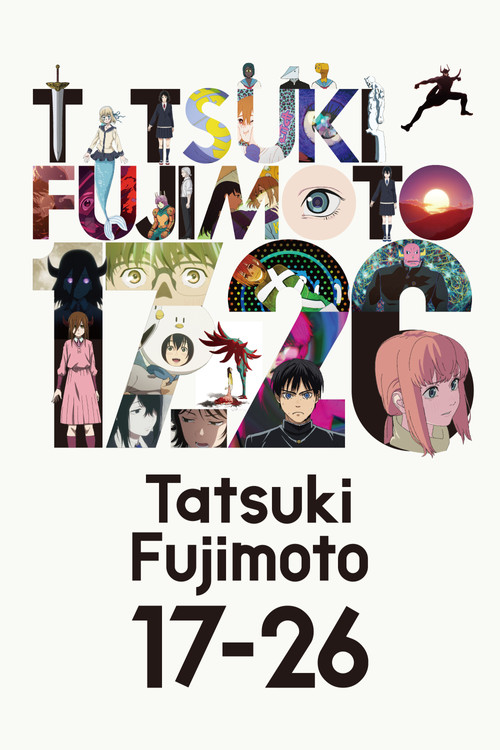
Tatsuki Fujimoto 17-26
An intoxicating blend of adolescent surrealism and visceral emotional sincerity, capturing the dizzying ache of youth like neon spray paint splattered across a cracked bathroom mirror.
Tatsuki Fujimoto 17-26

Tatsuki Fujimoto 17-26

藤本タツキ 17-26

08 November 2025 — 08 November 2025 Japan 1 season 8 episode Ended 8.7 (107)

Cast: Kensho Ono, Shion Sakurai, Kazuki Ura, Kimiko Saito, Mitsuo Iwata

Drama Animation Sci-Fi & Fantasy Comedy Radical Empathy and Monstrosity Artistic Obsession, Envy, and Creation The Cosmic Absurdity of Adolescent Passion Gender, Body, and Identity Transgression

Overview

Tatsuki Fujimoto 17-26 is an eight-episode anime anthology television series produced by six animation studios under seven visionary directors, adapting the early one-shot manga created by Chainsaw Man and Look Back auteur Tatsuki Fujimoto between the ages of 17 and 26. Released globally on Amazon Prime Video in November 2025 following a limited theatrical premiere in Japan, the series serves as a chronological expedition into the creative genesis of modern manga's wildest storyteller.

Rather than following a continuous serial narrative, the overarching arc across its single season charts an artistic evolution. The early episodes plunge viewers into irreverent, hyper-kinetic teenage absurdities—where apocalyptic alien invasions clash with high-school poultry, and desperate schoolboy confessions refuse to be derailed by gunfights or meteor strikes. As the anthology progresses, these spontaneous outbursts of dark humor mature into deeper explorations of connection, isolation, and identity.

By its second half, the series transitions into tender, haunting meditations on family, artistic obsession, and social alienation. From an immortal vampire seeking death only to rediscover curiosity through a hitwoman, to siblings navigating apocalyptic prophecies and rival artists bound by blood, the show forms a cohesive emotional mosaic. It documents the raw transformation of a young creator learning how to reconcile absurdity with profound human empathy.
Core Meaning

The central philosophy uniting Tatsuki Fujimoto 17-26 is the conviction that genuine human connection is found not in orderly perfection, but in shared lunacy and unconditional vulnerability. Across all eight stories, conventional societal structures—schools, families, prophecies, and apocalyptic orders—are depicted as indifferent, restrictive, or broken.

The show argues that adolescence and young adulthood are volatile crucible states where our most irrational obsessions (art, love, self-preservation, and loyalty) are our only defenses against existential dread. Fujimoto's early vision asserts that loving someone often demands embracing their monstrosity, absurdities, and flaws against the verdict of the entire world.

Thematic DNA

Radical Empathy and Monstrosity 30%
Artistic Obsession, Envy, and Creation 25%
The Cosmic Absurdity of Adolescent Passion 25%
Gender, Body, and Identity Transgression 20%

Radical Empathy and Monstrosity

Central to episodes like Nayuta of the Prophecy and Shikaku, this theme explores society's instinct to scapegoat the unconventional. It evolves from casual subversion into a fierce declaration: true love does not civilize the "monster"; it stands beside it against the mob.

Artistic Obsession, Envy, and Creation

Capping off the series in Sisters (and echoing through Mermaid Rhapsody), this theme examines art as a painfully isolating compulsion. Creation is presented as a battlefield of self-doubt and sibling rivalry that ultimately transforms into the purest bridge between souls.

The Cosmic Absurdity of Adolescent Passion

Predominant in Love is Blind and Sasaki Stopped a Bullet, the show treats teenage romance not as soft nostalgia, but as an uncontrollable cosmic force capable of defying logic, physics, and mortality.

Gender, Body, and Identity Transgression

Explored directly in Woke-Up-as-a-Girl Syndrome, the series interrogates bodily autonomy, societal performance, and emotional authenticity with refreshing nonchalance and sincerity, establishing self-acceptance as an ongoing act of courage.

Character Analysis

Yūto

Kensho Ono / Edward Stoneguard

Archetype: The Reluctant Protector Key Trait: Deadpan resilience

Motivation

Motivated by preserving fragile daily life.

Character Arc

Transitions from detached survivalist apathy to fighting for a micro-community in the post-apocalypse.

Sasaki

Toshiki Kumagai / Stephen Fu

Archetype: The Defiant Idealist Key Trait: Absurd willpower

Motivation

Driven by an intense desire for romantic confession and affirmation.

Character Arc

Evolves from an impulsive youth seeking romantic validation to a figure willing to defy physical reality through pure teenage stubbornness.

All 5 characters and cast

Symbols & Motifs

Horns (The Demon/The Outcast)

Meaning:

Symbolizes innate otherness, societal rejection, and dangerous destructive potential.

Context:

Prominently featured on Nayuta in Nayuta of the Prophecy as a mark of the demonic outcast feared by the villagers.

The Submerged Piano

Meaning:

Represents submerged grief, maternal memory, and art communicating where words cannot survive.

Context:

Appears resting on the seabed in Mermaid Rhapsody.

The Bullet / Assassination Weapons

Meaning:

Signify sudden mortality and the volatile intrusions of fate into ordinary routines.

Context:

Appearing across Sasaki Stopped a Bullet and Shikaku during violent disruptions of mundane reality.

The Sketchbook and Framed Canvas

Meaning:

Represent both toxic rivalry and the unspoken intimacy between creators.

Context:

Used extensively throughout Sisters to chronicle the bond between the two artist sisters.

Chickens and Classroom Ruins

Meaning:

Serve as a wry metaphor for ordinary domestic survival within a collapsing world.

Context:

Featured in A Couple Clucking Chickens Were Still Kickin' in the Schoolyard amid devastating post-apocalyptic destruction.

Memorable Quotes

妹だからだ!
— Kenji

Context

Shouted in Episode 7, Nayuta of the Prophecy, when facing a hostile town determined to exterminate his little sister Nayuta.

Meaning

Cuts through cosmic horror and apocalyptic prophecy with elemental familial commitment, asserting that basic unconditional love supersedes collective fear.

私を殺してください
— Yugeru

Context

Spoken in Episode 4, Shikaku, when the weary 3,500-year-old vampire hires an assassin out of existential boredom.

Meaning

Sets up Fujimoto's trademark subversion of death wishes into romantic farce, turning existential dread into a strange catalyst for connection.

All 3 quotes

Episode Highlights

A Couple Clucking Chickens Were Still Kickin' in the Schoolyard

S1E1

Directed by Seishiro Nagaya at ZEXCS, this episode adapts Fujimoto's very first competition manga submission, focusing on human survival alongside poultry amidst alien predators.

Significance:

Establishes Fujimoto's thematic blueprint: apocalyptic ruin contrasted with mundane routines and pitch-black comedic absurdity.

Love is Blind

S1E3

Directed by Nobuyuki Takeuchi at Lapin Track, the story tracks a schoolboy whose confession continues uninterrupted despite gunfire and falling meteors.

Significance:

Functions as a technical masterclass in pacing, visual escalations, and slapstick timing, showcasing Fujimoto's affinity for cinematic farce.

Shikaku

S1E4

Directed by Naoya Ando at STUDIO GRAPH77, this episode depicts an assassin hired by an ancient vampire seeking death, only to spark an absurd mutual fascination.

Significance:

Won the Audience Prize at BIAF 2025 and presents a twisted deconstruction of hitman and vampire tropes with bloody, pastel energy.

Mermaid Rhapsody

S1E5

Directed by Tetsuaki Watanabe at 100studio, it chronicles an underwater connection formed around a submerged piano on the ocean floor.

Significance:

Considered the most visually lyrical installment, weaving underwater acoustics and melancholic romance to explore how grief transforms into art.

Woke-Up-as-a-Girl Syndrome

S1E6

Directed by Kazuaki Terasawa at Studio Kafka, this episode explores the psychological and social ripples of waking up with a different biological sex.

Significance:

A sharp exploration of gender perception, body dysphoria, and adolescent empathy animated with vivid, experimental character animation.

Nayuta of the Prophecy

S1E7

Directed by Tetsuaki Watanabe at 100studio, it follows Kenji's perilous efforts to protect his prophesied, demon-horned younger sister from an extermination-minded village.

Significance:

Widely celebrated as the emotional heart of the anthology and serves as the direct thematic and conceptual precursor to Chainsaw Man Part 2 and the Control Devil.

Sisters

S1E8

Directed by Osamu / Shu Honma at P.A. WORKS, the finale charts the volatile, creative, and emotionally charged rivalry between two artist sisters.

Significance:

The finale of the series, functioning as the foundational sketch for Fujimoto's masterpiece Look Back by capturing the bitter envy and profound devotion inherent in creative expression.

Philosophical Questions

Does genuine love require accepting what is inherently terrifying or monstrous in another person?

Explored in Nayuta of the Prophecy and Shikaku, where emotional intimacy requires standing beside dangerous beings and embracing their monstrosity rather than seeking to tame or normalize them.

Is artistic creation fundamentally an act of self-gratification, bitter envy, or unspoken connection?

Explored in Sisters and Mermaid Rhapsody through the friction of sibling rivalries, grief, and the realization that personal creation can serve as an intimate bridge between isolated souls.

Why does youth grant trivial adolescent feelings the weight of cosmic apocalypse?

Explored in Sasaki Stopped a Bullet and Love is Blind, demonstrating how teenage infatuation and pride assume the scale of reality-warping events capable of outrunning violence and logic.

Alternative Interpretations

The Auteur Genesis Reading: Critics widely interpret the series as a living museum of Fujimoto's psychological maturation. The transition from crude, bloody punchlines in Chickens to the sophisticated emotional devastation of Sisters mirrors a creator outgrowing shock value to embrace raw vulnerability.

Full ending explanation

Cultural Impact

Released in late 2025 amidst the massive international success of Chainsaw Man and the theatrical acclaim of Look Back, Tatsuki Fujimoto 17-26 arrived when Fujimoto had firmly established himself as anime and manga's leading contemporary auteur.

The series demonstrated an alternative production model for major streamers like Amazon Prime Video: curating prestige short-story anthologies handled by boutique studios rather than commissioning uniform seasonal sequels. By showcasing Fujimoto's unpolished beginnings, the series demystified artistic genius, highlighting that masterful storytelling stems from wild experimentation, embarrassing adolescent impulses, and relentless drawing.

Audience Reception

The anthology debuted to enthusiastic critical acclaim and strong audience engagement, holding an average rating of 4.7/5 on Amazon Prime Video.

Audiences lauded the bold choice to give each story an independent studio and visual identity. Nayuta of the Prophecy, Shikaku, and Sisters emerged as universal favorites for their narrative power and animation quality.

Mild criticism was directed at the uneven tones between lighter comedic shorts like Love is Blind and heavier dramas, with some purists noting that several stories felt tightly constrained by their short runtime. Overall, it was regarded as an essential companion piece for anime cinephiles and Fujimoto devotees alike.

Interesting Facts

  • The production united six distinct anime studios—ZEXCS, Lapin Track, STUDIO GRAPH77, 100studio, Studio Kafka, and P.A.WORKS—each using different pipelines and aesthetic approaches.
  • Rather than enforcing a unified showrunner style, seven individual directors were granted creative freedom to interpret Fujimoto's original manga chapters.
  • Ryo Oyama, president of Avex Animation Labels and a key producer of Look Back (2024), coordinated the overarching project with FLAGSHIP LINE.
  • The series received its global theatrical premiere at the TCL Chinese Theatre in Los Angeles on October 5, 2025, as part of Global Stage Hollywood before opening in Japanese theaters on October 17.
  • Prime Video Japan released a special promotional cut lasting exactly 17 minutes and 26 seconds to commemorate the author's age bracket in the title.

Easter Eggs

The Origin of Nayuta

The horned, meat-devouring heroine of Episode 7 is the direct proto-design for Nayuta, the reincarnated Control Devil in Chainsaw Man Part 2.

The DNA of Look Back

Episode 8 (Sisters) features identical framing motifs, room layouts, and desk perspectives later immortalized in Fujimoto's celebrated manga Look Back.

Late-90s Disaster Cinema Homages

Episode 3's escalating background explosions and alien invasions playfully mimic late-90s Hollywood disaster cinema and vintage manga action tropes.

B-Movie Typography Aesthetics

Episode 4 incorporates stylized blood-spatter typography reminiscent of Quentin Tarantino and Robert Rodriguez grindhouse films.

Frequently Asked Questions

Explore More About This Movie

Dive deeper into specific aspects of the movie with our detailed analysis pages

Comments (0)

Leave a comment

No comments yet. Be the first to share your thoughts!

Similar Movies