Skip to content
Geri's Game
A small, sly autumn comedy in which one old man's rivalry with himself plays out on a chessboard in an empty park, as falling leaves turn loneliness into mischief.
Geri's Game

Geri's Game

"Sometimes you don't need more than one person to not feel alone."

24 November 1997 United States of America 4 min 7.6 (1,195)

Director: Jan Pinkava

Cast: Bob Peterson

Animation Family Comedy Loneliness and isolation Imagination as a way to survive The divided self Competitive spirit and cunning Aging with dignity and humor

Overview

Geri's Game is a 1997 computer-animated short written and directed by Jan Pinkava and produced by Pixar. On a fall day in an empty park in Paris, an elderly man named Geri sets up a chessboard at a small table and settles in for a game. The only problem is that nobody else is there to play him.

Geri doesn't let that stop him. He makes an opening move with the white pieces, takes off his glasses, and shuffles to the other side of the table to answer with black. As he keeps switching seats, two very different players appear. One Geri is confident and aggressive. The other is nervous and easily rattled. Before long the game is less about chess and more about the two of them trying to get the better of each other.

The film has almost no dialogue and runs only a few minutes. It tells its story through small gestures, expressions and timing. It was Pixar's first short with a human being as its main character. It won the Academy Award for Best Animated Short Film and was later shown in theaters with Pixar's second feature, A Bug's Life.
Core Meaning

On the surface, Geri's Game is a gag about a man who plays chess against himself. Underneath the comedy, it is a gentle portrait of old age and solitude, and of the imagination and competitive spirit that can make being alone bearable, even fun. Geri has no opponent, so he makes one out of himself, and that invented rival becomes real enough to outwit.

The final pull-back to a lone old man at an empty table shows the whole contest for what it was. It is sad and triumphant at once: a reminder that he is truly alone, and proof that he refuses to feel defeated by it. Pinkava loosely based Geri on his grandfather, a keen chess player, which gives the playfulness a personal warmth. It is an affectionate tribute to the stubborn, sly vitality of older people.

Thematic DNA

Loneliness and isolation 25%
Imagination as a way to survive 25%
The divided self 20%
Competitive spirit and cunning 15%
Aging with dignity and humor 15%

Loneliness and isolation

The park is empty, it is autumn, and Geri has nobody to play with. The ending pulls the camera back to show a single man at the table, which makes his solitude unmistakable.

Imagination as a way to survive

Geri turns being alone into a lively duel by playing two opponents with distinct personalities. Imagination fills the space where company should be.

The divided self

Timid White Geri and cocky Black Geri act like two sides of one personality. The film stages an inner conflict as an outer contest.

Competitive spirit and cunning

When he is losing, White Geri fakes a heart attack to win. Geri's drive to win, even against himself, is what keeps him lively.

Aging with dignity and humor

The film treats its elderly hero with affection, not pity. His dentures, glasses and slow shuffle become sources of comedy and character.

Character Analysis

Geri

Bob Peterson

Archetype: Trickster / lovable eccentric Key Trait: Playful, stubborn ingenuity

Motivation

To enjoy a good game and hold off loneliness through play.

Character Arc

He starts as a lonely old man setting up a game with no partner. Through the game he divides into two lively rivals and wins by cunning. At the end he is revealed to be alone again, but he is plainly delighted.

White Geri

Bob Peterson

Archetype: Underdog Key Trait: Timid but cunning

Motivation

To avoid defeat by any means necessary.

Character Arc

He begins nervous and makes mistakes, and his rival keeps him on the defensive. Then he fakes a heart attack, secretly turns the tables and checkmates his opponent.

All 3 characters and cast

Symbols & Motifs

The chessboard

Meaning:

The mind as a battlefield: a structured contest in which Geri's inner conflict can play out.

Context:

Geri sets it up at the start of the film. It is the only focus of his attention, and the board itself becomes the means of his final trick.

The glasses

Meaning:

A switch between identities that marks which Geri is playing.

Context:

Geri takes off his glasses when he moves to the black side. This small prop lets viewers tell the two personalities apart.

The false teeth

Meaning:

The prize and the stakes. They are comically small, which shows that the fun of the contest matters more than what is won.

Context:

After he is checkmated, Black Geri hands over a set of dentures to the winner.

The autumn park

Meaning:

Late life and seasonal decline, and the loneliness of a place everyone else has left.

Context:

The story takes place in an empty Paris park in the fall.

The empty chair / final wide shot

Meaning:

Reality breaking through the fantasy: the opponent never existed.

Context:

The last zoom-out shows Geri alone, which reframes the whole duel.

Philosophical Questions

Can a person truly compete against themselves?

By giving each side its own temperament, the film suggests that we contain several selves, and that one part of us can outwit another.

Is imagination a remedy for loneliness or a mask over it?

The game is lively and funny while it lasts. The closing wide shot, though, shows the empty chair across from Geri, which leaves open whether his solitude has been overcome or only put off.

Is it cheating if you only deceive yourself?

White Geri's staged heart attack and his trick with the board are real deception, yet the only victim is Geri himself. This raises playful questions about self-deception and what winning means.

How It Ends

Alternative Interpretations

A comedy of wits: Many viewers see it simply as a slapstick game of one-upmanship, where the fun lies in watching one man play two distinct characters.

Full ending explanation

Cultural Impact

Geri's Game was a milestone for Pixar and for computer animation. It was the studio's first short centered on a human, at a time when believable CG humans were one of the medium's hardest problems. The production served as a test bed for subdivision surfaces and cloth simulation. Subdivision surfaces had roots in Edwin Catmull's work from 1978, and the short showed they could produce natural skin and movement. These tools went on to shape later Pixar features.

The film won the Academy Award for Best Animated Short Film. It reached a wide audience when it played before A Bug's Life, which helped establish Pixar's tradition of pairing shorts with features. Geri's reappearance as the Cleaner in Toy Story 2 gave him a lasting place in Pixar's world. The short is widely used in classrooms to teach character traits, theme and wordless storytelling.

Audience Reception

The short was praised by critics and industry and won the Oscar for Best Animated Short Film. Viewers and reviewers tend to single out its wordless storytelling and its character animation, especially how clearly two personalities come across through one man's body language. They also praise its twist ending and its mix of humor and quiet sadness. Educators often use it to teach theme and character traits. The main debate is over tone: some viewers find the final reveal of Geri's solitude poignant, while others read it as purely comic.

Interesting Facts

  • Geri's Game was written and directed by Jan Pinkava and premiered on November 24, 1997.
  • It won the Academy Award for Best Animated Short Film the following year.
  • It was Pixar's first short with a human being as its main character.
  • A dedicated research and development group worked with the filmmakers to handle the difficulties of animating a human, including an in-house simulator for realistic clothing movement.
  • Subdivision surface modeling, a technique partly pioneered by Edwin Catmull in 1978, was used to give Geri natural movement and realistic skin.
  • Geri was loosely based on Jan Pinkava's grandfather, a keen chess player.
  • According to Pinkava, Steve Jobs offered to enlist Giorgio Armani to help design Geri's outfit, but Pinkava declined.
  • The short was shown with the theatrical release of Pixar's second feature, A Bug's Life.
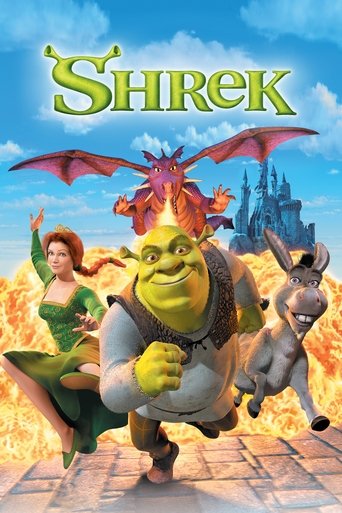
  • Geri later appeared in Toy Story 2 as 'The Cleaner', voiced by Jonathan Harris and Bob Peterson.

Easter Eggs

Geri returns in Toy Story 2 as the Cleaner

Pixar reused the character in Toy Story 2 (1999) as the toy restorer known as 'The Cleaner', voiced there by Jonathan Harris and Bob Peterson. This makes the short one of the earliest Pixar shorts to carry a character into a feature film.

Frequently Asked Questions

Explore More About This Movie

Dive deeper into specific aspects of the movie with our detailed analysis pages

Comments (0)

Leave a comment

No comments yet. Be the first to share your thoughts!

Similar Movies