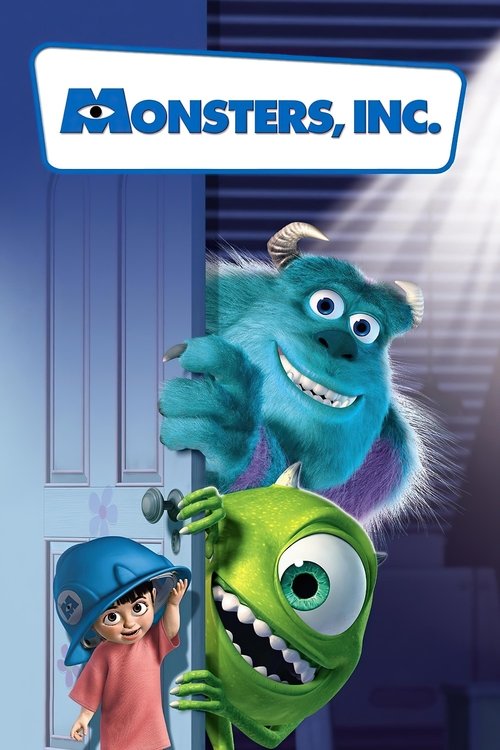
Monsters, Inc.
"It's nothing personal. It's just their job."
Overview
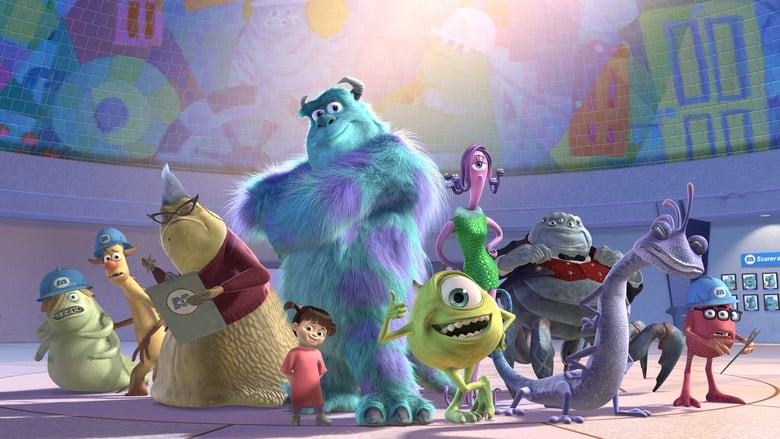
In the bustling city of Monstropolis, the primary source of energy is the screams of human children, collected by elite "Scarers" who work at Monsters, Inc. The top Scarer, James P. "Sulley" Sullivan, and his witty one-eyed best friend, Mike Wazowski, are at the top of their game. However, their world is turned upside down when a curious little girl, whom Sulley affectionately names Boo, accidentally follows Sulley back into the monster world.
Believing children to be toxic, the presence of Boo incites panic. Sulley and Mike must navigate the treacherous corporate landscape of Monsters, Inc., hide Boo from the authorities and their deceptive rival, Randall Boggs, all while trying to find a way to return her safely to her bedroom.
As Sulley develops a fatherly bond with Boo, he begins to question the very foundation of their society and the ethics of their energy source. Their adventure leads them to uncover a shocking conspiracy within the company, forcing them to choose between their careers and the well-being of their new human friend. Their journey culminates in a discovery that could change Monstropolis forever.
Core Meaning
The core meaning of "Monsters, Inc." revolves around the transformative power of love and compassion over fear. The film posits that joy and laughter are far more powerful and sustainable sources of energy than fear and intimidation. This is not just a literal plot point but a potent metaphor for interpersonal relationships and societal structures. The director, Pete Docter, was inspired by his own experiences as a new father, channeling the chaos, uncertainty, and profound love of parenthood into the relationship between Sulley and Boo. The film suggests that true strength lies not in being scary or intimidating, but in kindness, empathy, and the courage to challenge a flawed system for the greater good.
Thematic DNA
The Power of Laughter Over Fear
The central theme is the discovery that laughter is ten times more powerful than screams. This paradigm shift from a fear-based economy to one founded on joy is the film's main message. Initially, the monster world thrives on the fear of children, but Boo's infectious giggles prove to be a more potent energy source. This theme is highlighted when Mike Wazowski, not a traditionally scary monster, finds his calling as a comedian, leading the charge in the new era of Monsters, Inc.
Friendship and Loyalty
The unwavering bond between Sulley and Mike is the heart of the film. Their friendship is tested when Boo enters their lives, creating friction and forcing them to confront difficult choices. Despite their disagreements, their loyalty to each other ultimately prevails. Mike's quote, "You and I are a team. Nothing is more important than our friendship," encapsulates this theme perfectly. Their teamwork is essential in protecting Boo and exposing the conspiracy within their company.
Corporate Greed and Ethics
"Monsters, Inc." serves as a critique of corporate culture, where the pursuit of profit leads to unethical practices. Mr. Waternoose, the CEO, is willing to kidnap children and use a dangerous "Scream Extractor" to save his company from an energy crisis. His mantra, "I'll kidnap a thousand children before I let this company die!" reveals the depths of his corporate greed. The film contrasts this with Sulley's growing moral compass, suggesting that ethical responsibility should outweigh financial gain.
Prejudice and the Fear of the Unknown
The monsters' belief that human children are toxic is a form of prejudice born from fear and ignorance. This fear is so ingrained in their society that a child's sock causes a city-wide panic. Sulley's relationship with Boo deconstructs this prejudice, as he learns that she is not something to be feared but a child to be cared for. The film encourages audiences to challenge their own preconceived notions and to approach the unknown with curiosity and empathy rather than fear.
Character Analysis
James P. "Sulley" Sullivan
John Goodman
Motivation
Initially, Sulley is motivated by professional success and maintaining his reputation as the top Scarer. After meeting Boo, his motivation shifts to ensuring her safety and returning her home. This evolves into a desire to protect all children and reform the corrupt system he once championed.
Character Arc
Sulley begins the film as the top Scarer at Monsters, Inc., confident and at the peak of his career. His encounter with Boo catalyzes a significant character arc. Initially, he is driven by fear and a desire to maintain his status quo. However, as he grows to care for Boo, he develops a fatherly sense of responsibility and compassion. He transforms from an agent of fear into a protector of innocence, ultimately risking everything to do what is right. His journey culminates in him becoming the new CEO of Monsters, Inc. and ushering in an era of laughter.
Mike Wazowski
Billy Crystal
Motivation
Mike's primary motivation is to support Sulley and, by extension, enjoy the perks of being associated with the top Scarer. He is also motivated by his romantic relationship with Celia Mae. As the film progresses, his motivation becomes rooted in his loyalty to Sulley and his desire to do the right thing, even when it's difficult.
Character Arc
Mike starts as Sulley's biggest supporter and coach, but he is also pragmatic and initially more concerned with the rules and the potential repercussions of Boo's presence. He is often the voice of reason, albeit a frantic and comical one. His arc sees him move from being primarily self-interested (particularly in his relationship with Celia) to a loyal and courageous friend who stands by Sulley. He discovers his own unique talent is not in scaring, but in making children laugh, finding his true calling and becoming the top comedian at the reformed Monsters, Inc.
Boo
Mary Gibbs
Motivation
Boo is motivated by curiosity and a desire for companionship. She is drawn to Sulley, whom she affectionately calls "Kitty," and her primary goal is to be with him. Later, her motivation is to return home safely with the help of her new friends.
Character Arc
Boo, a pre-verbal toddler, is the catalyst for the film's events. Her innocence and lack of fear towards Sulley challenge the monsters' preconceived notions about humans. Though she is a child, she acts as a mentor figure for Sulley, teaching him that love and laughter are more powerful than fear. Her arc is less about personal change and more about the profound impact she has on the world she enters. Her bravery in confronting her fear of Randall is a pivotal moment in her journey.
Randall Boggs
Steve Buscemi
Motivation
Randall is driven by a deep-seated envy of Sulley's success and a ruthless ambition to become the number one Scarer. He is also motivated by a desire for power and control, as evidenced by his secret development of the Scream Extractor.
Character Arc
Randall is Sulley's primary rival, consumed by jealousy and a desire to be the top Scarer. He represents the dark side of ambition, willing to cheat and harm children to achieve his goals. His character does not have a redemptive arc; instead, his villainy escalates as he conspires with Mr. Waternoose. His ultimate defeat comes at the hands of Boo, the very child he sought to exploit, and he is banished from the monster world.
Henry J. Waternoose III
James Coburn
Motivation
Waternoose's primary motivation is to save Monsters, Inc. from collapse, a legacy passed down through his family for generations. This desperation drives him to embrace unethical and criminal methods to secure an energy source for Monstropolis.
Character Arc
Mr. Waternoose initially appears as a paternalistic mentor figure to Sulley, the CEO of Monsters, Inc. concerned about the future of his company. However, he undergoes a 'shapeshift' to reveal his true villainous nature. Faced with an energy crisis, his desperation leads him to conspire with Randall, showing that he is willing to sacrifice his morals for the sake of his company. His arc is a cautionary tale about how fear of failure can lead to corruption.
Symbols & Motifs
Closet Doors
The closet doors are portals between the human and monster worlds, symbolizing the connection between fear and the unknown. They represent a gateway that, once crossed, can lead to unexpected discoveries and the breaking down of prejudices. For the monsters, they are tools of their trade, but for Boo, her door is a symbol of home and safety. The destruction and eventual reconstruction of Boo's door symbolizes the enduring power of connection and friendship, even across different worlds.
The doors are a central element of the plot, from the bustling "Scare Floor" to the thrilling chase scene through the vast door vault. The climax of the film revolves around getting Boo back to her specific door. When Mike rebuilds her door at the end, it signifies hope and the continuation of Sulley and Boo's bond.
Scream Canisters
The yellow scream canisters visually represent the commodification of fear. They are a tangible measure of a Scarer's success and the fuel that powers Monstropolis. The shift from the small, yellow scream canisters to the larger, red laughter canisters at the end of the film visually symbolizes the film's core message: that joy is a more abundant and powerful resource than fear.
The canisters are ever-present on the Scare Floor, being filled and transported. The sound of a full canister is a mark of success. At the end of the film, the redesigned factory floor is filled with the new, larger canisters, signifying the positive change in their society.
Boo's Drawings
Boo's crayon drawings are a symbol of her innocence and her perception of the world. Her drawing of Sulley and herself holding hands represents their bond and her lack of fear towards him. After Sulley is forced to scare her, her torn drawing symbolizes her broken trust and fear. When she later shows him the mended drawing, it signifies forgiveness and the restoration of their friendship.
Boo's drawings are seen in her bedroom. The torn drawing is a pivotal emotional moment in the film. The final drawing she shows Sulley before he leaves her room for the last time reinforces the deep connection they have formed.
Memorable Quotes
Put that thing back where it came from, or so help me!
— Mike Wazowski
Context:
Mike says this to Sulley in their apartment shortly after discovering that Sulley has accidentally brought Boo into their home. He is terrified of the supposed danger she represents and desperately wants to get rid of her to avoid any trouble.
Meaning:
This quote, which becomes a recurring gag and even a song, encapsulates Mike's initial panic and by-the-book nature when confronted with the "toxic" human child. It hilariously underscores the monsters' unfounded fear of humans and the absurdity of the situation.
You and I are a team. Nothing is more important than our friendship.
— Mike Wazowski
Context:
After a heated argument that leads to Sulley accidentally getting them banished to the Himalayas, Mike says this to Sulley to reaffirm their friendship and his commitment to helping him, despite being angry and hurt.
Meaning:
This line is the emotional cornerstone of Mike and Sulley's relationship. It demonstrates that despite his anxieties and occasional selfishness, Mike's loyalty to Sulley is his most defining trait. It's a powerful affirmation of their bond, even in the face of immense danger and disagreement.
Kitty!
— Boo
Context:
Boo says this throughout the film, starting from their early interactions in Sulley's apartment. It becomes her endearing name for him, solidifying their unique and heartwarming bond.
Meaning:
This simple word is how Boo affectionately refers to the giant, furry Sulley. It's significant because it shows that she sees him not as a scary monster, but as a comforting and lovable creature. Her nickname for him is a constant reminder of the film's theme of looking past appearances to see the true nature within.
I wouldn't have nothing if I didn't have you.
— Mike Wazowski & James P. "Sulley" Sullivan
Context:
This line is part of the song that plays during the film's end credits, sung by Billy Crystal and John Goodman. It serves as a final, musical celebration of the central friendship of the movie.
Meaning:
This quote, from the Academy Award-winning song "If I Didn't Have You," beautifully summarizes the codependent and deeply affectionate friendship between Mike and Sulley. It acknowledges that their individual strengths are amplified by their partnership and that their lives would be incomplete without each other.
I'll kidnap a thousand children before I let this company die!
— Henry J. Waternoose III
Context:
Waternoose screams this in a moment of frustration and rage during a simulated scare demonstration. Sulley and Mike have cleverly tricked him into confessing his plan on tape, which is then used to expose him to the CDA.
Meaning:
This chilling line reveals the true extent of Waternoose's villainy and his warped sense of corporate responsibility. It's the moment his facade of a concerned CEO crumbles, exposing a man willing to commit monstrous acts to preserve his company's legacy, no matter the ethical cost.
Philosophical Questions
Is it ethical to exploit the emotions of others for personal or societal gain?
The entire premise of Monsters, Inc. is built on the harvesting of children's screams for energy. The film initially presents this as a simple fact of their world, but Sulley's growing relationship with Boo forces him, and the audience, to question the morality of this system. The conspiracy to kidnap children and use the "Scream Extractor" is a clear violation of ethics, but the film also raises questions about the fundamental practice of scaring children, even if it is for the betterment of monster society.
How do fear and prejudice shape a society?
The monster world is built on a foundation of fear: the fear the monsters instill in children, and their own fear of being contaminated by them. This societal fear leads to prejudice against humans and a rigid, unforgiving system for dealing with any perceived contamination. The film explores how this fear-based culture can stifle progress and lead to unethical behavior, and how challenging these ingrained fears and prejudices can lead to positive, transformative change.
What is the true nature of power?
"Monsters, Inc." presents two competing sources of power: screams and laughter. Screams represent a form of power derived from fear, intimidation, and control. Laughter, on the other hand, is a power source born from joy, connection, and positive emotions. The film ultimately argues that the power of laughter is not only more potent but also more ethical and sustainable. This raises the philosophical question of whether true power lies in dominance and control or in compassion and the ability to bring joy to others.
Alternative Interpretations
While "Monsters, Inc." is widely seen as a heartwarming story about friendship and overcoming fear, some critics and audiences have offered alternative readings. One interpretation views the film as a Marxist fable, with the Scarers representing the proletariat (working class) who rise up to overthrow the bourgeoisie (the corporate elite, represented by Mr. Waternoose) and seize the means of production. Another theory suggests that the entire monster world is a future dystopia where monsters are the result of genetic mutations from a polluted Earth, and the closet doors are a form of time travel to the past to harvest energy. There are also numerous fan theories connecting "Monsters, Inc." to the larger "Pixar Theory," which posits that all Pixar films exist in the same universe. For example, some fans speculate that Boo is the witch from "Brave," having learned to travel through doors to find Sulley.
Cultural Impact
Released in 2001, "Monsters, Inc." arrived at a time of significant cultural anxiety, particularly in the United States following the events of 9/11. The film's underlying message about the power of laughter overcoming fear resonated deeply with audiences. The movie also subtly critiques corporate greed and the exploitation of resources, a theme that remains relevant. Critically acclaimed for its clever premise, humor, and emotional depth, "Monsters, Inc." was a major box office success and further solidified Pixar's reputation as a leader in animated storytelling. The film's technical achievements, especially the groundbreaking animation of Sulley's fur, set a new standard for computer-generated imagery. The characters of Mike and Sulley have become iconic figures in pop culture, beloved by both children and adults. The film's success led to a prequel, "Monsters University" (2013), and a Disney+ series, "Monsters at Work" (2021), demonstrating its enduring popularity and cultural legacy.
Audience Reception
"Monsters, Inc." was met with widespread acclaim from audiences upon its release. Viewers praised the film for its originality, clever humor, and heartwarming story. The dynamic between the main characters, Sulley and Mike, was a particular highlight, with many considering their friendship to be one of the best in Disney's history. The emotional core of the film, the relationship between Sulley and Boo, resonated deeply with audiences of all ages. While some viewers found the plot to be slightly predictable, the overall consensus was overwhelmingly positive. The film's blend of comedy, adventure, and genuine emotion has made it a timeless classic that continues to be enjoyed by new generations of viewers.
Interesting Facts
- The voice of Boo was provided by Mary Gibbs, the young daughter of one of the film's story artists. To get her lines, the crew would follow her around the studio with a microphone, capturing her natural babbling and reactions.
- Animating Sulley's fur was a major technical challenge. Pixar developed a new software program called "Fizt" to realistically simulate the movement of his over 2.3 million individual hairs.
- John Goodman and Billy Crystal recorded their lines together, which is unusual for animated films. This allowed for more natural chemistry and improvisation between the two actors.
- The original concept for the film was about a 30-year-old man who is haunted by monsters from his childhood drawings.
- The film's title, "Monsters, Inc.", was suggested by Disney legend Joe Grant, who worked on classics like "Dumbo" and "Fantasia".
- Boo's real name is Mary, the same as her voice actress. This can be seen on one of her drawings in the film.
- The sushi restaurant in the film is named Harryhausen's, a tribute to the legendary stop-motion animator Ray Harryhausen.
- The scene where the CDA decontaminates the restaurant was originally going to show the building being blown up. However, this was changed after the September 11th attacks.
- Bill Murray was considered for the role of Sulley, but the director was unable to contact him after his audition.
- This was the final film for actor James Coburn (Mr. Waternoose) before his death in 2002.
Easter Eggs
Nemo from "Finding Nemo" makes several appearances in the film, two years before his own movie was released.
This is a classic Pixar tradition of hiding characters from upcoming films in their current releases. Nemo can be seen as a plush toy in Boo's room, on a picture in Harryhausen's restaurant, and on a wall plaque behind one of the closet doors.
The Pizza Planet truck from "Toy Story" can be seen in the scene where Randall is banished.
The Pizza Planet truck is a recurring Easter egg that appears in almost every Pixar film. In "Monsters, Inc.", it is parked next to the trailer that Randall is thrown into.
The Luxo Ball, the iconic yellow ball with a blue stripe and a red star from Pixar's first short film, "Luxo Jr.", is in Boo's room.
The Luxo Ball is another recurring Pixar Easter egg, a nod to the studio's origins. Boo hands the ball to Sulley when she is showing him her toys.
When Randall is practicing his camouflage, one of the backgrounds is the cloud wallpaper from Andy's room in "Toy Story".
This is a direct visual reference to another beloved Pixar film, connecting the worlds of "Monsters, Inc." and "Toy Story".
The number A113, a reference to the classroom at the California Institute of the Arts where many Pixar animators studied, can be seen in the background of the door vault.
A113 is a famous Easter egg that appears in numerous animated films and television shows, a tribute from CalArts alumni.
Rex from "Toy Story" makes a cameo appearance during the outtakes at the end of the film.
The inclusion of Rex in the blooper reel is a fun crossover moment that further strengthens the connection between Pixar's films.
⚠️ Spoiler Analysis
Click to reveal detailed analysis with spoilers
Frequently Asked Questions
Explore More About This Movie
Dive deeper into specific aspects of the movie with our detailed analysis pages
Comments (0)
No comments yet. Be the first to share your thoughts!