The Wrong Trousers
"They’ll crack any case"
Overview
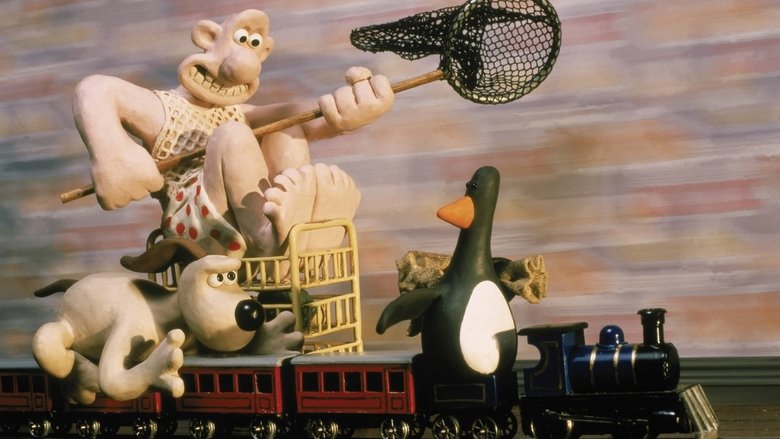
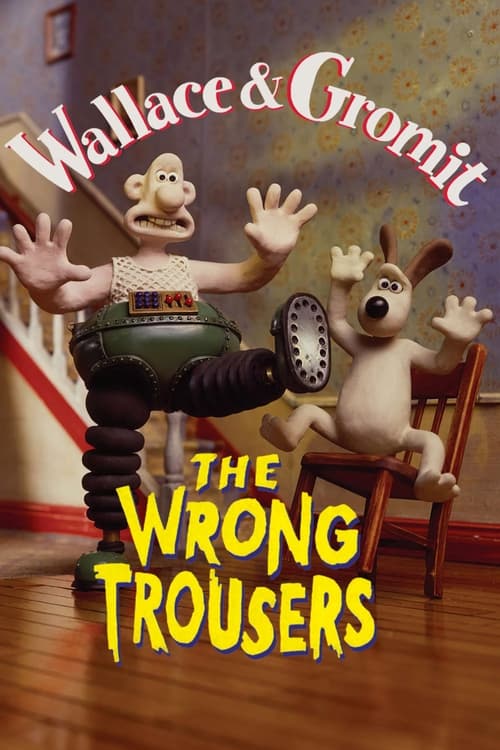
The Wrong Trousers is the second installment in the beloved Wallace & Gromit series, following the duo's debut in A Grand Day Out. In this 30-minute masterpiece, the eccentric, cheese-loving inventor Wallace finds himself in financial straits, leading him to take in a mysterious penguin lodger named Feathers McGraw. To celebrate Gromit's birthday, Wallace gifts his loyal dog a pair of ex-NASA "Techno-Trousers" designed to automate his daily walks, but the gift quickly becomes a source of tension.
The film shifts from a domestic comedy into a high-stakes thriller as the penguin reveals himself to be a master criminal. Feathers McGraw hijacks Wallace's inventions for his own nefarious purposes, culminating in a legendary heist and one of the most celebrated action sequences in animation history. Through its meticulous stop-motion craft, the film balances absurdist humor with genuine cinematic tension, portraying the displacement of a loyal pet by a manipulative intruder.
Core Meaning
At its heart, The Wrong Trousers explores the fragility of domestic harmony and the triumph of unspoken loyalty. Nick Park uses the characters to comment on how technology and external influences can disrupt the most intimate of bonds. Wallace represents a naive optimism that often blinds him to the emotional needs of those closest to him, while Gromit embodies the silent, stoic intelligence required to navigate a world gone wrong. The film suggests that while technology (the trousers) can provide convenience, it lacks the soul and moral compass of true companionship. Ultimately, the story is a celebration of the unique partnership between a man and his dog, proving that no machine can replace the protective instinct of a friend.
Thematic DNA
Loyalty and Displacement
The core of the film is Gromit's emotional journey as he is pushed out of his own home by Feathers McGraw. It highlights the expressive silence of a loyal friend compared to the cold, calculated silence of a manipulator. The tension is revealed through Gromit's increasing sadness and final decision to leave, emphasizing that loyalty must be nurtured and recognized to survive.
The Danger of Technological Over-Reliance
The "Techno-Trousers" serve as a cautionary tale about inventions that seek to automate human (or canine) experiences. By replacing the "walkie" with a machine, Wallace unknowingly creates the tool for his own kidnapping, showing how technology can easily be turned into a cage when stripped of its original intent.
Naive Optimism vs. Sinister Ambition
Wallace’s boundless trust in his lodger is contrasted sharply with Feathers McGraw's psychopathic focus. This theme is revealed through the dramatic irony of Wallace's oblivious kindness while the penguin meticulously plans a heist right under his nose.
Financial Desperation and Class
The plot is set in motion by the "mountain of bills" Wallace faces. His decision to rent out Gromit's room is a practical response to economic pressure, adding a layer of grounded, relatable stakes to an otherwise fantastical plasticine world.
Character Analysis
Wallace
Peter Sallis
Motivation
To solve his financial problems and improve his daily life through automation, while maintaining a cheerful, middle-class domesticity.
Character Arc
Wallace begins as an oblivious inventor focused on his gadgets and cheese. His arc involves moving from a state of total naivety and neglect of Gromit to a realization of his mistake and a final reconciliation with his dog.
Gromit
null
Motivation
To protect Wallace and preserve the integrity and safety of their shared household.
Character Arc
Gromit transitions from the under-appreciated guardian to an outcast, then a detective, and finally the savior. He finds the courage to fight back against the intruder who stole his place in the home.
Feathers McGraw
null
Motivation
Purely criminal; he seeks to use Wallace's technical genius to steal the Blue Diamond and enrich himself.
Character Arc
Feathers has a flat, menacing arc. He remains a calculating, emotionless force throughout the film, only losing his composure when his plan is physically thwarted during the train chase.
Symbols & Motifs
The Techno-Trousers
Symbolize loss of agency and control. Initially a tool for liberation (automated walks), they become a literal and metaphorical prison for Wallace, controlled by an outside force.
Used by Feathers McGraw to force Wallace through a heist, turning a domestic invention into a weapon of crime.
The Red Rubber Glove
Symbolizes identity and the absurdity of perception. It represents the "thin disguise" that succeeds only because of the world's (specifically Wallace's) gullibility.
Feathers McGraw wears it on his head to disguise himself as a "chicken," effectively evading the law until Gromit unmasks him.
The Model Train Set
Symbolizes childhood wonder transformed into adult heroism. The domestic toy becomes the stage for an epic battle, representing the characters' ability to find extraordinary solutions in their ordinary environment.
The setting for the film's climax, where the toy tracks are laid down in real-time during a high-speed chase.
The Diamond
A classic MacGuffin representing greed and the cold, unfeeling nature of the antagonist.
The target of the penguin's heist, housed in the city museum.
Memorable Quotes
Cracking toast, Gromit!
— Wallace
Context:
Said during breakfast at the start of the film, establishing the initial domestic equilibrium.
Meaning:
A quintessentially British exclamation that reinforces Wallace's simple pleasures and domestic focus despite the mounting chaos.
They're techno-trousers, ex-NASA, fantastic for walkies!
— Wallace
Context:
When Wallace presents the trousers to a skeptical Gromit as a birthday gift.
Meaning:
Highlights Wallace's fascination with gadgetry and his failure to understand Gromit's real needs, setting the plot in motion.
It's the wrong trousers Gromit, and they've gone wrong!
— Wallace
Context:
Said when the trousers malfunction (due to the penguin's tampering) and take Wallace on a forced, high-speed march.
Meaning:
The film's titular line, summarizing the central conflict where technology becomes a liability.
Now it looks like you're owned.
— Wallace
Context:
Said when giving Gromit his birthday collar, much to Gromit's silent dismay.
Meaning:
Reflects Wallace's lack of social awareness; he views the dog's autonomy as something to be managed rather than respected.
Philosophical Questions
Can silence be more communicative than speech?
The film poses this through Gromit and Feathers McGraw, both of whom never speak. Their emotions and intentions are conveyed entirely through micro-expressions and movement, challenging the audience to look deeper than verbal language.
Is technology an extension of human will or a replacement for it?
By showing how Wallace is literally carried away by his invention, the film asks whether our tools eventually come to command us, especially when we prioritize efficiency over connection.
Does naivety excuse negligence?
Wallace is a 'good' man, but his lack of awareness causes real pain to Gromit. The film explores the moral responsibility we have to be observant of our loved ones' well-being.
Alternative Interpretations
One common alternative reading is as a critique of the industrialization of the domestic sphere, where the Techno-Trousers represent the intrusion of labor-saving devices that actually complicate life and erode personal relationships. Critics have also noted a Queer coding interpretation in the domestic jealousy between Gromit and the penguin, viewing the conflict as a battle for Wallace's primary affection. Another perspective frames the film as a post-modern Noir, using the tropes of Alfred Hitchcock and film noir to elevate a simple children's story into a sophisticated exploration of psychological manipulation and urban dread.
Cultural Impact
The Wrong Trousers is a cultural landmark in British cinema, often cited as one of the greatest short films ever made. It won the 1994 Academy Award for Best Animated Short Film and solidified Aardman Animations as a global powerhouse. Its influence on the medium of stop-motion is profound, demonstrating that claymation could achieve the technical complexity and emotional weight of live-action blockbusters. The character of Feathers McGraw has become an iconic villain in pop culture, recognized for his minimalist design and terrifying silence. The film also inspired the annual 'Wrong Trousers Day' charity event in the UK, which raises funds for children's hospitals. It remains a staple of holiday television and a masterclass in visual storytelling taught in film schools worldwide.
Audience Reception
The film was met with universal acclaim upon release and holds a rare 100% rating on Rotten Tomatoes. Audiences were particularly captivated by the expressiveness of Gromit, finding his silent plight deeply moving. The climax on the model train set is frequently voted as one of the best action scenes in history, praised for its pacing and inventive use of physical space. Some viewers found the penguin genuinely frightening as children, a testament to the effective 'psychopathic' character design. The overall verdict is that it is a perfect film—balancing wit, heart, and technical brilliance without a wasted frame.
Interesting Facts
- Feathers McGraw was originally conceived as a nephew or a simple lodger before director Nick Park decided to make him a villain.
- The legendary train chase sequence took months to animate and is considered a benchmark for stop-motion action.
- The film's plot and heist style were loosely inspired by the 1964 film 'Topkapi'.
- A massive fire at the Aardman warehouse in 2005 destroyed many of the original sets and models from the film.
- Nick Park and his team used cinematic lighting techniques normally reserved for live-action noir thrillers to create the penguin's menacing atmosphere.
- Peter Sallis, the voice of Wallace, said this was his favorite of all the Wallace & Gromit films.
- The production took 13 months, a significant acceleration compared to the seven years it took for 'A Grand Day Out'.
Easter Eggs
Moon Cheese Shares Soar!
The headline on Gromit's newspaper is a direct reference to the previous film, A Grand Day Out, where they traveled to the moon to find cheese.
The Dog Food Box
When Gromit spies on the penguin from a box, he cuts out the eyes of the dog printed on the box, creating a hilarious visual pun where his real eyes replace the cartoon ones.
Hammond Radio
The radio station the penguin listens to is a nod to the sound and music style used in the film, particularly the use of the organ.
⚠️ Spoiler Analysis
Click to reveal detailed analysis with spoilers
Frequently Asked Questions
Explore More About This Movie
Dive deeper into specific aspects of the movie with our detailed analysis pages
Comments (0)
No comments yet. Be the first to share your thoughts!