Skip to content
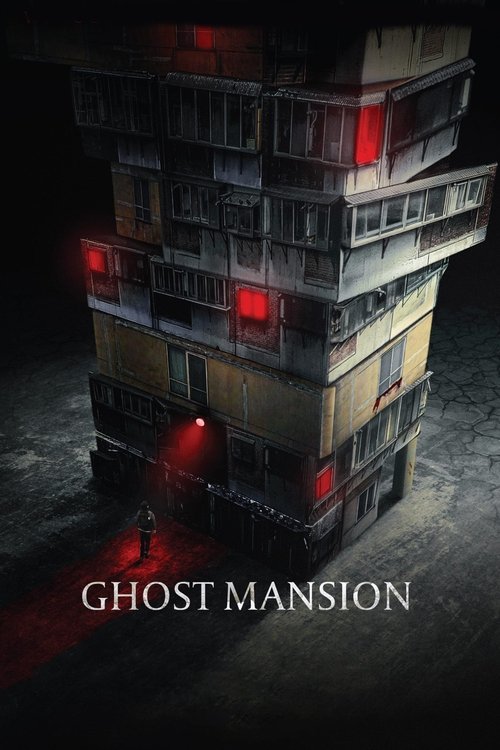
Ghost Mansion
A suffocating descent into architectural madness where everyday domestic claustrophobia metastasizes into cosmic rot, peeling back cracked wallpaper to reveal the parasitic horrors nestled within modern urban isolation.
Ghost Mansion

Ghost Mansion

괴기맨숀

"Welcome to the haunted mansion."

30 June 2021 South Korea 107 min 7.2 (258)

Director: Jo Ba-reun

Cast: Sung Joon, Kim Hong-pa, Kim Bo-ra, Lee Chang-hoon, Park So-jin

Thriller Horror Urban Isolation & Neighborhood Estrangement Parasitic Ambition & Commercialization of Tragedy Rot, Guilt, and Physical Contamination The Inescapable Cycle of Cursed Spaces

Overview

Ghost Mansion (괴기맨숀, 2021) is a South Korean horror anthology written and directed by Jo Ba-reun. The story centers on Ji-woo (Sung Joon), a struggling horror webtoon artist desperate to rebound after the dismal failure of his debut project. Chasing urban legends for creative inspiration, he visits Gwanglim Mansion (광림맨숀), a decrepit, near-abandoned apartment complex on the fringes of Seoul that is steeped in unsettling rumors of fires, disappearances, and occult tragedy.

Upon arrival, Ji-woo meets the enigmatic, weathered caretaker of the complex (Kim Hong-pa), who agrees to recount the sinister histories tied to various apartment units. The caretaker begins sharing vignettes revolving around former tenants: a novelist in Room 504 disturbed by phantom children beneath his floor, a pharmacist in Room 907 embroiled in an illicit romance with an elusive lover, a reclusive real estate broker in Room 708 cohabiting with an unsettling mannequin, and a returning exchange student visiting an old classmate whose flat is consumed by toxic mold.

With each chapter, Ji-woo converts the caretaker’s chilling testimonies into viral webtoon episodes. However, as his professional ambition morphs into an uncontrollable obsession, Ji-woo is gradually lured into the building’s insidious architecture, unaware that uncovering the origin of Gwanglim Mansion comes at an inescapable personal cost.
Core Meaning

Director Jo Ba-reun uses the framework of urban horror to critique modern Korean social alienation, predatory real estate, and consumerist ambition. In South Korea, apartment complexes represent standard urban living, status, and community; however, in Ghost Mansion, the building is repurposed into an antisocial labyrinth where neighbors exist in mutual resentment, secrecy, and emotional detachment.

The overarching message explores how unchecked obsession and creative parasitism blind individuals to real-world dangers. Ji-woo treats human tragedies and supernatural suffering purely as commodities for content creation. The film posits that when humans exploit misery for personal gain or isolate themselves behind locked apartment doors, they become spiritually consumed by the very structures they inhabit.

Thematic DNA

Urban Isolation & Neighborhood Estrangement 30%
Parasitic Ambition & Commercialization of Tragedy 25%
Rot, Guilt, and Physical Contamination 25%
The Inescapable Cycle of Cursed Spaces 20%

Urban Isolation & Neighborhood Estrangement

Revealed through characters living in high-density housing who remain completely disconnected, suspicious, or hostile toward their neighbors, spotlighting inter-floor noise disputes, illicit affairs, and hidden eccentricities.

Parasitic Ambition & Commercialization of Tragedy

Illustrated by Ji-woo's willingness to harvest real human misery, trauma, and cursed lore to advance his webtoon career, showing how modern media creators feed on real-life horrors.

Rot, Guilt, and Physical Contamination

Explored through visceral body horror—especially the spreading mold and decaying domestic spaces—symbolizing moral decay, deceit, lethargy, and lingering guilt.

The Inescapable Cycle of Cursed Spaces

Manifested in the mansion itself acting as a sentient, predatory trap where victims do not merely die, but are perpetually bound to maintain the supernatural ouroboros.

Character Analysis

Ji-woo (지우)

Sung Joon (성준)

Archetype: The Ambitious Seeker / Tragic Antihero Key Trait: Driven, skeptical, opportunistic

Motivation

Revitalizing his failing horror webtoon career at any cost.

Character Arc

Begins as a frustrated creator seeking inspiration for his failing comic; descends into obsessive curiosity as he pursues the mansion's dark secrets, ultimately becoming consumed by the building.

The Caretaker (관리인)

Kim Hong-pa (김홍파)

Archetype: The Gatekeeper / Deceptive Mentor Key Trait: Unflappable, cryptic, chillingly calm

Motivation

Passing on the mansion's curse and securing his own release or perpetuation.

Character Arc

Appears initially as a benign, weary narrator sharing urban legends, but is gradually revealed as a sinister custodian seeking a replacement to escape his eternal curse.

All 5 characters and cast

Symbols & Motifs

Mold / Fungus (곰팡이)

Meaning:

Symbolizes moral decay, poverty, social withdrawal, and an encroaching contagion that cannot be scrubbed away, literally and figuratively digesting those who surrender to neglect.

Context:

Featured centrally in the Room 604 vignette, covering the entire apartment, infesting the resident's food, and manifesting as oozing bodily pustules.

The Caretaker's Keys (열쇠)

Meaning:

Represent false authority, access to forbidden knowledge, and the ultimate entrapment of the building's custodian.

Context:

Used by the Caretaker to unlock different units and ultimately handed to Ji-woo to grant him access to Room 1504.

Children's Abandoned Shoes (아이들의 신발)

Meaning:

Represent unresolved trauma and the tragic historical fire of the former orphanage, serving as omens of phantom intrusion.

Context:

Discovered inside the writer's flat in Room 504 before he is confronted by the charred apparitions of deceased children.

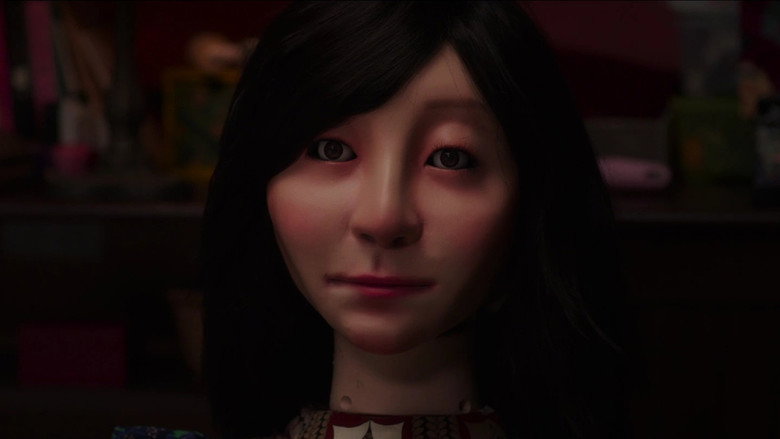
The Mannequin / Silicone Doll

Meaning:

Symbolizes extreme loneliness, objectification, and the grotesque substitution of authentic human connection with artificial intimacy.

Context:

Kept by the corrupt real estate broker in Room 708 before it becomes supernaturally animated by a malevolent force.

The Intercom and Doorbell

Meaning:

Represent the porous boundary between private domestic safety and the intrusion of the supernatural or repressed guilt.

Context:

Used throughout multiple chapters to signal unwanted outside disruptions, visitors, and eerie warnings.

Memorable Quotes

여기 광림맨숀에서는… 정말 기이한 일들이 많았지.
— The Caretaker (Kim Hong-pa)

Context

Spoken by the caretaker during his initial conversations with Ji-woo in the management office.

Meaning

Sets the anthology's framing premise, hooking Ji-woo and the audience into the dark lore of the apartment complex.

자기야, 나 여기서 샤워하고 있는 거 아무한테도 말하면 안 돼!
— Ho-jun (Lee Dong-ha)

Context

Uttered repeatedly from behind the closed bathroom door in Room 907 to Sun-hwa.

Meaning

Builds escalating tension and dread before the protagonist realizes that her lover is dead and a demonic entity is mimicking him.

All 4 quotes

Philosophical Questions

Where is the boundary between creative inspiration and unethical exploitation?

Explored through Ji-woo's willingness to profit from real-world human suffering and fatal tragedies without showing empathy toward the victims he depicts in his webtoon.

Does physical proximity in modern cities destroy genuine human connection?

Examined through the irony of high-density apartment living, where hundreds of residents live separated only by thin concrete walls yet remain alienated, hostile, and utterly alone.

Is evil self-generated by personal guilt, or does it exist as an external trap?

Contrasted between the external malevolence of the building's cult curse and the personal moral compromises made by individual tenants.

Alternative Interpretations

The narrative can be interpreted through multiple analytical lenses:

Full ending explanation

Cultural Impact

Ghost Mansion reflects the immense cultural footprint of the Korean webtoon industry, meta-textually integrating digital comics creation directly into the plot structure, which later spawned its own official tie-in webtoon release in 2022.

Additionally, the film capitalizes on widespread South Korean urban anxieties, specifically inter-floor noise conflicts (층간소음, cheonganso-eum) in dense residential towers, as well as recurring public trauma regarding secretive apocalyptic cults.

Audience Reception

Critical and horror fan reception was largely positive, praising the film's claustrophobic atmospheric dread, clever interconnected anthology format, practical special effects, and relatable domestic settings. The skin-crawling mold sequence in Room 604 was widely singled out as a highlight.

Minor criticisms focused on occasional reliance on standard horror tropes and abrupt chapter conclusions, reflecting its original structure as an episodic web series. Overall, it was regarded as a stylish, effective indie horror anthology.

Interesting Facts

  • The film was originally conceived and produced as an 8-part episodic web/TV series titled Ghost Mansion: The Original before being re-edited into a 106-minute theatrical feature.
  • Corridors and exterior scenes were filmed at the historic Hoehyeon Second Citizen Apartments near Namsan, Seoul, a famous retro 1970 apartment building known for its labyrinthine design.
  • Ghost Mansion served as lead actor Sung Joon’s major acting comeback project following his discharge from mandatory military service.
  • Prior to this production, director Jo Ba-reun was recognized for indie action titles like Slate; Ghost Mansion marked his debut horror feature.
  • The extended 8-episode streaming version includes cut stories not present in the theatrical cut, such as Room 408 (the high school student) and Room 1014 (the ballerina and musician).

Easter Eggs

Junji Ito Body Horror Tribute

The mold segment in Room 604 directly pays stylistic homage to master horror mangaka Junji Ito’s iconic stories (specifically Mold and Uzumaki), featuring fungal consumption and oozing pustules.

Girl's Day Idol Casting

Park So-jin, who plays the tragic pharmacist Sun-hwa in Room 907, is widely recognized as a lead vocalist of the prominent K-pop girl group Girl's Day.

Accident Property Superstition

The narrative directly references the real-world Korean real estate stigma surrounding accident properties (사고물건), where stigmatized units tied to deaths are leased at steep discounts.

James Wan Architectural Pacing

The director cited James Wan's atmospheric jump-scare timing and domestic architectural framing as a major structural inspiration for the anthology chapters.

Frequently Asked Questions

Explore More About This Movie

Dive deeper into specific aspects of the movie with our detailed analysis pages

Comments (0)

Leave a comment

No comments yet. Be the first to share your thoughts!

Similar Movies