Skip to content
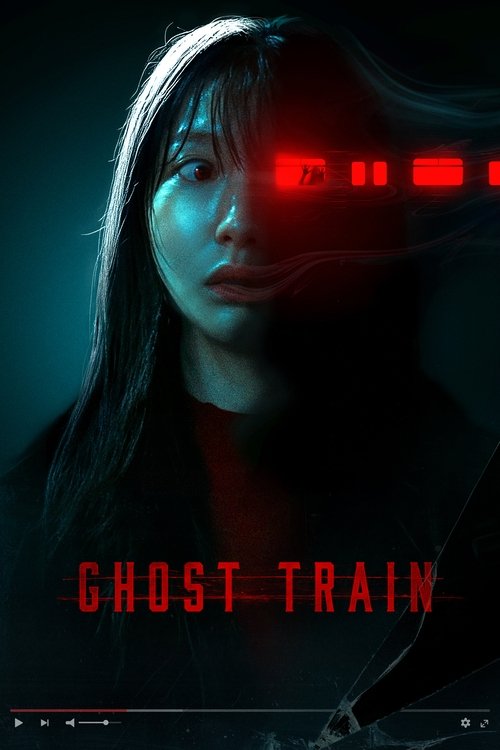
Ghost Train
A suffocating psychological mystery wrapped in fluorescent subway dread, capturing the hollow terror of viral obsession as a desperate streamer trades her humanity for views down an endless, subterranean track into oblivion.
Ghost Train

Ghost Train

괴기열차

"Do you believe the rumors?"

09 July 2025 South Korea 95 min 7.4 (138)

Director: Tak Se-woong

Cast: Joo Hyun-young, Jeon Bae-soo, Choi Bo-min, Kim Ji-in, Kim Woo-kyum

Mystery Horror The Parasitic Nature of the Attention Economy & Clout Urban Alienation and Modern Disconnection Societal Anxieties: Lookism, Poverty, & Hyper-Competition Liminal Purgatory and Moral Retribution
Box Office: $556,319

Overview

Ghost Train (Goegiyeolcha) is a 2025 South Korean supernatural mystery horror film directed by Tak Se-woong and written by Jo Ba-reun. The story centers on Da-kyung, an ambitious yet struggling content creator working for a multi-channel YouTube production agency. Facing plummeting viewership numbers and pressure from hyper-successful rival creators, Da-kyung desperately seeks an authentic, bone-chilling horror story to revive her dying channel.

Her investigation brings her to Gwanglim Station, an eerie commuter transit hub plagued by an unusually high number of unexplained disappearances and urban legends. There, she gains access to the secluded office of the mysterious, weary Stationmaster. In exchange for expensive bottles of traditional liquor, the stationmaster recounts a sequence of bizarre, localized urban horrors involving commuters, transient dwellers, and students who vanished into the station's dark periphery.

Accompanied by her supportive producer Woo-jin, Da-kyung adapts each grotesque testimony into video episodes. As the videos go viral and her subscriber count explodes, Da-kyung becomes ensnared in a spiral of morbid curiosity and algorithmic greed, failing to realize that each tale pulls her deeper into the station's supernatural trap.


Core Meaning

Director Tak Se-woong uses the framework of modern Korean urban legends (goedam) to critique the attention economy and the alienating nature of modern city life.

The central thesis of the film is that contemporary digital society fosters an insatiable appetite for spectacle, causing individuals to commodify real human suffering in exchange for ephemeral validation such as clicks, subscribers, and clout. By setting the horror in a subway station—a mundane, liminal space where millions of isolated commuters pass by one another with eyes glued to screens—the film emphasizes how modern disconnection and algorithmic obsession render individuals oblivious to spiritual rot and moral peril.

Thematic DNA

The Parasitic Nature of the Attention Economy & Clout 35%
Urban Alienation and Modern Disconnection 25%
Societal Anxieties: Lookism, Poverty, & Hyper-Competition 20%
Liminal Purgatory and Moral Retribution 20%

The Parasitic Nature of the Attention Economy & Clout

Explored through Da-kyung's moral degeneration as she disregards victim warnings and basic human empathy solely to satisfy audience metrics and online engagement.

Urban Alienation and Modern Disconnection

Revealed through commuters wearing earbuds and staring at mobile screens, remaining completely detached from the strange and horrific anomalies occurring right beside them.

Societal Anxieties: Lookism, Poverty, & Hyper-Competition

Expressed through distinct Korean socio-cultural pressures across the anthology segments, including cosmetic surgery obsession, extreme job-hunting stress (gosi culture), and economic despair.

Liminal Purgatory and Moral Retribution

Manifested through the subway station functioning as a modern purgatory where selfish behaviors and unresolved guilt transform into inescapable karmic traps.

Character Analysis

Da-kyung

Joo Hyun-young

Archetype: Tragic Antihero / Clout-Chaser Key Trait: Uncompromising ambition

Motivation

To regain viral fame, boost viewership numbers, and achieve channel monetization.

Character Arc

Starts as an ambitious creator under severe professional pressure, but devolves into an obsessive, reckless figure who ignores all danger, ultimately becoming the subject of the final urban legend.

The Stationmaster

Jeon Bae-soo

Archetype: Ominous Herald / Charon Figure Key Trait: Enigmatic composure

Motivation

To lure willing, self-absorbed souls into the supernatural fold and feed the cursed transit line.

Character Arc

Presents himself initially as a tired, passive observer trading urban gossip for liquor, but gradually reveals his true role as the deceptive conduit delivering greedy souls to the cursed train.

All 4 characters and cast

Symbols & Motifs

The Liminal Subway Station (Gwanglim Station)

Meaning:

Symbolizes the transitional, anonymous purgatory of urban life—a non-place designed solely for passing through where lingering invites spiritual stagnation.

Context:

Serves as the central setting and framing location where victims encounter supernatural phenomena and disappear.

The Red Coin & Cursed Vending Machine

Meaning:

Represents predatory capitalist greed and the loss of humanity driven by poverty and temptation.

Context:

Used in a vignette where a homeless man uses supernatural coins to consume people and claim their belongings.

The Bandaged Face / Plastic Surgery Ad

Meaning:

Symbolizes extreme lookism and the violent, destructive pursuit of societal beauty standards.

Context:

Featured in the cosmetic surgery stalker vignette where pursuit of physical vanity leads to horrific physical and spiritual decay.

The Train Handrail / Corrosive Fluid

Meaning:

Represents the invisible toxicity, disease, and contamination inherent in forced physical proximity among alienated urban commuters.

Context:

Encountered by subway passengers as a toxic fluid transmitting visceral body horror inside crowded train cars.

The 3:34 AM Ghost Train (Destination: Unlisted)

Meaning:

A visual metaphor for the irreversible point of no return and the final vehicle of karmic damnation.

Context:

Appears at the climax as the ultimate phantom train arriving late at night to transport doomed souls into oblivion.

Memorable Quotes

소문을 믿으십니까?
— The Stationmaster

Context

Spoken during the early interview sequences inside the darkened station office.

Meaning

Sets the psychological threshold; once a subject acknowledges belief in the station's legends, they become vulnerable to its haunting.

조회수 터지면 그게 진짜든 가짜든 무슨 상관이야?
— Da-kyung

Context

Uttered while arguing with Woo-jin when he raises ethical and safety concerns regarding their video stories.

Meaning

Encapsulates Da-kyung's moral devolution and the broader critique of an exploitative digital content economy.

All 3 quotes

Philosophical Questions

At what point does reporting on horror become complicity?

Explored through Da-kyung profiting from real trauma and ignoring victim warnings for online traffic, probing the boundary between ethical storytelling and exploitation.

Does hyper-connectivity breed ultimate isolation?

Examined in crowded subway carriages where digital absorption leads to profound human indifference, creating an environment ripe for predatory horrors.

Is ambition without ethical limits a modern curse?

Investigated by demonstrating how individuals are ultimately driven to destruction not purely by external monsters, but by their unchecked internal craving for validation.

Alternative Interpretations

The film invites multiple thematic interpretations:

Full ending explanation

Cultural Impact

Ghost Train reflects contemporary South Korean social phenomena, specifically the hyper-competitive multi-channel network (MCN) streaming industry, algorithmic dopamine loops, intense educational and job-hunting pressure (chwijunsaeng struggles), and the isolating routine of Seoul's sprawling transit network.

Released theatrically on July 9, 2025, the film topped opening day charts among domestic releases in its bracket, exceeded 105,000 admissions in South Korea, and secured distribution sales across Asia, North America, and Europe.

Audience Reception

Critical and audience reception highlights several core aspects:

  • Praise: Critics and viewers widely commended Joo Hyun-young's transformative, committed performance stepping away from variety comedy into grim genre acting. The biting social commentary in segments like the vending machine and plastic surgery vignettes received praise alongside the claustrophobic sound design and authentic subway visual dread.
  • Criticism: Reviewers noted variable quality across the omnibus segments, citing a reliance on conventional jump-scare setups and a framing device that closely replicates the Ghost Mansion formula with fewer structural surprises.
  • Verdict: Regarded as a brisk, 95-minute Korean horror anthology that effectively utilizes contemporary social malaise and subway claustrophobia to deliver solid chills.

Interesting Facts

  • Ghost Train was conceived as an omnibus horror project expanding the narrative structure established in director Jo Ba-reun's 2021 film Ghost Mansion (The Grotesque Mansion), shifting the venue from an apartment complex to a subway station.
  • Known prominently for her comedic work on SNL Korea and Extraordinary Attorney Woo, this marked Joo Hyun-young's first leading role in a horror feature film; she consulted real true-crime and mystery YouTubers to mirror authentic presentation mannerisms.
  • Golden Child idol member Choi Bo-min made his theatrical feature debut in the film, earning recognition at the 2024 Asia Artist Awards for his performance.
  • The film had its official world premiere in the 'Midnight Passion' section at the 29th Busan International Film Festival (BIFF) in October 2024 before its wider theatrical release in July 2025.
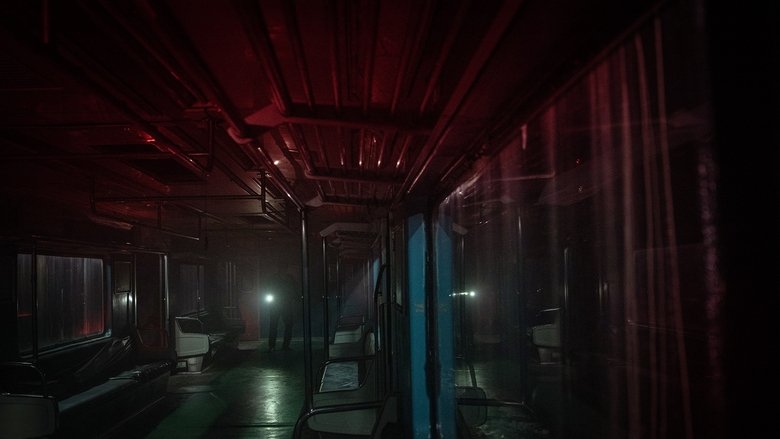
  • To achieve authentic subway claustrophobia, the production utilized real decommissioned and late-night underground rail facilities in South Korea.

Easter Eggs

Connection to Ghost Mansion (괴기맨숀)

The film retains the signature framing format where an ambitious creator (a webtoon artist in the 2021 film, a YouTuber in the 2025 film) visits an aging building or station manager, exchanges gifts, and listens to discrete episodic horror tales.

Homage to Classic Urban Legend Horror

The 3:34 AM phantom train draws inspiration from real-world East Asian urban legends such as Japan's Kisaragi Station and Seoul Subway myths regarding ghost stations and after-hours phantom trains.

K-Horror Visual Echoes

Visual moments such as the uncanny head-banging woman in the train window and the bandaged stalking figure evoke Korean horror touchstones like Whispering Corridors and Cello.

Frequently Asked Questions

Explore More About This Movie

Dive deeper into specific aspects of the movie with our detailed analysis pages

Comments (0)

Leave a comment

No comments yet. Be the first to share your thoughts!

Similar Movies