
Skip to content
Girl Meets World
A heartfelt coming-of-age family dramedy steeped in gentle nostalgia and adolescent vulnerability, framing youth as a sunlit bay window overlooking a bustling city subway train hurtling toward the unknown.
Girl Meets World

Girl Meets World

27 June 2014 — 20 January 2017 United States of America 3 season 71 episode Canceled 8.3 (721)

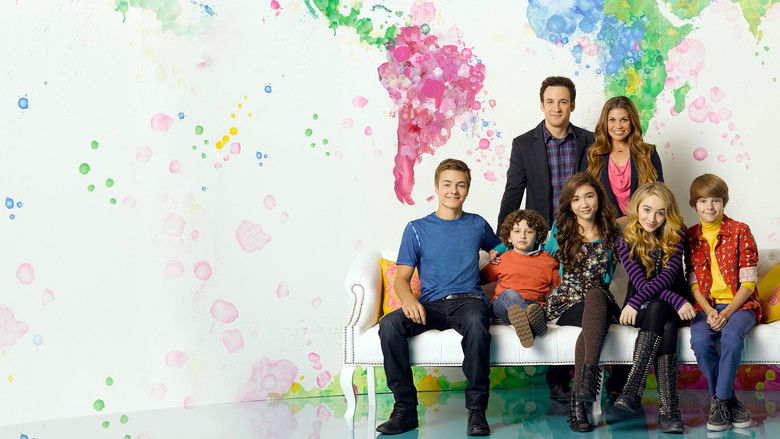
Cast: Rowan Blanchard, Sabrina Carpenter, Peyton Meyer, Corey Fogelmanis, August Maturo

Family Comedy The Transformative Power of Friendship ("People Change People") Growth and Identity Formation Family Stability vs. Brokenness and Forgiveness Tradition, Mentorship, and Intergenerational Wisdom

Overview

Girl Meets World follows Riley Matthews, the bright-eyed, sheltered daughter of Cory and Topanga Matthews, as she navigates the emotional complexities of adolescence in New York City alongside her fiercely loyal best friend, Maya Hart. While Riley comes from an affectionate, stable home, Maya struggles with family abandonment, creating a dynamic where each girl acts as the other's emotional anchor and moral compass. Together with classmates Lucas Friar, Farkle Minkus, and later Isadora Smackle and Zay Babineaux, they step out of the domestic sanctuary of middle school and into the broader social canvas of high school.

At the center of their educational and moral journey is Cory Matthews, who serves as both Riley’s father and her history teacher. Cory structures his history curriculum around foundational life lessons, encouraging his students to look beyond academic facts and engage with empathy, community, and personal responsibility. Over the course of three seasons, the ensemble confronts shifting social circles, academic challenges, the pangs of first love, the pain of growing apart, and the realization that identity is continuously constructed through relationships.

Rather than relying on high-stakes drama, the narrative arc tracks the steady transition of innocence into self-awareness. The series explores how childhood ideals hold up when confronted with harsh social realities, culminating in a celebration of chosen family and the resilience of deep-seated human connections as the characters step forward into a wider world.


Core Meaning

The fundamental message of Girl Meets World is summarized in its central philosophical maxim: "People change people." The show posits that personal growth does not occur in isolation, but through empathy, active listening, and the reciprocal impact humans have on one another.

The creators convey that "meeting the world" is not about passively inheriting external circumstances, but actively shaping oneself through kindness, social consciousness, forgiveness, and moral courage. The series argues that true maturity lies in embracing change without losing one’s foundational moral core, emphasizing that love and friendship provide the stability required to navigate life's inevitable uncertainties.

Thematic DNA

The Transformative Power of Friendship ("People Change People") 30%
Growth and Identity Formation 30%
Family Stability vs. Brokenness and Forgiveness 20%
Tradition, Mentorship, and Intergenerational Wisdom 20%

The Transformative Power of Friendship ("People Change People")

Friendship is the primary catalyst for character transformation throughout all three seasons. Riley's sunny optimism softens Maya's defensive cynicism, while Maya's edge gives Riley the courage to stand on her own feet. Farkle transitions from an eccentric caricature into a sensitive, deeply loyal young man due to the acceptance of his peers, while Lucas lets go of his aggressive past to embrace vulnerability. The show continually demonstrates that genuine connection makes individuals better versions of themselves.

Growth and Identity Formation

Spanning middle school to high school, the series details the painful friction between who a person was taught to be and who they choose to become. Characters constantly wrestle with labels: Farkle grapples with his identity and potential neurodiversity (Girl Meets Farkle), Maya struggles with whether she is losing her unique identity by adopting Riley's persona (Girl Meets Maya), and Riley learns that optimism requires active resilience rather than naive denial.

Family Stability vs. Brokenness and Forgiveness

A central narrative contrast exists between the warm, stable Matthews household and Maya’s fractured home life with her single mother Katy, haunted by her absent father Kermit. As the seasons progress, the Matthews family opens their home to Maya, culminating in Shawn Hunter stepping into Maya's life as a father figure, demonstrating that family can be chosen and repaired through vulnerability and forgiveness (Girl Meets The Forgiveness Project).

Tradition, Mentorship, and Intergenerational Wisdom

Inheriting the legacy of Boy Meets World, the series highlights how adult guidance shapes youth. Cory steps into the mentor archetype previously embodied by Mr. Feeny, translating historical events into practical ethical philosophies. The series frequently bridges generational divides, showing that adults are still growing alongside the children they guide.

Character Analysis

Riley Matthews

Rowan Blanchard

Archetype: The Idealistic Hero / Seeker Key Trait: Compassionate optimism

Motivation

Initially seeks acceptance and simple happiness; evolves into actively working to protect and elevate those around her, even at personal emotional cost.

Character Arc

Begins as an innocent, naive middle schooler sheltered by loving parents; over three seasons, learns to confront conflict, navigate heartbreak, and develop emotional autonomy while preserving her empathetic nature.

Maya Hart

Sabrina Carpenter

Archetype: The Rebel / Protector Key Trait: Fierce resilience

Motivation

Driven by survival and emotional self-defense; matures into pursuing authentic identity and embracing belonging and family.

Character Arc

Starts as a streetwise, defensive outsider guarding against abandonment; gradually softens, embraces artistic self-expression, confronts her father, and accepts Shawn Hunter as an adoptive parent.

All 5 characters and cast

Symbols & Motifs

The Bay Window

Meaning:

Located in Riley’s bedroom, the bay window is the physical and emotional sanctuary for Riley and Maya. It symbolizes childhood security, safe vulnerability, and the preservation of intimacy.

Context:

In Season 2’s Girl Meets the Bay Window, altering the window’s aesthetic serves as a visual metaphor for the inevitable, frightening transition toward adulthood.

The Subway Train

Meaning:

The subway represents independence, the chaotic modern world, and the journey away from parental protection.

Context:

Introduced in the pilot episode, stepping onto the New York City subway is the recurring visual motif of taking ownership of one’s life.

"Belgium 1831" Chalkboard Writing

Meaning:

This historical date (when Belgium declared independence from the Netherlands) symbolizes separation, finding one's individual voice, and knowing when to let go or stay together.

Context:

Written repeatedly by Cory on his classroom chalkboard throughout the series, and erased in the series finale (Girl Meets Goodbye).

Topanga’s Bakery / The Cafe

Meaning:

A communal hub where generation gaps dissolve, acting as a grounded neighborhood anchor.

Context:

Used as a gathering place where the teens debrief after school and where adult characters transition into community caretakers.

Maya’s Artwork and Sketchpad

Meaning:

Maya’s hidden talent as an artist symbolizes her authentic interior self, emotional vulnerability, and raw processing of grief and abandonment.

Context:

Appears throughout the series as Maya's primary outlet for emotional expression and self-discovery.

Memorable Quotes

People change people. No matter what I do, no matter what I say, that is what happens.
— Cory Matthews

Context

Season 1, Episode 1 (Girl Meets World / Pilot). Cory introduces the central axiom of the series during a classroom lesson on human interaction and the nature of life.

Meaning

Serves as the overarching thematic foundation of the entire franchise.

Change fills my pockets with pennies of uncertainty.
— Maya Hart

Context

Season 2, Episode 29 (Girl Meets the Bay Window).

Meaning

Captures Maya’s poignant fear of abandonment and the instability she feels when familiar childhood routines change.

All 5 quotes

Episode Highlights

Girl Meets World

S1E1

Establishes the New York setting, the intergenerational bridge from Boy Meets World, Cory’s classroom dynamic, and the core dynamic between Riley and Maya.

Significance:

Sets the foundational thematic question of how a sheltered young girl begins to engage with society.

Girl Meets Friendship

S1E13

Cory asks the class to run an experiment to see what holds communities together, challenging the friendships within the core group.

Significance:

Solidifies the ensemble dynamic among Riley, Maya, Lucas, and Farkle as a united collective.

Girl Meets Texas (Parts 1–3)

S2E20

The group travels to Texas for a rodeo, triggering the realization of Maya’s buried romantic feelings for Lucas and sparking a multi-episode love triangle.

Significance:

Challenges Riley and Maya's unconditional friendship with real emotional stakes and shifts the narrative into more mature adolescent drama.

Girl Meets The Forgiveness Project

S2E23

Maya is challenged to forgive her estranged father, Kermit, exploring the boundaries of forgiveness and emotional boundaries.

Significance:

Represents the series' dramatic peak in exploring trauma, setting up Shawn Hunter’s eventual parental integration into Maya's life.

Girl Meets the Bay Window

S2E29

Riley tries to redecorate the bay window before graduating middle school, prompting intense emotional resistance from Maya.

Significance:

A bottle-episode style exploration of the pain of outgrowing childhood spaces and fear of temporal change.

Girl Meets Legacy

S2E30

The core group completes middle school and reflects on the lasting imprint they leave on their school and each other.

Significance:

Closes the middle school chapter, marking the formal threshold into high school.

Girl Meets High School (Parts 1 & 2)

S3E1

The group enters high school and immediately loses their status, encountering dismissal from upperclassmen.

Significance:

Shatters their middle school complacency, forcing the group to redefine unity and resilience in a larger, less forgiving environment.

Girl Meets Goodbye

S3E21

Topanga receives a major job offer in London, prompting an intergenerational Matthews and Hunter family reunion to discuss the decision.

Significance:

Serves as the series finale, resolving character arcs and reaffirming their bond in New York.

Philosophical Questions

How much of our identity is inherited vs. chosen?

Explored through Maya’s fear of carrying her father's flaws and Farkle's struggle with expectations attached to his family name.

Can a person fundamentally change their nature, or do they merely redirect it?

Addressed via Lucas’s past in Texas and Harley Keiner’s transition from bully to supportive mentor.

What are the ethical limits of empathy?

Explored when Riley's desire to fix everyone around her risks crossing personal boundaries and ignoring difficult realities.

Alternative Interpretations

Different ways to interpret the series include:

Full ending explanation

Cultural Impact

Girl Meets World premiered during an era when 1990s nostalgia was entering mainstream television development. It represented Disney Channel’s deliberate strategy to capture a multi-generational audience: millennial parents who grew up on ABC's TGIF block and Gen-Z children encountering the characters for the first time.

While the first season leaned into traditional Disney Channel slapstick and bright multicamera pacing, subsequent seasons attempted to bridge the gap between youth programming and serious dramedy. The show tackled issues such as online cyberbullying, artistic censorship, socio-economic divides, neurodivergence, and the emotional fallout of broken homes. The series contributed to the career trajectories of Rowan Blanchard as an activist and actress, and Sabrina Carpenter as a pop superstar.

Audience Reception

Audience and critical reception across the run varied by season:

  • Season 1 Reception: Mixed to moderately positive. Praised for nostalgic callbacks, but criticized for heavy-handed moralizing and over-reliance on exaggerated Disney Channel tropes.
  • Season 2 Reception: Widely considered the creative peak. Praised for nuanced storylines (Girl Meets Texas, The Forgiveness Project), strong dramatic performances, and better thematic balance.
  • Season 3 Reception: Divided. Appreciated for exploring high school challenges, but criticized for pacing issues regarding the love triangle and network limitations.
  • Main Praises: The chemistry between Rowan Blanchard and Sabrina Carpenter; Ben Savage and Danielle Fishel’s seamless reprise; emotional maturity in select episodes.
  • Main Criticisms: Constraints imposed by Disney Channel’s family format preventing deeper exploration of teen topics; melodramatic resolution to certain romantic arcs.
  • Cancellation Reaction: Fans launched major campaigns (#SaveGMW) aiming for a transfer to Freeform or Netflix; cancellation in early 2017 was met with widespread disappointment by fans wanting to see high school graduation.

Interesting Facts

  • The series was co-created by Michael Jacobs and April Kelly. While Kelly left production during Boy Meets World Season 1 due to creative differences, she retained co-creator credit and royalties across all 72 episodes of Girl Meets World.
  • Danielle Fishel (Topanga) and Ben Savage (Cory) both directed multiple episodes across the series' run, with Savage directing the iconic Season 3 opening credits sequence referencing the original TGIF format.
  • The series theme song, "Take On the World," was performed by lead stars Rowan Blanchard and Sabrina Carpenter, composed by Matthew Tishler, Maria Christensen, and Shridhar Solanki.
  • The series served as a major launching pad for Sabrina Carpenter's multifaceted music and acting career, filmed concurrently with the release of her early studio albums.
  • Corey Fogelmanis initially auditioned for multiple roles before landing the part of Farkle Minkus, the son of Stuart Minkus (Lee Norris) from the original series.

Easter Eggs

Double Morgan Cameo

In the series finale (Girl Meets Goodbye), both actresses who portrayed Morgan Matthews in the original run—Lily Nicksay (Seasons 1–2) and Lindsay Ridgeway (Seasons 3–7)—reprise the role simultaneously in a meta-humorous scene acknowledging the recast.

Mr. Feeny’s Garden

William Daniels makes poignant guest appearances as George Feeny, offering signature mentorship to Cory and reminding viewers of the unbroken continuum of guidance.

Harley Keiner as School Janitor

Danny McNulty reprises his role as former middle school bully Harley Keiner, who was helped onto the right path by Cory and now works as the middle school custodian, reinforcing the theme that people can change.

Stuart Minkus & Jennifer Bassett

Lee Norris returns as billionaire Stuart Minkus, with his wife revealed to be Jennifer Bassett (Kristanna Loken), Cory and Shawn’s high school classmate from Boy Meets World.

The "Feeny Call"

Will Friedle returns as Uncle Eric Matthews (now a senator) and executes his iconic, theatrical "Fee-fee-fee-feeny!" shout.

Angela Moore & Chet Hunter

Trina McGee reprises her role as Shawn's past love Angela Moore to offer Shawn emotional closure, while Blake Clark appears as Chet Hunter's spirit offering paternal advice.

Frequently Asked Questions

Explore More About This Movie

Dive deeper into specific aspects of the movie with our detailed analysis pages

Comments (0)

Leave a comment

No comments yet. Be the first to share your thoughts!

Similar Movies