
Skip to content
Good Boy
A suffocating psychological thriller draped in domestic quietude, where violent delinquency clashes against forced civility like a leashed wolf pacing inside a pristine, velvet-lined cage.
Good Boy
Good Boy

"Some people only learn the hard way."

06 March 2026 United Kingdom 110 min 7.2 (200)

Director: Jan Komasa

Cast: Stephen Graham, Andrea Riseborough, Anson Boon, Kit Rakusen, Monika Frajczyk

Drama Thriller Mystery Coercive Control and Operant Conditioning vs. Autonomy Toxic Masculinity, Delinquency, and Social Media Alienation Middle-Class Hypocrisy and Performative Morality Grief, Trauma, and Substituted Family Dynamics Stockholm Syndrome and the Cycle of Abuse

Good Boy — Ending Explained

⚠️ Spoiler Analysis

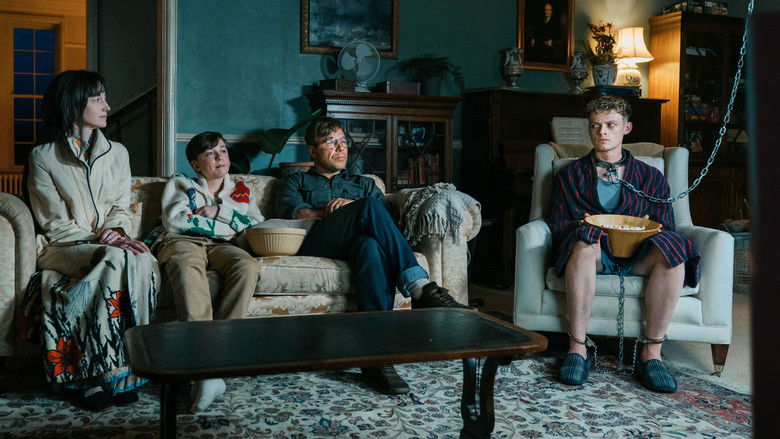
The narrative begins with Tommy’s night of violent outbursts, which he livestreams to social media. After being snatched from the street, he is chained in a basement. Initial resistance brings harsh punishment from Chris, including tasers and isolation.

Realizing that obedience yields privileges, Tommy adapts. He earns access to proper food, books, and eventually freedom to move through the house on an extended ceiling chain. He bonds with the young son Jonathan and shows genuine emotional maturity. However, Tommy secretly plots an escape with housekeeper Rina, who provides him with a padlock combination.

During an escape attempt, a violent struggle occurs. Rather than calling the police or killing him, Chris and Kathryn unexpectedly relent. Recognizing that Tommy has genuinely changed, they unlock his chain and set him free.

The Ending Twist: Tommy returns to his old life, only to find that his mother and former gang friends never bothered to search for him, having quickly moved on. Overwhelmed by the chaotic, empty nature of his former life and suffering from deep psychological conditioning, Tommy voluntarily returns to Chris and Kathryn's estate.

In the final scene, Tommy arrives at the house dragging a new, bound delinquent teen he abducted off the street. Having fully internalized Chris's ideology, Tommy takes on the role of captor and mentor, perpetuating the abusive cycle of re-education.

Alternative Interpretations

The film can be interpreted through several distinct lenses:

  • The Stockholm Syndrome Reading: Tommy is broken by systematic abuse, isolation, and rewards. His eventual compliance and final choices stem from severe psychological trauma and institutionalization rather than true growth.
  • The Genuine Redemption Reading: Tommy's chaotic past was self-destructive and empty. Chris’s strict regimen provided the boundaries, literacy, and stability Tommy lacked, resulting in genuine emotional maturity.
  • The Class & Generational Satire Reading: The film serves as a black comedy about middle-class entitlement. Chris and Kathryn represent an older generation forcibly reshaping unruly youth into quiet, compliant subjects.

Explore More About This Movie

Dive deeper into specific aspects of the movie with our detailed analysis pages

Similar Movies