Skip to content
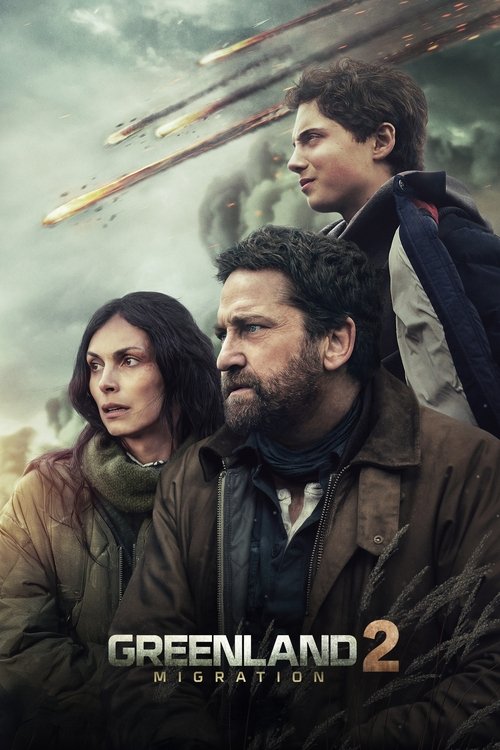
Greenland 2: Migration
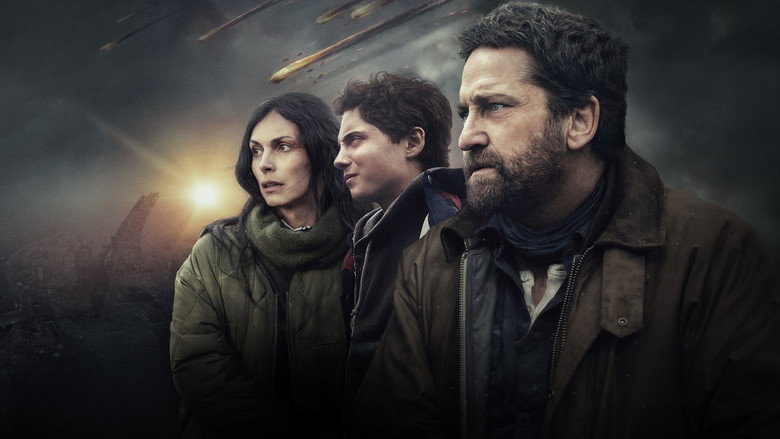
A frozen post-apocalyptic landscape of toxic grey skies and fractured earth framed by enduring familial devotion. Greenland 2: Migration wraps a relentless survival thriller in a bittersweet blanket of parent-child sacrifice.
Greenland 2: Migration

Greenland 2: Migration

"Hope is uncharted territory."

07 January 2026 United Kingdom 98 min 6.4 (1,388)

Director: Ric Roman Waugh

Cast: Gerard Butler, Morena Baccarin, Roman Griffin Davis, Tommie Earl Jenkins, Trond Fausa Aurvåg

Thriller Adventure Science Fiction Intergenerational Sacrifice and Parental Legacy Reclaiming Life vs. Subterranean Stagnation Humanity’s Dual Nature Under Extreme Scarcity Ecological Cataclysm and Planetary Resiliency
Budget: $90,000,000
Box Office: $44,856,736

Overview

Five years after the interstellar comet Clarke obliterated 75% of global life and shattered Earth’s atmosphere, the Garrity family continues to reside in the underground military bunker complex at Thule, Greenland. While the surface remains plagued by tectonic volatility, radioactive fallout, and sudden electromagnetic storms, life inside the subterranean refuge is growing increasingly unsustainable due to dwindling food and medical supplies. John Garrity (Gerard Butler) works as a surface scout and structural engineer, while his wife Allison (Morena Baccarin) serves on the bunker’s governing council, raising their now-teenage son, Nathan (Roman Griffin Davis).

When a violent seismic wave triggers the catastrophic structural failure and flooding of the Greenland bunker, the surviving inhabitants are forced onto the surface. With their home destroyed and Greenland rendered unlivable, the Garritys embark on a perilous trek across a decimated, frozen European continent. Driven by scientific reports of a newly emerging habitable microclimate near the comet’s primary impact crater in southern France, the family must navigate ruined cities, extreme environmental hazards, and desperate human factions to find a permanent home.
Core Meaning

Directed by Ric Roman Waugh, Greenland 2: Migration shifts focus from the immediate panic of global annihilation (explored in the 2020 original) to the prolonged, grueling work of human endurance and intergenerational legacy. The core message centers on what the present generation owes to the future: true survival is not merely staying alive inside an artificial sanctuary, but venturing into the unknown to build a viable world for one's children, regardless of the personal cost.

Thematic DNA

Intergenerational Sacrifice and Parental Legacy 35%
Reclaiming Life vs. Subterranean Stagnation 25%
Humanity’s Dual Nature Under Extreme Scarcity 20%
Ecological Cataclysm and Planetary Resiliency 20%

Intergenerational Sacrifice and Parental Legacy

The narrative focuses on the lengths parents will go to secure a future for their children. John and Allison’s decisions are consistently driven by Nathan’s health and future. John’s willingness to endure fatal radiation exposure highlights the film's message that the older generation must lay the foundation for the next.

Reclaiming Life vs. Subterranean Stagnation

The film contrasts the illusion of safety inside a crumbling bunker with the active pursuit of genuine life on a dangerous surface. Staying hidden leads to slow decay, whereas migrating into the unknown—despite immense risk—offers the only true possibility of renewal.

Humanity’s Dual Nature Under Extreme Scarcity

As the Garritys travel across Europe, they encounter both selfless solidarity and ruthless exploitation. The film explores how crisis strips away social pretense, leaving individuals to choose between predatory self-interest and communal compassion.

Ecological Cataclysm and Planetary Resiliency

Through its portrayal of chaotic post-impact weather and emerging crater ecosystems, the story underscores nature’s indifference to human civilization, while suggesting that planetary destruction can paradoxically initiate environmental rebirth.

Character Analysis

John Garrity

Gerard Butler

Archetype: Sacrificial Hero / Protective Father Key Trait: Pragmatic resilience and steadfast devotion

Motivation

Delivering his family to safe, habitable ground before his deteriorating health catches up with him.

Character Arc

Transitions from maintaining a crumbling shelter to leading his family across post-apocalyptic Europe, ultimately accepting his mortal limits to ensure his son's survival.

Allison Garrity

Morena Baccarin

Archetype: Resilient Leader / Matriarch Key Trait: Empathetic strength and moral clarity

Motivation

Keeping her family united and maintaining their moral integrity amidst widespread hostility.

Character Arc

Moves from administrative leadership within the bunker community to co-navigating the dangerous surface, ultimately stepping up as the sole surviving parent to guide Nathan into the new world.

All 4 characters and cast

Symbols & Motifs

The Clarke Crater (The "New Eden")

Meaning:

Rebirth, hope, and the ironical renewal of nature emerging directly from devastation.

Context:

Mentioned as a scientific hypothesis throughout the journey, the impact crater in southern France serves as the family's ultimate beacon and destination.

The Insulin Pump and Supplies

Meaning:

Human vulnerability and the fragility of life dependent on pre-collapse technology.

Context:

Nathan’s ongoing need for medical management creates immediate narrative urgency, reinforcing the temporal limits of their trek.

Electromagnetic Storms & Ash Rain

Meaning:

The untamed, lingering trauma of the comet event.

Context:

Recurring environmental threats throughout Europe that disrupt electronics, force the characters into cover, and serve as physical obstacles.

Submerged Liverpool Landmarks

Meaning:

The drowning of past human achievement and cultural identity.

Context:

Visually presented during the family's boat passage through flooded urban ruins, reinforcing the total loss of the pre-impact world.

Memorable Quotes

Hope is uncharted territory.
— Tagline / John Garrity

Context

Serves as the film's promotional tagline and core motivational theme uttered during their journey.

Meaning

Encapsulates the film's core motif—that moving forward into a dangerous, ruined world requires stepping past known boundaries without guarantees.

We didn't survive the end of the world just to die in a concrete hole.
— John Garrity

Context

Spoken during the debate inside the Greenland bunker prior to its collapse.

Meaning

Frames the philosophical argument for surface migration over subterranean stagnation.

All 3 quotes

Philosophical Questions

What constitutes true safety in a changing world?

The film explores whether remaining hidden inside a crumbling sanctuary is more dangerous than confronting environmental hazards to find long-term sustainability.

What are the moral boundaries of parental duty?

Through John's choices, the narrative asks how far a parent should push their own physical limits to secure a future for their offspring.

Can destructive catastrophes serve as catalysts for planetary renewal?

By depicting an emerging microclimate inside an impact crater, the film questions whether total destruction is a prerequisite for ecological rebirth.

Alternative Interpretations

The Generational Transition Reading: Critics note that John Garrity’s fate represents the literal end of the old world. He belongs to the era that built and lost modern civilization; his death right at the edge of the crater signifies that the post-apocalyptic world belongs entirely to the younger generation (Nathan) who adapted to it.

Full ending explanation

Cultural Impact

While the original Greenland resonated during the 2020 global COVID-19 lockdowns as a narrative about sudden isolation and shelter-in-place protocols, Greenland 2: Migration reflects the post-lockdown era—focusing on re-entering an altered world, rebuilding communities, and accepting permanent change.

Critically, the film received mixed reviews (holding a ~49–57% rating on Rotten Tomatoes), praised for Gerard Butler's grounded performance and Martin Ahlgren's cinematography, but criticized for standard post-apocalyptic clichés. Audiences were more receptive (scoring around 66%), appreciating the bittersweet emotional beats and visual scale despite theatrical headwinds.

Audience Reception

Praised Aspects:

  • Gerard Butler’s emotionally heavy, weary performance as a father running out of time.
  • High-scale visual effects depicting flooded European cities (e.g., Liverpool) and dramatic Icelandic landscapes.
  • A willing departure from standard disaster movie formulas by killing off its central action protagonist.

Criticisms:

  • Screenplay logic leaps during the journey across Europe.
  • Pacing slowdowns during mid-movie travel exposition.
  • Shift away from the character intimacy that made the 2020 original unique, leaning closer to conventional post-apocalyptic tropes.

Overall Verdict: A flawed but emotionally resonant post-apocalyptic sequel that exchanges panic thriller thrills for a melancholic survival journey anchored by strong lead performances.

Interesting Facts

  • Because five years elapsed between the production of the 2020 original and the sequel, the character of Nathan was recast with Jojo Rabbit star Roman Griffin Davis, taking over the role from Roger Dale Floyd to reflect the character's aging into a teenager.
  • The sequel operated on a budget of $90 million—more than double the $35 million budget of the 2020 original—allowing for expansive visual effects of post-apocalyptic European landscapes.
  • Principal photography took place across Iceland and the United Kingdom, utilizing real sub-zero weather conditions and rugged terrain to ground the actors' physical performances.
  • Screenwriter Chris Sparling returned alongside co-writer Mitchell LaFortune (Kandahar) to expand the franchise scope from a localized panic thriller to a broad post-apocalyptic journey.
  • The film marks the third major collaboration between director Ric Roman Waugh and star Gerard Butler, following Angel Has Fallen (2019), Greenland (2020), and Kandahar (2023).
  • Despite flopping theatrically with a $44.8 million global gross against its $90 million budget, the film rapidly surged to #1 on digital PVOD and streaming platforms like Max upon its home release.

Easter Eggs

Arthur C. Clarke Homage

The comet "Clarke" remains named after legendary sci-fi author Arthur C. Clarke (author of 2001: A Space Odyssey), referencing his hard science-fiction contributions regarding celestial impacts.

Archival Footage Cameo

Early scenes in the Greenland bunker briefly feature archival photos/video clips of Roger Dale Floyd as young Nathan, maintaining visual continuity with the 2020 film.

Visual Nod to War of the Worlds

The scenes featuring small groups navigating barren landscapes away from mechanical/natural threats directly mirror Steven Spielberg’s 2005 War of the Worlds aesthetic.

Frequently Asked Questions

Explore More About This Movie

Dive deeper into specific aspects of the movie with our detailed analysis pages

Comments (0)

Leave a comment

No comments yet. Be the first to share your thoughts!

Similar Movies