Skip to content
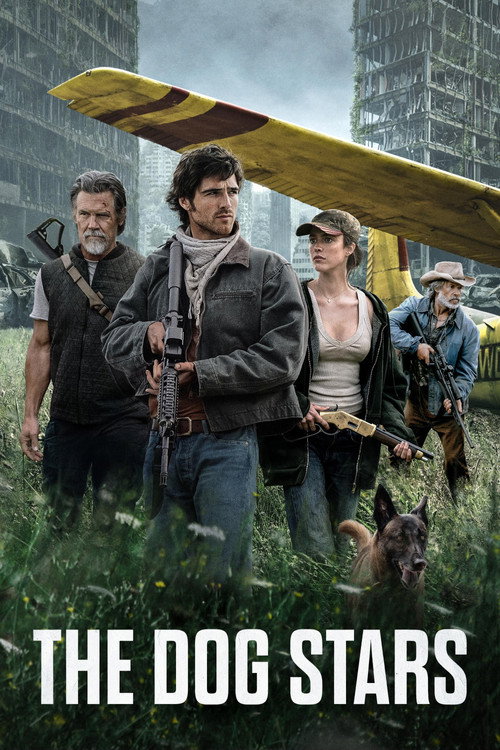
The Dog Stars
A sun-bleached, melancholy post-apocalyptic odyssey where grief ascends into open skies: an intimate study of human frailty navigating the silence of a dead earth in search of communion.
The Dog Stars

The Dog Stars

"At the end of the world, no one survives alone."

26 August 2026 United States of America 119 min 6.7 (205)

Director: Ridley Scott

Cast: Jacob Elordi, Margaret Qualley, Josh Brolin, Guy Pearce, Allison Janney

Thriller Adventure Science Fiction Survival vs. Living Grief, Memory, and Letting Go Man and Nature in the Anthropocene The Fragility and Necessity of Trust
Budget: $110,000,000
Box Office: $19,300,000

Overview

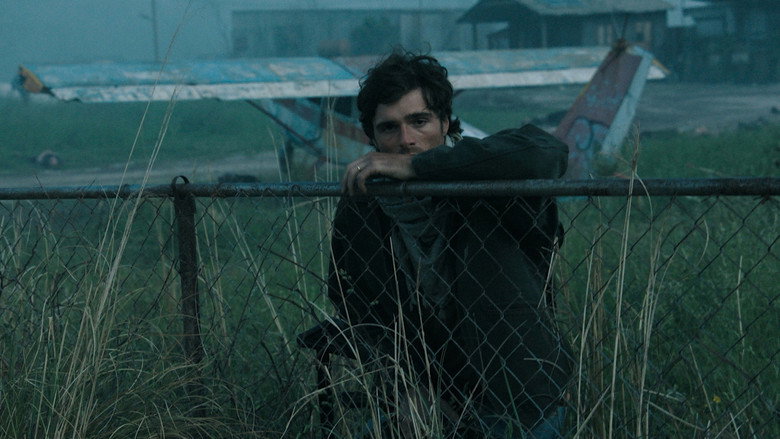
The Dog Stars, directed and produced by Ridley Scott from an adapted screenplay by Mark L. Smith (with additional writing credit to Christopher Wilkinson), is an adaptation of Peter Heller's acclaimed 2012 novel. Set roughly a decade after a virulent global flu pandemic and subsequent disease have decimated civilization, the narrative takes root in the rural, wind-swept expanses of Erie, Colorado. The story centers on Hig (Jacob Elordi), a former civilian mechanic and pilot who has carved out a secluded existence in an abandoned airport hangar alongside his aging dog, Jasper, and Bruce Bangley (Josh Brolin), a hardened ex-Marine survivalist.

Hig and Bangley maintain an uneasy, pragmatic truce: Bangley guards the perimeter against scavengers and roaming hostile marauders known as "Reapers" with brutal, lethal vigilance, while Hig patrols the skies above the front range in his vintage 1956 Cessna 182, nicknamed "the Beast," scavenging for fuel, game, and medical supplies. Hig also retains a sliver of his pre-collapse humanity by periodically airdropping rations to an isolated, sickened Mennonite community nearby.

Their fragile status quo unravels after a series of emotional ruptures and the persistent memory of a crackling, mysterious voice picked up years prior on Hig's aircraft radio from Grand Junction, Colorado. Driven by an aching need to discover whether anything humane remains beyond their fortified fence line, Hig prepares to fly his Cessna beyond the "point of no return"—a threshold of fuel exhaustion with no turning back—propelling the narrative into a dangerous, introspective journey through the American wilderness.

Core Meaning

Ridley Scott utilizes the apocalyptic framework to examine the distinction between surviving and actually living. While genre conventions often fixate on militarized survival, Scott and screenwriter Mark L. Smith focus on the heavy emotional tax of prolonged isolation. Bangley embodies the defensive, hyper-vigilant posture of pure biological endurance, where any outsider represents annihilation; conversely, Hig demonstrates that existence stripped of empathy, love, art, and trust is an empty, protracted death. The film's ultimate message posits that human resilience is not measured by the firepower guarding an isolated perimeter, but by the courage to remain vulnerable enough to seek out communion and genuine community.

Thematic DNA

Survival vs. Living 35%
Grief, Memory, and Letting Go 25%
Man and Nature in the Anthropocene 20%
The Fragility and Necessity of Trust 20%

Survival vs. Living

Contrasted through the dual protagonists: Bangley's fortified bunker mentality against Hig's persistent yearning for communion. The film argues that mere defensive survival is corrosive without human purpose.

Grief, Memory, and Letting Go

Hig is emotionally tethered to his dead wife Melissa and the lost world. His psychological journey involves accepting loss rather than remaining stagnant in memory.

Man and Nature in the Anthropocene

The silent rebirth of the natural world in the wake of humanity's collapse; Scott juxtaposes high-altitude, untouched wilderness with decaying industrial ruins, highlighting nature's reclaiming indifference.

The Fragility and Necessity of Trust

Depicted in the high-stakes encounters between Hig, Bangley, Cima, and Pops. In a landscape where desperation breeds predatory violence, extending trust becomes an act of existential rebellion.

Character Analysis

Hig

Jacob Elordi

Archetype: The Reluctant Nomad / Romantic Survivor Key Trait: Retained capacity for empathy, gentleness, and acute aviation skill.

Motivation

Finding something meaningful beyond mechanical survival; confronting his unresolved grief.

Character Arc

Begins anchored in defensive routine and mournful memories at the airfield; evolves into a daring seeker willing to stake his life on the possibility of community.

Bruce Bangley

Josh Brolin

Archetype: The Hardened Tactician / Militant Misanthrope Key Trait: Lethal marksmanship, tactical paranoia, emotional brusqueness.

Motivation

Total territorial defense and pragmatic self-preservation at all costs.

Character Arc

Relies purely on brute perimeter enforcement; when confronted with betrayal and near-fatal vulnerability, he allows an expanded social unit into his defended sphere.

All 5 characters and cast

Symbols & Motifs

The 1956 Cessna 182 ("The Beast")

Meaning:

Serves as a literal and spiritual vehicle of transcendence, symbolizing freedom, memory, and departure from safe confines.

Context:

Hig flies the vintage propeller plane to elevate himself above the blood-soaked territorial fights on the ground and to venture beyond the point of no return.

Jasper the Dog / Sirius (The "Dog Star")

Meaning:

Represents Hig's emotional anchor, surviving innocence, and an enduring cosmic motif of loyalty in darkness.

Context:

Jasper is Hig's faithful animal companion at the airfield and on high-altitude excursions, mirroring the constellation Canis Major and its brightest star Sirius.

The Radio Static / Broken Transmission

Meaning:

Symbolizes the lingering hope for human connection and functions as an ethereal siren song drawing Hig past self-imposed boundaries.

Context:

A mysterious, crackling voice received years prior on the aircraft radio from Grand Junction, Colorado, which continues to haunt Hig.

Perimeter Fencing and Tripwires

Meaning:

Represents human fear, trauma, and the psychological and physical walls constructed to exclude the external world.

Context:

Bangley's meticulously wired defense zone surrounding the abandoned airport hangar to eliminate approaching intruders.

Trout and Mountain Streams

Meaning:

Represents unhurried contemplation, ritual, and communion with an unpolluted Earth.

Context:

Fly-fishing motifs featured during Hig's escapes into remote high-altitude creeks in the wilderness.

Memorable Quotes

I never want to repeat myself, and all my films have been on the money... I'm not a filmmaker, I'm an influencer.
— Sir Ridley Scott

Context

Stated by the director during the promotional tour for The Dog Stars.

Meaning

Reflects Scott's provocative stance on auteur cinema and remaining relevant in contemporary culture.

Hope is a dangerous transmission.
— Promotional Tagline

Context

The official tagline and narrative premise highlighted throughout the film's promotional campaign and exhibition materials.

Meaning

Highlights the premise that reaching out for connection carries life-threatening risks in a hostile world.

All 4 quotes

Philosophical Questions

What distinguishes mere biological preservation from authentic human life?

Explored through the contrast between Bangley's armed, paranoid isolationism and Hig's willingness to risk fuel, safety, and life in search of music, companionship, and emotional connection.

Can moral codes survive total societal collapse?

Examined through Hig's continued choice to deliver food supplies to an isolated, sickened Mennonite community despite receiving no tactical or material benefit in return.

Is human grief an anchor or a cage in traumatic epochs?

Addressed through Hig's prolonged emotional stagnation following the loss of his wife Melissa and his dog Jasper, requiring an existential leap into the unknown to build new attachments.

How It Ends

Alternative Interpretations

Some viewers and critics interpret Hig's journey to Grand Junction as a pastoral delusion—a lucky escape born of a self-destructive, suicidal impulse rather than heroic rebirth. Flying past the point of no return is read as despair disguised as hope, with his survival functioning as an unearned narrative grace note rather than calculated foresight.

Full ending explanation

Cultural Impact

Arriving in 2026, The Dog Stars faced post-pandemic sci-fi fatigue, entering a cultural space saturated with pandemic-era allegories. Distributed by 20th Century Studios, it debuted on August 28, 2026, following a premiere at London's Odeon Luxe Leicester Square, but was met with mixed-to-negative critical reception (Rotten Tomatoes score between 38–42% and Metacritic at 51) and opened to an underwhelming $22 million against a $70–$110 million production budget.

Cultural critics, including writers for The New Republic, engaged in a "trad-apocalypse" debate, analyzing the romantic pairing of Jacob Elordi and Margaret Qualley as an aesthetically polished, trad-coded vision of post-collapse society that stood in stark contrast to the unwashed griminess typical of modern apocalyptic media.

Audience Reception

Audiences and critics praised Erik Messerschmidt's sweeping widescreen cinematography, especially the expansive aerial vistas of mountain ranges, alongside grounded performances by Josh Brolin and Jacob Elordi. Critics such as David Rooney of The Hollywood Reporter described it as an "appealingly mellow" and contemplative alternative to conventional summer blockbusters.

Conversely, major trade outlets including RogerEbert.com, IndieWire, and Variety faulted the film for its sluggish, low-incident pacing, emotional detachment, and uneven script. Reviewers also took issue with jarring tonal shifts, patchy digital effects in action sequences, and the sanitized, overly glamorous look of the lead performers, ultimately regarding it as a visually handsome but minor late-career entry for Scott.

Interesting Facts

  • Paul Mescal was originally slated to star as Hig but exited due to scheduling conflicts with Sam Mendes' multi-part Beatles biographical project, leading to Jacob Elordi's casting.
  • Screenwriter Mark L. Smith previously wrote the brutal, naturalistic survival drama The Revenant (2015).
  • Several expansive rural sequences set in the Colorado Rocky Mountains were filmed on location in rural Italy.
  • The theatrical release was pushed from March 2026 to August 2026 by 20th Century Studios and Scott Free to give editors Claire Simpson and Sam Restivo additional post-production finishing time.
  • The Dog Stars represents the 30th narrative feature film directed by Ridley Scott since his 1977 debut The Duellists.
  • During press junkets, Ridley Scott touted the project as 'probably the best movie I've done since The Martian.'

Easter Eggs

Visual and procedural parallels to The Martian and Alien

Several aerial compositions of barren plains and Hig's systematic cockpit checklists directly nod to Ridley Scott's previous survivalist and cockpit sequences in The Martian (2015) and Alien (1979).

1956 tail-dragger Cessna 182 design

The specific vintage aesthetic of the aircraft honors author Peter Heller's real-life passion for vintage general aviation.

Homage to classic Western frontier films

The film structurally echoes Westerns like The Searchers and Shane, positioning Bangley as the violent gunfighter clearing ground so that Hig and Cima can cultivate it.

Frequently Asked Questions

Explore More About This Movie

Dive deeper into specific aspects of the movie with our detailed analysis pages

Comments (0)

Leave a comment

No comments yet. Be the first to share your thoughts!

Similar Movies