Skip to content
Gushing Over Magical Girls
A glossy, subversively electric magical girl comedy where intense fanatical admiration morphs into dark dominance, blooming like neon night-blossoms amidst whip-snapping battles, leather-clad revelations, and unapologetic self-discovery.
Gushing Over Magical Girls

Gushing Over Magical Girls

魔法少女にあこがれて

03 January 2024 — 27 March 2024 Japan 2 season 14 episode Returning Series 8.3 (118)

Cast: Fuka Izumi, Misato Fukuen, Aoi Koga, Shiori Sugiura, Kaori Maeda

Animation Sci-Fi & Fantasy Comedy Admiration vs. Domination (Akogare) Authenticity & Unmasking (La Verità) Found Family Among Misfits Deconstruction & Parody of Magical Girl Tropes Guilt-Free Expression of Female Desire

Overview

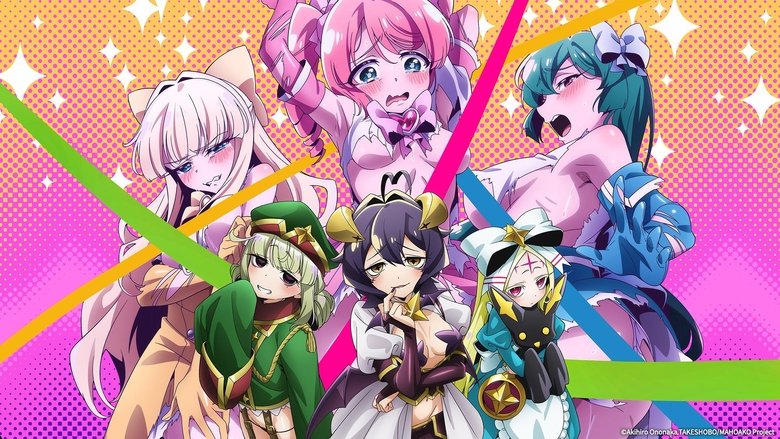
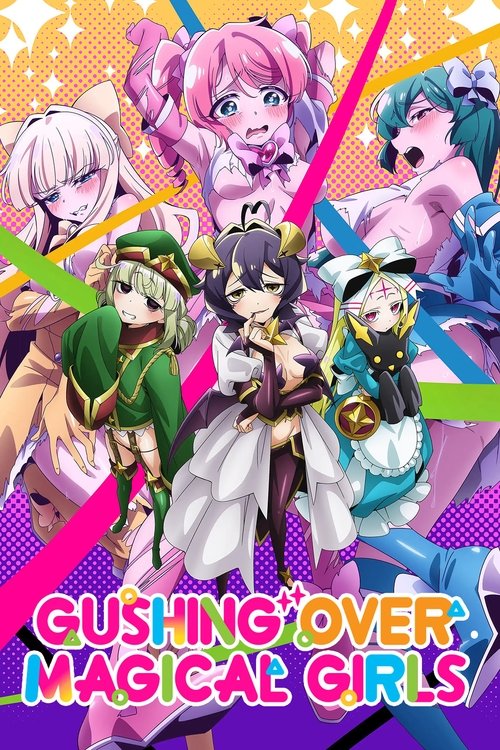
Gushing Over Magical Girls (魔法少女にあこがれて, Mahou Shoujo ni Akogarete) follows Hiiragi Utena, a shy middle-school girl who fanatically idolizes the local heroic trio, Tres Magia. Her life changes drastically when a sinister mascot named Venalita grants her magical powers, promising to fulfill her dream. However, instead of becoming a sparkling heroine, Utena is transformed into Magia Baiser, the lead villainess of the evil syndicate Enormita. Horrified at first by her forced villainy, Utena quickly discovers an unexpected sadistic streak: dominating magical girls in combat produces a visceral thrill, unlocking hidden potential in both herself and her idolized opponents.

As the narrative progresses, Utena assumes command of Enormita's local branch. She recruits a ragtag team of fellow misfits—including the fiery gunner Leopard (Kiwi Araga), the doll-manifesting child Nero Alice (Korisu Morino), the tone-deaf pop-singer Loco Musica (Matama Akoya), and the shadowy Leberblume (Nemo Anemo). Rather than seeking world domination, Utena's true goal becomes maintaining the ultimate "hero vs. villain" dynamic, driving Tres Magia (Magia Magenta, Magia Azure, and Magia Sulfur) to break past their limitations. When hardline internal factions like Lord Enorme threaten to destroy the heroines outright, Utena rallies her crew to protect the magical girls so they can keep fighting on her own twisted, affectionate terms.

Across its run, the series blends boundary-pushing erotic comedy with surprising tactical combat and genuine character development. The overarching arc examines how heroes and villains alike grow stronger not by suppressing their taboo desires, but by confronting their inner selves and embracing their true, uncensored identities.
Core Meaning

The core meaning of Gushing Over Magical Girls lies in its exploration of unconditional self-acceptance through the integration of the "shadow" self. Through its satirical inversion of magical girl tropes, the creators convey that true strength and personal transformation cannot occur when individuals hide behind rigid societal expectations or idealized heroic fronts.

By framing sadomasochistic dynamics as a metaphorical engine for personal awakening, the show argues that passion ("akogare") and desire—no matter how unconventional or taboo—are valid aspects of identity. Victory and growth (manifested in the story through the ultimate "La Verità" transformations) are achieved only when characters cease feeling ashamed of their innermost longings and express their genuine selves without fear.

Thematic DNA

Admiration vs. Domination (Akogare) 30%
Authenticity & Unmasking (La Verità) 25%
Found Family Among Misfits 20%
Deconstruction & Parody of Magical Girl Tropes 15%
Guilt-Free Expression of Female Desire 10%

Admiration vs. Domination (Akogare)

Utena's love for magical girls evolves from passive otaku fandom into active sadomasochism. The show examines how intense love and a desire to see someone reach perfection can manifest as a drive to test, break, and elevate them.

Authenticity & Unmasking (La Verità)

Characters start behind repressed personas (shy girl, stoic shrine maiden, perfect hero). As battles intensify, physical and psychological breakdown forces them to abandon pretenses and unlock "La Verità" (True Form), proving that true power comes from uninhibited honesty.

Found Family Among Misfits

Enormita begins as a chaotic squad assembled by force, but grows into a fiercely loyal family where outcast girls find unconditional acceptance, affection, and emotional safety.

Deconstruction & Parody of Magical Girl Tropes

The series systematically lampoons classic magical girl conventions—manipulative mascots, dramatic speeches, costume reveals, and moral dichotomies—revealing the absurdities hidden beneath the genre's sparkling surface.

Guilt-Free Expression of Female Desire

The narrative normalizes female pleasure, fetishes, and Yuri attraction in a non-judgmental, comedic fantasy setting, asserting that sexual curiosity is a natural phase of personal development.

Character Analysis

Utena Hiiragi / Magia Baiser

Fuka Izumi

Archetype: Sadistic Dominatrix Protagonist / Reluctant Antihero Key Trait: Dual personality—gentle and bashful in daily life, ruthlessly creative and dominant as Baiser.

Motivation

Initially wants to escape villainy; evolves into wanting to push Tres Magia to their absolute peak strength.

Character Arc

Starts as a meek, otaku middle schooler terrified of hurting her idolized heroines. She evolves into the confident, charismatic leader of Enormita who proudly embraces her sadistic role to make magical girls shine brighter than ever.

Kiwi Araga / Leopard

Aoi Koga

Archetype: Hot-headed Rival turned Obsessive Loyalist Key Trait: Heavy explosive weaponry paired with intense romantic devotion to Utena.

Motivation

Seeking love and dynamic spotlight; evolves into protecting Utena and Enormita.

Character Arc

Begins as an arrogant, gun-toting rogue villain seeking attention. After being completely dominated and humbled by Baiser, she falls deeply in love with Utena, becoming her most devoted enforcer.

All 5 characters and cast

Symbols & Motifs

The Riding Crop / Whip (Fulsta Dominate)

Meaning:

Represents Utena's dark authority, dominant sadism, and her catalyst for unlocking latent power in others.

Context:

Used by Magia Baiser in almost every battle to bind, punish, and stimulate magical girls.

Dolls, Plushies, and Toys (Nero Alice's Domain)

Meaning:

Represents the fragile boundary between innocent childhood play and surreal, inescapable psychological manipulation.

Context:

Morino Korisu (Nero Alice) uses dollhouses and stuffed animals to trap her targets inside real-world toy realms.

Mascot Plush Creatures (Venalita & Vatz)

Meaning:

Symbolizes shadowy, puppet-mastering institutions that exploit young girls' dreams for unknown higher agendas.

Context:

Venalita (evil mascot) and Vatz (hero mascot) act as catalysts for transformation while secretly manipulating battle outcomes.

La Verità Transformations (Bloomed Flowers)

Meaning:

Represents spiritual unmasking, emotional catharsis, and full psychological maturity.

Context:

Unlocked when a character completely embraces their inner desires without shame, altering their magical outfits into elaborate, unrestricted ultimate forms.

Microphones & Off-Key Music (Loco Musica)

Meaning:

Weaponized creative passion and expressing oneself despite lacking conventional perfection.

Context:

Matama Akoya uses her destructive, ear-splitting singing voice as acoustic shockwaves in battle.

Memorable Quotes

わたしたちの街には──魔法少女がいる
— Hiiragi Utena

Context

The iconic opening narration of the series in Episode 1.

Meaning

Establishes Utena's awe-struck romanticization of heroines before her world is flipped upside down.

わたし…わたし戦いたくなんてないんです…みんな可愛くて強いから…可愛いから…めちゃくちゃにしたいだけなんです
— Magia Baiser

Context

Spoken in Episode 3 / Manga Vol. 1.

Meaning

Baiser's foundational manifesto. It encapsulates her motivation: she does not hate heroes; she loves them so intensely that her affection manifests as a desire to torment them.

All 5 quotes

Episode Highlights

A Villain is Born?!

S1E1

Pivotal moments include Utena's recruitment by Venalita, her unexpected transformation into Magia Baiser, and her initial battle against Tres Magia.

Significance:

Establishes the premise, tone, and Utena's dormant sadistic awakening.

The Explosive Leopard!

S1E3

Pivotal moments include the introduction of Kiwi Araga; Baiser dominates her in combat and earns her absolute devotion.

Significance:

Expands Enormita's roster and establishes the romantic/subordinate dynamic between Utena and Kiwi.

Nero Alice in Wonder-Land

S1E5

Pivotal moments include Morino Korisu joining Enormita; her dollhouse domain traps Tres Magia in surreal, childlike scenarios.

Significance:

Demonstrates that Enormita's powers are rooted in individual psychological inner worlds.

The Origin of Tres Magia

S1E6

Pivotal moments include a deep dive into Tres Magia's origins and their connection with mascot Vatz, as well as the infamous adult regression scene.

Significance:

Highlights the contrast between Tres Magia's traditional heroism and Enormita's corruptive psychological play.

Adversity Azure

S1E7

Pivotal moments include Baiser pushing Magia Azure to her limits, exposing Azure's hidden masochistic desires.

Significance:

Critical character turning point for Azure, setting her on a path of internal conflict between heroics and submission.

Loco x Leber

S1E10

Pivotal moments include introducing Matama Akoya (Loco Musica) and Nemo Anemo (Leberblume), revealing their loyal bond.

Significance:

Integrates the rogue faction into Utena's Enormita family.

Giants and Command / Because I Am Magia Baiser

S1E11

Pivotal moments include Baiser standing up to Lord Enorme, declaring her true philosophy and defeating the tyrant.

Significance:

Utena takes official control of Enormita, reshaping the syndicate from conquerors into a theatrical love-letter to magical girls.

Gushing Over Magical Girls

S1E13

Pivotal moments include the Season 1 climax, where Baiser unleashes her ultimate form in a battle against Tres Magia.

Significance:

Establishes "La Verità" power levels and sets the stage for future conflict against mascot masterminds.

Philosophical Questions

Can intense love and the desire to cause pain coexist legitimately?

Explored through Utena's philosophy that tormenting heroes elevates their beauty.

Does true self-realization require embracing one's darker, taboo desires?

Explored through characters unlocking "La Verità" only after accepting their suppressed fetishes.

What separates true heroism from villainy when morality is subjective?

Explored through Enormita's non-lethal, affectionate battles versus mascot manipulators.

Alternative Interpretations

The series offers multiple layers of interpretation:

Full ending explanation

Cultural Impact

Created by Akihiro Ononaka and serialized on Takeshobo's Storia Dash, the manga began in 2019. When the anime adaptation aired in early 2024, it became a major viral phenomenon.

While the magical girl genre had been dominated by either squeaky-clean kids' shows (PreCure) or dark, depressing post-Madoka deconstructions, Gushing Over Magical Girls carved out a unique niche. It introduced an unabashedly hilarious, highly erotic meta-satire that celebrated the genre's tropes while turning them upside down. Critics and audiences praised the show for its high production values, genuine affection for its cast, and top-tier comedic timing, solidifying its place as a cult classic.

Audience Reception

Gushing Over Magical Girls surprised both critics and viewers by delivering a surprisingly high-quality, hilarious, and emotionally engaging show beyond simple softcore fanservice.

Key praised aspects include Fuka Izumi's star-making voice performance, fluid battle animation, top-tier comedic timing, and endearing female character bonds. The main points of criticism focused on boundary-pushing fetish themes involving middle-school-aged characters, which alienated prudish or casual anime viewers.

Overall, it was received as a triumph of late-night anime satire that turned a risky premise into one of 2024's biggest hit series.

Interesting Facts

  • To comply with Japanese broadcast laws while satisfying home video fans, the anime was produced in three distinct versions: TV Broadcast Version, Akogare/AT-X Version, and Chou Akogare/Blu-ray Version.
  • Fuka Izumi was cast as Utena Hiiragi in her very first leading role, receiving industry praise for seamlessly switching between a quiet middle-schooler and a booming, sadistic villainess.
  • Blu-ray Vol. 1 and Vol. 2 sold over 8,000–9,000 copies in their first weeks in Japan, leading directly to Season 2's greenlight.
  • Produced by Asahi Production, the studio utilized vibrant color palettes, exaggerated comedic reaction faces, and high-framerate action choreography to elevate the source manga.
  • During the official 'MahoAko S M Event' in Japan, the main voice actresses performed live dubbing of controversial scenes to huge audience fanfare.

Easter Eggs

Pretty Cure (PreCure) Parody

Tres Magia's trio structure (Magenta, Azure, Sulfur), transformation speeches, and color scheme directly parody Toei's flagship Pretty Cure franchise.

Classic Sailor Moon Visual Homages

Transformation sequences, crescent-moon backgrounds in Nacht Base, and Utena's bedroom decor pay homage to 1990s Sailor Moon aesthetics.

Puella Magi Madoka Magica Parallel

Mascots Venalita and Vatz directly reference Kyubey—cute talking animals who contract young girls into dangerous magic battles for hidden, sinister motives.

SM & Cosplay Subculture

Costumes feature explicit leather straps, chokers, blindfolds, and riding crops inspired by classic Japanese adult manga tropes and BDSM visual subcultures.

Frequently Asked Questions

Explore More About This Movie

Dive deeper into specific aspects of the movie with our detailed analysis pages

Comments (0)

Leave a comment

No comments yet. Be the first to share your thoughts!

Similar Movies