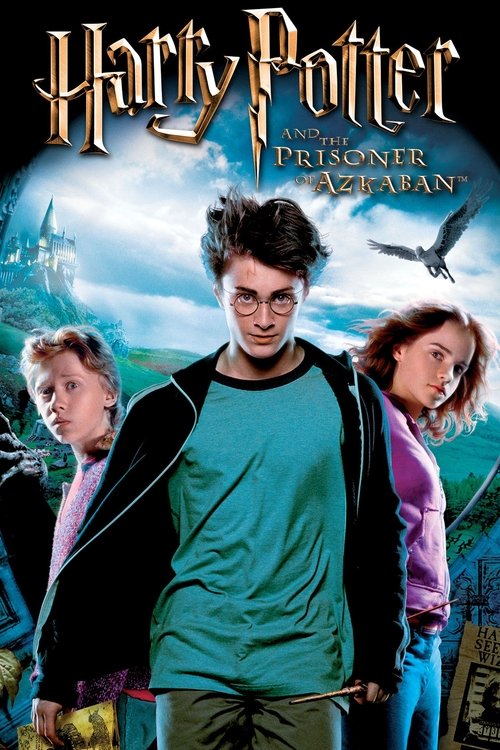
Harry Potter and the Prisoner of Azkaban
"Something wicked this way comes."
Overview
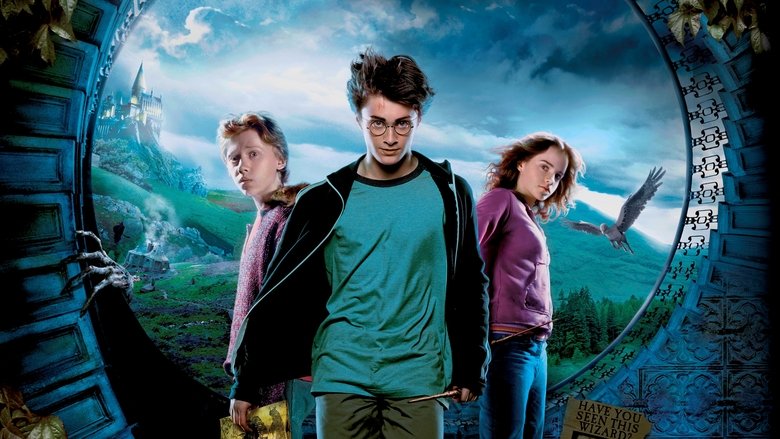
In his third year at Hogwarts, Harry Potter finds himself the target of the escaped mass murderer, Sirius Black, who is believed to have betrayed Harry's parents to the dark wizard, Lord Voldemort. The wizarding world is on high alert, and the dreaded, soul-sucking Dementors of Azkaban prison are dispatched to guard Hogwarts, affecting Harry more than anyone else.
Alongside his best friends Ron Weasley and Hermione Granger, Harry navigates new challenges, including the eccentric Divination professor, Sybill Trelawney, and the kind but mysterious new Defense Against the Dark Arts teacher, Remus Lupin. As Harry learns to confront his deepest fears, he uncovers shocking truths about his parents' past and the real story behind Sirius Black, leading to a climactic confrontation where nothing is as it seems.
Core Meaning
"Harry Potter and the Prisoner of Azkaban" is a story about the complexities of good and evil, and the idea that one's true nature is defined by choices, not innate qualities. Director Alfonso Cuarón shifts the franchise's tone to explore darker, more psychologically complex themes, suggesting that the most terrifying monsters are often not what they seem, and that fear itself is the greatest enemy to overcome. The film delves into the unreliability of perception and the justice system, ultimately championing the power of friendship, loyalty, and the courage to question accepted truths and choose compassion over vengeance.
Thematic DNA
Fear and Depression
The film introduces the Dementors, terrifying creatures that feed on happiness and represent the abstract concepts of fear and depression. Harry's intense and debilitating reactions to them stem from the trauma of his past. Professor Lupin teaches Harry that the way to combat this despair is not to ignore it, but to conjure hope and positive energy, symbolized by the Patronus Charm. This theme marks a significant maturation of the series, exploring internal struggles with the same gravity as external threats.
Justice, Innocence, and Betrayal
A central theme is the fallibility of the justice system. Sirius Black is presented as a dangerous villain but is ultimately revealed to be an innocent man framed by a true traitor, Peter Pettigrew. This storyline questions the nature of evidence and reputation, highlighting how prejudice and a rush to judgment can lead to grave injustices. The theme is further explored through Buckbeak the Hippogriff's unfair death sentence, reinforcing the idea that things are not always as they appear.
The Nature of Time and Choice
The introduction of the Time-Turner is a crucial plot device that explores themes of causality, fate, and moral responsibility. Harry and Hermione do not change the past but rather fulfill it, discovering they were always part of the events that unfolded. This suggests a complex interplay between free will and destiny. The climax reveals that Harry was the one who saved himself, a powerful message about inner strength and self-reliance. The Time-Turner symbolizes the preciousness of time and the idea that understanding the past is key to shaping the future.
Friendship and Loyalty
The bond between Harry, Ron, and Hermione is tested and strengthened, forming the emotional core of the film. The narrative also introduces the previous generation's friendships—the Marauders. The profound loyalty between James Potter, Sirius Black, and Remus Lupin is contrasted with the devastating betrayal of Peter Pettigrew. Sirius's cry, "THEN YOU SHOULD HAVE DIED! DIED RATHER THAN BETRAY YOUR FRIENDS!" encapsulates the supreme value placed on loyalty.
Character Analysis
Harry Potter
Daniel Radcliffe
Motivation
Harry is motivated by a desire to understand his past and protect those he cares about. He is initially driven by anger and a thirst for revenge against Sirius Black, whom he believes betrayed his parents. This motivation shifts to a desire for justice and to save an innocent man upon learning the truth.
Character Arc
Harry's journey in this film is one of internal growth. He begins the story haunted by the trauma of his parents' death, which makes him uniquely vulnerable to the Dementors. Throughout the film, he confronts his deepest fears and learns to draw strength from positive memories, culminating in his ability to cast a powerful Patronus. His arc is about moving from being a victim of his past to becoming his own protector, realizing his own power and his profound connection to his father.
Hermione Granger
Emma Watson
Motivation
Hermione is motivated by a thirst for knowledge and a powerful sense of justice and loyalty to her friends. She meticulously prepares a defense for Buckbeak and is unwavering in her support for Harry, even when it means bending the rules of magic and time itself.
Character Arc
Hermione's arc involves learning that intellect and rule-following are not always enough. She pushes herself academically to the breaking point with the Time-Turner but learns a greater lesson about breaking rules for a higher moral purpose. Her punch to Draco Malfoy's face signifies a moment where she chooses direct action over tolerance, and her use of the Time-Turner to save Sirius and Buckbeak shows her courage and willingness to operate outside the established system for the sake of justice.
Sirius Black
Gary Oldman
Motivation
Sirius's primary motivation is twofold: first, to find and capture Peter Pettigrew to clear his name and avenge the Potters, and second, to find Harry and fulfill his duty as a loving godfather.
Character Arc
Sirius Black is introduced as the film's primary antagonist, a fearsome and deranged killer. His arc is a complete reversal of this perception. The audience, along with Harry, discovers that he is not a traitor but a deeply loyal friend who was wrongfully imprisoned for twelve years in the horrific Azkaban. His journey is one from feared villain to a figure of hope and a paternal connection for Harry, representing the injustice of a flawed system and the endurance of loyalty.
Remus Lupin
David Thewlis
Motivation
Lupin is motivated by a deep-seated kindness and a sense of responsibility to his old friends and to Harry. He seeks to protect Harry and teach him valuable life lessons, all while carefully managing his lycanthropy and the secrets of his past.
Character Arc
Remus Lupin is the most compassionate and effective Defense Against the Dark Arts teacher Harry has ever had. He mentors Harry, teaching him how to confront his fear in the form of the Patronus Charm. His arc deals with the themes of prejudice and self-acceptance, as he is a werewolf, a condition that forces him to live on the fringes of society. His resignation after his secret is revealed underscores the prejudice of the wizarding world, despite his inherent goodness and wisdom.
Symbols & Motifs
Dementors
Dementors are a physical manifestation of depression and despair. They drain all happiness and hope from their victims, leaving them with their worst memories. J.K. Rowling has stated they were based on her own struggles with depression. They also symbolize the corruption of the justice system, as they are indiscriminate and serve a Ministry more interested in control than true justice.
The Dementors appear throughout the film, guarding Hogwarts against Sirius Black. They board the Hogwarts Express, causing Harry to faint and relive his mother's death. Their final, near-fatal attack on Harry and Sirius by the lake is a pivotal moment where Harry must conjure his fully-formed Patronus to save them.
The Grim
The Grim, a large black dog, is initially presented as a death omen. This symbol plays on superstition and the fear of the unknown. However, its meaning is subverted when the dog is revealed to be Sirius Black in his Animagus form, who is not a harbinger of death for Harry but rather his protective godfather. It symbolizes misunderstood fate and the danger of prejudice.
Harry first sees the Grim after he flees the Dursleys' house. It appears multiple times throughout the film, its presence building suspense. Professor Trelawney predicts Harry's death upon seeing the Grim in his tea leaves. The symbol's true meaning is revealed in the Shrieking Shack.
Hermione's Time-Turner
The Time-Turner, a golden hourglass on a necklace, symbolizes the immense value and power of time. It represents the idea that time is a precious commodity not to be wasted or manipulated lightly. On a deeper level, it facilitates the exploration of destiny and self-empowerment, showing that one can be the agent of their own rescue.
Hermione uses the Time-Turner throughout the year to attend multiple classes at once. Its crucial role is in the film's climax, where Dumbledore instructs her and Harry to use it to go back three hours to save more than one innocent life, namely Buckbeak and Sirius Black.
The Stag Patronus
The stag Patronus is a powerful symbol of hope, protection, and Harry's connection to his father, James Potter, whose Animagus form was also a stag (Prongs). When Harry successfully casts the Patronus, it represents him finding the light within himself and embracing his father's legacy not as a shadow to live under, but as a source of strength.
Harry struggles to produce a corporeal Patronus during his lessons with Lupin. During the climax by the lake, as the Dementors are about to consume him and Sirius, Harry sees a figure across the lake cast a powerful stag Patronus that saves them. Using the Time-Turner, he later realizes that the figure was himself, and he steps forward to cast the charm, accepting his own power.
Memorable Quotes
Happiness can be found, even in the darkest of times, if one only remembers to turn on the light.
— Albus Dumbledore
Context:
Dumbledore says this during his opening speech at the start-of-term feast, after announcing that the Dementors will be stationed at the school. It is a message of reassurance and wisdom to the students in unsettling times.
Meaning:
This quote encapsulates the film's central theme of finding hope amidst despair. It's a direct piece of advice that resonates with Harry's struggle against the Dementors and serves as a philosophical underpinning for the entire story. It suggests that happiness is a choice and a conscious act of seeking out the good, even when surrounded by darkness.
I solemnly swear that I am up to no good.
— Harry Potter (reading the Marauder's Map)
Context:
Harry first speaks these words when Fred and George Weasley give him the Marauder's Map, allowing him to see a secret passage to Hogsmeade. He must tap the blank parchment with his wand and recite the phrase to activate it.
Meaning:
This phrase, used to reveal the contents of the Marauder's Map, is an iconic representation of the mischievous, rule-bending spirit of the Marauders and, by extension, the adventures Harry undertakes. It signifies the beginning of a journey into the secrets of Hogwarts and the past.
You think the dead we loved ever truly leave us? You think that we don't recall them more clearly in times of great trouble?
— Albus Dumbledore
Context:
Dumbledore offers these comforting words to Harry near the end of the film, after Harry expresses his sadness and confusion about the events that transpired and the loss of the chance to live with Sirius.
Meaning:
This quote speaks to the enduring power of love and memory. Dumbledore suggests that the presence of those we've lost can be a source of strength, especially during difficult times. It directly relates to Harry's ability to conjure the Patronus by focusing on the powerful memory of his parents.
The world isn't split into good people and Death Eaters. We've all got both light and dark inside us. What matters is the part we choose to act on. That's who we really are.
— Sirius Black
Context:
This quote is from the book but is often attributed to the film's ethos. Sirius conveys this message to Harry, reassuring him that despite the bad things that have happened to him and the anger he feels, he is a good person because of the choices he makes.
Meaning:
This is a profound statement on moral complexity. Sirius, having been wrongly judged as evil, imparts to Harry the wisdom that morality is not a simple binary. It's a crucial lesson that defines the series' approach to character development, emphasizing choice over destiny or inherent nature.
Philosophical Questions
Is our identity defined by our past or by our choices?
The film consistently explores this question through its main characters. Harry is haunted by his traumatic past, yet he ultimately defines himself by choosing compassion over revenge when he spares Peter Pettigrew's life. Sirius Black has a past defined by wrongful imprisonment and betrayal, but his choices are driven by loyalty and love for Harry. The film's message, articulated by Sirius, is that everyone has light and dark within them, but it is the part they choose to act on that truly matters.
How does fear shape our perception of reality and justice?
The entire wizarding world's perception of Sirius Black is shaped by fear, leading to a massive injustice. The Dementors, the literal embodiment of fear, cloud judgment and are used as a tool of control by a Ministry that prioritizes appearing strong over being just. Harry's personal journey is a battle against fear itself. As Professor Lupin tells him, what he fears most is fear itself, and only by confronting this can he see the truth and find his inner strength.
Can one truly change the past, or are we bound by destiny?
The film's use of the Time-Turner presents a deterministic view of time. Harry and Hermione do not alter events but rather participate in them in a way they didn't initially understand. Harry doesn't conjure a new Patronus to save himself; he discovers he was the one who cast it all along. This raises questions about the nature of destiny. While events may be fixed, the film seems to suggest that the courage and growth required to fulfill that destiny are what give life meaning.
Alternative Interpretations
One significant alternative interpretation revolves around the character of Remus Lupin and his lycanthropy. J.K. Rowling herself confirmed that Lupin's condition was intended as a metaphor for illnesses that carry a stigma, such as HIV/AIDS. This reading frames Lupin's struggles—his secrecy, the prejudice he faces, and his fear of harming others—as a powerful allegory for the social and personal challenges faced by individuals with stigmatized chronic illnesses. His kindness and wisdom directly challenge the fear and discrimination he endures, suggesting that a person's character is not defined by their affliction.
Another interpretation focuses on the film's time-travel paradox. While the narrative presents a closed loop (a Novikov self-consistency principle) where Harry and Hermione's actions were always part of the past, some viewers interpret it as a more ambiguous commentary on fate versus free will. Is Harry truly making a choice to save himself, or is he merely an actor playing a predetermined part? This reading explores the philosophical implications of predestination, suggesting that even with the knowledge of what will happen, the emotional and psychological journey of living through the moment and making the 'choice' is what defines one's character.
Cultural Impact
"Harry Potter and the Prisoner of Azkaban" is widely considered a turning point for the film franchise, both critically and tonally. Under the direction of Alfonso Cuarón, the film adopted a darker, more mature aesthetic and a more sophisticated cinematic language, moving away from the more literal adaptations of the first two films. Cuarón introduced stylistic flourishes like long, continuous shots and a more subdued, gothic color palette that influenced the visual style of the subsequent films. The film received critical acclaim for its artistic direction and is often cited by critics and fans as the best in the series. Its exploration of themes like depression, through the Dementors, resonated deeply with audiences and brought a new level of psychological depth to the fantasy genre. The film proved that a franchise blockbuster could also be a work of auteur filmmaking, elevating the perception of what a 'children's film' could be.
Audience Reception
Audience reception for "Harry Potter and the Prisoner of Azkaban" is overwhelmingly positive, with many fans considering it the best film in the series. Praise is often directed at the darker, more mature tone and the significant stylistic shift brought by director Alfonso Cuarón. Viewers appreciated the deeper character development, particularly for Harry, and the introduction of beloved characters like Sirius Black and Remus Lupin. The visual effects, especially the creation of the Dementors and Buckbeak, were highly lauded. The main points of criticism, though minor for most, sometimes centered on the film's deviation from the source material, with some plot points and explanations from the book being condensed or omitted for cinematic pacing. Some viewers also found the tonal shift from the first two films jarring initially. Overall, the verdict is that it is a visually stunning and emotionally resonant film that successfully matured the franchise.
Interesting Facts
- Director Alfonso Cuarón had the three main actors write an essay about their characters. Emma Watson wrote a 16-page essay, Daniel Radcliffe wrote a single page, and Rupert Grint never turned his in, claiming it was in character for Ron.
- This was the first film in the series to extensively use real-life locations, particularly in the Scottish Highlands, to give Hogwarts a more grounded and expansive geographical presence.
- To create the effect of the Knight Bus speeding through traffic, the bus was driven at a normal speed while the surrounding cars drove very slowly. The film was then sped up in post-production.
- The tattoos on Sirius Black were inspired by those of Russian prison gangs, intended to identify him as a man to be feared and respected.
- Michael Gambon, who took over the role of Dumbledore after Richard Harris's death, had not read any of the Harry Potter books, preferring to work only from the script.
- During the sleeping bag scene in the Great Hall, Alan Rickman and Michael Gambon played a prank on Daniel Radcliffe by hiding a remote-controlled whoopee cushion in his sleeping bag.
- Harry Melling, who plays Dudley Dursley, lost a significant amount of weight between the second and third films and had to wear a fat suit to reprise the role.
Easter Eggs
A portrait of the director's wife and daughter can be seen in the background.
In the scene where students are walking up the Grand Staircase after Sirius Black's first break-in attempt, a portrait of a woman holding a baby is visible. This is a cameo of Alfonso Cuarón's then-wife and their daughter, adding a personal touch from the director to the magical world.
The 'Mexican Hat Dance' is whistled by Dumbledore.
Towards the end of the film, as the students are leaving, Dumbledore can be heard whistling "Jarabe Tapatío," more commonly known as the "Mexican Hat Dance." This is a playful nod to director Alfonso Cuarón's Mexican heritage.
Ian Brown, lead singer of The Stone Roses, makes a cameo.
In the Leaky Cauldron, when Harry is reading 'A Brief History of Time', the man sitting at the table magically stirring his drink is Ian Brown. Alfonso Cuarón is a fan of the band and included him in the scene.
⚠️ Spoiler Analysis
Click to reveal detailed analysis with spoilers
Frequently Asked Questions
Explore More About This Movie
Dive deeper into specific aspects of the movie with our detailed analysis pages
Comments (0)
No comments yet. Be the first to share your thoughts!