Skip to content
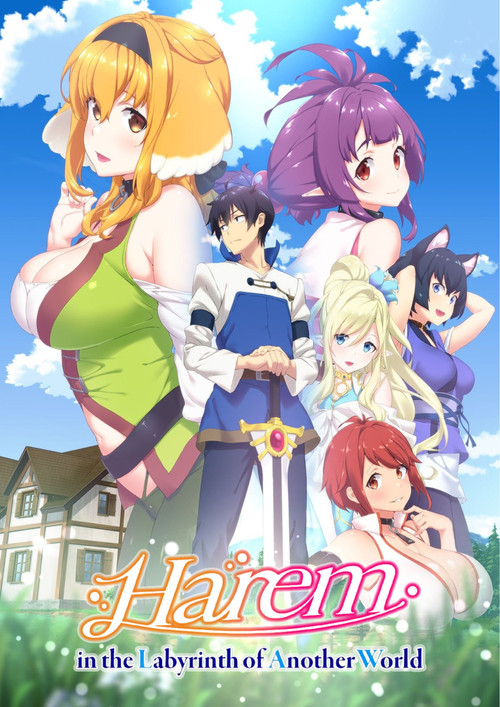
Harem in the Labyrinth of Another World
In a calculated fantasy realm tinged with quiet desperation, an aimless youth discovers purpose through ruthless pragmatism, turning dungeon grind and gilded domesticity into an intimate sanctuary.
Harem in the Labyrinth of Another World

Harem in the Labyrinth of Another World

異世界迷宮でハーレムを

06 July 2022 — 21 September 2022 Japan 1 season 12 episode Ended 7.5 (177)

Cast: Taku Yashiro, Shiori Mikami, Kenta Miyake, Hayato Fujii, Nozomi Furuki

Animation Sci-Fi & Fantasy Action & Adventure Escapism and Rationalized Rebirth Transactional Human Relationships Gamification and Methodical Labor Moral Desensitization in Survival

Overview

Harem in the Labyrinth of Another World follows Michio Kaga, a disaffected Japanese youth who, on the brink of despair, stumbles upon a mysterious online character creation prompt. Upon finalizing his stat distributions and bonus items, he is abruptly summoned into a harsh, gamified fantasy realm. Faced with immediate life-or-death peril from village bandits, Michio quickly realizes that his survival hinges on mastering this world's mechanics, leveling system, and uncompromising social hierarchy.

Unlike conventional isekai narratives centered on heroic destinies or saving kingdoms, Michio's journey is defined by intensely localized, pragmatic objectives. Driven by the encounter with a slave trader named Alan and captivated by a wolf-girl named Roxanne, Michio commits himself to systematic dungeon crawling to raise enough coin to purchase Roxanne as his battle partner and companion. The narrative details their methodical routine of clearing dungeon floors, collecting bounty rewards, and navigating market economics.

As the series progresses, Michio expands his party and domestic life by securing dwarven smith Sherry, evolving his strategic combat approach while deepening domestic bonds. The story presents a stark, unapologetic portrayal of gamified progression, where dungeon danger, systemic slavery, and domestic intimacy intertwine into an unconventional slice-of-life fantasy.
Core Meaning

At its core, the series serves as an unfiltered dissection of escapism and rationalized transactional existence. By placing a disaffected protagonist in a world where human relationships and survival are commodified through game mechanics, the story explores how an alienated individual rebuilds self-worth not through altruistic heroics, but through calculated, methodical labor. It presents a world where morality is subordinate to survival, illustrating how ordinary people adapt to and thrive within morally compromising systems when provided with clear rules, agency, and immediate positive reinforcement.

Thematic DNA

Escapism and Rationalized Rebirth 30%
Transactional Human Relationships 25%
Gamification and Methodical Labor 25%
Moral Desensitization in Survival 20%

Escapism and Rationalized Rebirth

The story opens with Michio's profound alienation from modern society and his literal transition into a realm where effort directly yields tangible numerical progression. His rebirth is not motivated by grand ideals, but by a pursuit of agency and a structured environment where clear rules govern survival and success.

Transactional Human Relationships

Rather than relying on spontaneous romance or heroic bonds, the series frames companionship through the legal and economic framework of master-slave contracts. Intimacy, loyalty, and companionship are negotiated and purchased with currency, examining the boundary between systemic servitude and genuine emotional attachment.

Gamification and Methodical Labor

Dungeon crawling is depicted not as epic adventure, but as repetitive, calculated labor. Michio treats labyrinth exploration like resource management, testing stat bonuses, analyzing monster attack patterns, and managing party synergy with the discipline of an optimizer.

Moral Desensitization in Survival

Faced with lethal combat and the legal reality of human trafficking, Michio rapidly discards modern moral inhibitions. The series chronicles his pragmatic normalization of taking lives for bounties and participating in the slave market, revealing how quickly ethical standards shift when survival and self-interest are at stake.

Character Analysis

Michio Kaga

Taku Yashiro

Archetype: Antihero / Pragmatic Realist Key Trait: Methodical pragmatism and analytical detachment

Motivation

Initially motivated by primal survival and the desire to purchase Roxanne, which evolves into building a safe, prosperous domestic refuge by optimizing labyrinth expeditions.

Character Arc

Begins as a severely depressed, suicidal young man transported into a brutal new reality. Rather than panicking, he adapts swiftly to the world's mechanics, accepting violent combat, bounty hunting, and slave ownership without moral qualms. Across the season, he evolves from a solitary, desperate survivor into a confident, tactical party leader and head of an unconventional household.

Roxanne

Shiori Mikami

Archetype: Loyal Companion / Vanguard Warrior Key Trait: Unwavering loyalty and canine sensory acuity

Motivation

To protect Michio in combat, fulfill her duties with absolute perfection, and maintain the comfort and security of their shared home.

Character Arc

Starts as an indebted slave up for auction at Alan's firm, bound by strict subservience. As Michio equips her and relies on her exceptional sensory skills in combat, she blossoms into an indispensable front-line combatant and devoted domestic partner, explicitly embracing her status and bond with him over abstract personal freedom.

All 4 characters and cast

Symbols & Motifs

Durandal

Meaning:

Symbolizes artificial dominance, unfair leverage, and the shortcut past natural struggle. The overpowered sword provides Michio with life-leeching capability and lethal force, representing the gamified 'cheat' that enables his swift ascent.

Context:

Michio selects Durandal during his initial character creation and relies on its lethal stats to eliminate bandits and clear difficult labyrinth bosses throughout the series.

The Slave Contract and Collar

Meaning:

Symbolizes systemic commodification of human intimacy, absolute control, and legal vulnerability. It acts as both a badge of societal subjugation and the catalyst for Michio's secure, anxiety-free relationships.

Context:

Introduced by Alan in the slave showroom, the contract binds Roxanne and later Sherry legally to Michio, defining their legal status and party hierarchy.

The Labyrinth

Meaning:

Symbolizes the grind of existence, structured progression, and infinite labor. It is a spatial representation of danger turned into a predictable workplace where effort directly yields material rewards.

Context:

The labyrinth floors of Vale and Qurina, explored methodically across the season to farm experience points, crystals, and ingredients.

600,000 Naal

Meaning:

Represents the quantified monetary valuation of companionship and desire, grounding fantasy romance into cold financial arithmetic.

Context:

The exact sum negotiated with broker Alan for Roxanne's purchase, serving as the primary narrative deadline driving the entire first arc.

Memorable Quotes

If the world is hard to live, you can live in a different world.
— System Prompt

Context

Appears on the mysterious computer screen in Episode 1 just before Michio confirms his character setup and is summoned into the fantasy world.

Meaning

The foundational thesis of the entire story, establishing escapism as a legitimate response to emotional isolation and social struggle.

Shinshi no torihiki, roku-jū-man Naal.
— Alan

Context

Spoken by Alan to Michio in Episode 2 while negotiating Roxanne's purchase price and time window, later adapted into the official ending theme song title.

Meaning

Encapsulates the cynical elegance of the world's economy, where human lives and companionship are treated as formal gentlemen's bargains.

All 3 quotes

Episode Highlights

Encounter

S1E1

Michio awakens in a fantasy village, discovers his system interface and stats, and slaughters a band of attacking bandits with Durandal, realizing this reality carries real mortal stakes.

Significance:

Establishes the violent tone, the lack of conventional heroic reservations, and Michio's swift embrace of survival pragmatism.

Gentleman's Agreement

S1E2

Michio visits Alan's slave emporium and meets Roxanne. Smitten, he negotiates a conditional deadline to earn 600,000 Naal before she is sold to another buyer.

Significance:

Introduces the central quest and economic catalyst of the entire first half of the season.

Resolution

S1E4

Facing an imminent deadline, Michio tracks down a dangerous group of bandits for a high-value guild bounty, surviving a close battle to secure the remaining funds.

Significance:

Solidifies Michio's resolve and combat competence, culminating in the successful purchase of Roxanne.

Fast Travel

S1E8

Michio unlocks teleportation abilities and strategic labyrinth shortcuts, establishing a sustainable, domestic rhythm of daily farming and home life with Roxanne.

Significance:

Shifts the anime's momentum into an optimized routine, illustrating how game mechanics become domestic conveniences.

Order

S1E11

Michio visits Alan to acquire a dwarf capable of smithing, meeting Sherry, while having a profound discussion regarding wills and the bond between master and slave with Roxanne.

Significance:

Broadens the party dynamic and deepens character psychology regarding servitude, devotion, and party growth.

Human Being

S1E12

Sherry is integrated into the household and labyrinth expeditions, testing her smithing skill crystals and establishing the fledgling multi-person harem dynamic.

Significance:

Concludes the season by cementing Michio's established status as an independent, well-equipped adventurer with a growing home unit.

Philosophical Questions

Can genuine affection and mutual respect exist within an inherently coercive legal structure?

The series consistently probes this dynamic through Roxanne and Michio's domestic life. While Michio holds absolute legal ownership, he strives to provide physical safety, care, and emotional comfort, prompting viewers to question whether benevolent ownership can ever produce genuine consent.

Does a predictable, gamified struggle offer greater existential fulfillment than an unpredictable modern society?

Through Michio's transition from an aimless outcast to an efficient adventurer, the show examines how clarity of purpose, objective metrics of effort, and immediate tangible rewards resolve modern existential despair.

How It Ends

Alternative Interpretations

While widely viewed as a straightforward wish-fulfillment and ecchi power fantasy, several critical readings interpret the show as a bleak satirical commentary on modern capitalist alienation. In this reading, Michio's obsession with numerical values, repetitive farming, and purchasing affection reflects the extreme compartmentalization of a disenfranchised worker who can only understand relationships and purpose through transactional exchange. Another perspective views Michio's psychological detachment not as cool competence, but as lingering dissociation stemming from his suicidal trauma in the prologue, projecting emotional distance onto everything he encounters.

Full ending explanation

Cultural Impact

Aired during the Summer 2022 anime season, Harem in the Labyrinth of Another World crystallized a distinct trend within late-stage isekai: the unrepentant embrace of 'borderline' adult content combined with hard-system fantasy mechanics. While conventional light novel adaptations soften controversial web novel tropes such as slavery, this series leans fully into it as a core gameplay dynamic and domestic premise. Its tripartite broadcast strategy (TV version, Harem version, and Super Harem version on AT-X) set a notable precedent for commercial ecchi distributions, demonstrating how studios could navigate strict Japanese broadcast guidelines while monetizing uncensored home video releases and premium pay-TV channels.

Audience Reception

Audience reception was sharply polarized. Mainstream critics and general fantasy fans widely condemned the premise, highlighting the uncomfortable normalization of human trafficking, repetitive dungeon crawl pacing, and lack of traditional plot momentum. Conversely, fans of mature fantasy and ecchi praised studio Passione's high production values, detailed anatomical animation, and surprisingly rigorous adherence to role-playing game mechanics. The series developed a dedicated niche following that appreciated its calm, methodical pacing and unapologetic honesty regarding its target demographic.

Interesting Facts

  • The anime was broadcast in three distinct versions in Japan: the heavily censored TV broadcast version, the semi-censored 'Harem' version, and the completely uncensored 'Super Harem' version on AT-X.
  • Character designer Makoto Uno previously provided character designs for the controversial adult-themed fantasy comedy Interspecies Reviewers.
  • The official ending theme song, 'Shinshi no Torihiki 60-Man Naal,' is a direct comedic musical dialogue between Taku Yashiro (Michio) and Kenta Miyake (Alan) negotiating Roxanne's price.
  • Author Shachi Sogano originally wrote the web novel on Shōsetsuka ni Narō from 2011 to 2019 before it received light novel and manga adaptations.
  • AT-X's 25th Anniversary celebration ranked the series third among its most popular signature broadcasts.

Frequently Asked Questions

Explore More About This Movie

Dive deeper into specific aspects of the movie with our detailed analysis pages

Comments (0)

Leave a comment

No comments yet. Be the first to share your thoughts!

Similar Movies