Skip to content
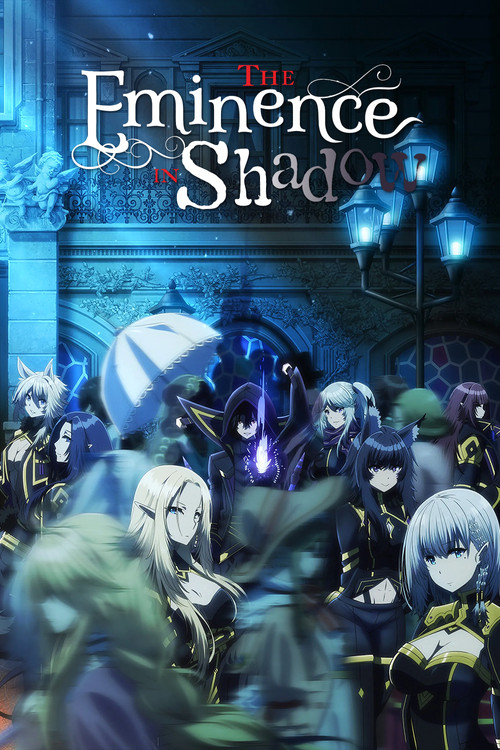
The Eminence in Shadow
A nocturnal tapestry of operatic chuunibyou spectacle and sharp dark satire, juxtaposing melancholic violet luminescence against grand gothic ruins as earnest tragedy collides with pure, unhinged theatrics.
The Eminence in Shadow

The Eminence in Shadow

陰の実力者になりたくて!

05 October 2022 — 20 December 2023 Japan 2 season 32 episode Ended 8.0 (320)

Cast: Inori Minase, Seiichiro Yamashita, Suzuko Mimori, Asami Seto, Fairouz Ai

Animation Sci-Fi & Fantasy Action & Adventure Comedy Deconstruction of Escapism & Power Fantasies The Convergence of Delusion and Reality Performative Identity vs. Authentic Being Institutional Corruption vs. Hidden Power

Overview

The Eminence in Shadow follows a modern Japanese youth obsessed not with being a conventional hero or an obvious villain, but with mastering the role of a mysterious background mastermind—a shadowbroker. After a fatal encounter with reality in his quest to obtain supernatural might, he reincarnates into a magic-laden fantasy realm as noble-born Cid Kagenou. Believing he is staging an elaborate live-action roleplaying scenario with fabricated villains, Cid invents a sinister organization called the Cult of Diablos and establishes his secret operative cell, Shadow Garden.

Across both seasons, the comedic dramatic irony hinges on the fact that Cid's fabricated conspiracies are terrifyingly real. While Cid navigates elite academies, subterranean underworlds, and corporate financial wars purely to perform dramatic shadowbroker tropes, his hyper-competent subordinates—the Seven Shades—loyally build a global empire to eradicate real ancient evil. As regional powers fall and geopolitical instability escalates across aristocratic kingdoms and lawless city-states, the narrative weaves high-stakes political intrigue, brutal action, and deadpan deconstruction into a multifaceted fantasy epic.
Core Meaning

At its core, the series explores the triumph of pure, uncompromising personal obsession over external validation and social convention. Unlike typical isekai protagonists driven by romance, duty, or morality, Cid is defined by singular, unfiltered devotion to his idiosyncratic aesthetic ideal.

The narrative delivers a dual message: a meta-satirical deconstruction of escapist power fantasies and an earnest reflection on how subjective perception creates objective reality. Through pervasive dramatic irony, it illustrates how profound changes in the world can be set into motion simply through the relentless pursuit of individual purpose, regardless of whether that purpose aligns with conventional heroic ideals.

Thematic DNA

Deconstruction of Escapism & Power Fantasies 35%
The Convergence of Delusion and Reality 25%
Performative Identity vs. Authentic Being 20%
Institutional Corruption vs. Hidden Power 20%

Deconstruction of Escapism & Power Fantasies

The series interrogates the tropes of isekai and dark fantasy by stripping the protagonist of moral righteousness. Cid acts not for kingdom, comrades, or justice, but for spectacle. This evolves from schoolyard parodies in Season 1 into complex geopolitical deconstructions during the economic and royal coups of Season 2.

The Convergence of Delusion and Reality

Cid’s lies consistently materialize as factual truths. The narrative tracks how subjective fabrications inadvertently cure biological afflictions (the Possessed), topple corrupt dynasties, and reconstruct an entire world's socioeconomic structure.

Performative Identity vs. Authentic Being

Characters continually wrestle with masking their true selves: Cid maintains his unremarkable NPC persona (Mob-character), Alexia hides her vulnerability beneath abrasiveness, and Rose balances princesshood with insurgent leadership.

Institutional Corruption vs. Hidden Power

Across both seasons, traditional power structures such as the Holy Church, the Midgar Knight Order, and aristocratic merchant guilds are depicted as hollow and corrupt puppets of the Cult, while true agency resides entirely in the shadows.

Character Analysis

Cid Kagenou / Shadow / John Smith

Seiichiro Yamashita

Archetype: Antiheroic Trickster / Absolute Operative Key Trait: Unwavering chuunibyou theatrical commitment

Motivation

Driven solely by the desire to live out the archetypal shadowbroker fantasy, evolving his theatrical stunts from school tournaments to international currency manipulation.

Character Arc

Remains blissfully detached from the genuine stakes of the world while accidentally dismantling global conspiracies; transitions seamlessly across alter egos to fulfill various narrative tropes.

Alpha

Asami Seto

Archetype: Devoted Commander / Right Hand Key Trait: Unflinching tactical loyalty and poise

Motivation

Aims to eradicate the Cult of Diablos and protect Lord Shadow, transitioning from dependent gratitude to carrying a deep strategic burden.

Character Arc

Rescued from flesh rot (Possession) as a child; evolves from an insecure exile into the supreme operational leader and commander of Shadow Garden's global network.

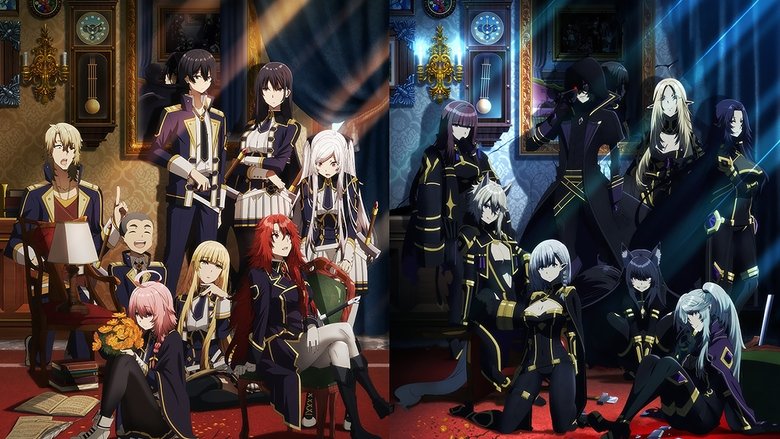
All 4 characters and cast

Symbols & Motifs

The Slime Bodysuit

Meaning:

Represents ultimate adaptability and hidden lethal efficiency. It underscores the concept that genuine power stems from fundamental mastery and scientific manipulation of magic rather than gifted destiny.

Context:

Invented and refined by Cid as magic conductors to control magic flow without external conduits, worn constantly as the standard operative gear of Shadow Garden.

The "I Am Atomic" Blast

Meaning:

Symbolizes Cid's ultimate answer to mortal vulnerability—surpassing nuclear weaponry through pure magic—and serves as the absolute physical manifestation of his shadowbroker ideal.

Context:

Appears as a dazzling purple sphere of total annihilation, utilized as the climactic punctuation in major narrative turning points.

The Piano / Moonlight Sonata

Meaning:

Symbolizes theatricality, timeless discipline, and calculated artistic drama injected into vigilantism.

Context:

Beethoven’s classic piece recurs whenever Shadow orchestrates aesthetic entrances, such as playing alone in underground catacombs to shock onlookers.

The Coin / Counterfeit Bills

Meaning:

Represents the illusion of perceived value, mirroring how identities, institutions, and reputations in the series are sustained merely by collective belief.

Context:

Serves as the dominant visual and thematic motif during Season 2’s Credit Collapse and commercial warfare arc.

Memorable Quotes

アイ・アム……アトミック。(Ai amu...... Atomikku.)
— Shadow (Cid Kagenou)

Context

Season 1, Episode 5. Whispered in pitch darkness before releasing a town-leveling magic blast against Zenon Griffey.

Meaning

Defines the franchise's signature sound design and theatrical punchline, cementing Shadow's overwhelming and peerless arcane dominance.

我が名はシャドウ。陰に潜み、陰を狩る者…… (Waga na wa Shadō. Kage ni hisomi, kage o karu mono...)
— Shadow

Context

Season 1, Episode 2. Delivered to Alpha and repeatedly recited when confronting cultists and criminals in the dark.

Meaning

The core founding manifesto and mission statement of Shadow Garden's aesthetic identity.

All 5 quotes

Episode Highlights

The Hated Classmate

S1E1

Establishes Cid’s past life on Earth as Minoru Kagenou, his brutal physical training regime, and his intervention in the kidnapping of Akane Nishino.

Significance:

Grounds the protagonist's sociopathic devotion to shadowbroker tropes before reincarnation and establishes the bridge to future dimensional events.

I Am...

S1E5

Features the full unveiling of Shadow's true magical capabilities in his duel against the Cult's Zenon Griffey.

Significance:

Debuts the iconic "I Am Atomic" sequence, solidifying the series' audiovisual reputation and tonal balance of edge and parody.

Dark Knight Academy Under Attack

S1E8

Cid intentionally orchestrates playing the helpless background student who gets cut down for an NPC bit during a school siege.

Significance:

Highlights the dark comedy of Cid's roleplay commitment amidst actual terrorist slaughter and genuine mortal danger.

Your Life, Your Wish

S1E14

Presents the tragic conclusion of the Sanctuary arc, detailing the memory phantoms of the hero Olivier.

Significance:

Unveils the historical cruelty and genetic experimentation of the Cult of Diablos while contrasting it with Shadow's effortless omnipotence.

Advent of the Demon

S1E20

Shadow enters the Bushin Festival to humiliate Princess Iris Midgar and the War Goddess Beatrix simultaneously in a massive public showdown.

Significance:

Shatters Iris’s psychological stability, disrupts royal authority, and cements Shadow as an unassailable urban myth in the capital.

The Hour of Awakening

S2E3

Concludes the Lawless City arc as Shadow intervenes in the vampire hierarchy battle against the Blood Queen Elisabeth.

Significance:

Showcases "I Am Recovery Atomic," illustrating Cid's ability to effortlessly heal an entire city district while believing he is playing a dramatic game.

John Smith

S2E6

Cid adopts the persona of super-spy John Smith, teaming up with the fox therianthrope Yukime to orchestrate a credit collapse using steel string magic.

Significance:

Pits Cid directly against Shadow Garden's commercial interests, demonstrating the peak of his chaotic, independent maneuvering.

HIGHEST

S2E12

Cid crashes Rose’s wedding, effortlessly executes the realm boss Ragnarok, defeats Cult Knight Mordred, and is swallowed by the Black Rose portal.

Significance:

Concludes the Oriana Kingdom crisis and pulls Cid through an interdimensional rift into a post-apocalyptic Earth, setting up the sequel storyline.

Philosophical Questions

Is intentionality required for an action to be virtuous?

The series explores this by having Cid rescue thousands of lives and dismantle oppressive systems entirely out of vanity and theatrical roleplay rather than moral benevolence.

How does collective belief construct socioeconomic reality?

Examined during the Credit Collapse arc, where both the Cult of Diablos and Mitsugoshi Corporation derive immense geopolitical power from manufactured trust and institutional myths.

What is the boundary between madness and genius when delusion creates demonstrable results?

Explored through Cid's absolute commitment to his fabricated scenarios, which consistently manifest as world-altering breakthroughs and accurate historical revelations.

Alternative Interpretations

The series accommodates multiple analytical readings:

Full ending explanation

Cultural Impact

Released amid a saturated modern isekai market in 2022–2023, The Eminence in Shadow achieved breakout status by pivoting away from earnest wish fulfillment into self-conscious meta-parody. Rather than treating its tropes as cheap jokes, it animated ridiculous chuunibyou scenarios with cinematic gravity and high-tier production values.

This approach sparked widespread viral moments—particularly the whisper of "I Am Atomic" across global anime communities. The series revitalized Studio Nexus’s commercial footprint and established Cid Kagenou as a prominent parody icon alongside characters like Saitama from One-Punch Man and Kazuma from KonoSuba.

Audience Reception

Audience reception across both seasons has been exceptionally positive, with the series achieving high ratings (peaking above 8.2–8.4 on platforms like MyAnimeList and IMDb):

  • Season 1: Highly praised for its subversive humor, dynamic fight choreography, and Kenichiro Suehiro's symphonic score. Audiences embraced the successful balance of unironic dark fantasy aesthetics and deadpan comedy.
  • Season 2: Applauded for tighter pacing and the innovative John Smith / Credit Collapse arc, though some viewers noted the 12-episode format felt briefer compared to Season 1's 20-episode sweep.

Overall, critics and audiences regard it as one of the definitive deconstructions of modern isekai tropes.

Interesting Facts

  • Director Kazuya Nakanishi personally drew an unprecedented number of key animations and storyboards throughout both seasons at Studio Nexus.
  • Studio Nexus produced Season 1 (20 episodes) and Season 2 (12 episodes) back-to-back with minimal production delays.
  • The acoustic drop and pressurized vacuum sound before "I Am Atomic" was custom-designed to emulate the physics of atmospheric implosion before an explosion.
  • Composer Kenichiro Suehiro composed an orchestral and choral score specifically tuned to match chuunibyou gothic extravagance.
  • Studio Nexus initially declined the project pitch before calling the producer back the next day after agreeing that Kazuya Nakanishi was essential to direct it.

Easter Eggs

James Bond and 007 Spy Tropes

In Season 2, Cid’s alter-ego John Smith adopts jazz-noir motifs, tailored suit aesthetics, and wire-based combat reminiscent of classic retro spy cinema.

Light Novel Parody Names

Cid’s internal monologues mock generic naming conventions by giving throwaway aristocratic antagonists derogatory puns like Perv Asshat (Doem Ketsuhat) and potato puns like Jaga Imo.

Classic RPG Dungeon Tropes

The Holy Sanctuary arc directly references classic fantasy RPG ruin structures where memory phantoms guard ancient seal cores.

Nuclear Deterrence Doctrine

Cid’s obsession with becoming an atomic bomb parodies Cold War military doctrines, aiming to make his physical body an unstoppable deterrent immune to conventional weaponry.

Frequently Asked Questions

Explore More About This Movie

Dive deeper into specific aspects of the movie with our detailed analysis pages

Comments (0)

Leave a comment

No comments yet. Be the first to share your thoughts!

Similar Movies