Skip to content
Hello Monster
A chilly psychological labyrinth soaked in melancholic shadows, where shattered innocence and estranged brotherly yearning collide under the cold, unblinking gaze of an intimate monster.
Hello Monster

Hello Monster

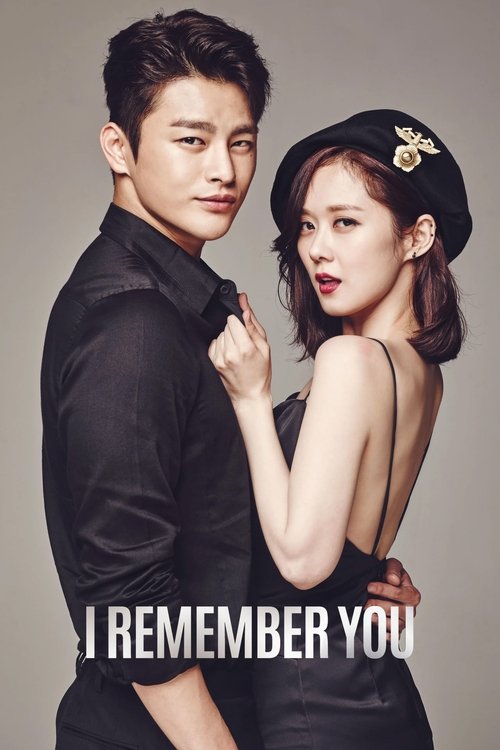
너를 기억해

22 June 2015 — 11 August 2015 South Korea 1 season 16 episode Ended 7.3 (128)

Cast: Seo In-guk, Jang Na-ra, Park Bo-gum, Lee Chun-hee, Choi Won-young

Drama Mystery Nature vs. Nurture: The Making of a Monster Brotherhood, Abandonment, and Guilt Memory, Repression, and Identity Institutional Neglect and Vengeance vs. Law

Overview

Hello Monster (너를 기억해, also known as I Remember You) is a psychological crime thriller and character-driven mystery created by the KBS Drama Division, written by Kwon Ki-young, and directed by Noh Sang-hoon and Kim Jin-won. The narrative follows Lee Hyun (David Lee), an eccentric, aloof criminal profiler who returns to South Korea from the United States after a crime scene trigger awakens fragments of his repressed childhood memories. Upon his return, he crosses paths with Detective Cha Ji-an, an elite investigator who has secretly monitored Hyun for years because both of their lives were shattered by the same traumatic origin: the murderous rampage and subsequent disappearance of the psychopathic killer Lee Joon-young.

As Hyun consults on high-profile homicide cases with Ji-an’s special investigation unit, the procedural crimes mirror the central trauma of his past. Beneath every murder investigation lies an intricate cat-and-mouse game between Hyun and a shadowy network of individuals tied to his father’s murder and the disappearance of his younger brother, Lee Min. Across its 16-episode arc, the narrative weaves together personal vendettas, forgotten grief, and philosophical inquiries into human nature, forcing both Hyun and Ji-an to confront whether monsters are born or made.

Core Meaning

The central thesis of Hello Monster explores the cyclical mechanics of trauma, misjudgment, and the social construction of "monsters." Rather than presenting evil as an inexplicable, supernatural anomaly, the series argues that true monstrosity is forged through isolation, lack of parental empathy, and self-fulfilling prophecies. By framing Lee Joon-young not merely as a killer, but as a twisted caregiver who collects and shapes traumatized youth, the drama demonstrates how emotional abandonment warps human connection into violent distortion. Ultimately, the overarching message stresses that redemption and psychological preservation are anchored in memory—remembering another person's pain and refusing to abandon them, even at the edge of the abyss.

Thematic DNA

Nature vs. Nurture: The Making of a Monster 35%
Brotherhood, Abandonment, and Guilt 25%
Memory, Repression, and Identity 20%
Institutional Neglect and Vengeance vs. Law 20%

Nature vs. Nurture: The Making of a Monster

The dramatic engine of the series explores whether psychopathy is genetically hardwired or nurtured through trauma, emotional rejection, and exposure to cruelty. This theme evolves from young Hyun being feared by his own father to the adult realization that young minds reflect the treatment they receive.

Brotherhood, Abandonment, and Guilt

The core emotional relationship is between Hyun and his brother Min. The narrative traces how a perceived abandonment transforms childhood adoration into lethal resentment, exploring how love can decay into pathology when validation is withheld.

Memory, Repression, and Identity

Hyun’s psychological journey centers on confronting selectively erased trauma. The series demonstrates that denying one's past creates blind spots that allow monsters to thrive unnoticed, while retrieving memory requires agonizing moral reckonings.

Institutional Neglect and Vengeance vs. Law

Through the procedural subplots and Lee Joon-young’s insidious foster network, the series exposes the failure of child welfare, policing, and penal systems. The characters debate whether justice within institutional boundaries is sufficient or if extrajudicial retribution is an inevitable consequence of systemic abandonment.

Character Analysis

Lee Hyun / David Lee

Seo In-guk

Archetype: The Brilliant, Emotionally Detached Detective / Antiheroic Thinker Key Trait: Piercing deductive intuition masked by nonchalant arrogance.

Motivation

Initially seeks the truth behind his erased memories; evolves into an urgent mission to rescue his younger brother from the moral void.

Character Arc

Begins as an aloof, cynical profiler who treats human interactions as cold puzzles. As he recovers his childhood memories and reconnects with Ji-an and his brother, his defensive intellectual walls crumble, forcing him to accept guilt, vulnerability, and love.

Cha Ji-an

Jang Na-ra

Archetype: The Tenacious Crusader / Emotional Anchor Key Trait: Relentless moral determination paired with sharp street smarts.

Motivation

Uncover the fate of her missing father and clear his name from suspected complicity with Lee Joon-young.

Character Arc

Starts as an obsessive detective branded as a "stalker" who relies on sheer persistence. She evolves into an emotionally mature investigator who prevents Hyun from falling into darkness while confronting her own unresolved grief over her father.

All 5 characters and cast

Symbols & Motifs

Sketchbooks and Cryptic Drawings

Meaning:

Symbolize repressed memory, hidden guilt, and communication between brothers that bypasses spoken language.

Context:

Created in childhood with recurring motifs of eyes, two-headed figures, and distorted portraits.

Two-Headed Monsters / Mirror Doubles

Meaning:

Symbolizes the duality of human potential—that the difference between a savior and a killer can rest on a single decision.

Context:

Visual and thematic doublings appear continuously between Hyun and Min, Hyun and Joon-young, as well as Ji-an and Hyun.

Buried Remains and Sealed Basements

Meaning:

The basement represents psychological compartmentalization and parental mislabeling, while unmarked graves symbolize unresolved historical trauma that festers until unburied.

Context:

Encountered in the basement where Hyun was quarantined by his father, and the unmarked graves concealing Lee Joon-young's victims.

The Living Room Table / Shared Meals

Meaning:

Serves as an ironic domestic motif where lethal enemies dine together, masking menace beneath mundane civility.

Context:

Repeated scenes of characters sharing meals, cooking, and drinking tea—especially between Hyun, Lawyer Jung Sun-ho, and Medical Examiner Lee Joon-ho.

Memorable Quotes

너는 어떤 아이일까? 넌 나 같은 사람이 될까? 아니면 정반대의 사람이 될까? 문은 하나가 아니란다.
— Young Lee Joon-young (Doh Kyung-soo)

Context

Spoken to young Hyun during an interrogation room interaction in Episode 1/2.

Meaning

It frames the entire nature-versus-nurture conflict and foretells Hyun’s lifelong struggle between becoming an investigator or a monster.

나는 20년 동안 형을 기다렸는데... 왜 나를 찾지 않았어?
— Jung Sun-ho / Lee Min (Park Bo-gum)

Context

From Episode 12 during his confrontation with Lee Hyun.

Meaning

This quote shatters the cold facade of the serial killer attorney, exposing the abandoned, weeping child underneath.

All 4 quotes

Episode Highlights

Every Child's Story Starts with Their Parents

S1E1

Establishes the past incident between criminal profiler Lee Joong-min, his sons Hyun and Min, and the psychopathic inmate Lee Joon-young. It introduces the tragic misunderstanding that caused Hyun’s father to lock him in a basement to prevent him from becoming a "monster."

Significance:

Sets the emotional stakes and foundational mystery for the entire drama.

Hello, Monster

S1E2

Lee Joon-young escapes from prison, Hyun’s father is murdered, and young Min mysteriously vanishes. Adult Hyun begins his tenuous partnership with Ji-an.

Significance:

Shifts the show from prologue into the primary investigation narrative.

Find Me

S1E10

Tensions climax as Ji-an is kidnapped by an elusive killer, prompting Hyun, Sun-ho (Min), and Joon-ho (Joon-young) to collaborate in an eerie temporary alliance. Ji-an uses cunning to survive, and Hyun realizes the depths of his feelings for her, ending with their first kiss.

Significance:

Consolidates the romantic and emotional partnership between the two leads while placing the three childhood figures in the same analytical sphere.

If We Had to Kill Someone / The Reunion

S1E12

The emotional climax of the series: Hyun openly confirms that Lawyer Jung Sun-ho is his lost younger brother Min. The ensuing confrontation strips away Sun-ho’s composure, laying bare two decades of grief, longing, and perceived betrayal.

Significance:

Completely pivots the brotherly dynamic from hostile psychological chess into tragic protective desperation.

Lee Joon-young’s Room

S1E14

Ji-an uncovers the tragic confirmation regarding her missing father, bringing her to the brink of shooting Joon-ho in cold-blooded revenge before Hyun intervenes and holds her back.

Significance:

Tests the moral core of Ji-an and proves Hyun's growth into an empathetic protector.

I Remember You

S1E16

Hyun recovers the final piece of his repressed memory: the home invasion where their mother was murdered, during which young Hyun shot the attacker in self-defense, a trauma witnessed by Min. Min attempts to assassinate Joon-young to free Hyun, suffering severe stab wounds. Joon-young slips away into society, Min survives and is given a choice regarding his future identity, and Hyun reunites with Ji-an one year later.

Significance:

Resolves the psychological origins of the brothers while leaving the pursuit of justice open-ended.

Philosophical Questions

Can a monster be diagnosed at birth, or does society manufacture its own nightmares?

Explored through the conflicting trajectories of Hyun and Min, who shared the same violent trauma but ended up on opposite sides of the law.

Is memory essential to morality?

Hyun’s loss of memory made him a functional profiler, while Min’s retention of it bound him to murder, questioning whether forgetting is a biological mercy or a moral abdication.

Can restorative love redeem actions that have already crossed the threshold of murder?

Dramatized through Hyun’s desperate attempt to embrace Min despite knowing the horrifying reality of his crimes.

Alternative Interpretations

Several distinct readings frame the series:

Full ending explanation

Cultural Impact

Airing in summer 2015, Hello Monster was broadcast during a wave of gritty Korean police procedurals (Signal, Tunnel, and Voice emerged shortly after). At the time, Korean public television (KBS2) rarely allowed darkness and psychological ambiguity to take center stage without softening it with overt romantic comedy tropes.

Domestically, the drama faced stiff ratings competition from simultaneous broadcasts (High Society and Splendid Politics), averaging modest Nielsen ratings of 4%–5%. However, it achieved immense international praise and developed an ardent cult following among Korean drama connoisseurs for its tight writing, absence of filler, and refusal to offer neat, fairy-tale solutions to complex moral dilemmas. The series is widely credited as a key milestone in propelling Park Bo-gum to elite stardom.

Audience Reception

Critics praised Kwon Ki-young's meticulous screenplay, which maintained narrative tension and thematic consistency across all 16 episodes without relying on cheap melodramatic twists. The chemistry between Seo In-guk and Park Bo-gum was lauded as one of the most powerful and heartbreaking portrayals of brotherhood in Korean television history.

Conversely, the domestic ratings were considered an unfortunate casualty of broadcast timing and the show's dark, cerebral tone. Some viewers also expressed frustration with the open-ended finale, particularly the lack of direct retribution or immediate capture of Lee Joon-young.

Overall, it is regarded today as an underrated masterpiece of the K-thriller genre, celebrated for its nuanced exploration of psychopathy, stellar ensemble acting, and emotional resonance.

Interesting Facts

  • Park Bo-gum’s nuanced portrayal of the psychopathic, emotionally starved Jung Sun-ho was widely hailed by critics as his breakthrough into serious dramatic acting, earning him the Best Supporting Actor and Popularity Awards at the 2015 KBS Drama Awards.
  • The child actors who played young Lee Hyun (Hong Hyun-taek) and young Lee Min (Hong Eun-taek) are actual brothers in real life, adding authentic emotional chemistry to their childhood scenes.
  • Doh Kyung-soo (EXO’s D.O.) made an uncredited/special appearance in early episodes as the young psychopathic Lee Joon-young. His eerie performance received significant critical acclaim and set the menacing psychological tone for the entire production.
  • The production was originally developed and promoted under the working title Hello Monster (헬로 몬스터) before KBS changed its primary domestic title to Remember You (너를 기억해), though the international release retained Hello Monster.
  • Writer Kwon Ki-young conducted extensive study into criminal profiling, childhood attachment disorders, and forensic psychiatry to draft complex serial killers whose motives stepped outside generic revenge tropes.

Easter Eggs

The "Two-Headed Man" Drawing

The drawings sent to Hyun by Sun-ho were designed with intentional anatomical anomalies (eyes drawn on backs of heads, intertwined bodies), foreshadowing that the crimes involved two collaborative killers—one providing legal defense, the other orchestrating murder.

The Great Gatsby Allusion

In Episode 5, an explicit reference is made to F. Scott Fitzgerald's The Great Gatsby, thematically foreshadowing individuals attempting to fabricate elegant, respectable alter egos to obscure a violent, disreputable past.

Choi Won-young’s Character Name Wordplay

In Korean, the adult killer's alias "Lee Joon-ho" differs by only one syllable from his true identity "Lee Joon-young," a brazen display of serial killer arrogance, mocking the police by hiding under a name virtually identical to his real one.

Frequently Asked Questions

Explore More About This Movie

Dive deeper into specific aspects of the movie with our detailed analysis pages

Comments (0)

Leave a comment

No comments yet. Be the first to share your thoughts!

Similar Movies