Skip to content
18 Again
A heartwarming fantasy melodrama steeped in bittersweet nostalgia, where rainy basketball courts and faded youth become a canvas for rediscovering forgotten love and healing fractured family ties through quiet, sacrificial grace.
18 Again

18 Again

18 어게인

"You're young again. You're at an age full of dreams and hope. What's your dream now that you're young again?"

21 September 2020 — 10 November 2020 South Korea 1 season 16 episode Ended 8.3 (268)

Cast: Lee Do-hyun, Kim Ha-neul, Yoon Sang-hyun, Roh Jeong-eui, Ryeoun

Drama Sci-Fi & Fantasy Comedy Family, Sacrifice, and Unseen Parental Devotion Regret, Reflection, and Re-Evaluating Life Choices Communication and Empathy in Marriage Coming of Age and Identity Across Generations Forgiveness, Reconciliation, and Second Chances

Overview

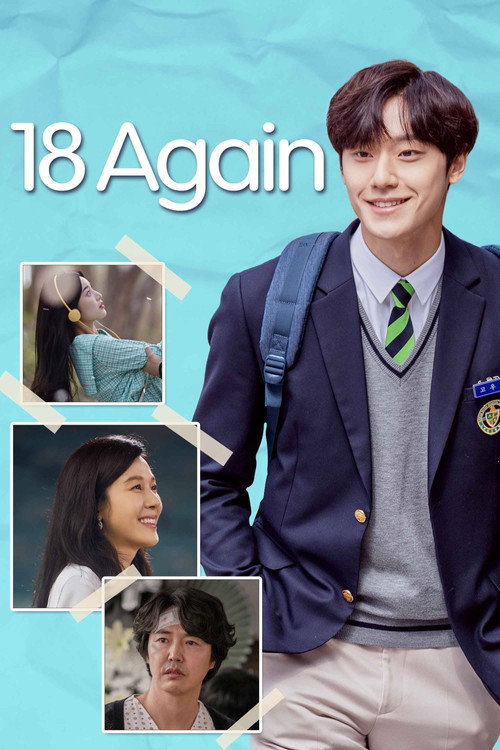
18 Again (2020) is a 16-episode South Korean fantasy-drama series directed by Ha Byung-hoon and based on the 2009 American film 17 Again. The story follows 37-year-old Hong Dae-young (Yoon Sang-hyun), a worn-out, unemployed father whose 18-year marriage to Jung Da-jung (Kim Ha-neul) is collapsing. Blamed by his family and regretting the moment he gave up his promising high school basketball career due to an unexpected teenage pregnancy, Dae-young wishes to turn back the clock. Mysteriously, his body reverts to his 18-year-old self (played by Lee Do-hyun), while his middle-aged mind remains intact.

Adopting the pseudonym Ko Woo-young and pretending to be the son of his eccentric best friend Go Deok-jin (Kim Kang-hyun), Dae-young enrolls in his children's high school. Expecting to relive his glory days and pursue his athletic dreams, Dae-young instead uncovers the hidden struggles of his twin teenage children, Shi-ah (Roh Jeong-eui) and Shi-woo (Ryeoun). Moving through their lives as a classmate and friend, he secretly protects them from bullies, supports their secret aspirations, and re-evaluates the immense sacrifices his wife made throughout their marriage.

Simultaneously, Jung Da-jung fights ageism and societal stigma to pursue her lifelong dream of becoming a TV news anchor. As Woo-young stays close to Da-jung from the shadows, Da-jung finds herself unnerved by the mysterious teenager who acts, speaks, and cares for her exactly like the young man she fell in love with two decades earlier. Across its run, the series evolves from a body-swap comedy into an emotional study of marriage, parenting, and self-forgiveness.

Core Meaning

The core message of 18 Again is that true happiness is not found in chasing unlived dreams or romanticizing "what could have been," but in actively cherishing the choices and people right in front of us. The creators emphasize that regret often stems from a lack of honest communication rather than a lack of love.

Through Dae-young's dual perspective as a struggling father and a youthful teenager, the series reveals that love is expressed through quiet, unglamorous, everyday sacrifices that often go unnoticed by those receiving them. The show reminds viewers that life's inevitable hardships are not signs of failure, but shared hurdles that bring families closer when met with empathy and openness.

Thematic DNA

Family, Sacrifice, and Unseen Parental Devotion 30%
Regret, Reflection, and Re-Evaluating Life Choices 25%
Communication and Empathy in Marriage 20%
Coming of Age and Identity Across Generations 15%
Forgiveness, Reconciliation, and Second Chances 10%

Family, Sacrifice, and Unseen Parental Devotion

The narrative reveals how parents silently throw away their individual dreams to build a safety net for their children. Dae-young abandoned his basketball career, while Da-jung paused her education and professional ambitions. Throughout the series, Dae-young's journey as Woo-young allows him—and the audience—to see that his children's resentment stemmed from miscommunication rather than a lack of care, highlighting the depth of quiet parental love.

Regret, Reflection, and Re-Evaluating Life Choices

Dae-young begins the series consumed by regret, believing his life went downhill the moment he became a teenage father. Living as an 18-year-old forces him to realize that his regret was an illusion born from bitterness. The show demonstrates that every choice carries hardship, and true maturity lies in taking responsibility for one's path rather than blaming others.

Communication and Empathy in Marriage

The crumbling of Da-jung and Dae-young’s marriage is not due to a breakdown of love, but the slow build-up of unspoken burdens, pride, and hidden pain. By observing Da-jung from a distance, Dae-young learns how lonely she felt during their marriage, while Da-jung comes to understand the crushing pressure Dae-young carried silently as the primary provider.

Coming of Age and Identity Across Generations

The series parallels the growth of teenagers (Shi-ah, Shi-woo, and their peers) with the emotional maturation of middle-aged adults. It explores how adolescents search for identity under social pressure and bullying, while adults must constantly redefine themselves when life strays from their initial plans.

Forgiveness, Reconciliation, and Second Chances

Beyond romantic and familial reconciliation, the show emphasizes making peace with estranged parents (such as Dae-young and his father) and forgiving oneself for past failures. It asserts that it is never too late to restart a career or rebuild a broken bond.

Character Analysis

Hong Dae-young / Ko Woo-young

Yoon Sang-hyun (37-year-old Dae-young) / Lee Do-hyun (18-year-old Dae-young / Ko Woo-young)

Archetype: Protagonist / Tragic Hero / Devoted Father Key Trait: Deep, sacrificial paternal instinct hidden beneath a gruff exterior

Motivation

Begins with the desire to reclaim his lost youth and basketball career, which evolves into an urgent mission to heal his family and earn back his wife's heart.

Character Arc

Starts as a defeated, cynical middle-aged man blaming his past choices for his miserable present. Upon getting his 18-year-old body back, he initially plans to live for himself, but quickly reverts to 'dad mode' when he sees his children struggling. He transforms from a bitter, distant head of the household into an empathetic listener and supportive partner.

Jung Da-jung

Kim Ha-neul (Younger version: Han So-eun)

Archetype: Co-Protagonist / Resilient Heroine / Determination Key Trait: Unshakeable dignity, professional persistence, and deep maternal love

Motivation

To reclaim her independence, establish a stable career for her children, and find authentic happiness.

Character Arc

Begins as an exhausted mother who files for divorce after years of silent suffering and emotional distance. She bravely pursues her dream of being a broadcast anchor despite ageism and systemic bias. Throughout the series, she learns to release her stored resentment, recognize her husband’s quiet efforts, and allow herself to be vulnerable again.

All 5 characters and cast

Symbols & Motifs

The Umbrella (우산)

Meaning:

A visual symbol of care and protection. Da-jung notes that on a rainy day, the true measure of love is revealed by the angle at which a person holds an umbrella, willing to let their own shoulder get soaked to keep the other person dry.

Context:

Used throughout rainy scenes to visually measure love and selfless discomfort between characters.

The Half Moon vs. Full Moon (반달과 초승달/보름달)

Meaning:

Symbolizes hidden presence and incomplete truth. Just because the unseen half of the moon is in shadow does not mean it isn't there; similarly, Dae-young’s love and support were always present even when invisible to his family.

Context:

Serves as a key metaphor during confessions and reflections. When Da-jung and Dae-young finally reconcile, the half moon symbolically becomes full.

The Basketball / Basketball Court (농구장)

Meaning:

Represents abandoned youth, unfulfilled potential, and the ultimate locus of choice.

Context:

It serves as the physical space where Dae-young makes his life-changing decisions—first choosing Da-jung over his career in high school, making his magic wish, and later choosing his family over his second chance at stardom.

Untied Shoelaces (신발끈)

Meaning:

A motif representing subtle, grounded affection.

Context:

Dae-young's instinct to bend down and tie Da-jung’s and his children's shoelaces serves as a sensory trigger that continually reminds Da-jung of her husband.

Rain and Storms (비)

Meaning:

Represents emotional expression and dramatic shifts in relationships.

Context:

Serves as a backdrop for emotional clarity, cathartic confessions, and critical turning points in relationships throughout the series.

Memorable Quotes

비가 오는 날엔 사랑의 크기를 알 수 있다. 함께 우산을 써도 각자의 어깨가 젖어가는 각도로, 그 사람이 나를 얼마나 생각하는지 보니까.
— Jung Da-jung

Context

Spoken in Episode 1 and Episode 14 regarding shared umbrellas in the rain.

Meaning

Reflects on how care is shown through selfless, physical discomfort, a realization that later helps her recognize Dae-young's unconditional love.

네가 내 미래고, 우리 아기가 내 미래야.
— Young Hong Dae-young (Lee Do-hyun)

Context

Episode 1 and Episode 16 flashback. Young Dae-young walks away from his critical high school scout basketball game to choose Da-jung and their unborn twins.

Meaning

Cements Dae-young's ultimate priority in life over athletic fame.

All 5 quotes

Episode Highlights

Life Goes On

S1E1

Establishes the catalyst of the show. Shows Dae-young getting fired, served divorce papers, and subsequently making a wish at his old high school basketball court, turning back into an 18-year-old.

Significance:

Launches the central body-swap premise and establishes the primary conflicts in Dae-young's personal and family life.

About the Things That Made You Smile

S1E3

Woo-young enrolls in high school and discovers his son Shi-woo is being severely bullied by Goo Ja-sung and that his daughter Shi-ah works part-time secretly. Woo-young steps up as a friend to defend Shi-woo and teach him basketball.

Significance:

Shifts Dae-young's focus from personal ambition to protecting and supporting his children from within their world.

The Story You Didn't Know

S1E8

Focuses on fatherhood and intergenerational reconciliation. Woo-young plays in a basketball match in front of his estranged father, Hong Joo-man, and uses sign language on the court to reveal his identity, resolving decades of misunderstanding.

Significance:

Resolves the long-standing emotional rift between Dae-young and his father through a powerful court gesture.

If You Love Again

S1E10

Da-jung gains massive public respect as an anchor, while Ye Ji-hoon's secret as the guardian of his deceased brother's daughter is highlighted. Emotional bonds shift as Da-jung senses Dae-young's presence through Woo-young.

Significance:

Deepens Da-jung's career narrative and intensifies her intuitive connection to Woo-young.

The Half Moon

S1E12

Uses the half-moon metaphor to explore how Dae-young's love was present even when hidden. Woo-young's straightforward emotional approach leads to a dramatic, confusing kiss with Da-jung, accelerating the romantic tension.

Significance:

Serves as a major romantic turning point, bringing the hidden truth closer to light.

To Know You

S1E14

Major climax and turning point. Da-jung connects all the clues—the half-moon speech, habits, and basketball gestures—and realizes Ko Woo-young is Hong Dae-young. Features the rain-soaked emotional confession.

Significance:

Unveils Woo-young's true identity to Da-jung, shifting their dynamic toward emotional reconciliation.

Life Goes On (Final Episode)

S1E16

Series finale. Dae-young forfeits his second chance at a youthful basketball career to protect his family, returns to his 37-year-old body, remarries Da-jung, and embraces the messy reality of life.

Significance:

Provides complete narrative closure, affirming that true maturity and happiness lie in embracing real family life over fantasy.

Philosophical Questions

Is regret a reflection of making wrong choices, or of failing to appreciate the choices made?

The series demonstrates that unhappiness often comes not from past mistakes, but from constantly longing for unchosen alternatives.

Can love exist without active communication?

18 Again argues that good intentions and silent sacrifices are insufficient in human relationships; true love requires vulnerability and active listening.

What defines a person's true identity—their physical body or their history of choices?

Woo-young's dual identity questions whether maturity is a product of age or the accumulated weight of love and responsibility.

Is it ever too late to restart one's life?

Through Da-jung's late-career start and Dae-young's transformation, the show asserts that age should not dictate personal growth or the pursuit of happiness.

Alternative Interpretations

The series can be viewed through several distinct analytical lenses:

Full ending explanation

Cultural Impact

Social Context: 18 Again directly confronts prevalent social issues in contemporary South Korea:

  • Stigma Around Teenage Pregnancy: Highlights the severe social judgment, interrupted education, and economic hardships faced by young unwed or teenage parents.
  • Gender and Age Discrimination in the Workplace: Jung Da-jung's struggle as a 37-year-old mother trying to break into the broadcast media industry reflects real Korean workplace ageism and gender bias against mothers re-entering the job market.
  • School Bullying (Iljin Culture): Depicts the psychological and physical torment in high schools, emphasizing how fear keeps victims silent from their parents.

Pop Culture Influence and Legacy: The show cemented Lee Do-hyun as a top-tier A-list actor in the South Korean entertainment industry. It is widely celebrated as one of the rare Western adaptations (from 17 Again) that surpassed its source material by expanding a short romantic comedy into a multi-layered family melodrama.

Audience Reception

Critical Praise: Critics praised the series for its tight screenplay, exceptional pacing, and emotional nuance. Lee Do-hyun received universal acclaim for convincingly portraying a 37-year-old father inside an 18-year-old body without making the performance feel absurd or exaggerated. The soundtrack (featuring hits by Sohyang and Sondia) was lauded for heightening the show's emotional moments.

Main Points of Criticism: Some viewers noted that episodes 11 to 13 dragged slightly due to romantic misunderstandings and side subplots (such as secondary character romances and workplace politics). A few critics argued that Da-jung's failure to recognize Woo-young's identity until episode 14 required a strong suspension of disbelief.

Overall Verdict: Widely considered one of the finest family-healing K-dramas of 2020, holding high user ratings across global platforms (9.0+ on MyDramaList).

Interesting Facts

  • Lee Do-hyun was a varsity basketball player during his high school days, allowing him to perform almost all of his complex basketball stunts, dribbling, and shooting scenes without a stunt double.
  • To play a middle-aged man trapped in an 18-year-old’s body convincingly, Lee Do-hyun closely analyzed Yoon Sang-hyun’s speech patterns, walking style, vocal tone, and sighing habits, ensuring a seamless performance between both actors.
  • Director Ha Byung-hoon previously directed the hit 2017 fantasy marriage-healing K-drama Go Back Couple, making 18 Again his spiritual follow-up in exploring second chances in relationships.
  • The series was originally scheduled to premiere on September 7, 2020, but was delayed by two weeks to September 21, 2020, due to strict COVID-19 safety guidelines and filming pauses in South Korea.
  • Lee Do-hyun's performance in his first leading role earned him widespread critical acclaim, winning Best New Actor in Television at both the prestigious 57th Baeksang Arts Awards and the 7th APAN Star Awards.

Easter Eggs

Announcer Test Cameos (Episode 2)

Popular real-life Korean TV presenters Jun Hyun-moo and Jang Sung-kyu make cameo appearances as a severe judge and a panicked applicant, respectively, during JBC’s blind recruitment exam.

'Go Back Couple' Reunion (Episode 8)

Actor Huh Jung-min, who played a main character in director Ha Byung-hoon's prior work Go Back Couple, makes a humorous cameo as Choo Ae-rin’s ex-boyfriend.

K-Drama Parodies

The show incorporates slow-motion hero shots parodying iconic scenes from Descendants of the Sun when Woo-young and Deok-jin walk onto the high school campus.

Basketball Legend Appearance

Real-life South Korean basketball icon Heo Jae appears in a sports-centric cameo, winking at the show's heavy basketball lore.

Frequently Asked Questions

Explore More About This Movie

Dive deeper into specific aspects of the movie with our detailed analysis pages

Comments (0)

Leave a comment

No comments yet. Be the first to share your thoughts!

Similar Movies