Skip to content
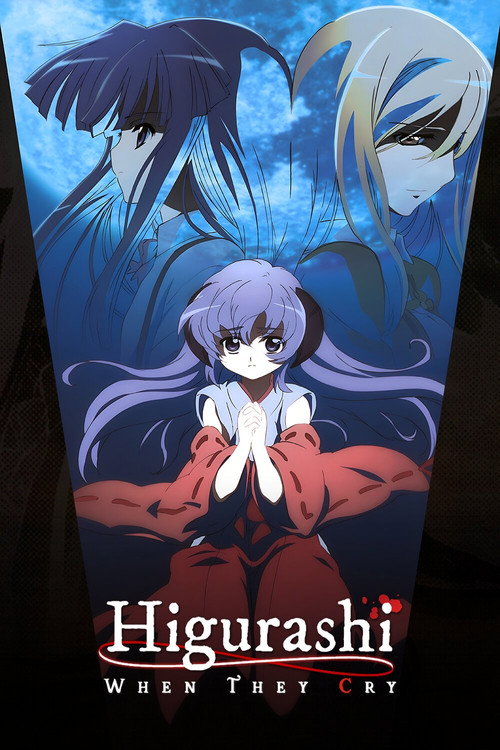
Higurashi: When They Cry
A sun-bleached village mystery where cicadas drone over friendship turning to dread, and every idyllic summer afternoon hides a blade in the tall grass.
Higurashi: When They Cry

Higurashi: When They Cry

ひぐらしのなく頃に

"It's not paranoia... if they really are trying to kill you!"

05 April 2006 — 18 December 2007 Japan 2 season 50 episode Ended 7.7 (245)

Cast: Soichiro Hoshi, Mai Nakahara, Satsuki Yukino, Mika Kanai, Yukari Tamura

Drama Animation Mystery Trust versus paranoia Fate and the struggle to defy it Community, tradition and the outsider Trauma and hidden suffering Truth versus belief

Overview

Higurashi: When They Cry adapts the sound-novel series by Ryukishi07 and the circle 07th Expansion. Studio Deen made the anime under director Chiaki Kon. It aired in 2006 and was followed by the second season, Kai, in 2007. Together the two seasons run for 50 episodes: 26 in the first and 24 in the second. The setting is Hinamizawa, a small, fictional rural village where mysterious deaths and disappearances recur every year around the local festival.

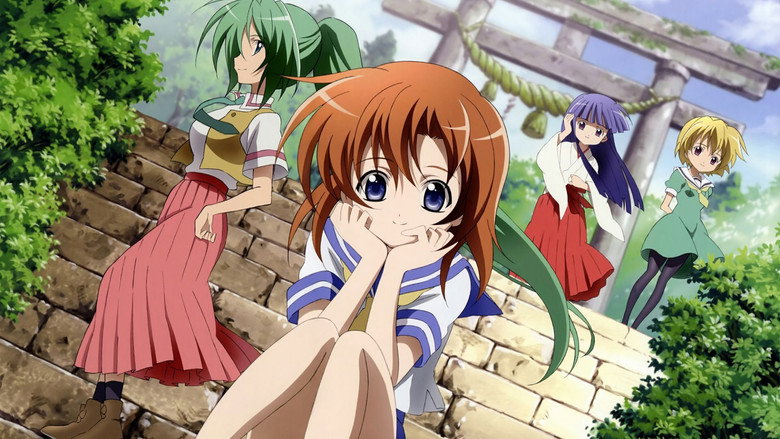
Keiichi Maebara, a transfer student from the city, quickly befriends a lively group of classmates who play games together. The story is told in self-contained arcs, each running a few episodes. Most arcs begin with the same cheerful summer and then end differently and tragically. The early "question" arcs pile up fear, paranoia and unexplained violence. They leave the viewer to ask whether the cause is a curse, a conspiracy or a coincidence.

The second season supplies the "answers". It revisits the same events from other angles and explains the mechanics behind the repeating tragedies. It also changes the tone from dread to a hard-fought search for a way out. Throughout, the show turns on how friendship, suspicion and the weight of a community's history can both destroy people and save them.
Core Meaning

The series argues that tragedy is rarely the work of a single monster or curse. It grows from isolation, distrust and the inability to ask for help. Many of the horrors come from characters who suffer alone and decide they cannot rely on their friends.

The answer arcs offer the counterpoint. Fate can be defied through trust, communication and shared effort, and the "true magic" is repair rather than destruction. The ending is notably gentle. It prefers hope and reconciliation to vengeance, and the creator himself questioned whether treating the villain only as an enemy was the ideal resolution.

Thematic DNA

Trust versus paranoia 30%
Fate and the struggle to defy it 25%
Community, tradition and the outsider 20%
Trauma and hidden suffering 15%
Truth versus belief 10%

Trust versus paranoia

The question arcs show friendships collapsing under suspicion, where one lie or misread glance leads to violence. The answer arcs show the same group surviving because they choose to confide in each other.

Fate and the struggle to defy it

Repeating tragedies create an impression of inevitability. Over the second season this changes into an active fight to break the cycle, and the show treats fate as something that can be overcome.

Community, tradition and the outsider

A closed village with old grudges, a dam conflict and a local deity shapes how people treat outsiders and one another. Folklore turns out to be entangled with real social pressure.

Trauma and hidden suffering

Beneath the cheerful club scenes are characters with painful pasts. They hide their pain until it erupts, and the series then explores where it comes from and how to heal it.

Truth versus belief

Curse or conspiracy? The mystery structure makes viewers weigh rational and supernatural explanations. It shows how belief shapes behaviour regardless of what is objectively true.

Character Analysis

Keiichi Maebara

Soichiro Hoshi

Archetype: Everyman hero / outsider Key Trait: Persuasive, impulsive loyalty

Motivation

First he wants to fit in and protect his new friends. Later he wants to break the cycle by believing in them.

Character Arc

He arrives as a cheerful newcomer. In the question arcs he is often broken by paranoia and the pressure of secrets. In the answer arcs he becomes the one who insists on trust and on confronting problems head-on, which helps bring about a happier outcome.

Rena Ryuugu

Mai Nakahara

Archetype: Kind friend with hidden turmoil Key Trait: Cute and dangerous

Motivation

She seeks belonging and relief from loneliness, and her catchphrase of taking cute things home captures her warmth.

Character Arc

Rena seems sweet and childlike but carries a deeply fragile mind. The first season uses her for the series' most frightening moments. The second season explains her suffering and gives her a place in the group's recovery.

All 5 characters and cast

Symbols & Motifs

Cicadas (higurashi)

Meaning:

The passing of time, the cycle of summers, and a lament for lives cut short.

Context:

Their sound opens and fills nearly every scene, and it gives the title its meaning. It marks both calm afternoons and the onset of horror.

Oyashiro-sama

Meaning:

The village's curse and its collective guilt, a way of explaining violence as divine punishment.

Context:

The deity's alleged wrath is invoked to account for each year's death. Over the series the audience learns how belief in it influences what people do.

The Watanagashi festival

Meaning:

A ritual cycle that anchors the repeating tragedy, binding the village's tradition to its annual violence.

Context:

The festival falls near the day when someone dies and someone vanishes, so each arc moves toward the same date.

The club's games

Meaning:

Everyday joy and the bonds of friendship, often used as a test of character and loyalty.

Context:

The cheerful club scenes open every arc. Their warmth sets up the contrast when the same people turn on each other.

Keiichi's note

Meaning:

Hope that someone else will carry the truth forward.

Context:

A note left at the end of the first arc asks whoever finds it to uncover the truth, and it foreshadows the series' structure of retries.

Memorable Quotes

Whoever finds this note, please uncover the truth.
— Keiichi Maebara

Context

It comes from Keiichi's note at the end of the first arc, Onikakushi-hen (Season 1).

Meaning

A plea to the future, setting up the series' theme of passing truth between iterations.

We are gonna take back all of our happiness that we lost.
— Rika Furude

Context

Part of Rika's note at the end of Matsuribayashi-hen, the finale of Season 2.

Meaning

It reflects the series' conclusion that hope and happiness can be reclaimed after endless suffering.

All 5 quotes

Episode Highlights

Onikakushi-hen (Abducted by Demons) opening

S1E1

The first arc introduces Hinamizawa, the club and Keiichi. It then collapses into suspicion and horror. Exact episode numbering varies by listing; this is the arc's opening.

Significance:

It establishes the template of idyllic days turning into paranoia that the whole series uses and later reinterprets.

Watanagashi-hen (Cotton Drifting) opening

S1E5

The second arc retells the opening from a different angle and reveals the Sonozaki family and the festival's role.

Significance:

It shows that the same events can be seen differently and starts to hint at hidden agendas.

Tatarigoroshi-hen (Curse Killing) opening

S1E9

Keiichi tries to help Satoko, whose abusive guardian threatens her. It is the arc where he is most heroic.

Significance:

It shows the series' emotional core: individuals who need help and a community unwilling or unable to give it.

Meakashi-hen (Eye Opening) opening

S1E15

The arc, which tells events from the Sonozaki twin's point of view, is the series' darkest and most disturbing. Episode number is approximate.

Significance:

It begins the shift from mystery to explanation and shows how isolation drives people to terrible acts.

Yakusamashi-hen (Medicine Waking) opening

S2E1

An arc written by Ryukishi07 specifically for the anime, which opens the second season and fills in detail missing from the adaptation.

Significance:

It bridges the question and answer arcs and sets up the second season's explanations.

Minagoroshi-hen (Massacre) opening

S2E5

The arc turns to Rika's perspective and reveals the truth about the cycle. Episode number is approximate.

Significance:

It is the turning point, shifting the series from fear to a fight for survival.

Matsuribayashi-hen (Festival Accompanying) finale

S2E24

The group tries to break the cycle together. The characters survive, though one of them remains comatose, leaving a note of hope.

Significance:

It resolves the series with a message of cooperation and leaves a small ambiguity at the edge of the happy ending.

Philosophical Questions

Is tragedy inevitable, or can it be avoided through choice?

The arcs repeat a fixed disaster, but the answer arcs show individuals deliberately choosing differently, suggesting that fate depends on actions and trust.

How much responsibility do communities bear for the suffering of individuals?

The village's closed social structure and its failure to help vulnerable people drive several of the tragedies.

Can a villain be forgiven or understood?

The finale invites the audience to consider the antagonist's motives and whether simple opposition is enough.

How It Ends

Alternative Interpretations

Some viewers treat the series as a purely rational mystery, while others read the supernatural as real. The curse can be seen as metaphor for community guilt and mass paranoia. Another view reads the story as a response to the horror genre: the same cast is shown tragically destroyed, then saved, as a kind of argument that tragedy is contingent. The ending is treated as either a full victory or a bittersweet one, because one character remains comatose and the creator questioned whether villainizing the antagonist was an ideal resolution.

Full ending explanation

Cultural Impact

Higurashi began as a self-published sound novel and became one of the best-known examples of a doujin work growing into a multimedia franchise. It spawned manga, which Yen Press published in English from 2008, plus further anime. These included OVAs, a later reboot produced by Studio Passione (Gou and Sotsu), and a new TV anime announced in 2026 for the franchise's 20th anniversary. Ryukishi07 later wrote the related series Umineko: When They Cry.

Its structure of question arcs followed by answer arcs, with the same events revisited, influenced how mystery anime and visual novels are presented. Critics have pointed to its mix of cute characters and sudden brutality as a hallmark. Reviewers have noted that the Deen adaptation can be inconsistent in animation, while still praising the story.

Audience Reception

The first season is generally remembered for its tension and constant dread. Kai is often seen as a necessary but different experience. One review argues that its answer arcs are twice the length of the earlier arcs and feel padded in places, and that the finale is anticlimactic compared with the drama it explains. Even that reviewer says the second season is a must-watch to understand the story.

Other reviewers call it one of the best mystery series, praising the structure of dividing the story into chapters of four to eight episodes that feed in clues and then reveal answers. Criticism focuses on inconsistent animation and off-model character designs in the Deen adaptation. A fan wiki reported a score of 8.20 for Kai on MyAnimeList as of September 2021. The overall verdict is that the series is a landmark horror-mystery, with the debate centring on how satisfying the explanation is.

Interesting Facts

  • The anime was made by Studio Deen and directed by Chiaki Kon, with series composition by Toshifumi Kawase, character design by Kyuta Sakai and music by Kenji Kawai.
  • The first season aired in Japan from April 4 to September 26, 2006, and adapted the four question arcs plus the first two answer arcs.
  • Kai aired from July 6 to December 17, 2007 and ran for 24 episodes.
  • Kai opened with Yakusamashi-hen, an arc written by Ryukishi07 for the anime, because the adaptation left some gaps in the story.
  • The second season was officially announced on December 7, 2006.
  • Ryukishi07 has said that the games Kanon and Air by Key inspired him to mix everyday scenes with emotional peaks, but using horror instead of sadness.
  • He also said that The Blair Witch Project gave him the idea of adding extra documents and outside information to the story.
  • The first season's ending theme was 'why, or why not' by Katakiri Rekka, and Kai's opening theme was 'Naraku no Hana'.
  • Kai sold 511.2 million yen of DVD and Blu-ray on its first release, according to a fan wiki.
  • A brand-new TV anime from Studio DEEN was announced during the franchise's 20th-anniversary special on June 21, 2026.

Frequently Asked Questions

Explore More About This Series

Dive deeper into specific aspects of the series with our detailed analysis pages

Comments (0)

Leave a comment

No comments yet. Be the first to share your thoughts!

Similar Movies